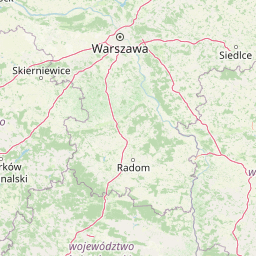
Why Dąbrowy Seroczyńskie Nature Reserve stands out
Dąbrowy Seroczyńskie is best known for its substantial, well-structured lowland oak forest, in which sessile oak is the dominant species and forms a coherent, ecologically rich woodland complex. The reserve preserves both oak-dominated forest communities and complementary mixed stands with pine, birch, and pear, producing a structurally diverse habitat that supports uncommon forest understory plants. It is also recognized for the presence of numerous protected and regionally rare herbaceous species growing in the forest floor vegetation, a feature that elevates the reserve from a typical oak wood into a botanically significant protected area. The combination of mature oak stands, varied plant communities, and characteristic lowland forest fauna gives the site its identity as one of the more valuable forest reserves in the Siedlce region. The reserve's position within the Łuków Protected Landscape Area and its contiguity with the Kulak Nature Reserve further reinforce its role as part of a broader protected forest mosaic in eastern Mazovia.
Dąbrowy Seroczyńskie Nature Reserve history and protected-area timeline
Dąbrowy Seroczyńskie Nature Reserve was established on 29 December 1987 under a regulation that was subsequently published in the official Polish legal gazette in early 1988. The formal legal act is recorded under the Polish Journal of Laws reference cited in the founding documentation as M.P. of 1988, No. 5, item 47, paragraph 13. The reserve was created to preserve a unique forest complex characterized by tree stands in which sessile oak is the dominant species.
The protection of this woodland in the late 1980s reflected a broader Polish conservation push during that period to safeguard well-preserved examples of lowland oak forests, which had become increasingly threatened by forestry intensification and landscape change across the lowland regions of central and eastern Poland. By securing the site as a forest nature reserve under Polish law, the authorities ensured that the area would be managed primarily for the preservation of its forest communities, its tree age structure, and its characteristic biodiversity rather than for timber production.
Today, the reserve is administered as part of the state forest holdings of the Seroczyn forest district within the Siedlce Forest Management Authority, and it sits within the larger Łuków Protected Landscape Area. It also remains closely linked administratively and ecologically with the neighboring Kulak Nature Reserve, which borders the southern edge of the Dąbrowy Seroczyńskie protected zone, reinforcing the role of both sites as jointly significant components of the protected forest landscape of eastern Mazovia.
Dąbrowy Seroczyńskie Nature Reserve landscape and geographic character
The landscape of Dąbrowy Seroczyńskie reflects the gently undulating terrain characteristic of the eastern Mazovian lowlands. Elevations within the reserve lie between roughly 175 and 192 meters above sea level, producing small but noticeable variations in topography that shape local drainage, soil conditions, and forest community distribution. There are no dramatic landforms; instead, the reserve presents a continuous, mature forest cover laid over softly rolling plain.
The forested area is shaped by long-established state forest management, with clearly defined administrative forest units belonging to the Seroczyn forest district. The compartmentalized structure of the woodland reflects decades of forestry planning, but within the protected reserve the aim is to maintain the forest's ecological integrity and continuity within the broader landscape rather than to maximize wood production.
At a regional level, the reserve forms part of a larger forested matrix on the Mazovian plain, with the Łuków Protected Landscape Area providing the wider landscape context. To the south, the reserve borders the Kulak Nature Reserve, so that the two protected sites effectively form adjoining stretches of forest, reinforcing the landscape character of a continuous protected woodland belt in this part of the Siedlce region.
Dąbrowy Seroczyńskie Nature Reserve ecosystems, habitats, and plant life
Ecologically, Dąbrowy Seroczyńskie belongs to the category of lowland oak-dominated forests that are emblematic of the east-central European plain. The reserve is structured around mature oak communities with sessile oak as the leading species, supplemented by pedunculate oak, Scots pine, birch, and wild pear in the older mixed stands. Across the reserve, foresters have identified four main forest community complexes, with the melittis-type oak-lime forest and the typical oak-lime forest occupying the largest shares.
The age structure of the woodland is ecologically significant: the oldest tree cohorts, reaching roughly 70 to 90 years of age, form a substantial proportion of the forest cover, providing habitat continuity, deadwood potential, and structural complexity that benefit both understory plants and forest fauna. The mixture of oak, pine, birch, and occasional broadleaf companions creates a heterogeneous internal microclimate, with shaded oak litter areas, lighter pine sections, and edge transitions, each supporting somewhat different ecological conditions.
The forest floor vegetation is one of the most distinctive ecological features of the reserve. Numerous protected and regionally rare herbaceous species have been recorded in the understory, including several species of conservation interest. The diversity of these plants, combined with the variety of forest community types, gives the reserve a botanical richness that elevates it beyond a typical managed oak forest and marks it out as a meaningful conservation site within the Siedlce region.
Dąbrowy Seroczyńskie Nature Reserve wildlife and species highlights
The fauna of Dąbrowy Seroczyńskie reflects the typical composition of a well-structured central European lowland oak and mixed forest. Among the most often noted bird species in the reserve are goshawk, hoopoe, red-breasted flycatcher, Eurasian jay, middle spotted woodpecker, black woodpecker, and common firecrest, a mix that suggests good availability of nesting sites, snags, and varied vertical forest structure for cavity-nesting and canopy-dwelling species.
The reserve also hosts a range of characteristic forest reptiles and amphibians. Sand lizard and European tree frog have been documented in the reserve, along with the slow worm, an often-overlooked legless lizard that prefers the sheltered conditions of mature broadleaf and mixed woodland with leaf-litter cover. These species benefit from the mix of sunny forest edges, clearings, and shaded interior habitats provided by the oak and pine stands.
Mammal diversity is less comprehensively surveyed but includes notable species such as pine marten and beech marten, suggesting the presence of mature woodland and stable populations of small mammals on which these predators depend. Moose have also been observed within the reserve, indicating that the wooded landscape functions as part of a wider habitat mosaic capable of supporting large ungulates. The insect fauna is recognized as rich, although it has not yet been systematically studied, which implies that the reserve may host additional invertebrate diversity that complements its already notable plant and vertebrate communities.
Dąbrowy Seroczyńskie Nature Reserve conservation status and protection priorities
From a conservation perspective, Dąbrowy Seroczyńskie is significant primarily because it protects a regionally important complex of lowland oak forests dominated by sessile oak. The reserve maintains a substantial share of mature oak stands, which are increasingly rare across the intensively managed agricultural lowlands of central Poland, and it preserves these woodlands within a formal protection framework that prioritizes ecological value over timber yield.
The reserve's botanical richness adds a second conservation dimension. The forest floor supports numerous protected and regionally rare herbaceous species, indicating that the site functions as a long-term refuge for plants that depend on stable, unbroken forest cover and undisturbed soil conditions. Maintaining these communities requires the continuity of mature canopy, the avoidance of abrupt management changes, and the preservation of microclimate conditions beneath the woodland.
The reserve's integration into the wider Łuków Protected Landscape Area and its contiguity with the Kulak Nature Reserve further enhance its conservation value. Together with these surrounding protected designations, it forms part of a broader ecological network that supports forest-dependent species across a larger landscape, increasing both the resilience of individual populations and the overall connectivity of protected forest habitats in the eastern Mazovian region.
Top sights and standout views in Dąbrowy Seroczyńskie Nature Reserve
Dąbrowy Seroczyńskie stands out for the unusual concentration of protected and rare plant species in its forest understory, set against a backdrop of mature oak-dominated woodland. The reserve's role as a refuge for sessile oak forest in the eastern Mazovian lowlands also gives it strong landscape continuity, especially when considered together with the adjacent Kulak Nature Reserve and the broader Łuków Protected Landscape Area.
The combination of old oak stands, mixed pine and birch sections, and structurally varied understory makes the reserve valuable both for botanical study and for the conservation of typical lowland forest fauna, including characteristic woodpeckers, the European tree frog, and uncommon martens within the broader Mazovian region.
Best time to visit Dąbrowy Seroczyńskie Nature Reserve
For visitors interested in lowland oak forest scenery and woodland atmosphere, late spring and early summer are generally the most rewarding periods, as deciduous canopy is fully leafed out, the understory is in active growth, and the distinctive forest flora becomes most visible beneath the trees. Late summer and early autumn offer an alternative character, with mature oaks presenting their full crown color and forest paths made easier by drier ground.
Winter visits emphasize the structural character of the woodland, when the bare deciduous canopy reveals the age, spacing, and species mix of the trees, particularly the older sessile oaks and the interspersed pine and birch cohorts. Wildlife observation is generally feasible year-round, though bird activity is most conspicuous during the breeding season in spring and early summer, while autumn can offer opportunities for spotting larger mammals such as moose within the broader forested landscape.