
Mori Atlas logo
Nature reserveRezerwat przyrody Dębina

A mapped look at ancient oak-hornbeam forests and glacial geological heritage in the Polish Lowlands

Rezerwat przyrody Dębina: Exploring the Oldest Protected Nature Reserve in Mazovian Voivodeship, Poland

Rezerwat przyrody Dębina stands as a landmark of conservation history within the Mazovian Voivodeship of east-central Poland. This protected nature reserve spans approximately 51 hectares of the Równina Wołomińska, preserving a multi-layered oak-hornbeam forest dominated by ancient pedunculate oaks. Beyond its botanical significance, the reserve provides a unique look at the Pleistocene geological history of the region through its collection of scattered glacial erratics embedded in the lowland terrain.

forest reserveoak-hornbeam forestancient oaksglacial erraticslowland forestprotected nature reserve
A stylized vector illustration showing a waterfall cascading down rocky cliffs into a valley, framed by tall green pine trees in the foreground under a sunny sky with clouds.

Rezerwat przyrody Dębina

Nature reserve

Park overview

Structured park overview, official facts, and landscape profile for Dębina Nature Reserve

Dębina Nature Reserve park facts, protected area profile, and essential visitor context

Review the core facts for Dębina Nature Reserve, including designation, size, terrain, visitor scale, habitats, and operating context in one park-focused overview.

About Dębina Nature Reserve

Dębina Nature Reserve occupies a modest but ecologically significant footprint within the largely agricultural landscape northeast of Warsaw. Located in Gmina Klembów, the reserve represents a surviving fragment of the natural deciduous forest that once characterized central Poland's lowlands. Its protected forest community is dominated by oak and hornbeam, with elm, linden, and ash contributing to a layered canopy structure that reflects the region's potential natural vegetation.

The reserve has been protected since 1952, making it the longest-standing formal nature reserve in the Mazovian Voivodeship. Its establishment was driven primarily by the presence of ancient pedunculate oak trees, estimated to be roughly 200 years old, which form the upper storey of the forest. Over the decades, this early protection has helped preserve the stand from the widespread deforestation and agricultural conversion that affected much of the surrounding lowland.

In addition to its botanical value, Dębina holds geological interest. The terrain contains glacial erratics, stones moved southward during past glaciation events and now resting within the forest floor. These features lend the reserve a scientific dimension beyond its ecological focus. An educational trail runs through the reserve, allowing visitors to experience the old-growth forest character and observe both the veteran trees and scattered erratics within a relatively contained setting.

Quick facts and research context for Dębina Nature Reserve

Dębina Nature Reserve is a forest reserve situated in Gmina Klembów, within Wołomin County of the Mazovian Voivodeship in central Poland. Established in 1952 by official decree, it covers approximately 51 hectares and is the oldest nature reserve in the entire voivodeship. The site lies on the Równina Wołomińska mesoregion of the Mazovian Plain, an extensive lowland area in the central-eastern part of the Polish Lowlands. Its protection focuses on a natural oak-hornbeam forest community featuring approximately 200-year-old pedunculate oak trees, alongside a notable concentration of glacial erratics of geological interest.

Protection and recognition

Documented terrestrial protection framework and historical designation timeline.

Rezerwat przyrody Dębina Protection Status and Designation History

Rezerwat przyrody Dębina maintains an established terrestrial protection status dating back to nineteen fifty two. Protected area records outline the foundational designation history and administrative scope governing the natural landscape.

Protection details

Protection scope
Terrestrial
Designated year
1952
Transboundary protection
No
Park context

Deeper park guide and search-rich context for Dębina Nature Reserve

Dębina Nature Reserve history, landscape, wildlife, and travel context

Explore Dębina Nature Reserve through its history, landscape character, ecosystems, wildlife, conservation priorities, cultural context, and seasonal travel timing in a structured park guide built for atlas discovery and search intent.

Why Dębina Nature Reserve stands out

Dębina is primarily known for its exceptionally old oak trees and its natural multi-species deciduous forest composition. The reserve's upper canopy features around 200-year-old pedunculate oaks that prompted the original protection, set within a mixed oak-hornbeam community that also includes elm, linden, and ash. The name "Dębina" itself is a reference to the dominant oak-hornbeam character of the forest, and the reserve's age as the oldest in the Mazovian Voivodeship adds to its recognized standing. Equally notable is the site's geological heritage. The reserve contains numerous glacial erratics, boulders transported by Pleistocene ice sheets and left as part of the post-glacial landscape. These features give the otherwise flat lowland forest an additional dimension of natural-history value, blending ecological and geological interest within a compact protected footprint.
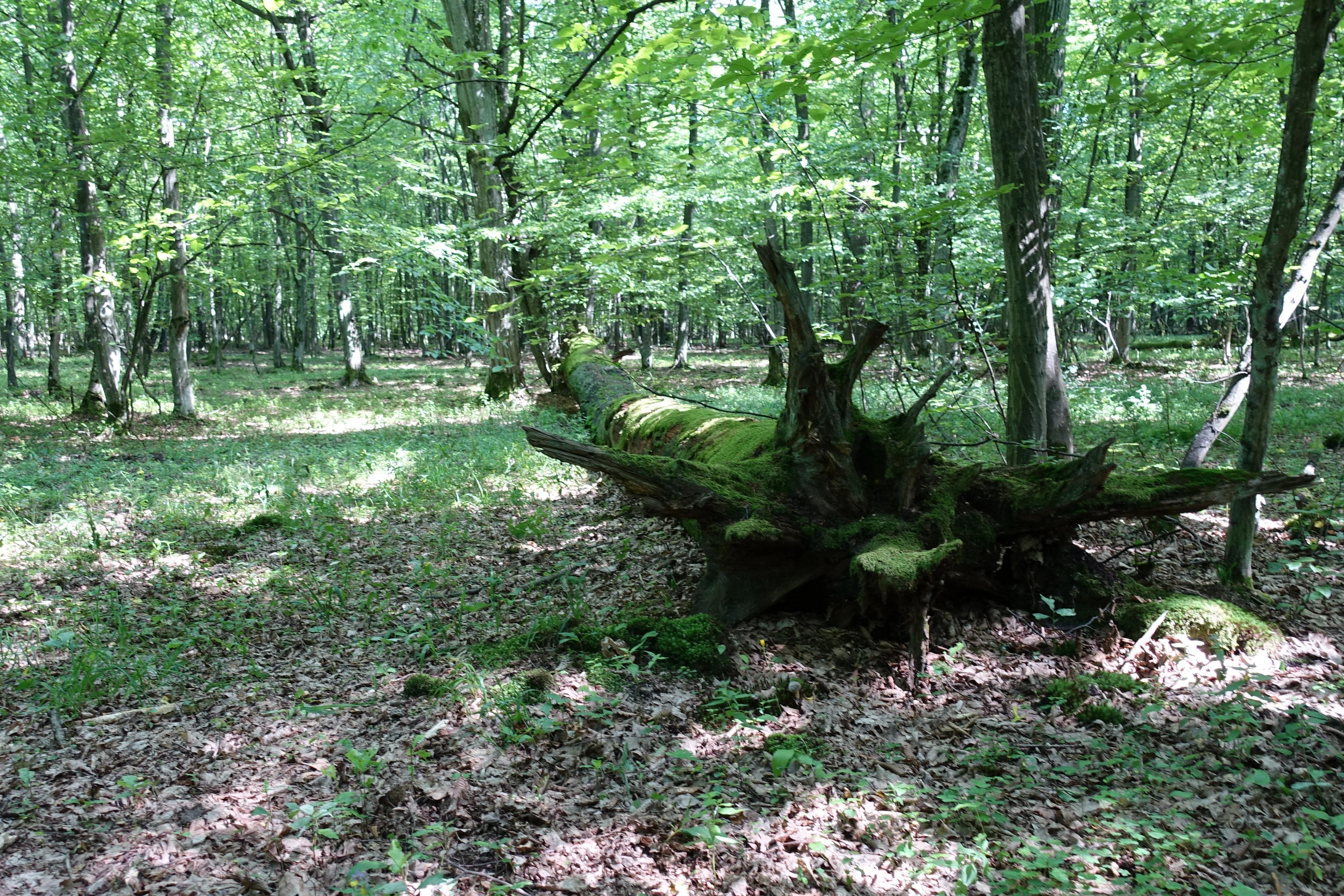
A view inside a dense green forest showing a large, mossy tree stump lying on the ground surrounded by trees and leaf litter.
A large, moss-covered tree stump rests on the forest floor within the dense woodland of the Debina Nature Reserve.

Dębina Nature Reserve history and protected-area timeline

Dębina Nature Reserve was formally established in 1952 through a legal decree recorded in the Polish legal gazette, marking it as the oldest officially designated nature reserve within the present-day Mazovian Voivodeship. Its creation responded to the presence of mature pedunculate oak trees, estimated to be around 200 years old at the time of protection, which formed the upper layer of a natural oak-hornbeam forest.

The mid-20th century establishment placed Dębina among the early wave of modern nature reserves in post-war Poland, a period when the country was formalizing protection for surviving fragments of natural lowland forest. The reserve's enduring status has allowed it to preserve its forest character and ancient tree specimens across decades of surrounding landscape change. The site continues to be recognized as a foundational conservation reference point for the Mazovian region.

Dębina Nature Reserve landscape and geographic character

The reserve lies within the Równina Wołomińska, a mesoregion of the Mazovian Plain, itself part of the larger Polish Lowlands. The terrain is characteristically flat and low-lying, consistent with the broad glacial plain that dominates much of central Poland. The forest floor reflects this gentle topography, with subtle variations rather than dramatic relief.

The most distinctive physical feature of the reserve's landscape is not its elevation but its scattered glacial erratics. These boulders, remnants of the Pleistocene glaciations that once covered the region, lie dispersed through the woodland and give the site an unusual geological texture. Combined with the mature oak and hornbeam canopy, the erratics contribute to a landscape that reads as a small remnant of a much older, post-glacial natural environment embedded within a modern, heavily cultivated plain.

Dębina Nature Reserve ecosystems, habitats, and plant life

Dębina protects a natural oak-hornbeam forest community, a vegetation type historically widespread across central European lowlands but now greatly reduced by centuries of agricultural conversion. The stand is a multi-layered deciduous forest in which pedunculate oak forms the uppermost canopy, while hornbeam contributes to the mid-layer. Elm, linden, and ash enrich the species mix, supporting ecological diversity beyond a simple two-species model.

The presence of approximately 200-year-old oaks indicates that the site has retained near-natural forest continuity for a substantial period, allowing the development of old-growth structural features such as veteran trees, complex canopy layering, and associated microhabitats. This ecological continuity, rare on the Mazovian Plain, is the primary reason the reserve retains distinct conservation value. The forest also functions as refuge habitat supporting a range of typical lowland woodland species.

Dębina Nature Reserve wildlife and species highlights

The reserve functions as a refuge for lowland woodland fauna, with the source describing it as a haven for numerous game and animal species. The combination of mature trees, structurally complex canopy, and the relative seclusion provided by long-term protection supports a typical central European deciduous forest animal community. While specific species are not detailed in the available source, the habitat profile points to mammals and birds associated with mature broadleaf forest, including browsing ungulates and cavity-nesting or forest-interior bird species typical of veteran oak stands.

Dębina Nature Reserve conservation status and protection priorities

As the oldest formal nature reserve in Mazovian Voivodeship, Dębina carries a particular conservation legacy, having been under protected status continuously since 1952. Its long-term protection has safeguarded a fragment of natural oak-hornbeam forest in a region where such stands are otherwise scarce due to extensive agricultural land use. The reserve's old oaks represent a genetic and structural resource that takes many decades to develop and cannot be easily replaced.

The site's geological dimension adds another layer of conservation importance: the glacial erratics are non-renewable elements of the post-glacial landscape and are preserved in their in-situ context through the reserve's protection. Together, the botanical and geological values make Dębina a compact but multi-dimensional conservation site, demonstrating how even small reserves can protect intersecting natural heritage features.

Dębina Nature Reserve cultural meaning and human context

The reserve's name, Dębina, derives directly from the Polish term for an oak-dominated forest, culturally connecting the site to long-standing regional woodland traditions in central Poland. The protection of old oaks reflects an enduring cultural valuation of ancient trees in the Polish countryside, where veteran oaks have historically functioned as landmarks, gathering places, and objects of local reverence. The reserve's educational trail also reflects a broader Polish conservation tradition of interpreting protected areas for public understanding of natural heritage.

Top sights and standout views in Dębina Nature Reserve

Dębina's strongest distinguishing features include its ancient pedunculate oak stand, its natural oak-hornbeam forest composition, and its collection of glacial erratics, all preserved within a small lowland footprint. As the oldest reserve in the Mazovian Voivodeship, it holds a foundational place in the region's conservation history. The presence of an educational trail makes the site accessible to visitors interested in both forest ecology and the geological character of the Polish lowlands.

Best time to visit Dębina Nature Reserve

Dębina can be visited throughout the year, but the experience varies meaningfully with the seasons characteristic of central European lowland forest. Spring and early summer bring active birdlife and fresh green canopy, while autumn showcases the oaks, hornbeams, and mixed broadleaf species in seasonal color, making the forest composition especially visible. Winter, with leafless deciduous canopy, offers the clearest views of the veteran oak trunks and the glacial erratics scattered across the forest floor, making it a particularly suitable season for those interested in the site's tree architecture and geological features.
Monthly climate preview

Long-term monthly temperature ranges and precipitation patterns sampled at a representative coordinate

Rezerwat przyrody Dębina Climate Normals, Annual Temperature and Precipitation Rhythm

Rezerwat przyrody Dębina exhibits measured long-term monthly temperatures ranging from sub-zero winter minimums to warm summer maximums alongside steady daily precipitation averages. Examining the complete twelve-month climatology profile provides deeper insight into the annual weather rhythm across this protected landscape.
Annual mean8 °C
-4 °C20 °C
Jan-4°
Feb-2°
Mar
Apr
May14°
Jun18°
Jul20°
Aug19°
Sep14°
Oct
Nov
Dec-2°
Warmest month
July

19.8 °C

Coolest month
January

-3.9 °C

Wettest month
July

2.4 mm/day

Driest month
March

1.3 mm/day

Park location guide

Geography guide, regional context, and park location map for Dębina Nature Reserve

Dębina Nature Reserve park geography, regions, and map view in Poland

Understand where Dębina Nature Reserve sits in Poland through a broader geographic reading of the surrounding landscape, nearby location context, and its mapped position within the national park landscape.

How Dębina Nature Reserve fits into Poland

Poland, officially the Republic of Poland, is a Central European country spanning from the Baltic Sea in the north to the Carpathian Mountains in the south. It borders Germany, Czech Republic, Slovakia, Ukraine, Belarus, Lithuania, and Kaliningrad Oblast. The country has a temperate climate, diverse landscapes, and is known for its rich history, cultural heritage, and strong economic position within the EU.

Wider geography shaping Dębina Nature Reserve in Poland

Poland occupies 312,696 km2 in Central Europe, extending from the Baltic Sea coast in the north to the Sudetes and Carpathian Mountains in the south. It borders Germany to the west, Czech Republic and Slovakia to the south, Ukraine and Belarus to the east, and Lithuania and Kaliningrad Oblast to the northeast. The landscape includes lowland plains, uplands, and mountain ranges.

Map view of Dębina Nature Reserve

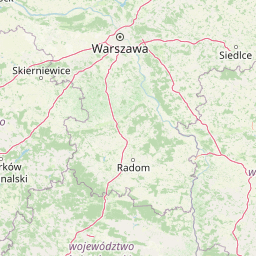
Use this park location map to pinpoint Dębina Nature Reserve in Poland, understand its exact geographic position, and read its mapped placement within the surrounding landscape more clearly.

Pigeon | © OpenStreetMap contributors

Location context for Dębina Nature Reserve

Mazovian Voivodeship

Explore photographic records of ancient oak canopies, forest habitats, and glacial erratics across the Mazovian Plain

Visualizing Rezerwat przyrody Dębina Photos, Ancient Oak Woodlands, and Protected Lowland Scenery

Photographic collections reveal the complex forest structure, ancient pedunculate oaks, and unique post-glacial terrain defining Rezerwat przyrody Dębina. Visual documentation offers direct insight into the habitats and natural features preserved within the oldest protected area of the Mazovian region.

A view inside a dense green forest showing a large, mossy tree stump lying on the ground surrounded by trees and leaf litter.

Park atlas

Compare regional protected areas across the Mazovian Plain

Other Parks Near Rezerwat Przyrody Dębina and Surrounding Lowland Reserves

Browse nearby national parks and protected areas sharing the lowland geography of Rezerwat przyrody Dębina. Comparing adjacent forest reserves provides broader context on post-glacial terrain and regional conservation landscapes.
A pale, soft-focus watercolor illustration showing a horizontal landscape of rolling green hills, distant hills in shades of purple and grey, and groups of conifer trees.
Protected landscapeMasovian Voivodeship
About 22 km away#1 closest

North

Puszcza Biała Protected Landscape: Map and Geography of the Mazovian Lowland Forests

Extensive pine-dominated woodlands of Masovian Voivodeship

Puszcza Biała is a massive, continuous lowland forest in east-central Poland, characterized by its dominant Scots pine stands and post-glacial sandy soils. Positioned between the Bug and Narew rivers, this protected landscape provides a quiet, expansive green space that serves as an essential component of the regional natural geography of the Masovian Voivodeship.

Area
850 km²
Relief
Lowland
Scope
Terrestrial
Water
Major water bodies
A soft watercolor illustration of a winding river flowing through a green valley with forested hills in the background.
Nature reserveMazowieckie
About 32 km away#2 closest

Southwest

Rezerwat przyrody Morysin: Protected Floodplain Landscapes and Historic Forest Reserves

A riparian heritage site in the Mazowieckie region

Situated in the Vistula floodplain, Rezerwat przyrody Morysin stands as a significant protected area defined by its massive old-growth trees and layered cultural history. The terrain incorporates diverse wetland features, including the Sobieski Canal and Wilanówka stream, creating a vital habitat for cavity-nesting species and a rare example of integrated natural and historic preservation.

Area
0.535 km²
Established
1996
Relief
Lowland
Climate
Temperate
Nature reserveMasovian Voivodeship
About 33 km away#3 closest

South

Rezerwat przyrody Mszar Pogorzelski: Peatland Protected Area and Wetland Landscape Mapping

Regional landscape context in Masovian Voivodeship

Located in the eastern reaches of Otwock, Rezerwat przyrody Mszar Pogorzelski preserves a rare gradient of raised bogs and pine forest edge habitats. This site offers valuable insight into the sandy lowland geography of east-central Poland and acts as a localized refuge for bog vegetation within the protected Mazovian Landscape Park zone.

Area
0.351 km²
Established
1987
Relief
Lowland
Climate
Temperate
A flat vector illustration of a grassy meadow with yellow dandelions, a winding dirt path lined with fence posts, a forest in the midground, and large mountains in the background under a sky with pink clouds.
Protected areaMazovia Voivodeship
About 34 km away#4 closest

North

Bagno Pulwy: A Geographic Overview of the Mazovian Wetland and Peatland Mosaic

Protected marshland landscapes and Narew valley terrain

Bagno Pulwy represents an extensive lowland wetland in Poland's Mazovia region, characterized by its wide meadows, peat-rich soil, and intricate network of historical drainage canals. This protected area offers a distinct geographic contrast to the surrounding forested uplands, functioning as a vital open habitat situated within the broader Narew river valley drainage system.

Area
60 km²
Water
Major water bodies
National parkMasovian Voivodeship
About 35 km away#5 closest

West

Kampinos National Park: Geographic Profile and Protected Forest Landscape Map

Inland dune formations and wetland habitats in Masovian Voivodeship

The expansive woodland of Kampinos National Park represents a critical protected area in Poland, characterized by its parabolic sand dunes and low-lying marshes. Gain insights into the geomorphological features of this UNESCO biosphere reserve and trace the complex hydrological network that defines its unique forest environment.

Area
385.44 km²
Established
1959
IUCN
II
Relief
Lowland
A soft watercolor illustration of a marshy landscape with low rolling hills, scattered trees, and a winding stream, rendered in light green and yellow tones on a white background.
National parkMasovian Voivodeship
About 35 km away#6 closest

West

Kampinoski Park Narodowy: Mapping the Inland Dune and Wetland Landscapes of Central Poland

A vital protected area in Masovian Voivodeship

The landscape of Kampinoski Park Narodowy is defined by the Grochalskie Piachy dune complex and diverse riparian habitats. This atlas entry covers the geological history and protected boundaries of this significant lowland forest, tracing the Vistula river valley's influence on the surrounding terrain and ecological character.

Area
385.443 km²
Established
1959
Visitors
1M annual
Relief
Lowland
A pale, soft-focus watercolor painting of a wetland area with grassy banks, distant rolling hills, and a calm body of water reflecting sunset-toned light.
Nature reserveMazowieckie Voivodeship
About 37 km away#7 closest

South

Rezerwat przyrody Bagno Bocianowskie: Protected Nature Reserve and Forest Geography

Inland dune and peatland mosaics in central Poland

The nature reserve Rezerwat przyrody Bagno Bocianowskie provides a protected study of how glacial sand dunes and peat-filled depressions shape forest distribution. Located in Mazowieckie Voivodeship, this site preserves rare wetland flora and diverse woodland communities within a 69-hectare lowland forest landscape.

Area
0.689 km²
Established
1982
Relief
Lowland
Climate
Temperate
Nature reserveMazowieckie
About 40 km away#8 closest

East

Rezerwat przyrody Moczydło: Protected Ornithological Landscapes in the Masovian Voivodeship

Mapping wetland habitats and forest bird refuges

Rezerwat przyrody Moczydło occupies a compact, ecologically significant forested area within the Mazowieckie region. As a designated faunistic reserve, it preserves critical breeding sites for water and marsh birds, contributing to the regional biodiversity and the expansive conservation efforts of the Nadbużański Landscape Park. This profile traces the reserve's geographic boundaries and its role in regional environmental protection.

Area
0.581 km²
Established
1991
Scope
Terrestrial
Water
Major water bodies

Common questions about visiting, size, designation, and location context for Dębina Nature Reserve

Dębina Nature Reserve FAQs for park facts, access, geography, and protected area context

Find quick answers about Dębina Nature Reserve, including protected-area facts, park geography, trail and visitor context, and how the park fits into its surrounding country and regional landscape.
MoriAtlas Explorer

Continue Your Protected Areas Search Across the Global Atlas

Deepen your exploration by continuing the structured search for national parks and protected areas worldwide. Utilize the comprehensive filtering capabilities to compare different conservation landscapes and refine your understanding of global park geography. Discover more about the distribution and characteristics of protected natural areas.

Global natural geography