Why Dębniak Nature Reserve stands out
Dębniak is best known for its preserved stand of natural oak and small-leaved linden old-growth forest, set on the Bug River escarpment. The reserve showcases a classic Polish grąd-type deciduous assemblage with monumental trees and an unusually rich spring flora, including several orchid species. It is also known for its layered cultural and ecological history: the woodland began as part of a manor estate park and only narrowly escaped being clear-cut and replanted before being given protected status in the late 1970s.
Dębniak Nature Reserve history and protected-area timeline
Before the Second World War, the area that is now Dębniak formed part of a park attached to the local manor estate, characteristic of many such landscape parks across the eastern Polish lowlands. After the war, as a result of the post-war land reform, the property was nationalized and initially placed under a state agricultural farm, then transferred to the Polish State Forests (Lasy Państwowe). Under that administration the woodland was earmarked for felling and subsequent reforestation as a production forest.
The natural qualities of the stand, combined with the efforts of the local forest administration, prevented that outcome. By order of the Minister of Forestry and the Wood Industry dated 16 January 1978, the area was designated a nature reserve under the name Rezerwat przyrody Dębniak, formally published in the Polish official gazette. The reserve has since been managed as part of the broader Nadbużański Park Krajobrazowy framework and currently operates under active protection status, where specific management actions are taken to maintain its ecological character.
Dębniak Nature Reserve landscape and geographic character
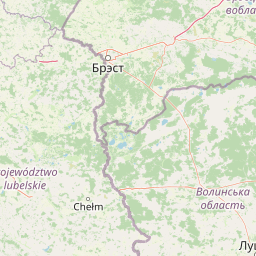
Dębniak occupies a section of the escarpment above the Bug River valley, giving the reserve a gently sloping, broken terrain typical of the river's edge in eastern Poland. Rather than presenting dramatic landforms, the area's landscape interest lies in its position above the Bug, the transition from the valley floor to higher ground, and the way the woodland frames the lower-lying floodplain beyond the reserve's boundaries.
The reserve itself is a lowland deciduous forest environment, without rock outcrops or open vistas, but with a varied microtopography shaped by the natural drainage patterns of the escarpment. Within the woodland, cleared paths and a small retention reservoir create open spaces that contrast with the dense canopy and contribute to the site's park-like appearance, a legacy of its earlier use as part of a manorial landscape.
Dębniak Nature Reserve ecosystems, habitats, and plant life
Ecologically, Dębniak is a textbook example of a grąd, the multi-species rich deciduous forest typical of Polish lowlands. The canopy is formed mainly by Pedunculate Oak and Small-leaved Linden, with other broadleaf species contributing to a layered, structurally diverse woodland. The presence of many trees that have reached old age or monumental size adds habitat complexity that is unusual in actively managed production forests.
Beneath the canopy, the reserve hosts a notably diverse shrub and herb layer. Shrubs include Red Elderberry and Alpine Currant, while the ground flora features Mezereon, Yellow Turk's-cap Lily, Oxlip, and, in some locations, Common Foxglove and Common Columbine. Orchid species such as Broad-leaved Helleborine and White Helleborine are also present, marking the reserve as a site of real botanical interest despite its small size. The combination of veteran trees, varied shrubs, and a flower-rich understory gives the woodland a distinctly seasonal character, with the richest botanical displays in spring and early summer.
Dębniak Nature Reserve wildlife and species highlights
As a small, fully forested reserve, Dębniak functions primarily as habitat for the typical woodland fauna of eastern Poland rather than as a site with conspicuous large mammals or large bird colonies. The varied tree age structure, including many old and veteran oaks and lindens, creates nesting and shelter opportunities for cavity-nesting birds, small woodland mammals, and typical deciduous-forest invertebrates.
The reserve's real wildlife value lies less in any single charismatic species and more in the continuity and structural diversity of the forest. Old trees, deadwood, dense shrubs, and an unbroken canopy provide stable conditions for forest-interior species that would not survive in the more uniform production forests surrounding the reserve. This makes Dębniak an important local refuge within the broader mosaic of the Nadbużański Park Krajobrazowy.
Dębniak Nature Reserve conservation status and protection priorities
Dębniak was created specifically to conserve a natural fragment of multi-species oak and linden old-growth forest with monumental trees and a floristically rich understory, a combination that is increasingly rare in the intensively managed forests of the region. By preventing the conversion of this site into uniform production forest, the reserve safeguards not only the canopy trees but also the dependent shrub and herb-layer communities, including several orchid species.
The reserve lies within the Nadbużański Park Krajobrazowy, which extends the surrounding landscape-level protection, and it is managed under active protection status, allowing targeted interventions to maintain the woodland's character. Although small, Dębniak is therefore an important local node of natural-forest conservation along the Bug River, preserving habitat structure and species that have largely disappeared from the wider productive forest landscape.
Dębniak Nature Reserve cultural meaning and human context
Before becoming a nature reserve, the woodland at Dębniak was part of the park grounds associated with the Korczew manor estate, a typical pattern of landscape design across the eastern Polish lowlands before the Second World War. The post-war land reform transformed ownership first into a state agricultural farm and then into State Forests land, putting the older woodland at risk of commercial felling.
The eventual designation of the area as a nature reserve in 1978 thus reflects both an ecological story and a cultural one: a former manorial park that was preserved for its natural values at a moment when its old trees could easily have been lost. The surviving park-like character of the woodland, with its open paths and a small retention reservoir, still carries the imprint of that earlier estate landscape, giving the reserve a subtle cultural dimension alongside its ecological role within the Nadbużański Park Krajobrazowy.
Top sights and standout views in Dębniak Nature Reserve
Despite its small footprint of roughly twenty hectares, Dębniak packs in several notable features: a natural stand of oak and small-leaved linden old-growth forest, monumental veteran trees, and a grąd-type understory that includes orchids such as Broad-leaved Helleborine and White Helleborine, along with species like Yellow Turk's-cap Lily, Mezereon, and Alpine Currant. Its position on the Bug River escarpment adds scenic context, and a didactic trail with a small retention reservoir makes it a compact but rewarding site for visitors.
Best time to visit Dębniak Nature Reserve
Late spring and early summer are the most rewarding times to experience Dębniak, when the herb layer of the grąd forest is at its richest, with Yellow Turk's-cap Lily, Oxlip, and orchids typically in flower and the canopy fully leafed out. The same season brings the woodland's most pleasant walking conditions, with shaded paths and active birdlife.
Autumn also offers a quieter alternative, when the oak and linden canopy turns color and the reserve's atmosphere becomes particularly park-like, echoing its origins as part of a former manor estate. Winter visits are possible but offer little of the reserve's distinctive botanical character and may be limited by snow and short daylight.