Mori Atlas logo
National parkDyakovsky Forest National Park

Examine the geographic boundaries and unique mosaic terrain of Europe's southernmost natural forest massif.

Dyakovsky Forest National Park: Mapping the Woodland Landscapes of the Saratov Trans Volga Region

(National Park 'Dyakovsky Les')

Dyakovsky Forest National Park occupies a distinct ecological niche as a federally protected area set within the dry steppe landscape of the Saratov Trans Volga region. Centered on a sandy-plain massif along the Yeruslan River, the park sustains a vital mosaic of oak, birch, and aspen groves surrounded by vast feather-grass plains. This terrain presents a rare biogeographical bridge, where closed-canopy woodland persists far south of its typical climatic range, offering a essential refuge for woodland-dependent species.

steppeforest-steppe mosaicoak woodlandsbirch forestspsammophyte vegetationnational park
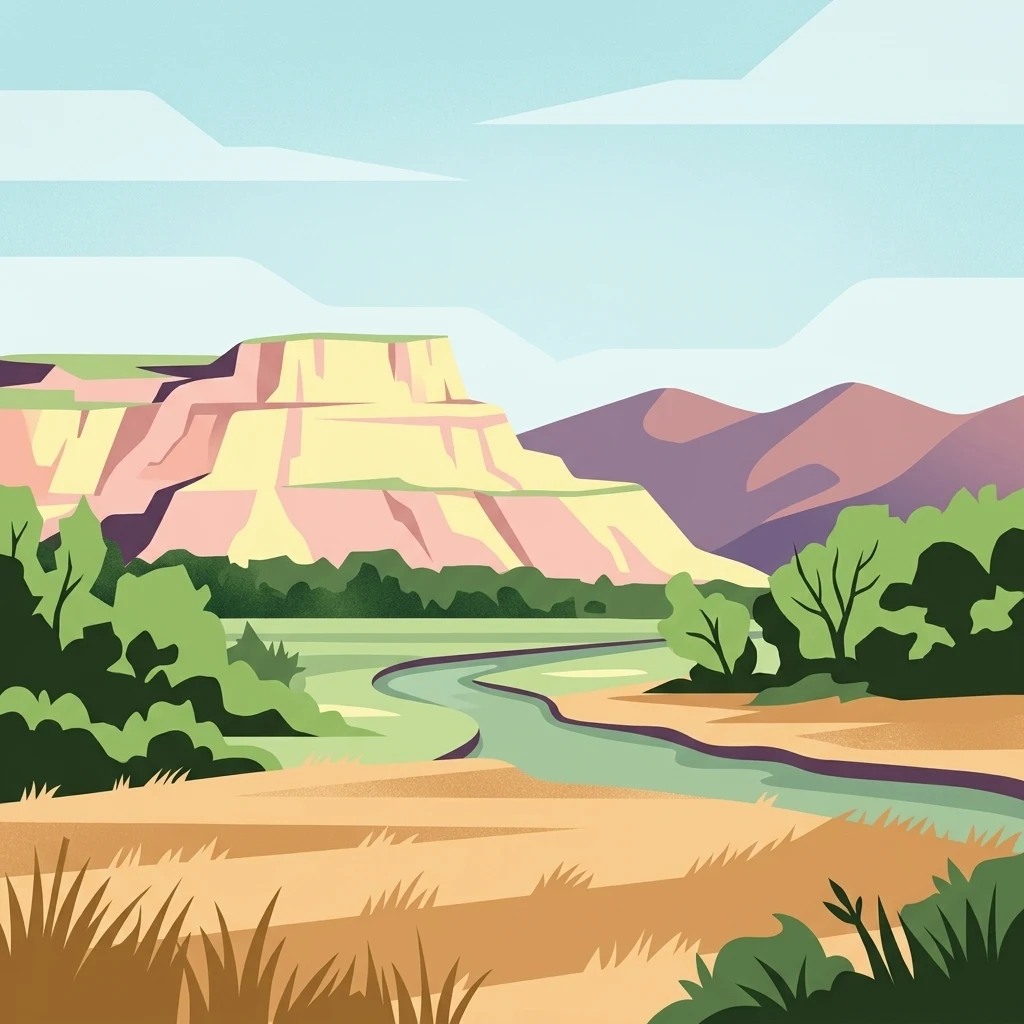
A flat-style digital illustration depicting a river flowing through a grassy valley with trees and distant mesas under a pale blue sky.

Dyakovsky Forest National Park

National park

Park overview

Structured park overview, official facts, and landscape profile for Dyakovsky Forest National Park

Dyakovsky Forest National Park park facts, protected area profile, and essential visitor context

Review the core facts for Dyakovsky Forest National Park, including designation, size, terrain, visitor scale, habitats, and operating context in one park-focused overview.

About Dyakovsky Forest National Park

Dyakovsky Forest National Park occupies a distinctive ecological position at the southern edge of European forest distribution. Although its surroundings belong firmly to the dry steppe landscapes of the Saratov Trans-Volga region, the park's sandy terrain and the hydrological influence of the Yeruslan River allow a complex mosaic of woodland habitats to persist where they ordinarily could not.

The territory sits on the terraces of the middle course of the Yeruslan River, extending across the Priyeruslan sand massif between the Yeruslan and the Bizyuk rivers and around the village of Dyakovka. This unusual combination of sandy soils and proximity to riverine water creates a layered pattern of vegetation: hilltops are clothed in steppe grasses, slopes support shrubby thickets, and the lower-lying depressions between ridges host clusters of oak, birch, aspen, elm, and maple. White birch stands in the low-lying flats are particularly characteristic of the park's appearance.

As a federally designated national park, Dyakovsky Forest continues a longer conservation story in Saratov Oblast. Its botanical importance was recognized by scientists as early as the late 19th and early 20th centuries, and the area received successive levels of regional protection through the Soviet and post-Soviet periods before finally achieving national park status at the end of 2023. The park's modern role is to safeguard this forest-steppe interface as a refuge for native flora and fauna, to support scientific research, and to preserve a culturally and ecologically significant landscape in the lower Volga region.

Quick facts and research context for Dyakovsky Forest National Park

Dyakovsky Forest National Park lies in the south of Saratov Oblast near the village of Dyakovka, within the subzone of southern fescue-feather grass steppes that form part of the vast Black Sea-Caspian steppe belt. It occupies roughly 18,000 hectares of the Priyeruslan sandy massif and adjacent lands, with elevations varying from around 30 to 80 meters. The park is administered under Russia's federal system, managed by the Ministry of Natural Resources and Ecology through the Khvalynsky National Park institution. It was established as a national park on December 29, 2023, evolving from a long history of regional protection that began as early as the 1980s.

Protection and recognition

Documented protection history and terrestrial management scope records

Dyakovsky Forest National Park Protection Status and Designated Year

Dyakovsky Forest National Park maintains a documented terrestrial protection status established in two thousand seven. Official conservation records outline the designated framework and management scope without supplementary international recognition sources.

Protection details

Protection scope
Terrestrial
Designated year
2007
Transboundary protection
No
Park context

Deeper park guide and search-rich context for Dyakovsky Forest National Park

Dyakovsky Forest National Park history, landscape, wildlife, and travel context

Explore Dyakovsky Forest National Park through its history, landscape character, ecosystems, wildlife, conservation priorities, cultural context, and seasonal travel timing in a structured park guide built for atlas discovery and search intent.

Why Dyakovsky Forest National Park stands out

Dyakovsky Forest is best known for being one of the most southerly natural forest massifs in Europe, surviving as a woodland island within an otherwise dry steppe environment. Its mosaic of oak clusters, birch-aspen groves, sandy-plain steppe vegetation, and aquatic habitats along the Yeruslan River makes it an important refuge for forest-dwelling birds and plants far outside their usual range. The park also stands out for its rich intersection of psammophyte communities, steppe shrubs, and gallery-like forest habitats, offering a rare living laboratory where southern European forest meets Eurasian dry steppe.
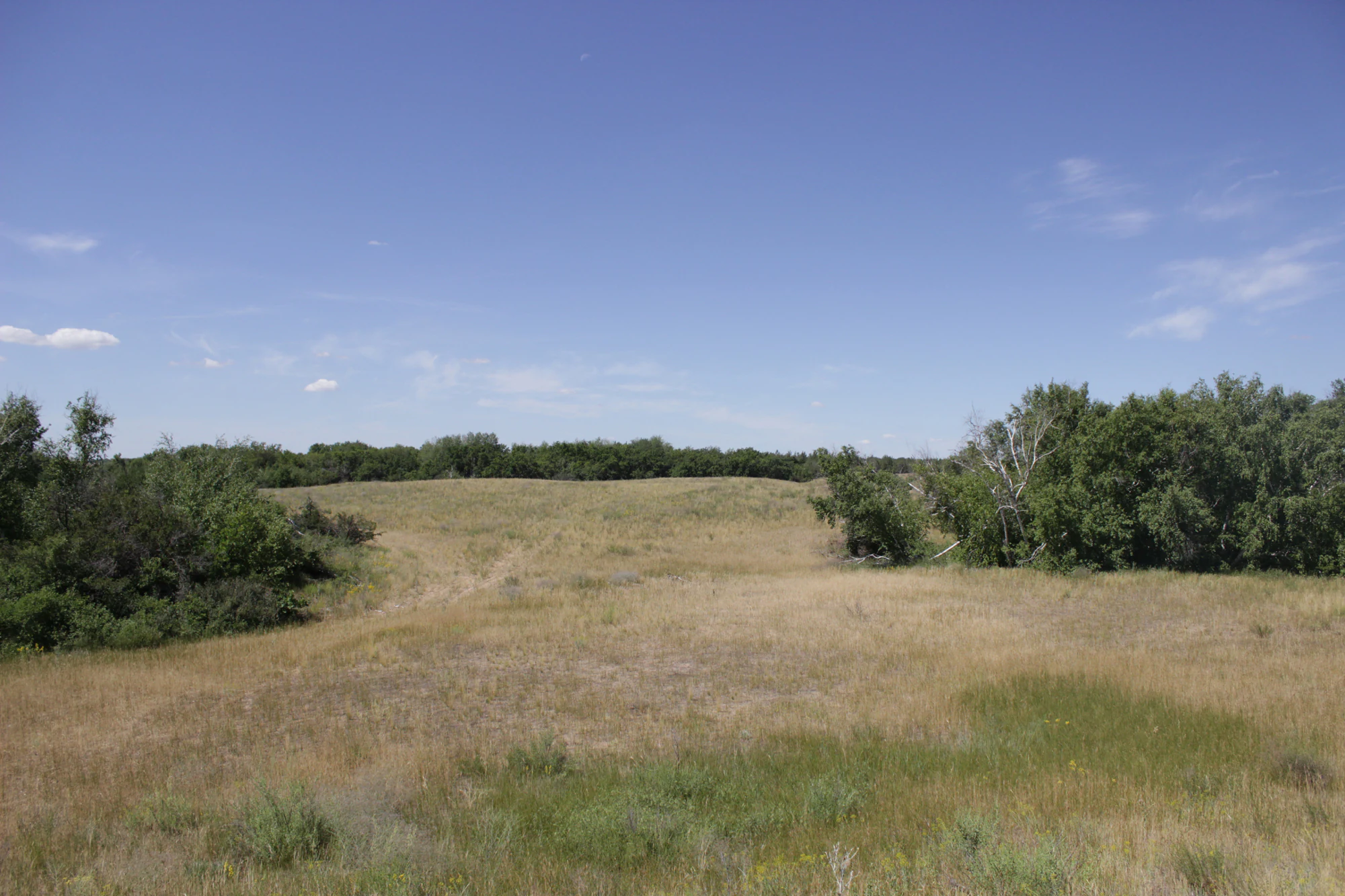
A wide view of a dry, grassy landscape with patches of birch trees and low sandy dunes under a clear blue sky.
Birch groves situated in the lowlands between sand dunes in the Dyakovsky Forest.

Dyakovsky Forest National Park history and protected-area timeline

The conservation story of Dyakovsky Forest stretches back more than a century and reflects the broader development of nature protection in the Saratov region. Botanical investigations in the area began in the second half of the 19th century, with researchers such as Tranchel, Zinger, Kozo-Polyansky, and others documenting the region's unusual flora. In the 1920s, florist Conrad Yulievich Gross and his colleagues were among the first to propose setting aside protected areas in Saratov Oblast.

In 1947, Professor Fursayev of Saratov University publicly highlighted the region's lack of protected natural areas despite its ecological importance, listing the forest near the villages of Dyakovka and Saltovo as a priority for protection. Botanist E. K. Koch later proposed dedicated forest, steppe, and wetland reserves for the region, including one for Dyakovsky Forest itself.

By 1979, a comprehensive list of 130 natural heritage sites had been compiled, leading to official regional protection decisions in 1982 that included a landscape reserve known as 'Dyakovsky Les.' A separate republican-level biological reserve was approved for the area in 1984, though it was never fully established. The forest received formal status as a complex natural monument of regional significance in 2007, and on December 29, 2023, it was upgraded to the federal National Park 'Dyakovsky Les,' securing its future as a permanent protected area under Russian federal management.

Dyakovsky Forest National Park landscape and geographic character

The landscape of Dyakovsky Forest National Park is shaped by its position within the southern fescue-feather grass steppe subzone, part of the expansive Black Sea-Caspian steppe. Despite this dry-steppe setting, the park's terrain is built from the sandy deposits of the Eруслан River's middle terraces, producing a gently rolling topography with hollows, ridges, and floodplain-influenced lows.

Elevations range from around 30 to 50 meters along the Yeruslan's higher terraces to roughly 80 meters in the northeast of the park. The combination of sandy substrate, river terraces, and micro-relief creates the physical basis for the area's striking habitat diversity. Small hills host dry steppe vegetation, while the depressions between sand ridges retain enough moisture to support closed-canopy woodland groves known locally as kolki.

The mosaic pattern of open sandy-steppe patches interspersed with oak, birch, aspen, elm, and maple clusters gives the park a parkland-like appearance unusual for this latitude. The Yeruslan River itself, along with the smaller Bizyuk River, adds a fluvial element to the landscape, producing aquatic and riparian environments that further enrich the visual and ecological character of the national park.

Dyakovsky Forest National Park ecosystems, habitats, and plant life

Ecologically, Dyakovsky Forest is defined by the interaction between steppe and forest communities living in unusually close proximity. The sandy soils of the Priyeruslan massif hold moisture better than typical steppe substrates, allowing trees and shrubs to persist in a region otherwise dominated by grasses. As a result, the park is a meeting point for plants and animals that would rarely share habitat elsewhere in this part of European Russia.

Upper hill slopes are covered with herbaceous steppe vegetation, while lower slopes and depressions support oak-dominated clusters mixed with steppe shrubs such as Russian broom, germander spiraea, common honeysuckle, Kyrgyz thyme, and Austrian wormwood. The spaces between these groves are filled with psammophyte grasses, feather-grass communities, and mixed herbaceous steppe formations. The bottomlands of inter-ridge hollows display birch-aspen, aspen-birch, and elm-maple-oak stands, creating a vivid patchwork of habitats.

Aquatic vegetation along the Yeruslan is similarly rich. Around two dozen plant formations are present in the river within the park, including two species listed in the Red Book of Saratov Oblast. The park's vascular flora numbers roughly 556 species, of which over 40 appear in the regional Red Book and at least six are listed in the Red Book of Russia. The flora also includes several endemics and species that grow here at the northern or southern limits of their natural ranges, underscoring the site's biogeographical importance.

Dyakovsky Forest National Park wildlife and species highlights

The combination of forest, shrubland, open sandy steppe, and river habitats within a compact area gives Dyakovsky Forest unusually high habitat heterogeneity for its latitude. This mosaic creates conditions suitable for a wide range of birds, including both typical woodland species and those associated with more open landscapes. Surveys conducted in 2011 and 2012 recorded around 97 bird species during the nesting season, with over 74 confirmed as breeding in the area.

Among the most numerous nesting birds are the tree pipit, the chiffchaff, the yellowhammer, the great tit, and the chaffinch. The presence of woodpeckers, orioles, flycatchers, thrushes, and tits reflects the maturity and structural complexity of the local woodlands. Notably, the large-scale wildfires that affected Russia in 2010 favored an increase in wood-eating insects, which in turn supported the establishment of a resident population of black woodpeckers in the region. Rook colonies are found in the surrounding area, though the birds do not inhabit the forest interior itself.

Beyond birds, the park also hosts a significant insect fauna, including 68 species of scarab beetles documented on the territory, of which 55 are flower-visiting species. These pollinators contribute to the ecological connectivity of the wider steppe-forest mosaic that defines the park's biodiversity value.

Dyakovsky Forest National Park conservation status and protection priorities

Dyakovsky Forest is ecologically important precisely because it preserves complexes that would not normally coexist in this dry-steppe region. The park's sandy substrates act as a moisture reservoir that allows boreal-type forest communities, deciduous woodlands, and steppe formations to develop side by side, creating transitional habitats that have largely disappeared elsewhere in southern European Russia.

The conservation value of the area has been recognized at multiple administrative levels over many decades. Its transformation into a federal national park in 2023 was the culmination of this protective trajectory, providing the territory with the highest tier of nature protection under Russian law and placing its management within the country's federal protected-area network. The park also benefits from administrative support through the Khvalynsky National Park institution, which provides management continuity in the Saratov region.

From a biodiversity standpoint, the park safeguards populations of more than 40 regionally rare plant species, at least six species protected at the Russian federal level, several endemics, and a number of species persisting at the edges of their natural ranges. The combination of nesting habitat for diverse forest birds and pollinator-rich habitats for scarab beetles further underlines the park's role as a living refuge in a strongly transformed agricultural and steppe landscape.

Dyakovsky Forest National Park cultural meaning and human context

The cultural identity of Dyakovsky Forest is closely tied to the surrounding village of Dyakovka and to the long tradition of natural science in the Saratov region. Local place names, including the park itself, reflect the historic settlement pattern of the Trans-Volga steppe and its agrarian communities who have long lived in close contact with the forest island that now forms the heart of the protected area.

The park also stands within a wider regional culture of scientific exploration and conservation planning. From 19th-century botanists through 20th-century university researchers and Soviet-era nature-protection societies, generations of naturalists have viewed the Dyakovsky forest as a natural reference point for understanding the lower Volga region's ecology. This intellectual and cultural heritage continues today through formal research and the federal management framework under which the park now operates.

Top sights and standout views in Dyakovsky Forest National Park

Dyakovsky Forest National Park's standout features converge around its character as a forest island inside a steppe sea. Its oak, birch, aspen, elm, and maple kolki form the southernmost significant natural forest massif in Europe, rising from the sand-plain terraces of the Yeruslan River and breaking the visual and ecological monotony of the surrounding fescue-feather grass steppe.

The park's layered mosaic of habitats, its high vascular plant diversity, the presence of multiple rare and endemic species, and its importance for nesting birds all combine to give Dyakovsky Forest a distinctive identity among Russia's protected areas. Whether viewed for its biogeographical significance, its stepping-stone role for woodland wildlife in a steppe landscape, or its value as a regional conservation landmark, the park offers a compelling example of nature persisting at the edge of its climatic limits.

Best time to visit Dyakovsky Forest National Park

Dyakovsky Forest lies in a dry-steppe climate zone, and seasonal character strongly influences both the landscape and the wildlife that can be observed. Spring and early summer bring flowering steppe vegetation, active bird nesting, and the freshest display of grasses and herbs across the park's sandy ridges; this period is particularly rewarding for birdwatching and for appreciating the floral diversity that distinguishes the park at the regional and federal levels.

Late summer and early autumn highlight the structured golden character of the surrounding steppe and the cooling of the woodland groves, while winter brings a quieter atmosphere in which the contrast between snow-covered forest clusters and open steppe is especially visible. Visitors interested in the full forest-steppe mosaic may find the transitional seasons most evocative of the park's distinctive blend of habitats.

Monthly climate preview

Long term temperature and precipitation patterns across representative coordinates

Dyakovsky Forest National Park Climate and Monthly Temperature Normals

Dyakovsky Forest National Park exhibits a measured annual temperature and precipitation rhythm recorded across representative baseline coordinates. Examining the full twelve-month statistical baseline reveals precise baseline averages for temperature variations and precipitation totals.
Annual mean7 °C
-11 °C25 °C
Jan-11°
Feb-10°
Mar-2°
Apr
May16°
Jun22°
Jul25°
Aug23°
Sep16°
Oct
Nov-1°
Dec-8°
Warmest month
July

24.6 °C

Coolest month
January

-10.8 °C

Wettest month
December

1.2 mm/day

Driest month
August

0.7 mm/day

Park location guide

Geography guide, regional context, and park location map for Dyakovsky Forest National Park

Dyakovsky Forest National Park park geography, regions, and map view in Russia

Understand where Dyakovsky Forest National Park sits in Russia through a broader geographic reading of the surrounding landscape, nearby location context, and its mapped position within the national park landscape.

How Dyakovsky Forest National Park fits into Russia

Russia is a transcontinental nation spanning eleven time zones, bordered by fourteen countries. It is the world's largest country by area, covering 17,098,246 km². Moscow is the capital and largest city, while Saint Petersburg is the second-largest and a major cultural centre.

Wider geography shaping Dyakovsky Forest National Park in Russia

Russia spans Eastern Europe and North Asia, covering 17,098,246 km². It shares land borders with fourteen countries, more than any other nation, and spans eleven time zones. The landscape includes vast plains, mountain ranges such as the Urals and Caucasus, and extensive coastlines along the Arctic Ocean, Pacific Ocean, Baltic Sea, Black Sea, and Caspian Sea.

Map view of Dyakovsky Forest National Park

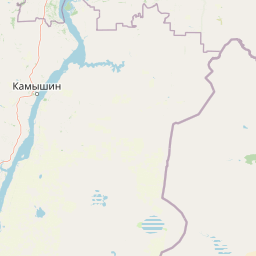
Use this park location map to pinpoint Dyakovsky Forest National Park in Russia, understand its exact geographic position, and read its mapped placement within the surrounding landscape more clearly.

Pigeon | © OpenStreetMap contributors

Location context for Dyakovsky Forest National Park

Saratov Oblast

Visualizing the woodland island habitats and sandy steppe terrain of southern Russia

Dyakovsky Forest National Park Photos and Landscape Scenery Exploration

Protected area photography reveals the striking mosaic of oak groves, birch clusters, and sandy river terraces defining Dyakovsky Forest National Park. Visual reference material illustrates how rare woodland habitats persist within an expansive dry steppe environment.

A wide view of a dry, grassy landscape with patches of birch trees and low sandy dunes under a clear blue sky.

Park atlas

Compare regional steppe reserves, river terraces, and adjacent woodland habitats.

Explore Other Parks Near Dyakovsky Forest National Park and Protected Landscapes

Browse protected areas near Dyakovsky Forest National Park to examine neighboring dry steppes and forest islands across the surrounding region. Extending the geographic comparison reveals how regional conservation landscapes connect across the Yeruslan River basin.
A horizontal watercolor painting showing a pale, soft-focus landscape with rolling green plains, a few small trees, and layered distant hills in shades of light purple and pink.
Nature reserveWest Kazakhstan Region
About 161 km away#1 closest

Southeast

Bokeyorda Nature Reserve: Mapping Protected Steppe Landscapes in West Kazakhstan

A regional stronghold for migratory saiga antelope populations

Bokeyorda Nature Reserve serves as a foundational protected area in the West Kazakhstan Region, established to preserve expansive dry steppe and semi-desert environments. The reserve provides essential habitat for migratory ungulates, forming a connected conservation corridor alongside the Ashchiozek Sanctuary that spans diverse lowland terrain and seasonal water features within the northwestern Kazakh plains.

Area
3,430.4 km²
Established
2022
IUCN
VI
Relief
Lowland
Watercolor illustration of green hills, a body of water, and pink and yellow vegetation
National parkSaratov Oblast
About 219 km away#2 closest

Northeast

Khvalynsky National Park: Protected Landscape and Regional Geography Atlas

Discover mapped park boundaries in Saratov Oblast

Khvalynsky National Park is a significant protected area designated as a national park within the Saratov Oblast. This entry provides detailed atlas-based insights into its geographic scope, protected landscape features, and its context within the wider regional geography of Southeastern European Russia. Explore the mapped terrain and understand how this park contributes to the conservation landscape of the Volga region.

Area
255 km²
Established
1994
IUCN
II
Visitors
35K annual
Wildlife reserveWest Kazakhstan Region
About 317 km away#3 closest

Southeast

Zhaltyrkol Sanctuary: A Wildlife Reserve in the West Kazakhstan Steppe Mosaic

Mapping wetland habitats along the Kushum and Ural River basins.

Zhaltyrkol Sanctuary encompasses a unique steppe-and-wetland mosaic, featuring shallow lakes such as Zhaltyrkol and Itbatyr. It provides a protected habitat for waterfowl and game species, maintaining essential breeding grounds within the flat, open terrain of the West Kazakhstan Region.

Area
190 km²
Established
1967
IUCN
IV
Relief
Lowland
Watercolor illustration of a river flowing through a valley with green hills and scattered trees in the background
National parkSamara Oblast
About 328 km away#4 closest

Northeast

Samarskaya Luka National Park: Mapped Geography and Protected Area Landscape Context

An atlas-focused overview of the Zhiguli Mountains and Volga River meander.

Samarskaya Luka National Park covers 134,000 hectares of diverse terrain in Samara Oblast. This overview examines the protected area's karst limestone uplands, dense forests, and river floodplains. Access map-integrated data on the Volga River bend and the unique geological formations defining this regional ecosystem.

Area
1,340 km²
Established
1984
IUCN
II
Relief
Mixed relief
A watercolor painting showing a panoramic landscape of green, rolling hills with light forest cover and a body of water in the middle ground.
National parkSamara Oblast
About 328 km away#5 closest

Northeast

Samarskaya Luka National Park: Geography, Karst Terrain, and Volga River Boundaries

Protected mountain, forest, and floodplain landscapes in Samara Oblast

Samarskaya Luka National Park anchors the Middle Volga Biosphere Reserve with its rugged limestone cliffs, extensive karst sinkholes, and rare steppe-forest habitats. The park represents a key geographic transition zone where high-elevation mountain terrain meets the expansive Volga floodplains and reservoirs, providing a vital study area for regional forest-steppe ecosystems.

Area
1,319 km²
Established
1984
IUCN
II
Relief
Mountain
Watercolor painting of a meadow with wildflowers and rolling hills under a soft sky
National parkRussia
About 381 km away#6 closest

North

Sengileevskie Mountains National Park: National Park Protected Area and Mapped Landscape Context

Explore protected boundaries and regional geography.

Uncover the geographic specifics of Sengileevskie Mountains National Park, a designated national park. This entry provides detailed insights into its protected area status, mapped landscape features, and regional context, serving as a foundational element for atlas-based exploration and understanding of Russia's conservation areas.

IUCN
II
A horizontal watercolor painting showing a stylized, layered landscape of rolling green hills, a calm river, and hints of forest, rendered in soft pastel tones against a white background.
Wildlife reserveWest Kazakhstan Region
About 414 km away#7 closest

East

Kirsanov Sanctuary: Protected Floodplain Landscapes and Ural River Geography

Wildlife reserve and riverine corridor in West Kazakhstan

Spanning 50 kilometers along the Ural River, Kirsanov Sanctuary preserves a rich mix of floodplain meadows, gallery forests, and oxbow lakes. Originally established for beaver conservation, this wildlife reserve now functions as a complex ecosystem refuge, representing a key protected landscape within the West Kazakhstan regional geography.

Area
610 km²
Established
1967
IUCN
IV
Relief
Lowland
National parkRussia
About 452 km away#8 closest

Northeast

Buzuluksky Bor National Park: Mapping an Isolated Forest in the Russian Steppe

Examining the unique geomorphology and forest-steppe ecological boundaries.

Buzuluksky Bor National Park serves as an extraordinary natural laboratory in Russia, defined by its 106,000 hectares of pine forest set against a backdrop of open grasslands. This protected area features deep sandy substrates of marine origin, undulating dune landscapes, and the deeply incised Borovka River valley, providing a vital study site for forest-steppe dynamics and long-term conservation research.

Area
1,060 km²
Established
2007
IUCN
II
Relief
Lowland

Common questions about visiting, size, designation, and location context for Dyakovsky Forest National Park

Dyakovsky Forest National Park FAQs for park facts, access, geography, and protected area context

Find quick answers about Dyakovsky Forest National Park, including protected-area facts, park geography, trail and visitor context, and how the park fits into its surrounding country and regional landscape.
MoriAtlas Explorer

Continue Your Protected Areas Search Across the Global Atlas

Deepen your exploration by continuing the structured search for national parks and protected areas worldwide. Utilize the comprehensive filtering capabilities to compare different conservation landscapes and refine your understanding of global park geography. Discover more about the distribution and characteristics of protected natural areas.

Global natural geography