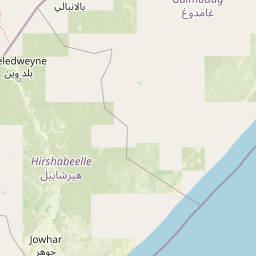
Why Hobyo National Park stands out
Hobyo National Park is most notable for protecting one of the Horn of Africa's most distinctive coastal dune ecosystems and the unique wildlife adapted to it. The park safeguards several endemic species found nowhere else on Earth, including the silver dik-dik and Somali golden mole among mammals, and Ash's lark and Obbia lark among birds. The ecoregion represents a critical refuge for specialized antelope species such as the dibatag, Soemmerring's gazelle, Salt's dik-dik, and Speke's gazelle. The contrast between the sweeping coastal dunes and the denser evergreen thickets near the shoreline creates a visually striking landscape atypical of typical desert environments.
Hobyo National Park history and protected-area timeline
The formal designation of Hobyo National Park reflects Somalia's commitment to conserving its unique coastal biodiversity despite significant national challenges. The Hobyo grasslands and shrublands ecoregion was recognized internationally through its classification as a vulnerable ecosystem, highlighting the urgency of establishing formal protection. The park's establishment represents an effort to secure protection for an area that had previously fallen outside any protected area network, addressing the conservation gap where zero percent of this ecoregion was previously protected. This designation provides institutional framework for managing one of Somalia's most distinctive natural landscapes.
Hobyo National Park landscape and geographic character
The physical landscape of Hobyo National Park is dominated by an impressive coastal dune system that defines the region's character. The dunes form a continuous belt along the Indian Ocean, extending roughly 800 kilometers along Somalia's low-lying coastal plain. These massive sand formations reach heights of up to 60 meters and are composed of distinctive white or orange sand that creates a striking visual contrast against the deep blue ocean. The dunes extend between 10 and 15 kilometers inland from the coastline, gradually transitioning to dry savanna and semi-desert scrublands. Among the dune formations, occasional limestone outcrops emerge, creating rocky outcliffs that interrupt the otherwise uniform sandy terrain. The coastal plain itself remains remarkably flat and low-lying, with the dunes being the primary topographic variation across the landscape.
Hobyo National Park ecosystems, habitats, and plant life
The ecological character of Hobyo National Park centers on specialized plant communities adapted to harsh coastal desert conditions. Dune grassland represents the most widespread plant community across the protected area, with specialized grasses and herbaceous plants anchoring the shifting sands. The dunes support succulent plants and cushion plants that store moisture during the brief wet season, alongside low shrubs that can survive the prolonged dry periods. Nearer to the coast, denser evergreen thickets develop where coastal breezes provide slightly elevated humidity while keeping vegetation low through constant wind exposure. Key shrub species include Aerva javanica and Indigofera sparteola. The limestone gorges scattered throughout the dunes provide crucial refugia with deeper soils and enhanced moisture retention, supporting a distinct bushland community including Buxus hildebrandtii and Dirachma somalensis.
Hobyo National Park wildlife and species highlights
The wildlife of Hobyo National Park includes several species found nowhere else on Earth, making the protected area globally significant for biodiversity conservation. Among mammals, the silver dik-dik and Somali golden mole represent true endemics restricted to this ecoregion. The park also supports populations of several antelope species with limited distributions in the Horn of Africa, including the dibatag, Soemmerring's gazelle, Salt's dik-dik, and Speke's gazelle. The bird fauna includes two endemic species: Ash's lark and Obbia lark, both confined to the Central Somali coast region. Among reptiles, Haackgreerius miopus and Latastia cherchii are endemic to these coastal dunes. The specialized mammal and bird communities reflect the unique evolutionary isolation of this coastal ecosystem.
Hobyo National Park conservation status and protection priorities
Hobyo National Park addresses a critical conservation need for one of Africa's most vulnerable coastal ecosystems. The Hobyo grasslands and shrublands ecoregion carries a vulnerable conservation status, reflecting the pressures from human activity and environmental change across its range. Significantly, prior to national park designation, zero percent of this ecoregion fell within any protected area network, leaving its unique biodiversity completely unprotected by formal conservation mechanisms. The park's establishment represents an attempt to correct this gap and provide institutional protection for an ecosystem that supports multiple endemic species. The ongoing challenge involves balancing conservation needs with the reality that most of the ecoregion remains sparsely populated with soils poorly suited to agriculture, creating both opportunities and constraints for effective management.
Top sights and standout views in Hobyo National Park
Hobyo National Park offers exceptional value as a conservation landscape protecting Horn of Africa endemic species. The coastal dune ecosystem represents one of East Africa's most significant sand dune systems, with dunes reaching 60 meters in height across an 800-kilometer coastal stretch. The park provides critical habitat for the silver dik-dik and Somali golden mole, two mammal species found nowhere else on the planet. Birdwatchers may encounter Ash's lark and Obbia lark, both endemic to this stretch of Somali coastline. The transition from coastal dunes through evergreen thickets to inland savanna creates remarkable habitat diversity within a relatively compact area.
Best time to visit Hobyo National Park
Visitors to Hobyo National Park should anticipate consistently hot and dry conditions year-round, with temperatures typically ranging between 21 and 33 degrees Celsius. The most favorable conditions occur during the cooler dry seasons, though the park experiences limited rainfall throughout the year with most precipitation falling between April and June. The landscape maintains its character regardless of season, though the brief rainy period may bring temporary greening of grasslands. Travelers should prepare for desert conditions and limited infrastructure typical of Somalia's coastal regions.