Why Ikh Bogd Uul National Park stands out
Ikh Bogd Uul is most prominently known for harboring the highest mountain in the Altai-Gobi range, creating a dramatic alpine environment within Mongolia's generally arid southwestern landscape. The park protects critical habitat for the near-threatened argali, one of the world's largest wild sheep species, as well as the elusive Pallas's cat, a small feline with a remarkably wide but scattered distribution across Central Asian steppe and montane zones. The combination of high-altitude alpine meadows, montane steppe, and the presence of rare species makes this park a significant conservation area within Mongolia's protected area network.
Ikh Bogd Uul National Park history and protected-area timeline
Ikh Bogd Uul National Park was formally established in 2008 as part of Mongolia's expanding protected areas network during a period of significant investment in nature conservation. The creation of the park responded to growing concerns about the conservation status of Mongolia's mountain ecosystems and the species that depend on them, particularly the argali populations that had experienced declining numbers across their range. The park came under the management authority of Mongolia's Ministry of Environment and Green Development, which administers the nation's system of protected areas. The designation reflected scientific assessments identifying the Altai-Gobi Mountains as an important biogeographic zone supporting species found nowhere else in Mongolia, with the high peaks representing critical habitat for species with limited distribution in the country.
Ikh Bogd Uul National Park landscape and geographic character
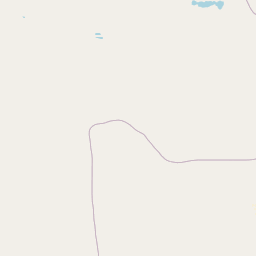
The landscape of Ikh Bogd Uul National Park is defined by the distinctive geology and topography of the Altai-Gobi Mountains, which extend southeastward from the greater Altai range into Mongolia as a chain of thin, elevated ridges. The Ikh Bogd ridge itself is capped by a remarkably flat plateau, atop which rises Tergun-Bogd, the highest point at 3,957 meters above sea level. This alpine terrain creates a stark visual contrast with the vast semi-arid deserts and steppes that extend to both the north and south of the mountain mass. The middle and upper elevations feature rocky outcrops, alpine meadows, and montane steppe vegetation, while the highest portions of the plateau are essentially devoid of vegetation, exposed to the harsh conditions of true alpine environments. The visual drama of the landscape is enhanced by the mountain's isolation, standing as a dramatic sentinel above the surrounding Gobi terrain.
Ikh Bogd Uul National Park ecosystems, habitats, and plant life
The ecological character of Ikh Bogd Uul National Park reflects its position at the intersection of multiple habitat types, creating a montane environment distinct from the surrounding arid lowlands. Middle and high elevations support a mosaic of alpine meadows and montane steppe, with vegetation adapted to the cold semi-arid climate and relatively thin soils of the mountain slopes. As of 2007, scientific surveys had documented approximately 500 species of vascular plants representing 218 genera and 51 families within the park boundaries. This botanical diversity supports the broader ecosystem function of the area, providing the foundation for the wildlife communities that inhabit the park. The transition from desert and steppe environments at lower elevations to true alpine conditions at higher elevations creates a vertically stratified habitat system that supports diverse species assemblages across relatively short geographic distances.
Ikh Bogd Uul National Park wildlife and species highlights
Ikh Bogd Uul National Park provides crucial habitat for several notable species, most prominently the argali, a large wild sheep species classified as near-threatened and representing one of the largest members of the genus Ovis. The park also supports populations of Pallas's cat, a small and secretive feline species that, despite its relatively wide distribution across Central Asia, remains elusive and poorly understood in many parts of its range. The area holds particular significance for birdlife, serving as an important site for Eurasian steppe bird species including the vulnerable white-throated bush chat, Henderson's ground jay, and the Altai snowcock. This avifaunal community reflects the park's position at the boundary between steppe and alpine environments, supporting species with different habitat requirements within the protected area.
Ikh Bogd Uul National Park conservation status and protection priorities
The establishment of Ikh Bogd Uul National Park reflects recognition of the area's conservation significance within Mongolia's protected areas framework. The park protects critical habitat for species of conservation concern, including the near-threatened argali and the specialized avifauna of the steppe and alpine zones. The protected area status helps buffer these species from pressures associated with pastoral activity and other land uses that affect much of the surrounding Gobi region. The park's inclusion in Mongolia's national park system under IUCN category II indicates management objectives focused on both ecosystem conservation and the maintenance of natural processes, while allowing for sustainable use where appropriate. The cold semi-arid climate and the complexity of habitats from desert to alpine create a conservation environment that requires ongoing attention to the ecological transitions that characterize this mountain system.
Ikh Bogd Uul National Park cultural meaning and human context
The name Ikh Bogd, translating as Great Saint, reflects the cultural significance of this mountain within the traditional landscape of the region. The Altai Mountains hold deep cultural meaning for Mongolian communities, and prominent peaks like Ikh Bogd have historically served as landmarks and spiritual sites within the broader cultural geography of the area. The park lies within the Bayankhongor aimag, a region historically associated with pastoralnomadic communities whose relationship with the mountain landscape spans generations. While the park itself is managed primarily for conservation purposes, this cultural context provides important background for understanding the landscape's significance beyond its ecological values.
Top sights and standout views in Ikh Bogd Uul National Park
The park's defining highlight remains the Ikh Bogd mountain itself, the highest peak in the Altai-Gobi range, offering a dramatic alpine landscape unlike any other in Mongolia's southwesternProtected Areas. The presence of argali and Pallas's cat provides exceptional wildlife viewing opportunities for patient observers, while the birdlife including Altai snowcock and Henderson's ground jay offers particular interest for ornithologists. The transition from semi-arid desert through montane steppe to alpine meadow creates remarkable ecological diversity within a relatively compact protected area, making the park an excellent destination for understanding Mongolia's montane ecosystems.
Best time to visit Ikh Bogd Uul National Park
The most favorable period for visiting Ikh Bogd Uul National Park typically spans the summer months from June through August, when temperatures are warmest and the high-altitude environments are most accessible. During this period, the alpine meadows are in flower and wildlife activity is at its peak, though visitors should be prepared for rapid weather changes characteristic of mountain environments. Spring and autumn offer different experiences, with spring bringing green-up across the lower elevations and autumn potentially offering clearer skies and fewer visitors. Winter visits are challenging due to harsh conditions at altitude, though the stark beauty of the snow-covered landscape may appeal to experienced winter travelers.