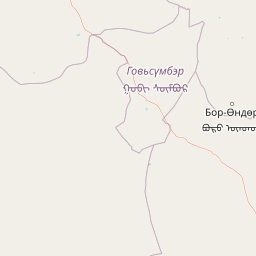
Why Ikh Nartiin Chuluu Nature Reserve stands out
Ikh Nartiin Chuluu is especially known as one of the principal refuges for the argali wild sheep in Mongolia, a species whose range has contracted sharply across Central Asia. The reserve's combination of rugged granite outcrops and surrounding steppe creates a mosaic of shelter and forage that supports not only argali but also Siberian ibex and goitered gazelles, giving it an unusually rich ungulate community for such an arid setting. Equally distinctive is the reserve's ornithological importance. Its designation as an Important Bird Area reflects the presence of Himalayan and cinereous vultures, eagles, buzzards, kites, sandgrouse, owls, wildfowl, and a wide array of passerines, making it a reference site for steppe and semi-desert bird conservation in the eastern Gobi region.
Ikh Nartiin Chuluu Nature Reserve history and protected-area timeline
Ikh Nartiin Chuluu Nature Reserve was formally established in 1996 as a protected area within Mongolia's national system of nature reserves. Its designation reflected growing recognition that the rocky outcrops of the eastern Gobi, combined with their surrounding steppe, represented one of the last secure strongholds for the argali wild sheep in the country, at a time when the species' range had already contracted sharply across much of Central Asia.
Since its establishment, the reserve has gained additional international recognition. BirdLife International has designated it an Important Bird Area, acknowledging both its raptor populations and the unusually rich birdlife supported by the mix of cliffs, valleys, and steppe. The area also bears a long human history: numerous abandoned mines dot the rocky terrain, hinting at earlier periods of mineral extraction, while the sheltered valleys continue to be used by herders seeking refuge for their livestock during harsh winters.
Ikh Nartiin Chuluu Nature Reserve landscape and geographic character
The landscape of Ikh Nartiin Chuluu is defined by its granite skeleton. Rocky outcrops rise out of the steppe in a series of rugged formations, creating clefts, ravines, sheltered hollows, and elevated vantage points across the reserve. Between these rocks, the Ikh Nart Valley holds small springs and natural ponds, and these wetter pockets support a thin but ecologically vital ribbon of willows and elms that contrasts sharply with the surrounding arid plains.
Beyond the rocky core, the reserve opens into expansive dry steppe and semi-desert grassland. The terrain here is largely flat to gently rolling, dominated by hardy bunch grasses, sagebrushes, and low shrubs. The contrast between the broken, vertical world of the granite outcrops and the horizontal sweep of the steppe gives the reserve much of its visual identity and plays a major role in supporting its wildlife, which can switch between rugged refuge and open grazing grounds as conditions change.
Ikh Nartiin Chuluu Nature Reserve ecosystems, habitats, and plant life
Ecologically, Ikh Nartiin Chuluu sits at the intersection of steppe, semi-desert, and rocky refuge habitat, a combination not commonly protected elsewhere in Mongolia. More than two hundred plant species have been documented across the reserve, spanning grasses, forbs, sagebrushes, and shrubs. Because precipitation is limited and variable, the composition of the vegetation shifts notably between wet and dry years, producing a dynamic ecological mosaic rather than a stable, uniform plant community.
Wet years favor sagebrush species, including fringed sagewort and other Artemisia taxa, alongside Allium species that briefly color the steppe. Dry years see the community reorganize around feather grasses (Stipa spp.), wheatgrasses, drought-tolerant shrubs like Caragana, and the resilient Gobi apricot. Shrubs and small trees, including willows and elms, survive only in the most sheltered rocky positions, where they create small but ecologically important microhabitats for insects, birds, and browsing mammals.
The reserve's reptile fauna reflects its arid setting, with three snake species including the Central Asian viper, and several lizard species such as the variegated toadhead agama and Mongolian racerunner. Together, the plants, reptiles, and small mammals of Ikh Nartiin Chuluu form a functioning arid-ecosystem community that depends heavily on the structural diversity provided by its rocky outcrops.
Ikh Nartiin Chuluu Nature Reserve wildlife and species highlights
Wildlife is the heart of Ikh Nartiin Chuluu's identity. The reserve is home to thirty-three recorded mammal species, including an unusually rich suite of ungulates: argali sheep, Siberian ibex, goitered gazelles, Mongolian gazelles, and Asiatic wild ass. Several of these species are threatened or endangered at the regional or global scale, making the reserve's populations a significant contribution to their long-term survival.
Carnivores patrol the same terrain. Grey wolves, Eurasian lynx, Pallas's cat, corsac fox, red fox, European badger, and marbled polecat all occur in the reserve, sustaining the predator-prey dynamics typical of intact steppe-ecosystems. Smaller mammals, including jerboas, gerbils, voles, hamsters, long-tailed ground squirrels, tolai hare, Mongolian pika, hedgehogs, and various bats, fill out the community, with additional records of species such as the long-tailed dwarf hamster adding to the picture over time.
Birds are equally significant. The reserve has been formally recognized as an Important Bird Area by BirdLife International, based on the presence of 125 bird species. These include large raptors such as the Himalayan vulture and cinereous vulture, along with eagles, buzzards, kites, hawks, owls, sandgrouse, wildfowl, and a wide variety of resident and migratory passerines that use the reserve across seasons.
Ikh Nartiin Chuluu Nature Reserve conservation status and protection priorities
Ikh Nartiin Chuluu plays an outsized role in the conservation of steppe and semi-desert biodiversity in eastern Mongolia. Its 1996 establishment as a protected area was driven primarily by the need to secure refuges for the argali wild sheep, whose populations have declined across much of their historical range. Today it remains one of the few areas in Mongolia where argali can be observed with relative reliability, alongside other vulnerable ungulates such as Siberian ibex and goitered gazelle.
The reserve's conservation value has been reinforced by BirdLife International's designation of Ikh Nartiin Chuluu as an Important Bird Area. This recognition highlights the reserve's importance for raptors, including the Himalayan vulture and cinereous vulture, both of which are species of conservation concern, and for the broader community of steppe, cliff-nesting, and migratory birds that depend on the rocky outcrops and valleys.
Equally important is the reserve's role as a refuge habitat. The granite outcrops and sheltered valleys provide escape terrain, shade, and rare water sources for wildlife, while also serving local herders as winter shelter for livestock, a long-standing dual use that underscores the importance of balancing pastoral livelihoods with ecological protection in the region.
Ikh Nartiin Chuluu Nature Reserve cultural meaning and human context
Although the reserve is best known for its ecological role, the landscape carries visible signs of long human presence. Numerous abandoned mines are scattered through the rocky outcrops, reflecting earlier eras of mineral prospecting in the eastern Gobi. These workings are integrated into the present-day terrain, providing both additional shelter for wildlife and silent reminders of the area's extractive history.
The valleys of the reserve continue to be used by local herders as shelter for livestock during the harsh Mongolian winter, illustrating the deep-rooted relationship between the people of Dornogovi and the rocky landscape of Ikh Nartiin Chuluu. This pastoral use coexists with the reserve's strictly protective status, shaping the practical realities of conservation management in the region.
Top sights and standout views in Ikh Nartiin Chuluu Nature Reserve
Ikh Nartiin Chuluu's strongest points of distinction are its role as a refuge for argali sheep, its mix of granite outcrops and steppe that supports ibex and multiple gazelle species, and its formal recognition as an Important Bird Area hosting Himalayan and cinereous vultures among more than 125 bird species.
Best time to visit Ikh Nartiin Chuluu Nature Reserve
The reserve's character shifts meaningfully with the seasons and with rainfall patterns. Late spring and early summer typically bring greener steppe conditions, active wildflowers and Allium blooms, and more visible wildlife activity, making this a particularly rewarding window for visitors interested in flora and general landscape photography. Summer can be hot and dry, while autumn often offers crisp air, golden steppe tones, and increased visibility of argali and other ungulates as they move across the terrain.
Winter transforms Ikh Nartiin Chuluu into a stark, deeply cold landscape where snow highlights the rocky outcrops and concentrates wildlife around sheltered valleys, springs, and areas used by herders for livestock. This season can offer dramatic scenery and unique photographic opportunities but requires serious preparation for the cold. Because the local climate is highly variable and the vegetation responds strongly to whether a year is wet or dry, conditions in any given season can differ noticeably from the typical pattern.