
Why Keenjhar Lake stands out
Keenjhar Lake is best known as a Ramsar-recognized freshwater wetland that hosts vast congregations of winter migratory birds in the Sindh region. The lake draws large flocks of flamingos, ducks, geese, cormorants, waders, herons, egrets, ibises, terns, coots, and gulls, functioning as both a wintering ground and a breeding area for several regionally important species. Equally famous is the shrine marking the grave of Noori Jam Tamachi, which gives the lake a strong cultural identity in Sindhi folklore and traditions.
Keenjhar Lake history and protected-area timeline
Keenjhar Lake in its present form is the result of historical hydrological engineering in the Sindh region. According to local tradition, the lake was formed when two earlier bodies of water, Sonehri and Keenjhar, were united through the construction of a bund along the eastern side. This transformation converted the area into the large freshwater lake that has since supported surrounding communities and ecosystems.
The modern significance of Keenjhar Lake was formally acknowledged in 1976, when it was designated as a Ramsar Wetland of International Importance under the official reference 'Kinjhar Lake.' Its inclusion on the Ramsar list marked international recognition of its value for migratory waterbirds and reinforced its role as a protected natural area. Over time, the lake also came to be designated as a wildlife sanctuary, embedding its conservation status within national environmental policy alongside its role in supplying drinking water to Thatta District and Karachi.
Keenjhar Lake landscape and geographic character
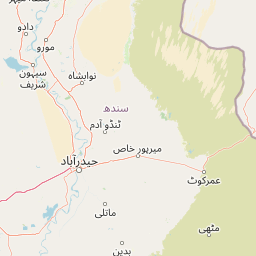
Keenjhar Lake occupies a broad expanse of lowland terrain in the Thatta District of Sindh, in the southern part of Pakistan. The lake stretches about 24 kilometers in length and reaches around 6 kilometers at its widest, creating a substantial open water surface surrounded by the flat alluvial landscape characteristic of lower Sindh. The waters are generally shallow, with average depths of roughly one meter and maximum depths approaching 7.9 meters.
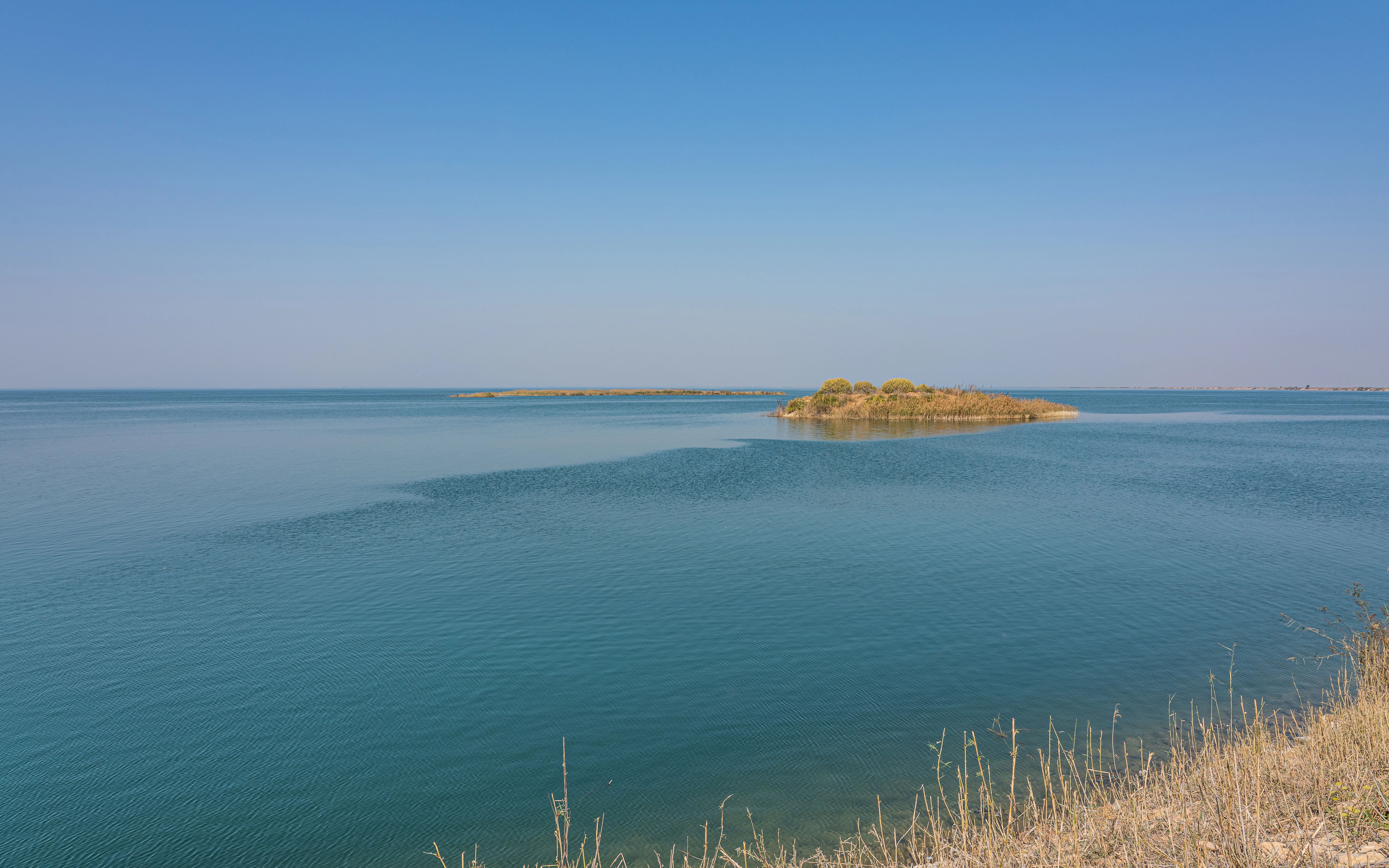
The visual character of the lake is defined by wide stretches of open water, reed-fringed margins, and the small islands within the basin, including the one associated with the shrine of Noori Jam Tamachi. The surrounding terrain is largely agrarian plains, with the lake functioning as a defining geographic feature in the landscape. Its surface elevation of about 15 meters above sea level and the bund on its eastern edge shape the hydrology and visual framing of the area, making the lake a prominent and tranquil feature within the otherwise flat Sindh countryside.
Keenjhar Lake ecosystems, habitats, and plant life
Keenjhar Lake is fundamentally shaped by its freshwater wetland character, hosting a mosaic of open water, fringing marshes, reedbeds, and small islands that together support a rich community of waterbirds and aquatic species. The wetland's combination of shallow waters and varied shoreline habitats creates conditions suitable for both feeding and breeding, allowing the lake to function as a year-round ecological zone rather than simply a seasonal stopover.
Beyond its open water, the fringing vegetation around Keenjhar Lake plays a significant ecological role, providing nesting cover, refuges from disturbance, and feeding grounds for fish, amphibians, and invertebrates that underpin the food web. The lake's ecological integrity is closely tied to the wider hydrological system of the Sindh region, which influences water levels, salinity, and habitat availability. This ecological setting is why Keenjhar has been recognized internationally as a wetland of outstanding value.
Keenjhar Lake wildlife and species highlights
The wildlife significance of Keenjhar Lake centers on its exceptional importance for waterbirds, particularly during winter when migratory species arrive from across Central Asia and beyond. Large numbers of ducks, geese, flamingos, cormorants, waders, herons, egrets, ibises, terns, coots, and gulls make seasonal use of the lake's open waters and fringing habitats. The diversity of feeding niches, from shallow margins to deeper central waters, supports this broad mix of species.
In addition to its role as a wintering ground, Keenjhar Lake also serves as a breeding area for several notable bird species. Black-crowned night herons, cotton pygmy geese, purple swamp hens, and pheasant-tailed jacanas have been recorded breeding around the lake, an indication that the wetland provides not only seasonal refuge but also the habitat conditions needed for reproduction. These qualities have been central to the lake's recognition under the Ramsar Convention.
Keenjhar Lake conservation status and protection priorities
Keenjhar Lake holds a prominent place in Pakistan's conservation framework due to its dual designation as a Ramsar Wetland of International Importance and a notified wildlife sanctuary. Listed as Ramsar site number 99 under the name Kinjhar Lake on 23 July 1976, the lake was one of the early South Asian wetlands to receive international recognition for its ecological value. This status connects the lake to a global network of wetlands committed to wise use and long-term protection.
Beyond the symbolic value of these designations, the conservation significance of Keenjhar Lake lies in the role it plays for migratory and resident waterbirds across the Central Asian Flyway. By offering wintering habitat and breeding grounds for a diverse set of species, the lake contributes to the long-term viability of waterbird populations whose ranges extend well beyond Pakistan's borders. Protecting the lake's water quality, shoreline habitats, and surrounding catchment is therefore a matter of regional and international ecological importance.
Keenjhar Lake cultural meaning and human context
Keenjhar Lake is deeply embedded in the cultural identity of Sindh, primarily through the celebrated folklore of Noori Jam Tamachi. Noori, a legendary fisherwoman, is remembered as a central figure in one of Sindh's most famous love stories, and her story is intimately linked to the lake itself. A shrine marking her grave stands on an island within the lake, transforming Keenjhar into a place of pilgrimage as well as natural beauty.
The lake is also woven into the everyday life of surrounding communities, supporting fishing and providing a setting for social and recreational gatherings. Visitors from Karachi, Hyderabad, and Thatta come to the lake for picnics, boating, and outings, embedding Keenjhar into the regional culture of leisure and weekend travel. Together, the spiritual associations of the Noori legend and the lake's role as a social gathering place make Keenjhar a strong cultural landmark in southern Sindh.
Top sights and standout views in Keenjhar Lake
Keenjhar Lake stands out for the combination of its Ramsar-recognized ecological importance, its recognized status as a wildlife sanctuary, and its iconic cultural landmark in the shrine of Noori Jam Tamachi. As a wintering ground for flocks of flamingos, ducks, geese, herons, and many other waterbirds, the lake offers one of the finest waterbird spectacles in Pakistan. Its breeding populations of species such as the black-crowned night heron and pheasant-tailed jacana add another layer of ecological value.
Beyond ecology, the lake serves as a vital source of drinking water for Thatta District and Karachi and remains a popular destination for day visitors and pilgrims. The presence of an island shrine at the heart of the lake gives Keenjhar a unique dual character as both a natural reserve and a living cultural site.
Best time to visit Keenjhar Lake
Keenjhar Lake is most rewarding to visit during the cooler months of the year, when the lake fills the role of a major winter refuge for migratory waterbirds. Large numbers of ducks, geese, flamingos, cormorants, waders, herons, and other species arrive from across Central Asia, turning the lake into a busy gathering of birdlife that is not seen in warmer seasons. Cooler temperatures also make the lake a more comfortable destination for travel from Karachi and other urban centers in Sindh.
During the warmer months, the lake retains its cultural appeal and is used by visitors for picnics, boating, and trips to the Noori shrine, though the birdlife is less concentrated and conditions can be hot and humid. As a freshwater lake with generally shallow waters, conditions around the margins and on the water can change with seasonal hydrology, which can influence how the lake's islands, reeds, and open water are accessed. Planning a visit around the cooler, bird-rich months typically offers the richest combination of scenery, wildlife, and activity.