Why Khyargas Lake National Park stands out
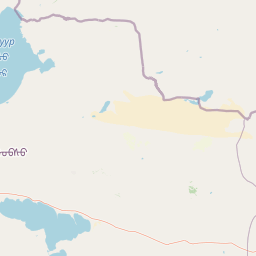
Khyargas Lake National Park is best known for protecting one of Mongolia's major salt lakes, Khyargas Nuur, set within an unbroken expanse of western Mongolian steppe. The park is recognized for the unusual pairing of a large saline endorheic lake with a smaller freshwater lake, Airag Nuur, right next to it. The saline character of the main lake, the arid continental climate, and the wide, open setting define much of the park's identity. It is also notable as part of the chain of large lakes that characterize the western Mongolian landscape, including nearby Uvs Nuur, giving the park its sense of remoteness and ecological contrast.
Khyargas Lake National Park history and protected-area timeline
Khyargas Lake National Park was officially established in 2000 as a protected area centered on the salt lake Khyargas Nuur. The park's creation reflected growing recognition in the late 20th and early 21st centuries of the ecological importance of Mongolia's lake systems, particularly the saline and freshwater basins in the remote west of the country.
The protected area was designed to include not only the saline Khyargas Lake itself but also the adjacent freshwater Airag Lake, recognizing the ecological relationship between the two basins through the inflow of the Zavkhan River. Since its establishment, the park has functioned as part of the wider network of protected landscapes in Uvs Province, including reserves around the much larger Uvs Lake further north.
Khyargas Lake National Park landscape and geographic character
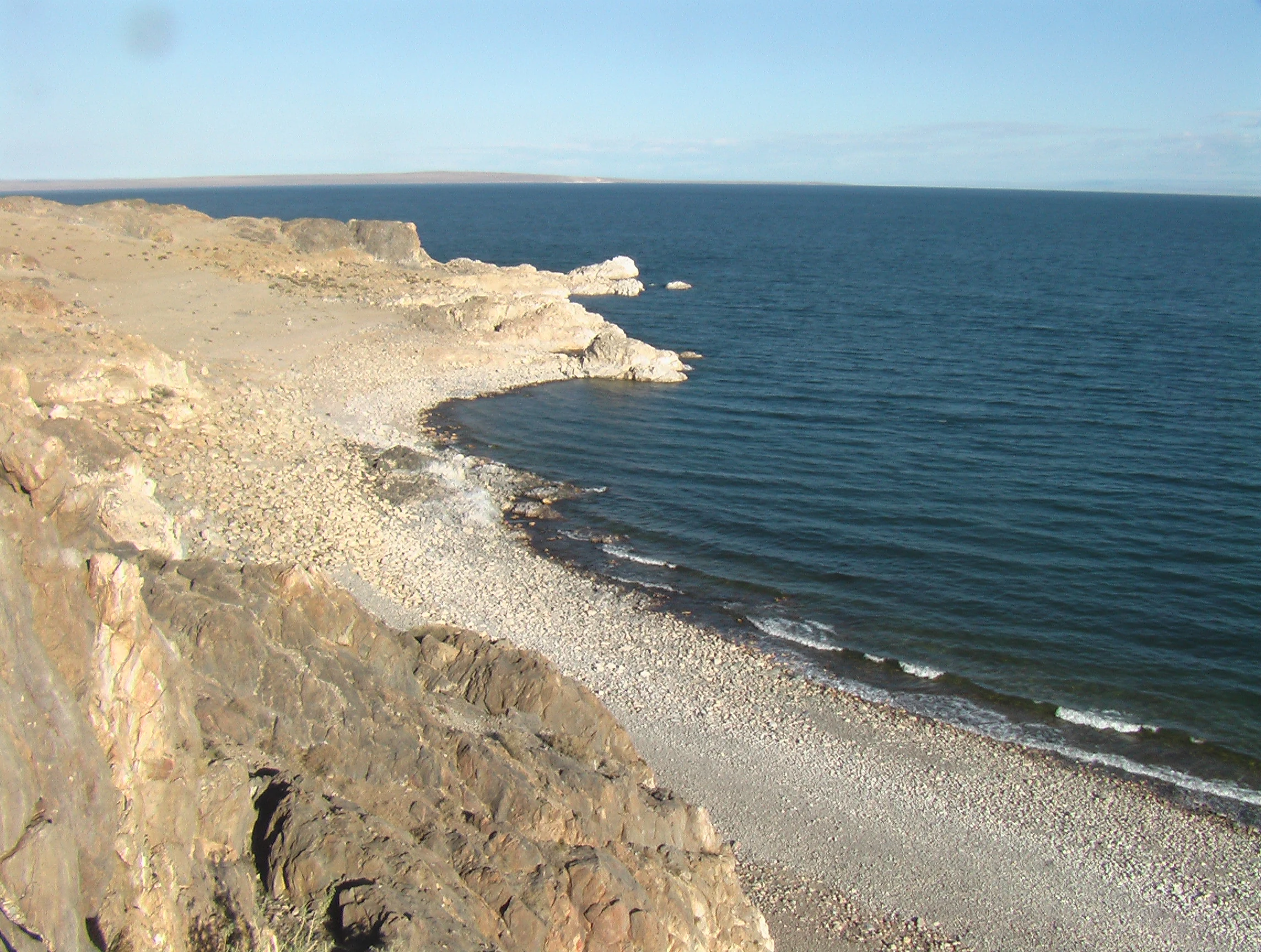
The landscape of Khyargas Lake National Park is defined by the broad, flat expanse of Khyargas Nuur itself, a wide salt lake lying in a shallow depression surrounded by open steppe. The lake's shoreline is gentle and largely featureless, reflecting the low relief of the surrounding region, with no significant mountain ranges rising directly from the lakeshore. The result is a sweeping, open visual character that emphasizes the size of both the lake and the surrounding grasslands.
Beyond the lake's edge, the park extends across semi-arid steppe and gently undulating terrain typical of the Great Lakes region of western Mongolia. The freshwater Airag Lake sits just to the south, adding a softer, freshwater counterpart to the saline main lake. Across the park, the terrain is shaped by the continental climate, with sparse vegetation cover and long sightlines across the basin.
Khyargas Lake National Park ecosystems, habitats, and plant life
Khyargas Lake National Park lies within the broader Great Lakes depression of Mongolia, where a chain of saline and freshwater basins interrupt an otherwise continuous stretch of steppe. The park's natural character is shaped by this fundamental contrast: the saline, endorheic main lake held in a basin without outflow, and a connected but ecologically distinct freshwater lake to the south. This combination gives the park an unusual ecological profile for Mongolia.
The surrounding terrestrial environment is dominated by steppe and semi-arid grassland adapted to the dry continental climate. Vegetation is sparse and adapted to high evaporation rates and limited precipitation, and the soil and water chemistry of the saline lake influences the biology of its immediate shoreline. The lake's water balance depends heavily on inflow from the Zavkhan River through Airag Lake, balanced against strong evaporation in summer months.
Together, the saline and freshwater lake environments, along with the surrounding dry steppe, make up the park's ecological system. This mosaic contrasts with the alpine and taiga ecosystems found in other parts of Mongolia, giving the park a distinctive position within the country's range of protected environments.
Khyargas Lake National Park wildlife and species highlights
Khyargas Lake National Park supports wildlife characteristic of the steppe and saline lake environments of western Mongolia. The lake attracts waterbirds adapted to saline and brackish conditions, while the surrounding grasslands provide habitat for steppe-dwelling species typical of this part of Central Asia. The combination of open steppe and open water creates a setting where wetland, lakeshore, and grassland fauna can occur in close proximity.
The saline character of Khyargas Nuur means that the lake's wildlife communities are different from those of fully freshwater lakes in the region, while the neighboring freshwater Airag Lake supports a different ecological community. The park's position within the broader Great Lakes region also connects it ecologically with surrounding protected areas and important bird habitats of the western Mongolian lowlands.
Khyargas Lake National Park conservation status and protection priorities
Khyargas Lake National Park protects a significant example of the saline lake and steppe landscapes that characterize western Mongolia. By including both saline Khyargas Nuur and freshwater Airag Nuur within its boundaries, the park helps preserve the contrasting ecological processes that occur where endorheic saline basins and freshwater basins sit side by side and exchange water.
The park's establishment in 2000 reflected an understanding that these lake systems, together with the surrounding steppe, form a single ecological unit rather than separate features. The protected area also contributes to the broader conservation network of the Great Lakes region, which supports migratory waterbirds and preserves some of the most intact steppe landscapes in Mongolia. Conservation value is further tied to the park's role in maintaining water balance and protecting representative habitat across a large area of a sparsely populated region.
Khyargas Lake National Park cultural meaning and human context
The region around Khyargas Lake National Park lies in the Khyargas district of Uvs Province, a part of western Mongolia historically associated with nomadic pastoralism. The lake and the surrounding steppe have long provided grazing resources for traditional Mongolian herding communities, and the wider Uvs Province region is home to distinct cultural traditions linked to the lake landscapes and steppe environment.
The name "Khyargas," applied both to the lake and the district, forms an integral part of local place identity in this part of Mongolia. While the park itself is primarily established for natural conservation, its landscape continues to reflect the long-standing relationship between nomadic land use and the natural systems of the western Mongolian lowlands.
Top sights and standout views in Khyargas Lake National Park
Khyargas Lake National Park's strongest point of distinction is its protection of a major endorheic salt lake combined with the adjacent freshwater Airag Lake, creating a paired saline-freshwater system within a single reserve. The park also showcases the sweeping, open character of the Mongolian Great Lakes region, where vast, unbroken steppe meets large lake basins.
Its relatively recent establishment in 2000 and its more than 3,000 square kilometer footprint underscore the scale at which Mongolia has begun to protect these lake-steppe landscapes. For visitors and researchers, the park represents a clear example of how a single protected area can capture both lake and steppe environments within one continuous setting.
Best time to visit Khyargas Lake National Park
Khyargas Lake National Park lies in a region with a strongly continental climate, where winter brings severe cold and heavy ice cover on the lake, and summer brings warmer temperatures and the highest rates of evaporation. Late spring through early autumn generally offers the most accessible conditions for visiting the lake and the surrounding steppe, when the landscape is free of snow and waterbird activity around the saline and freshwater shorelines tends to be most visible.
Summer is also the season when travel conditions across the surrounding steppe are typically easier, though visitors should expect dry conditions and significant temperature variation between day and night. Winter visits into the area are difficult because of extreme cold and limited infrastructure in this remote part of western Mongolia.