Why Kiauneliškis Nature Reserve stands out
Kiauneliškis Nature Reserve is best known for protecting a small but ecologically distinctive fragment of the Labanoro forest landscape, characterized by ancient Scots pines, moist sandy pine woodland on undulating glacial-relief terrain, and active capercaillie leks. The reserve hosts the Kiauneliškis twin-topped pine, widely recognized as the tallest pine in Lithuania and among the tallest individual trees of any species in the country. Together with the protected group of six Labanoro pines on the eastern edge of the reserve, these trees give Kiauneliškis a strong identity as a sanctuary for exceptionally old, monumental pine specimens.
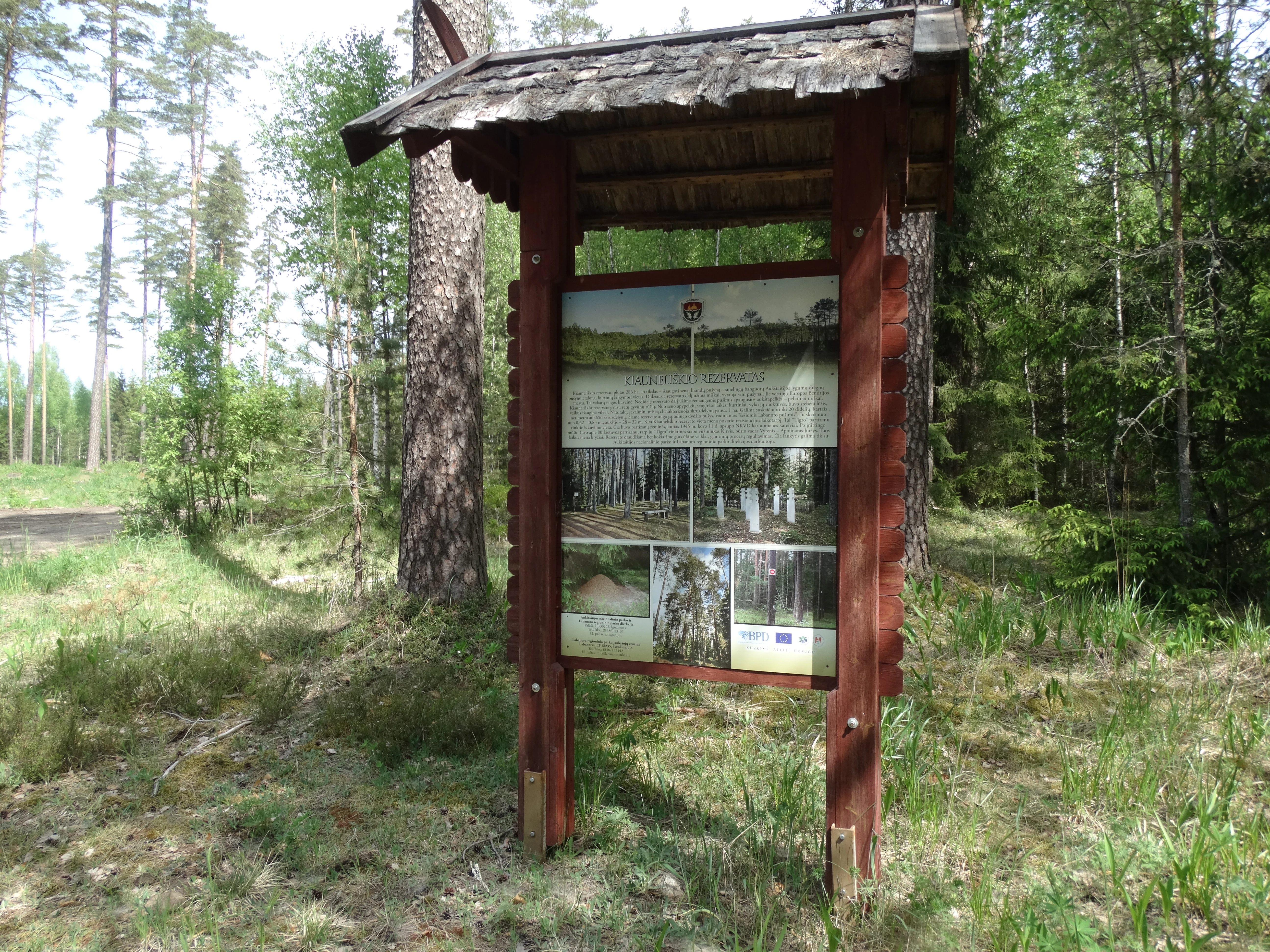
Kiauneliškis Nature Reserve history and protected-area timeline
Kiauneliškis Nature Reserve was established as a strictly protected natural area in order to preserve what remained of the northern-eastern part of the Labanoro-Pabradė forest system. Its creation reflected the recognition that even within a generally forested landscape, only small fragments retained their old-growth structure, and that these fragments needed to be shielded from active forestry.
The reserve was carved out of land managed by the Antaliedė forest district of the Švenčionėliai forestry enterprise. Its designation aimed to protect three interconnected values: a surviving stand of old-growth forest, the dry-moist sandy pine woodland characteristic of East Aukštaitija's undulating glacial lowlands, and the capercaillie leks that depend on quiet, mature forest interiors.
In addition to its natural significance, the reserve later acquired a memorial dimension. On September 7, 2003, a composition of typical memorial markers was unveiled in the reserve to honor Lithuanian partisans who died during the Battle of Kiauneliškis. The 2006 measurement of the Kiauneliškis twin-topped pine, when a forest genetic resources specialist climbed the tree to verify its dimensions, further cemented the reserve's identity as a home to some of Lithuania's most extraordinary individual trees.
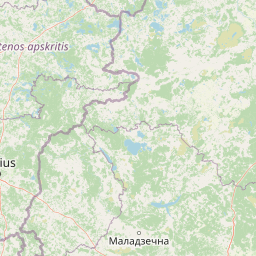
Kiauneliškis Nature Reserve landscape and geographic character
The landscape of Kiauneliškis Nature Reserve is shaped by the sandy, wave-like topography of the East Aukštaitija lowlands, where glacial sediments and ancient meltwater action have produced a gently undulating relief. Within the reserve, this terrain translates into a pattern of low sandy ridges separated by moister depressions, creating the structural variation that defines the forest types found here.
The reserve sits within a broader forested environment, contiguous with the Labanoro-Pabradė forest massif, but it preserves an unusually undisturbed interior. Scots pine dominates the canopy across most of the area, reflecting both the dry sandy soils and the long continuity of forest cover. The pines in the reserve are exceptionally old, with many individuals exceeding 170 years of age.
Three small lakes lie within the territory: the relatively better-known Šeškynėlis lake, measuring roughly 185 by 115 meters, and two unnamed lakes, the larger of which is about 60 by 50 meters, and a small isolated pond only about 20 meters across. These modest water features break the otherwise continuous pine forest canopy and contribute small but ecologically valuable open-water and shoreline habitats.
Kiauneliškis Nature Reserve ecosystems, habitats, and plant life
Kiauneliškis Nature Reserve protects one of the clearest extant examples of moist sandy pine woodland on the East Aukštaitija glacial lowlands. The forest type developed here represents a classic combination of dry sandy ridges and damper hollows, supporting a pine-dominated canopy with structural diversity that has accumulated over many generations.
Scots pine is the keystone species, with trees exceeding 170 years of age forming much of the canopy. The presence of such old pines indicates not only ecological continuity but also the absence of recent large-scale disturbance or harvesting intervention, an outcome explicitly intended through the reserve's protected status.
The mix of dry ridges, moist depressions, and small lakes forms a micro-habitat mosaic typical of mature boreal forest in this part of Lithuania. By preserving these structural elements in combination, the reserve functions as a reference site for the natural character of East Aukštaitija's sandy pine forests, which elsewhere have been heavily affected by forestry and land conversion.
Kiauneliškis Nature Reserve wildlife and species highlights
The principal wildlife value of Kiauneliškis Nature Reserve lies in its undisturbed, old-growth pine forest interior, which provides habitat for grouse species most notably the capercaillie, whose leks are one of the key reasons for the reserve's establishment. Capercaillie require quiet, mature coniferous forest with sufficient cover, which the reserve's combination of old pines, varied micro-topography, and absence of active disturbance provides.
The mosaic of dry sandy ridges, moist depressions, and small lakes also supports characteristic boreal forest fauna associated with mature pine stands and wetland edges. The reserve's location within the larger Labanoro-Pabradė forest landscape means that wildlife movements can extend beyond the reserve boundaries into the surrounding managed forest matrix, with Kiauneliškis acting as a high-quality core area within that broader ecological network.
Kiauneliškis Nature Reserve conservation status and protection priorities
Kiauneliškis Nature Reserve carries an IUCN Category Ia designation, the strictest level, recognizing its role as a fully protected nature reserve rather than a multiple-use protected landscape. The reserve's conservation purpose focuses on preserving an intact, small-scale reference of moist sandy pine woodland typical of the East Aukštaitija lowlands, including canopy continuity spanning more than 170 years.
The reserve safeguards capercaillie lek sites, protecting one of the species' most sensitive habitat requirements from logging and disturbance. It also preserves old individual trees of high genetic and natural-heritage value, including the tallest known pine in Lithuania and a protected group of six Labanoro pines, reinforcing the reserve's significance as a repository of genetic resources and ecological reference points within Lithuania's national protected-area system.
Kiauneliškis Nature Reserve cultural meaning and human context
Beyond its natural features, Kiauneliškis Nature Reserve carries significant cultural and memorial meaning. The area lies near the historic village of Kiauneliškis, and the surrounding forest landscape of East Aukštaitija has long been intertwined with rural Lithuanian life, including forestry traditions and small-scale local settlement.
The reserve itself hosts a memorial site dedicated to the Lithuanian partisans who fell in the Battle of Kiauneliškis. A composition of typical memorial markers was unveiled within the reserve on September 7, 2003, transforming part of this protected natural area into a place of national remembrance as well as ecological conservation.
Top sights and standout views in Kiauneliškis Nature Reserve
Within its compact 283-hectare footprint, Kiauneliškis Nature Reserve concentrates several of eastern Lithuania's most distinctive natural-heritage features. It protects ancient Scots pines more than 170 years old, including the tallest pine known in Lithuania and a protected cluster of Labanoro pines, making it a major anchor for monumental tree conservation in the country.
Its three small lakes, particularly the more prominent Šeškynėlis, diversify the otherwise pine-dominated landscape and add quiet shoreline habitat. Combined with its capercaillie leks, its strict IUCN Category Ia status, and its integration into Labanoro Regional Park, the reserve offers an unusually dense concentration of ecological, landscape, and cultural value in a very small territory.
Best time to visit Kiauneliškis Nature Reserve
Kiauneliškis Nature Reserve is best experienced during late spring and summer, when the surrounding sandy forest paths are most accessible and the pine canopy is in full foliage. In these months the forest interior warms, the small lakes are most visible, and the broader East Aukštaitija lowlands show their characteristic wave-like forested relief. Dawn visits during the capercaillie season can be of particular interest to bird-focused visitors, though observation remains subject to the reserve's strict protection rules.