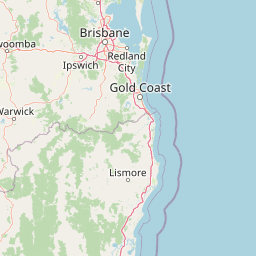
Why Limpinwood Nature Reserve stands out
Limpinwood Nature Reserve is best known for its large extent of old-growth subtropical rainforest, much of it untouched by logging, which gives it a strong wilderness character unusual for such a comparatively small reserve. It is also notable for its place within the Gondwana Rainforests of Australia World Heritage Area, linking it to one of the world's most significant surviving refuges of ancient rainforest vegetation. The reserve is recognised for its birdlife, forming part of the Scenic Rim Important Bird Area, an area identified for its role in conserving threatened bird species. Combined with its lack of formed walking tracks and its reliance on Lamington National Park in Queensland for access, Limpinwood is best understood as a quiet, low-intervention rainforest sanctuary rather than a visitor-oriented park.
Limpinwood Nature Reserve history and protected-area timeline
Limpinwood Nature Reserve was gazetted in April 1963 over former fauna and crown reserves in the Northern Rivers region of New South Wales. It was dedicated as a Flora Reserve at the time of gazettal, giving it the highest level of forest protection available in the New South Wales national parks system. Before 1963 the area had been classified as a Forest Reserve.
Additional land was added to the reserve in 1967, and further additions in 1988 brought it to its current extent of around 2,646 hectares. The earlier history of the surrounding forests included selective logging along the fringes for highly valued timber species such as red cedar, hoop pine and white beech, with bullock teams historically used to drag out logs. The interior of what became the reserve, however, retained its old-growth character.
Beyond its local protection history, Limpinwood gained broader international recognition through its inclusion in the UNESCO World Heritage-listed Gondwana Rainforests of Australia, inscribed in 1986. The reserve was later recognised as part of the Australian National Heritage List in 2007, and its birdlife contributed to the identification of the Scenic Rim as an Important Bird Area by BirdLife International.
Limpinwood Nature Reserve landscape and geographic character
The landscape of Limpinwood Nature Reserve is shaped by the foothills and escarpment country of the McPherson Range in far north-eastern New South Wales. The reserve's terrain rises above 1,000 metres along the state border escarpment, creating steep, dissected terrain that drains eastward. The result is a deeply forested, rugged landscape dominated by continuous rainforest cover rather than open or agricultural land.
Water flows from the reserve through two named watercourses, Hidden Creek and Finches Creek, which move east out of the protected area. The escarpment that marks part of the New South Wales and Queensland boundary gives Limpinwood an exceptionally well-defined natural edge, reinforcing the sense of a self-contained forested block between the two states. Much of the visible landscape is essentially continuous canopy of old-growth subtropical rainforest, with no major clearings, roads, or built features interrupting the terrain.
Limpinwood Nature Reserve ecosystems, habitats, and plant life
The vegetation of Limpinwood Nature Reserve is overwhelmingly subtropical rainforest, with smaller areas of wet sclerophyll forest occupying transitional zones on the edges of the rainforest proper. The reserve retains extensive stands of virgin, old-growth rainforest that have escaped the logging that affected surrounding forested areas in earlier decades.
The rainforest includes a mix of characteristic subtropical rainforest species along with hardwood emergents such as flooded gum, tallowwood, ironbark and white mahogany, which rise above the general canopy. Because the reserve sits within the Gondwana Rainforests of Australia, its vegetation is linked ecologically to one of the most significant surviving networks of ancient rainforest in the world, with strong representation of relict plant lineages from the Gondwanan era.
The combination of wet climate, steep terrain, long protection from major disturbance, and connection to the broader Gondwana rainforest system gives Limpinwood a particularly high-quality ecological character for a reserve of its size. The presence of intact old-growth rainforest, combined with the escarpment topography and associated moisture patterns, supports a layered habitat structure that is typical of high-quality subtropical rainforest.
Limpinwood Nature Reserve wildlife and species highlights
Because the reserve sits within the Scenic Rim Important Bird Area, Limpinwood's most highlighted wildlife value is its birdlife. The Important Bird Area designation reflects the reserve's contribution to the conservation of several threatened bird species that depend on subtropical rainforest and associated escarpment habitat in the region.
The general character of the wildlife in the reserve reflects typical Northern Rivers subtropical rainforest fauna, including species associated with rainforest canopy, understorey and waterways such as Hidden Creek and Finches Creek. The reserve's old-growth character, with mature canopy trees, persistent leaf litter, fallen logs, and connected forest habitat, supports the kind of ecological conditions these species require.
The reserve is managed as a low-intervention area designed to reduce disturbance from humans, domestic animals, and feral pests, which in itself is intended to support wildlife persistence. While specific species inventories are limited in publicly available material, the reserve's importance for bird conservation within the Scenic Rim is its most clearly documented wildlife value.
Limpinwood Nature Reserve conservation status and protection priorities
Limpinwood Nature Reserve carries a particularly high conservation profile for a reserve of its size. It is a Flora Reserve under the New South Wales national parks framework, the highest protection status available for forest areas in the state, and it remains largely undisturbed as old-growth rainforest.
Its inclusion in the UNESCO World Heritage-listed Gondwana Rainforests of Australia places it within one of the global benchmarks for subtropical rainforest conservation, protecting rainforest that harbours ancestral plant lineages of Gondwanan origin. Additions to the Australian National Heritage List in 2007 strengthened this national-level recognition of the reserve's heritage values.
The reserve's contribution to the Scenic Rim Important Bird Area further extends its conservation significance into bird conservation. The management intent is to maintain the area as a place where flora and fauna are largely free from human, domestic, and feral pest interference, an approach that suits a reserve with no formed walking tracks or public access routes on the New South Wales side.
Limpinwood Nature Reserve cultural meaning and human context
The traditional owners of the Limpinwood Nature Reserve area are the Ngandowal and Minyungbal speaking people of the Bundjalung Nation. This places the reserve within the broader cultural landscape of the Bundjalung peoples of north-eastern New South Wales, whose language and custodial connections extend across the Northern Rivers region.
While publicly available source material on the reserve itself does not detail specific cultural sites or practices within the reserve boundary, the recognition of traditional ownership reflects the broader regional context in which Aboriginal custodianship of Country is acknowledged across New South Wales protected areas. The reserve's forested highlands and escarpment country formed part of the Country of these traditional owners prior to the gazettal of the reserve in 1963.
Top sights and standout views in Limpinwood Nature Reserve
Limpinwood Nature Reserve stands out for the combination of UNESCO Gondwana rainforest protection, Flora Reserve status, Important Bird Area recognition, and a strictly low-intervention management approach. Its old-growth subtropical rainforest, including rare hardwood emergents such as flooded gum, tallowwood, ironbark and white mahogany, gives it a particularly distinctive rainforest character.
Equally noteworthy is its inaccessibility: the reserve has no formed walking tracks and no public access from New South Wales, with entry only possible through Lamington National Park in Queensland. This reinforces its identity as a quiet, research- and conservation-oriented rainforest reserve rather than a visitor-developed park.
Best time to visit Limpinwood Nature Reserve
Because Limpinwood Nature Reserve is not designed for routine public visitation and has no formed walking tracks or visitor facilities on the New South Wales side, seasonal visit planning as such is not the central consideration. The reserve's character is dominated by its subtropical rainforest climate, which generally delivers warm, humid conditions year round with higher rainfall in the warmer months.
For anyone approaching the area through Larapinta / Limpinwood locality or via the adjoining Lamington National Park in Queensland, the cooler and drier months tend to offer more comfortable walking conditions in the surrounding forested landscape, while the warmer, wetter months emphasise the rainforest's lush, misty character. The reserve itself, however, is best appreciated primarily as an intact ecological landscape seen in the context of the broader Scenic Rim rather than as a destination with defined seasonal peaks.