
Why Médanos de Samalayuca stands out
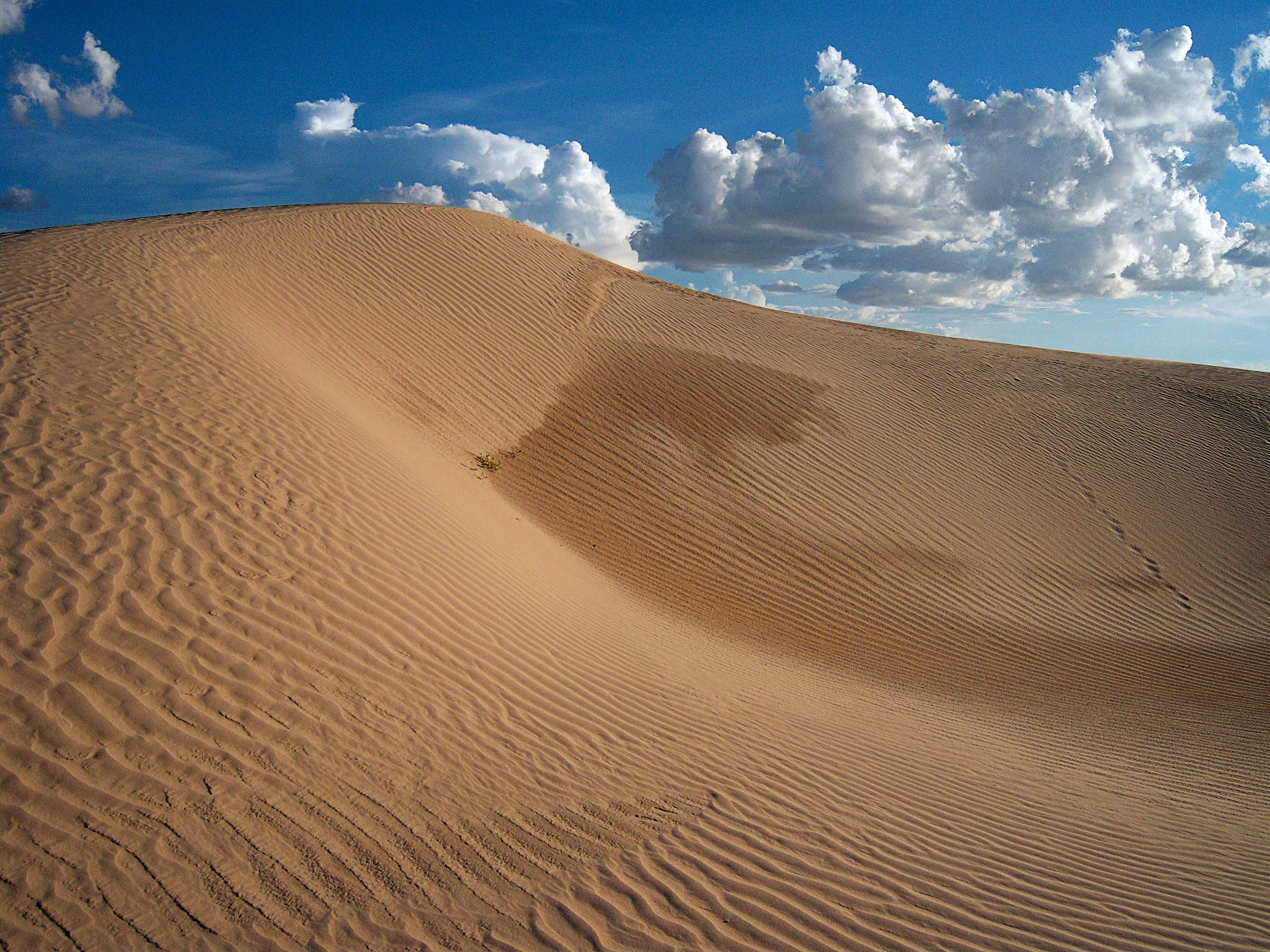
The park is best known for its expansive field of fine, white silica sand dunes, which are unusual within the Chihuahuan Desert for their lack of stabilizing vegetation and their constant movement under the wind. These shifting dunes create a striking, almost lunar landscape that contrasts sharply with the thorn-scrub desert that surrounds them. The combination of raw desert scenery, strong winds, sweeping horizons, and an unusually pale sand palette gives the area a distinctive visual identity that has also made it a recognizable filming location.
Médanos de Samalayuca history and protected-area timeline
The dune landscape of Samalayuca has long been a defining geographical feature of northern Chihuahua, taking its name from the nearby settlement that has, for generations, served as a waypoint and reference point in this arid stretch of the country. For much of its history, the area was known primarily to local inhabitants, travelers crossing the desert, and the railway and highway corridors that connect central Mexico with Ciudad Juárez.
A turning point came on 5 June 2009, when a presidential decree signed by President Felipe Calderón Hinojosa formally established the Área de Protección de Flora y Fauna Médanos de Samalayuca. The designation acknowledged both the ecological value of the dune system and the pressures it faced from sand extraction, unregulated tourism, and surrounding land use, placing the landscape under a national conservation framework.
In the years since, the area has increasingly been recognized as a destination for adventure tourism, drawing visitors interested in dune driving, sandboarding, hiking, and the experience of one of Mexico's most unusual desert environments. The dunes have also become a fixture in Mexican and international cinema, appearing as a backdrop in films as varied as Luis Buñuel's Simón del Desierto and the 1984 productions Conan el Destructor and Dune.
Médanos de Samalayuca landscape and geographic character
The defining feature of Médanos de Samalayuca is an exceptionally open dune field composed of fine, light-toned silica sand. Unlike the surrounding territories of the Chihuahuan Desert, where thorny scrubland helps bind the soil, this dune zone is largely bare, allowing the wind to shape ridges, hollows, and mobile sand corridors almost continuously.
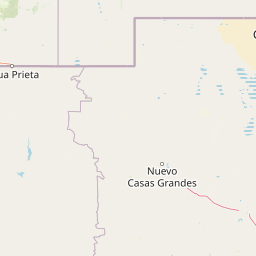
The terrain extends across northern Chihuahua primarily in the municipalities of Juárez, Ascensión, and Guadalupe, and is crossed by two major linear features: Federal Highway 45 and the railway linking Mexico City with Ciudad Juárez. These transport corridors give the landscape a frame of human infrastructure cutting through otherwise remote desert scenery.
Extreme climatic contrasts are a defining part of the experience of the landscape. Temperatures can climb to around 45 °C in high summer and plunge to roughly -16 °C during cold winter nights. Add to this the strong winds that drive the sands, and the result is an exceptionally dynamic desert environment, capable of shifting visibly over short periods and occasionally producing sandstorms that dramatically reduce visibility across wide stretches of the region.
Médanos de Samalayuca ecosystems, habitats, and plant life
Ecologically, Médanos de Samalayuca sits at the heart of the Chihuahuan Desert, one of North America's major desert regions and an area known for its hardy scrub vegetation, resilient wildlife, and wide temperature swings. The protected area's biodiversity reflects this desert context, hosting more than 580 species of plants and animals according to data compiled by Mexico's national biodiversity information system, CONABIO.
Among these species, 24 are listed under some risk category in the Mexican Official Standard NOM-059, highlighting the conservation significance of even seemingly sparse desert environments. A further 18 species are considered exotic, illustrating the ongoing influence of non-native elements on the local ecology.
The dune zone itself stands apart within the broader desert landscape. Where surrounding areas are dominated by thorny scrub that stabilizes soils and shapes habitat structure, the dune zone is unusually open, with shifting sand dominating the surface. This contrast between vegetated desert margins and bare, mobile sand in the core creates a distinctive ecological gradient, where different species and ecological communities find niches along the transition between stable and shifting ground.
Médanos de Samalayuca wildlife and species highlights
Although the shifting silica dunes at the core of the protected area appear barren, the broader Médanos de Samalayuca protected landscape supports a diverse desert fauna alongside its plant life. Across the area as a whole, more than 580 species of plants and animals have been documented, illustrating that the Chihuahuan Desert environment, despite its harsh appearance, sustains a wide range of life adapted to aridity, temperature extremes, and wind-driven sand movement.
Among documented fauna, 24 species fall under some category of risk in Mexico's official ecological protection standard, NOM-059, underlining the conservation value of species living in this desert and dune habitat. The presence of these at-risk species contributes to the rationale for the area's protected designation.
Médanos de Samalayuca conservation status and protection priorities
The principal conservation value of Médanos de Samalayuca lies in its protection of one of the most unusual landscapes within the Chihuahuan Desert: a large, mobile dune system composed of fine silica sand. Because dune fields like this are vulnerable to sand extraction, off-road vehicle impacts, and uncontrolled tourism, formal protection has been an important step in preserving the area's geomorphological and ecological integrity.
The 2009 designation as a Flora and Fauna Protection Area was a significant milestone in this regard. By placing the landscape under national protection, the decree created a framework to manage human pressures and safeguard a regionally distinctive ecosystem. Within the protected area, the contrast between vegetated desert margins and the bare, mobile dunes represents a conservation priority in itself, since such dune systems are relatively uncommon, slow to recover from disturbance, and home to specialized desert species.
The presence of more than two dozen species listed under Mexico's NOM-059 risk categories underscores the area's broader ecological importance beyond its iconic dunes. Conservation management of the area thus serves not only to preserve a striking landscape, but also to protect desert biodiversity in a region where arid ecosystems face increasing pressure.
Médanos de Samalayuca cultural meaning and human context
The Médanos de Samalayuca region has a strong sense of place rooted in the settlement of Samalayuca itself, the small community that gives the dunes their name and serves as a longstanding reference point for travelers and residents of northern Chihuahua. The dunes are part of how local identity in this part of the Chihuahuan Desert is understood and described.
The area's stark, minimalist scenery has also given it an enduring cultural presence beyond regional tourism. Its dramatic horizons and pale sands have served as a visual stand-in for deserts and otherworldly landscapes in film, appearing in Mexican productions such as Luis Buñuel's 1965 classic Simón del Desierto and Alejandro Jodorowsky's El Topo, as well as in international productions including Conan el Destructor (1984) and David Lynch's Dune (1984). This cinematic legacy has helped shape the area's wider image as one of Mexico's most visually iconic natural settings.
Top sights and standout views in Médanos de Samalayuca
Among the strongest points of distinction of Médanos de Samalayuca are its sweeping dunes of fine white silica sand, an unusually bare expanse within a desert otherwise dominated by stabilizing vegetation. The area combines dramatic desert scenery, strong winds, and extreme temperature ranges that together create an environment defined by movement, contrast, and exposure. Its formal protection since 2009, combined with its long-standing presence in film and growing role in adventure tourism, makes it both a working protected landscape and a culturally recognizable symbol of the Chihuahuan Desert.
Best time to visit Médanos de Samalayuca
Médanos de Samalayuca experiences a wide range of conditions across the year, and the character of a visit will shift with the seasons. Summers bring intense heat and very high daytime temperatures, with sunlight turning the pale silica dunes bright and stark. Winters can be surprisingly cold, with freezing overnight temperatures that require warm clothing despite the area's desert location. Spring and autumn often offer the most balanced conditions for outdoor exploration, with milder temperatures, softer light across the dunes, and generally more comfortable conditions for hiking, sandboarding, or guided desert excursions. Visitors should also be prepared for strong winds at any time of year, as these are a defining feature of the landscape and can occasionally produce sandstorms.