Mori Atlas logo
Nature reserveRezerwat przyrody Miłachowo

Analyzing the ecological significance of relict steppe vegetation within the Krajeńskie Lakeland

Rezerwat przyrody Miłachowo: Xerothermic Steppe Landscapes and Protected Nature Reserve Geography

Rezerwat przyrody Miłachowo represents a critical protected area in northern Poland, safeguarding xerothermic swards and shrub communities on a sun-exposed slope within the Debrzynka River valley. This nature reserve serves as a significant northern outpost for thermophilic flora, maintaining dry-grassland habitats that contrast sharply with the surrounding post-glacial lakeland terrain of the Pomeranian Voivodeship.

steppe reservexerothermic grasslandsthermophilic floradry grasslandslope habitatPomeranian Voivodeship

Rezerwat przyrody Miłachowo

Nature reserve

Park overview

Structured park overview, official facts, and landscape profile for Miłachowo Nature Reserve

Miłachowo Nature Reserve park facts, protected area profile, and essential visitor context

Review the core facts for Miłachowo Nature Reserve, including designation, size, terrain, visitor scale, habitats, and operating context in one park-focused overview.

About Miłachowo Nature Reserve

Miłachowo Nature Reserve is a compact protected area in north-central Poland, classified as a phytocenotic reserve of non-forest communities. Its full focus is on vegetation, with the formal subtype describing it as a reserve of steppe communities. The reserve lies in the Pomeranian Voivodeship, in Człuchów County, within the administrative area of the gmina of Debrzno, and is part of the Krajeńskie Lakeland mesoregion, a landscape otherwise defined by post-glacial lakes, rolling moraines, and mixed forests.

The geographic situation of Miłachowo is what makes the site unusual. Although the broader landscape of the Krajeńskie Lakeland is shaped by cooler, more humid conditions, the reserve occupies a sunny slope above the Debrzynka River valley, where local microclimate and substrate support vegetation communities more typical of warmer regions. The reserve was created specifically to preserve the xerothermic grasslands and xerothermic shrub thickets growing there, together with the thermophilic plants that accompany them. These communities are recognized as important because they occur at the northern edge of the species ranges involved, effectively functioning as ecological outposts on the margin of the species' distribution.

The current conservation objective of Miłachowo is stated as the restoration and preservation of the xerothermic grassland ecosystem together with populations of valuable plant and animal species. Active protection methods are applied to the site, meaning that conservation is not purely passive but involves deliberate management to maintain the open, dry character of the habitat and prevent succession toward woodland. Supervision of the reserve rests with the Regional Director for Environmental Protection in Gdańsk, reflecting the regional administrative structure for nature protection in northern Poland.

Quick facts and research context for Miłachowo Nature Reserve

Miłachowo Nature Reserve is a phytocenotic reserve of non-forest communities, specifically a steppe reserve, located in northern Poland. It was created in 1976 by order of the Minister of Forestry and the Wood Industry, originally covering 2.50 hectares, and was later enlarged to its present area of 3.84 hectares. The reserve sits in the Krajeńskie Lakeland on a slope above the Debrzynka River valley near Debrzno in the Pomeranian Voivodeship. Its primary role is to protect xerothermic grasslands and shrub thickets with thermophilic plants at the northern limit of their range, and active conservation measures are applied here under the supervision of the Regional Director for Environmental Protection in Gdańsk.

Protection and recognition

Documented terrestrial protection scope and international recognition records

Rezerwat przyrody Miłachowo Protection Status and Designation History

Rezerwat przyrody Miłachowo maintains a documented terrestrial protection status established in the year 2018. Official designation history records provide verified administrative context for conservation tracking and management scope analysis.

Protection details

Protection scope
Terrestrial
Designated year
2018
Transboundary protection
No
Buffer area
0.35 km²
Park context

Deeper park guide and search-rich context for Miłachowo Nature Reserve

Miłachowo Nature Reserve history, landscape, wildlife, and travel context

Explore Miłachowo Nature Reserve through its history, landscape character, ecosystems, wildlife, conservation priorities, cultural context, and seasonal travel timing in a structured park guide built for atlas discovery and search intent.

Why Miłachowo Nature Reserve stands out

Miłachowo is known primarily for protecting relict xerothermic grassland and shrub communities, sometimes informally called steppe vegetation, in a region of Poland where such dry, warmth-loving plant assemblages would not normally be expected. The reserve marks a notable northern outpost for thermophilic flora, with species adapted to dry, sun-exposed slopes surviving here far from their central European strongholds. This combination of steppe-like vegetation on a glacial lakeland slope is what gives the small site its distinctive identity.

Miłachowo Nature Reserve history and protected-area timeline

Miłachowo Nature Reserve was established on 10 November 1976 by order of the Polish Minister of Forestry and the Wood Industry, at which point its initial area was 2.50 hectares. The founding purpose was to preserve xerothermic swards and xerothermic shrub communities that supported a notable set of thermophilic plant species at the northern limit of their range. In 1982, a further order of the same ministry expanded the reserve to 3.70 hectares, and subseqent administrative steps brought its area to the current 3.84 hectares.

In 2018, the Regional Director for Environmental Protection in Gdańsk designated a buffer zone of 34.53 hectares surrounding the reserve, strengthening the management context of the protected site. Over time the formal conservation goal has also evolved: while the original aim emphasized preservation of the existing xerothermic communities and their thermophilic species, the current stated objective is to restore and maintain the xerothermic grassland ecosystem together with populations of valuable species of plants and animals. The reserve remains under active protection and is supervised by the regional environmental authority in Gdańsk.

Miłachowo Nature Reserve landscape and geographic character

The reserve occupies a slope within the Debrzynka River valley, about one kilometer west of the town of Debrzno. This position on a sun-exposed slope is decisive for the character of the site: the relief and exposure create drier, warmer local conditions than the surrounding lakeland terrain. The broader mesoregion, the Krajeńskie Lakeland, is a typical post-glacial landscape of north-central Poland, characterized elsewhere by moraine hills, lake basins, forest patches, and agricultural valleys, but at Miłachowo the slope-and-valley setting allows steppe-like habitat to develop.

The protected area is a small, clearly defined tract of land on this slope, while the surrounding buffer zone of more than thirty hectares provides a broader management framework that helps protect the hydrological and ecological conditions on which the slope habitats depend. The terrain itself is sloping rather than flat, which is essential to the openness and dryness of the grassland and shrub communities it supports.

Miłachowo Nature Reserve ecosystems, habitats, and plant life

Miłachowo is defined ecologically as a non-forest community reserve focused on steppe-type vegetation, with its conservation value centered on xerothermic grasslands and xerothermic shrub thickets. These communities are plant assemblages adapted to dry, sunny conditions, with shallow soils and warm microclimate, and they are typically dominated by grasses, herbs, and low shrubs rather than trees. Their presence in this part of Poland is significant because xerothermic vegetation is generally associated with warmer parts of central and southeastern Europe, while the Krajeńskie Lakeland belongs climatically to the cooler lakeland belt.

The reserve therefore represents an ecologically marginal but ecologically valuable outpost, where thermophilic plant species find refuge on slopes whose microclimate mimics conditions further south. The active management regime is intended to keep the habitat open and prevent the encroachment of woodland and dense shrub cover that would, under the prevailing regional climate, eventually replace the xerothermic communities without intervention.

Miłachowo Nature Reserve wildlife and species highlights

Because of its small size and habitat focus, Miłachowo is primarily a botanical reserve, and the available source material emphasizes its plant communities and xerothermic fauna in connection with the habitat rather than detailing a broad vertebrate fauna. The thermophilic grassland and shrub communities of the reserve would be expected to host invertebrates typical of dry, warm, flower-rich open habitats, and the broader protection goal extends to animal species associated with these conditions.

Miłachowo Nature Reserve conservation status and protection priorities

Miłachowo is significant from a conservation standpoint because it protects an unusual assemblage of xerothermic plant communities far north of where such communities are typically found. The reserve has been recognized as important for safeguarding thermophilic plants at the northern border of their range, and this biogeographical role is the primary reason the site was first protected in 1976. The 2018 designation of a buffer zone of over 34 hectares underlines the regional environmental authorities' interest in reinforcing protection around this small but ecologically distinctive core.

Conservation at Miłachowo is active rather than passive. The reserve is managed under a task-based protection regime that includes deliberate measures to prevent natural succession from converting the open xerothermic grasslands and shrub thickets into forest. The current formal objective combines restoration with preservation, acknowledging that maintaining xerothermic grassland ecosystems in this climatic setting requires ongoing intervention rather than simple protection from disturbance.

Miłachowo Nature Reserve cultural meaning and human context

The reserve has no specific cultural or indigenous context highlighted in its defining documentation. Its identity is shaped by natural-history and biogeographical considerations rather than by human cultural narratives, and the surrounding region is characterized by the small town of Debrzno and the broader rural landscape of the Krajeńskie Lakeland.

Top sights and standout views in Miłachowo Nature Reserve

Miłachowo Nature Reserve stands out for the unusual presence of xerothermic steppe-like vegetation on a glacial lakeland slope in northern Poland. Its protected xerothermic grasslands, xerothermic shrub thickets, and thermophilic plant species mark a northern limit of range that gives the site disproportionate scientific interest relative to its small core area of about 3.84 hectares.

Best time to visit Miłachowo Nature Reserve

The reserve's open steppe-like vegetation is most expressive in late spring and summer, when the grasses, herbs, and thermophilic plants are in active growth and the xerothermic character of the swards is easiest to observe. As a small, ecologically sensitive site under active management, visits should focus on the broader landscape setting of the Debrzynka valley and Krajeńskie Lakeland rather than on the reserve itself.

Monthly climate preview

Examine long-term representative temperature and precipitation metrics across the year

Rezerwat przyrody Miłachowo Climate Normals and Annual Temperature Patterns

Rezerwat przyrody Miłachowo exhibits a measured annual cycle of temperature and precipitation based on long-term representative coordinate records. Detailed monthly normals provide deeper insight into historical climate trends and variations across the protected area.
Annual mean8 °C
-3 °C19 °C
Jan-3°
Feb-2°
Mar
Apr
May13°
Jun16°
Jul19°
Aug19°
Sep14°
Oct
Nov
Dec-1°
Warmest month
July

18.9 °C

Coolest month
January

-2.9 °C

Wettest month
July

2.6 mm/day

Driest month
April

1.2 mm/day

Park location guide

Geography guide, regional context, and park location map for Miłachowo Nature Reserve

Miłachowo Nature Reserve park geography, regions, and map view in Poland

Understand where Miłachowo Nature Reserve sits in Poland through a broader geographic reading of the surrounding landscape, nearby location context, and its mapped position within the national park landscape.

How Miłachowo Nature Reserve fits into Poland

Poland, officially the Republic of Poland, is a Central European country spanning from the Baltic Sea in the north to the Carpathian Mountains in the south. It borders Germany, Czech Republic, Slovakia, Ukraine, Belarus, Lithuania, and Kaliningrad Oblast. The country has a temperate climate, diverse landscapes, and is known for its rich history, cultural heritage, and strong economic position within the EU.

Wider geography shaping Miłachowo Nature Reserve in Poland

Poland occupies 312,696 km2 in Central Europe, extending from the Baltic Sea coast in the north to the Sudetes and Carpathian Mountains in the south. It borders Germany to the west, Czech Republic and Slovakia to the south, Ukraine and Belarus to the east, and Lithuania and Kaliningrad Oblast to the northeast. The landscape includes lowland plains, uplands, and mountain ranges.

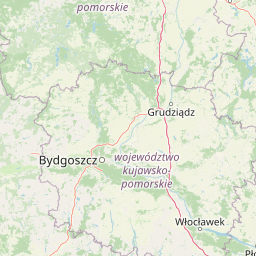
Map view of Miłachowo Nature Reserve

Use this park location map to pinpoint Miłachowo Nature Reserve in Poland, understand its exact geographic position, and read its mapped placement within the surrounding landscape more clearly.

Pigeon | © OpenStreetMap contributors

Location context for Miłachowo Nature Reserve

Pomeranian Voivodeship
Park atlas

Compare surrounding protected landscapes and regional conservation areas in northern Poland

Parks Near Rezerwat przyrody Miłachowo and Regional Protected Areas

Browsing other protected areas near Rezerwat przyrody Miłachowo reveals the diverse regional geography and unique slope habitats of the Krajeńskie Lakeland. Examining adjacent conservation zones provides broader ecological context for dry grassland reserves across northern Poland.
Nature reserveGreater Poland Voivodeship
About 14 km away#1 closest

South

Uroczyska Kujańskie Nature Reserve: A Geographic Overview of the Krajeńskie Lakeland

Mapped protected landscapes, glacial lakes, and old-growth oak forests.

Uroczyska Kujańskie provides a rare study in post-glacial landscape architecture. Situated in the Greater Poland Voivodeship, this site links dystrophic lakes, travertine-forming spring fens, and extensive acid oak forests. Use our atlas data to understand the complex ecological boundaries and hydrological features that define this protected Natura 2000 habitat.

Area
10.182 km²
Relief
Lowland
Scope
Terrestrial
Water
Major water bodies
Nature reserveKuyavian-Pomeranian Voivodeship
About 14 km away#2 closest

Southeast

Rezerwat przyrody Dęby Krajeńskie: Mapping Forest Biodiversity and Protected Land

Nature reserve geography in Kuyavian-Pomeranian Voivodeship

Dęby Krajeńskie stands as a significant lowland woodland reserve featuring old-growth oak and beech stands. Located within the Krajeński Landscape Park, it represents a core protected area for regional avian populations and spring-flowering forest herbs. Explore the terrain characteristics and ecological significance of this preserved Polish woodland environment.

Area
0.458 km²
Established
2001
Relief
Lowland
Scope
Terrestrial
Nature reservePomeranian Voivodeship
About 20 km away#3 closest

West

Rezerwat przyrody Dolina Gwdy: Exploring Protected River Meanders and Forested Geography

Nature reserve in Pomeranian Voivodeship

This nature reserve serves as a critical protected landscape, encompassing 425 hectares of riverine corridors along the Gwda and Czernica rivers. The area is defined by its pronounced meanders, floodplain terraces, and extensive alder swamp forests, providing a documented look at the natural terrain and hydrological evolution within the Pomeranian lake district of northern Poland.

Area
4.246 km²
Established
1998
Relief
Upland
Scope
Terrestrial
Protected landscapePomeranian Voivodeship
About 26 km away#4 closest

Northeast

Zaborski Park Krajobrazowy: Geographic Profile of a Polish Protected Landscape Area

Tuchola Forest region, Pomeranian Voivodeship

Investigate the unique terrain of Zaborski Park Krajobrazowy, a protected landscape defined by its dense network of glacial lakes and sandy outwash plains. This territory provides a comprehensive view of northern Polish lowland geography, highlighting the ecological significance of its river valleys and relic forest habitats within the broader Tuchola Forest ecosystem.

Area
340.3 km²
Established
1990
Relief
Lowland
Climate
Temperate
A pale, soft-toned watercolor painting of a calm lake shore with marshy grasses in the foreground and a line of green trees and rolling hills in the background.
National parkPomeranian Voivodeship
About 29 km away#5 closest

Northeast

Park Narodowy „Bory Tucholskie”: Geography of a Polish National Park and Protected Forest

Lowland pine ecosystems and glacial water networks

Located in the Pomeranian Voivodeship, Park Narodowy „Bory Tucholskie” protects a significant remnant of the Tuchola Forest. The terrain, characterized by postglacial sandy plains, inland dunes, and acidic lobelia lakes, provides a critical reference site for studying forest ecology and glacial geomorphology within the Polish national park system.

Area
46.13 km²
Established
1996
Visitors
33K annual
Relief
Lowland
Watercolor painting of a river flowing through a forested area with colorful fields
National parkPomeranian Voivodeship
About 29 km away#6 closest

Southeast

Tuchola Forest National Park: Explore Poland's Largest Protected Woodland and Glacial Lakes

Detailed maps and geographic context of unique forest ecosystems and terrain.

MoriAtlas offers a comprehensive geographic overview of Tuchola Forest National Park, a vital protected area in Pomeranian Voivodeship, Poland. This page delves into the park's identity as Poland's largest contiguous forest, distinguished by its post-glacial landscape. Users can explore the mapped boundaries of its extensive coniferous forests, numerous interconnected glacial lakes, dynamic dunes, and ecologically rich peatlands. It serves as a key entry point for understanding the park's unique terrain and its significant place within the broader regional geography and protected lands atlas.

Area
46.13 km²
Established
1996
IUCN
II
Visitors
33K annual
Nature reservePomeranian Voivodeship
About 31 km away#7 closest

Northeast

Jezioro Sporackie Nature Reserve: Mapped Geography and Protected Area Context

Exploring the lobelia lake and peatland mosaic in Pomeranian Voivodeship

Jezioro Sporackie Nature Reserve protects a vital ecological gradient ranging from nutrient-poor aquatic habitats to wooded terrestrial margins. The site preserves Sporacz, a glacial lake recognized for its specialized flora, alongside the surrounding transitional mire and forest compartments that form its primary buffer zone in Northern Poland.

Area
0.176 km²
Established
1965
Relief
Lowland
Climate
Temperate
Nature reservePomeranian Voivodeship
About 34 km away#8 closest

Northeast

Rezerwat przyrody Jezioro Małe Łowne: Protected Bog and Lake Landscape in Poland

A nature reserve in Pomeranian Voivodeship's wetland geography.

Located in the heart of the Bory Tucholskie forest region, this nature reserve protects a shallow post-glacial lake and its surrounding mire habitats. The protected area features a dynamic floating bog mat, boggy pine forests, and transitional peatlands, offering a clear look at the lowland hydrology and glacial topography that characterizes this specific part of northern Poland.

Area
0.378 km²
Established
1993
Relief
Lowland
Climate
Temperate

Common questions about visiting, size, designation, and location context for Miłachowo Nature Reserve

Miłachowo Nature Reserve FAQs for park facts, access, geography, and protected area context

Find quick answers about Miłachowo Nature Reserve, including protected-area facts, park geography, trail and visitor context, and how the park fits into its surrounding country and regional landscape.
MoriAtlas Explorer

Continue Your Protected Areas Search Across the Global Atlas

Deepen your exploration by continuing the structured search for national parks and protected areas worldwide. Utilize the comprehensive filtering capabilities to compare different conservation landscapes and refine your understanding of global park geography. Discover more about the distribution and characteristics of protected natural areas.

Global natural geography