Mori Atlas logo
Nature reserveRezerwat przyrody Modrzew Polski w Noskowie

A vital floristic nature reserve preserving rare Polish larch populations within the Wrzesnia Plain.

Rezerwat przyrody Modrzew Polski w Noskowie: Mapped Protected Landscapes and Regional Geography

Located within the gently undulating terrain of the Wrzesnia Plain in Greater Poland, Rezerwat przyrody Modrzew Polski w Noskowie functions as a specialized floristic sanctuary. This protected area safeguards a unique forest community dominated by pine and the rare Larix polonica, marking a significant botanical refuge in the Polish lowlands. Its current boundaries reflect an extensive conservation mandate that ensures the long-term survival of these relict conifer populations amidst a wider agricultural landscape.

floristic nature reservePolish larchpine forestlowland forestrelict tree speciesbotanical conservation

Rezerwat przyrody Modrzew Polski w Noskowie

Nature reserve

Park overview

Structured park overview, official facts, and landscape profile for Modrzew Polski w Noskowie Nature Reserve

Modrzew Polski w Noskowie Nature Reserve park facts, protected area profile, and essential visitor context

Review the core facts for Modrzew Polski w Noskowie Nature Reserve, including designation, size, terrain, visitor scale, habitats, and operating context in one park-focused overview.

About Modrzew Polski w Noskowie Nature Reserve

Modrzew Polski w Noskowie is a floristic nature reserve in central western Poland, located in the Wielkopolskie Voivodeship and administratively tied to Gmina Czerniejewo in the Gniezno county. Its location places it within the broader agricultural and forested lowlands of Greater Poland, an area traditionally dominated by mixed lowland woodland, farmland, and small river valleys.

The site was designated in 1954 under a ministerial forestry ordinance, at a time when Poland was actively extending its system of nature reserves to preserve particular tree populations and characteristic forest communities. The reserve's stated objective was to protect a pine stand enriched with Polish larch (Larix polonica), underlining its role as a conservation site for a tree species of regional botanical importance. Polish larch is considered a distinct larch taxon native to Poland and is recognized for its limited distribution and relict character; reserves such as this one help preserve trees and genetic stock outside the species' main southern range.

The reserve sits within the Równina Wrzesińska (Września Plain), a flat, low-lying mesoregion typical of the Greater Poland lowlands. Although very modest in size by international park standards, the reserve carries weight as a narrowly focused floristic sanctuary. Over time, the protected area was significantly expanded: while the 1954 establishment act referenced only a single hectare, the modern regulatory framework places the reserve at about 1,044 hectares, indicating that subsequent environmental protection decisions broadened the legal boundaries of the protection zone.

The reserve is governed at the regional level by the Regional Directorate for Environmental Protection in Poznań, which renewed and updated its protective provisions in 2016. As a floristic reserve rather than a landscape or faunal reserve, it does not aim to protect entire ecosystems but instead targets the preservation of a specific plant community centered on the Polish larch and its accompanying pine forest.

Quick facts and research context for Modrzew Polski w Noskowie Nature Reserve

Modrzew Polski w Noskowie is a floristic nature reserve in the Greater Poland Voivodeship, situated in the Gniezno county within the administrative area of Gmina Czerniejewo. It lies in the Września Plain, a lowland mesoregion of central western Poland.

The reserve covers approximately 1,044 hectares of forest, although the original 1954 founding act specified a much smaller area of around one hectare. It was established by an order of the Minister of Forestry on 5 November 1954, and its current protective framework is set by a 2016 order of the Regional Director for Environmental Protection in Poznań.

Protection and recognition

Explore documented terrestrial conservation scope and recognition history

Rezerwat przyrody Modrzew Polski w Noskowie Protection Status and Designation

Rezerwat przyrody Modrzew Polski w Noskowie maintains a documented terrestrial protection scope within its designated natural boundary. Structured facts outline the recorded legal status and administrative designation history for this protected area.

Protection details

Protection scope
Terrestrial
Park context

Deeper park guide and search-rich context for Modrzew Polski w Noskowie Nature Reserve

Modrzew Polski w Noskowie Nature Reserve history, landscape, wildlife, and travel context

Explore Modrzew Polski w Noskowie Nature Reserve through its history, landscape character, ecosystems, wildlife, conservation priorities, cultural context, and seasonal travel timing in a structured park guide built for atlas discovery and search intent.

Why Modrzew Polski w Noskowie Nature Reserve stands out

The reserve is best known for protecting a population of Polish larch (Larix polonica), a regionally rare conifer that stands out within the surrounding pine-dominated lowland forest. The combination of a botanical conservation mandate focused on a single emblematic tree species and the protection of its associated forest stand defines the reserve's identity. Because Polish larch is uncommon in the Polish lowlands and most of its populations are concentrated in upland and mountain regions of southern Poland, the Nosków population is considered scientifically and conservation-significant. The reserve functions essentially as a safeguarding site for this tree and the forest community it inhabits.

Modrzew Polski w Noskowie Nature Reserve history and protected-area timeline

The reserve was established on 5 November 1954 by an order of the Minister of Forestry, published in the Polish legal journal Monitor Polski under item 114, position 1637. Its original purpose was to protect a pine stand incorporating Polish larch, a tree of notable botanical value in Poland.

Although the founding act specified an area of around one hectare, the reserve today covers approximately 1,044 hectares. This discrepancy reflects subsequent revisions to the boundaries and regulatory framework of the protected area. A more recent order by the Regional Director for Environmental Protection in Poznań on 5 July 2016 reaffirmed and updated the reserve's protective status, providing the contemporary legal basis for its management.

The 1950s were a formative period for Poland's nature conservation system, with many small floristic reserves created to safeguard rare tree populations and particular botanical stand types, and the Nosków reserve fits squarely within that post-war wave of nature protection legislation.

Modrzew Polski w Noskowie Nature Reserve landscape and geographic character

The reserve is situated in the Września Plain (Równina Wrzesińska), a lowland mesoregion in the Greater Poland region. The plain is characterized by gently undulating terrain, agricultural land use, and patches of lowland forest typical of central western Poland. Within this regional setting, the protected area preserves a forest community dominated by Scots pine, enriched with Polish larch, rather than dramatic topographic features.

Modrzew Polski w Noskowie Nature Reserve ecosystems, habitats, and plant life

Ecologically, Modrzew Polski w Noskowie protects a lowland pine forest stand with a notable presence of Polish larch (Larix polonica). The Polish larch is the key botanical subject of the reserve, valued for its relict status and its limited presence in the Polish lowlands.

The surrounding landscape of the Września Plain is dominated by agricultural land interspersed with patches of mixed lowland woodland, and the reserve represents one of the few formally protected forest fragments in the immediate area. As a floristic reserve, its ecological significance rests on its capacity to preserve a specific tree species and the forest community in which it occurs rather than on broader landscape-scale ecosystems.

Modrzew Polski w Noskowie Nature Reserve wildlife and species highlights

The reserve's designation as a flora-focused site means that faunal information is limited in the available source material. The protected forest stand may support typical lowland forest fauna associated with mixed pine woodland in the Greater Poland region, but no specific wildlife claims are documented in the source pages.

Modrzew Polski w Noskowie Nature Reserve conservation status and protection priorities

The reserve's conservation role centers on the protection of Polish larch (Larix polonica), a tree species considered a regionally important botanical relict. By safeguarding a population outside the main southern range of the species, the reserve contributes to the broader conservation of genetic diversity of Polish larch.

The site is currently managed under the 2016 order of the Regional Director for Environmental Protection in Poznań, which provides the updated regulatory framework for the reserve. The significant expansion of the protected footprint from the original one-hectare declaration to about 1,044 hectares in modern documentation reflects an evolving conservation strategy that recognized the wider forest stand as integral to protecting the targeted tree population.

Top sights and standout views in Modrzew Polski w Noskowie Nature Reserve

The standout feature of the reserve is its population of Polish larch, embedded within a lowland pine forest on the Września Plain. The protection history of the site, which spans from a small 1954 ministerial declaration to a substantially larger modern designation, provides an interesting example of how Polish nature reserves have evolved in scope since the mid twentieth century.

Best time to visit Modrzew Polski w Noskowie Nature Reserve

As a floristic lowland reserve dominated by pine and larch, the site has its most striking character in autumn, when larch foliage turns golden yellow before the needles drop; this is one of the few times during the year when the species is visually distinct from co-occurring conifers. Spring brings fresh green needle growth on the larches and increased activity of lowland forest birdlife, while in winter the deciduous habit of Larix polonica allows the trees to be identified even without foliage. Visitors should consult current local guidance from the managing Regional Directorate for Environmental Protection in Poznań regarding access conditions.

Monthly climate preview

Long-term monthly temperature and precipitation averages recorded at the representative coordinate

Rezerwat przyrody Modrzew Polski w Noskowie Climate Normals and Temperature Rhythms

Rezerwat przyrody Modrzew Polski w Noskowie exhibits a measured annual cycle ranging from subzero winter minima to warm summer maximum temperatures alongside steady monthly precipitation rates. Detailed monthly climate normals provide complete statistical breakdowns for temperature and precipitation distribution across the entire year.
Annual mean9 °C
-2 °C20 °C
Jan-2°
Feb-1°
Mar
Apr
May14°
Jun17°
Jul20°
Aug20°
Sep15°
Oct
Nov
Dec-1°
Warmest month
July

19.8 °C

Coolest month
January

-2.5 °C

Wettest month
July

2.5 mm/day

Driest month
April

1.1 mm/day

Park location guide

Geography guide, regional context, and park location map for Modrzew Polski w Noskowie Nature Reserve

Modrzew Polski w Noskowie Nature Reserve park geography, regions, and map view in Poland

Understand where Modrzew Polski w Noskowie Nature Reserve sits in Poland through a broader geographic reading of the surrounding landscape, nearby location context, and its mapped position within the national park landscape.

How Modrzew Polski w Noskowie Nature Reserve fits into Poland

Poland, officially the Republic of Poland, is a Central European country spanning from the Baltic Sea in the north to the Carpathian Mountains in the south. It borders Germany, Czech Republic, Slovakia, Ukraine, Belarus, Lithuania, and Kaliningrad Oblast. The country has a temperate climate, diverse landscapes, and is known for its rich history, cultural heritage, and strong economic position within the EU.

Wider geography shaping Modrzew Polski w Noskowie Nature Reserve in Poland

Poland occupies 312,696 km2 in Central Europe, extending from the Baltic Sea coast in the north to the Sudetes and Carpathian Mountains in the south. It borders Germany to the west, Czech Republic and Slovakia to the south, Ukraine and Belarus to the east, and Lithuania and Kaliningrad Oblast to the northeast. The landscape includes lowland plains, uplands, and mountain ranges.

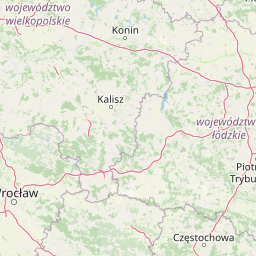
Map view of Modrzew Polski w Noskowie Nature Reserve

Use this park location map to pinpoint Modrzew Polski w Noskowie Nature Reserve in Poland, understand its exact geographic position, and read its mapped placement within the surrounding landscape more clearly.

Pigeon | © OpenStreetMap contributors

Location context for Modrzew Polski w Noskowie Nature Reserve

Greater Poland Voivodeship
Park atlas

Compare surrounding lowland forests and regional conservation landscapes

Parks Near Rezerwat przyrody Modrzew Polski w Noskowie and Regional Protected Areas

Continue exploring protected areas near Rezerwat przyrody Modrzew Polski w Noskowie by browsing adjacent lowland forest reserves and regional woodland ecosystems. Comparing nearby conservation sites reveals broader patterns of botanical diversity across the surrounding plain.
A soft, abstract watercolor painting showing rolling green hills, distant mountains, and a field under a white sky.
Protected areaGreater Poland Voivodeship
About 8.9 km away#1 closest

West

Ostoja koło Promna Protected Area: Geography, Lakes, and Forest Habitat Map

A detailed look at the postglacial lowland landscape of Wielkopolska

Ostoja koło Promna serves as a primary example of protected lowland hydrology and broadleaf woodland in the Greater Poland Voivodeship. Integrating three distinct nature reserves, the site preserves essential aquatic and forest-interior habitats for rare amphibians and waterbirds. This overview provides a structured geographic analysis of the terrain and ecological boundaries forming this significant protected zone.

Area
13.99 km²
Established
2011
Relief
Lowland
Scope
Terrestrial
Nature reserveGreater Poland Voivodeship
About 23 km away#2 closest

Northwest

Stawy Kiszkowskie Nature Reserve: Mapped Geography and Protected Wetland Boundaries

Wetland ecosystems in Greater Poland Voivodeship

Located in the Mała Wełna river valley, Stawy Kiszkowskie acts as a sanctuary for migratory waterbirds and geese populations. This detailed geographic entry highlights the complex mosaic of shallow ponds, reedbeds, and xerothermic dike grasslands that define this protected area within the Polish landscape.

Area
4.775 km²
Established
2022
Relief
Lowland
Water
Major water bodies
Nature reserveGreater Poland Voivodeship
About 26 km away#3 closest

Northwest

Uroczyska Puszczy Zielonki: Protected Nature Reserve and Glacial Landscape Context

Key protected area in the Poznan Lake District, Poland

Uroczyska Puszczy Zielonki consists of four distinct enclaves that safeguard diverse aquatic and forest ecosystems. The geography is shaped by the Poznan Lake District, featuring a mix of calcareous fens, acidophilous oak woods, and eutrophic lake basins. This site serves as a critical conservation corridor, offering valuable insight into the glacial origins and hydrologic patterns of west-central Poland.

Area
14.96 km²
Established
2011
Relief
Lowland
Climate
Temperate
Nature reservePoland
About 27 km away#4 closest

South

Rezerwat przyrody Dwunastak: Protected Forest Reserve and Landscape Map

Ecological mapping in the Wielkopolska region of Poland.

Located in the Warta river corridor, Rezerwat przyrody Dwunastak protects a rare mosaic of riparian and oak-hornbeam forests. This small but significant nature reserve provides a critical study site for lowland woodland habitat connectivity and regional conservation efforts within the broader Żerkowo-Czeszewski Landscape Park framework.

Established
1959
A pale, delicate watercolor painting showing a quiet lake scene with marsh grasses in the foreground and a line of soft-colored trees along the horizon.
Nature reserveGreater Poland Voivodeship
About 29 km away#5 closest

Northwest

Rezerwat przyrody Jezioro Pławno: Glacial Lake and Wetland Reserve Mapping

Protected botanical landscapes in Greater Poland Voivodeship

Examine the mapped boundaries and natural terrain of Rezerwat przyrody Jezioro Pławno. This nature reserve protects distinctive peatland and aquatic habitats within the Gniezno Lake District, integrating seamlessly into the broader forest complex of the Puszcza Zielonka Landscape Park in west-central Poland.

Area
0.167 km²
Established
1978
Protected landscapeGreater Poland Voivodeship
About 32 km away#6 closest

South

Żerkowsko-Czeszewski Park Krajobrazowy Protected Landscape: Map and Geographic Overview

Glacial river valleys and moraine hills in Greater Poland

The Żerkowsko-Czeszewski Park Krajobrazowy protects a diverse range of lowland terrains, from the broad Warta River floodplain to the elevated moraine ridges known locally as the Swiss Żerków. This protected area serves as a vital corridor for riparian forests and avian habitats, framed by historic cultural sites across the Greater Poland Voivodeship landscape. Access detailed geographic insights into the riverine networks, forest reserves, and moraine formations that define this notable Polish protected area.

Area
157.95 km²
Established
1994
Relief
Upland
Climate
Temperate
Nature reservePoland
About 34 km away#7 closest

Northeast

Mięcierzyn Nature Reserve: Geographic Overview and Protected Forest Landscape Boundaries

A rare lowland beech forest sanctuary in Poland's Gnieźno Lakeland

Mięcierzyn Nature Reserve stands as a protected enclave within the Gołąbki Forest District, exemplifying fertile lowland beech woodland ecology. This compact site offers deep insights into forest composition on non-calcareous soils, representing a distinct geographic feature within the rolling moraine terrain of north-central Poland.

Area
0.532 km²
Established
1996
Relief
Lowland
Climate
Temperate
A horizontal watercolor painting depicting a wide river flowing through a lush landscape with distant rolling hills and a soft pink sky.
Nature reserveWielkopolska Voivodeship
About 35 km away#8 closest

Southwest

Ostoja Rogalińska: Protected Nature Reserve and Glacial Terrain in Wielkopolska Voivodeship

Mapped riparian corridors, moraine ridges, and bird habitats.

Ostoja Rogalińska offers a detailed look at lowland glacial morphology, featuring twelve mapped lakes, wandering inland dunes, and the extensive Warta River floodplain. This protected area within Wielkopolska Voivodeship preserves ancient pedunculate oaks alongside diverse wetland and forest ecosystems, providing a clear geographic view of one of the region's most important Natura 2000 bird sanctuaries.

Area
217.63 km²
Established
2007
Relief
Lowland
Climate
Temperate

Common questions about visiting, size, designation, and location context for Modrzew Polski w Noskowie Nature Reserve

Modrzew Polski w Noskowie Nature Reserve FAQs for park facts, access, geography, and protected area context

Find quick answers about Modrzew Polski w Noskowie Nature Reserve, including protected-area facts, park geography, trail and visitor context, and how the park fits into its surrounding country and regional landscape.
MoriAtlas Explorer

Continue Your Protected Areas Search Across the Global Atlas

Deepen your exploration by continuing the structured search for national parks and protected areas worldwide. Utilize the comprehensive filtering capabilities to compare different conservation landscapes and refine your understanding of global park geography. Discover more about the distribution and characteristics of protected natural areas.

Global natural geography