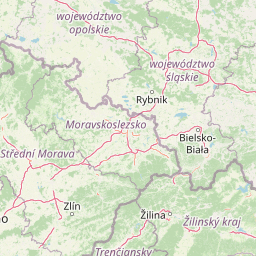
Why Morzyk Nature Reserve stands out
Morzyk is best known for protecting a small but ecologically rich fragment of natural lowland and foothills forest on the edge of the Carpathian system. The reserve combines two classic Central European forest types: the deciduous grąd, an oak-lime-ash woodland typical of fertile lowlands, and the fertile Carpathian beech forest, which otherwise dominates higher in the mountains. This juxtaposition of forest communities at one site, together with the presence of very old and large trees, makes Morzyk a notable reference point for understanding the original forest cover of the Silesian Foothills. The reserve also contains ravines, ponds, and relict flora, including vascular plants under full and partial legal protection.
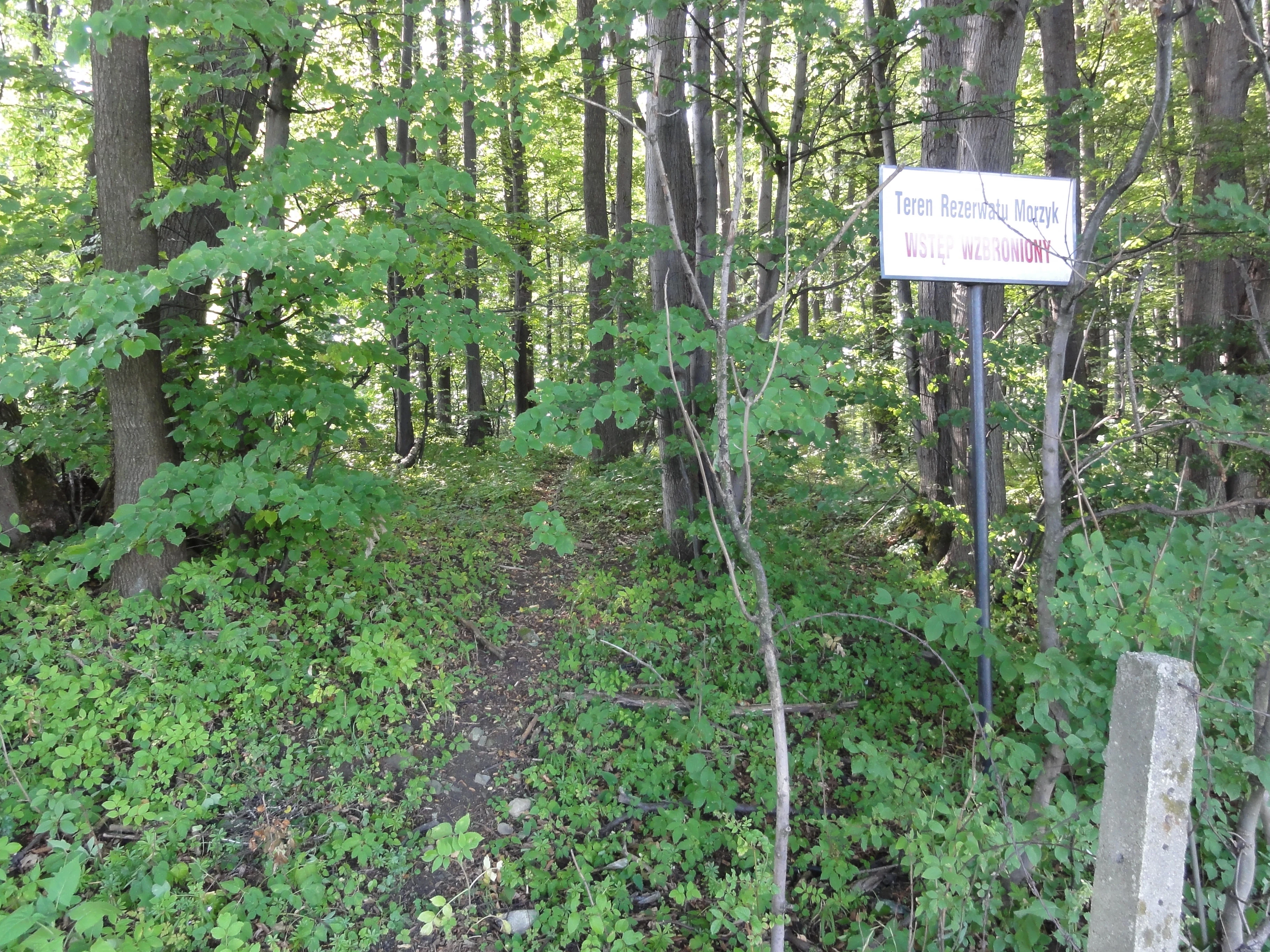
Morzyk Nature Reserve history and protected-area timeline
Morzyk Nature Reserve was formally established in 1996, by decree published in the Polish legal gazette (Monitor Polski, 1996, issue 75, item 686). The reserve was created to safeguard a fragment of natural forest on the southwestern slopes of the hill above Grodziec, including adjacent ravines and ponds, in an area that had otherwise been heavily shaped by centuries of agricultural and settlement use in the Silesian Foothills.
The founding act specified an area of 11.47 hectares, but contemporary descriptions place the actual protected footprint at approximately 10.25 hectares. From the outset, the reserve has been managed under active protection (ochrona czynna), meaning that direct conservation interventions are applied rather than the area being left entirely to passive protection.
The reserve's existence is closely tied to broader regional efforts to document and protect the natural environment of Cieszyn Silesia. Scholarly publications addressing the natural setting of the right-bank Olza area, including the work of A. Dorda in the collective volume on Cieszyn Silesia edited by W. Sosna (2001), place Morzyk within a wider framework of local nature protection in southern Poland.
Morzyk Nature Reserve landscape and geographic character
The landscape of Morzyk Nature Reserve is shaped by the rolling topography of the Pogórze Śląskie, the Silesian Foothills, a transitional belt between the Silesian lowlands and the Carpathian front. The protected area sits on the southwestern slopes of a hill, in an elevation band from approximately 330 to 347 meters, where slopes, ravines, and small water features converge within a compact footprint.
Ravines cut into the hillside create steeper sections within the reserve, while small ponds at lower elevations add wetland-affected habitats to the otherwise forested setting. This combination of hilltop slopes, incised valleys, and quiet water bodies produces a topographically varied environment that supports multiple forest types in close proximity.
The visual character of the reserve is dominated by mature broadleaf forest, with long sightlines limited by dense canopy. Beech-dominated sections give the area a classic foothills-mountain appearance, while the oak-hornbeam and mixed deciduous stands produce a more open, lowland feel during leaf-off periods. The result is a compact landscape that visually bridges two of Poland's most characteristic forest regions.
Morzyk Nature Reserve ecosystems, habitats, and plant life
The ecological identity of Morzyk rests on the coexistence of two forest communities that are otherwise typical of different geographical settings. The first is grąd, a fertile deciduous oak-hornbeam woodland characteristic of lowland and foothill sites with rich soils. At Morzyk, this community is built around small-leaved lime, pedunculate oak, and ash, with sycamore maple and Norway spruce present in smaller quantities. Where these species dominate, the reserve carries a distinctly lowland forest character.
The second community is żyzna buczyna karpacka, the fertile Carpathian beech forest, a type more commonly associated with the mountains to the south. At Morzyk, this community is dominated by mature European beech, described as reaching up to around 40 meters tall and approximately 100 centimeters in trunk diameter. These trees give the reserve its most visually classic Carpathian-forest appearance and contribute to the population of monumental trees for which the area is noted.
The reserve has been documented to host 153 species of vascular plants, including seven that are legally protected (with three under strict protection). In the herb layer of the grąd, common woodland species such as common touch-me-not, sweet-scented bedstraw, summer hedge-nettle, and Schultes's bedstraw are noted. In the beech forest understory, Actaea spicata, common wild ginger (which is itself under partial protection), and common lungwort are described as the most abundant species. This botanical richness reflects the site's transitional position between lowland and Carpathian vegetation zones.
Morzyk Nature Reserve wildlife and species highlights
Although Morzyk is a small reserve and detailed faunal records are limited, the mature and structurally diverse forests it protects provide habitat for a range of forest-dependent species. The Polish-language register for the reserve specifically notes nesting populations of common buzzard and black stork, both of which are sensitive woodland and woodland-wetland birds in central Europe.
The presence of black stork in particular is ecologically meaningful; the species nests in older, quieter forest near water, and its nesting on the slopes and ravines of the reserve indicates that Morzyk retains the kind of undisturbed or well-buffered habitat that the species requires.
Because the reserve includes ponds, ravines, and a mix of deciduous forest types, it is ecologically suited to a broader range of woodland birds, small mammals, and invertebrates, even if comprehensive inventories are not part of the available source material. The reserve's role as a refuge for native fauna in an otherwise heavily transformed regional landscape is therefore complemented, rather than fully defined, by these documented species.
Morzyk Nature Reserve conservation status and protection priorities
Morzyk Nature Reserve was established explicitly to preserve a surviving example of natural, non-planted forest in a region where the original woodland cover has been reduced and fragmented by centuries of land use. Its conservation significance lies less in scale and more in representativeness: it is one of the few sites in the local area where both grąd oak-hornbeam forest and Carpathian fertile beech forest still occur in something close to their natural composition and structure.
The reserve is classified under active protection (ochrona czynna), which means that conservation measures can include direct interventions beyond simply preventing harm. This management approach is appropriate given the presence of old trees and the ecological value of the existing forest communities, both of which often benefit from targeted stewardship to maintain their character over time.
The botanical importance of the site is reflected in the protected status of its flora. Out of 153 documented vascular plant species, seven receive legal protection and three are under strict protection, indicating that Morzyk holds a noticeable share of regionally or nationally protected plants within a very small area. Monument trees within the reserve add an additional layer of natural-heritage protection, placing the site among the small, carefully chosen forest reserves that anchor biodiversity conservation in the Silesian Foothills.
Morzyk Nature Reserve cultural meaning and human context
The Morzyk reserve sits within the cultural geography of Cieszyn Silesia, a region with a long history of settlement on the borderlands between the Polish lowlands and the Carpathian foothills. Its landscape, combining forest, slope, and small valley settlements, is part of the everyday environment of villages such as Grodziec, where rural land use, forestry, and small-scale fishing or pond management have shaped the terrain for generations.
A small but interesting cultural element within the reserve is the presence of an archaeological site: the foundations of an unidentified stone building, made of broken stone and dating from an undetermined period. While not the core reason for protection, this feature connects the reserve's value to regional heritage, adding a layer of historical depth to an otherwise primarily ecological site.
More broadly, Morzyk reflects a regional tradition, evident in scholarly work and regional publications, of treating forests, ravines, and water features in the Cieszyn Silesia landscape as objects of cultural and natural value worth documenting and protecting.
Top sights and standout views in Morzyk Nature Reserve
Morzyk Nature Reserve stands out as a compact but unusually representative fragment of natural forest in the Silesian Foothills. Its most distinctive quality is the side-by-side occurrence of two forest community types, oak-hornbeam grąd and Carpathian fertile beech forest, which are more often found in different geographical regions.
Old and monumental trees, including mature beech reaching roughly 40 meters in height, give the reserve a strong sense of ecological maturity. The presence of protected vascular plants, nesting buzzards and black storks, ravines, ponds, and a small archaeological site together mean that Morzyk offers ecological, scenic, and historical value well beyond what its modest ten-hectare footprint might suggest.
Best time to visit Morzyk Nature Reserve
As a small forest reserve at relatively low elevation in the foothills, Morzyk does not depend on a narrow seasonal window and is most rewarding as a destination for those interested in woodland scenery, old trees, and plant life. Late spring and early summer are typically the best time to experience the forest understory, when herb-layer species such as common lungwort, wild ginger, and sweet-scented bedstraw are in active growth and the canopy is fully developed.
Autumn brings mature deciduous trees into color and exposes the structure of the forest, including old beeches and oaks, making it a useful period for appreciating the reserve's monumental trees and the relief of slopes and ravines. Winter visits can be quieter and easier for observing woodland birds, but conditions on the slopes and around the ponds can be wet and slippery, and visitors generally should treat the area as a working nature reserve rather than a fully developed recreational site.