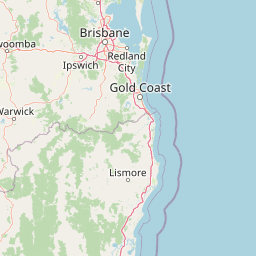
Why Mount Chinghee National Park stands out
Mount Chinghee National Park is best known for its inclusion within the Gondwana Rainforests of Australia World Heritage Site, one of Australia's most significant natural heritage designations. The park protects a remnant of the ancient forests that once covered much of this continent during the Gondwana period, preserving species that represent evolutionary lineages stretching back tens of millions of years. As part of the Scenic Rim Important Bird Area, the park is particularly significant for bird conservation, supporting populations of threatened species that depend on the mix of rainforest, eucalyptus forest, and rocky escarpment habitats found throughout the area. The volcanic geology of Mount Chinghee contributes to the diverse terrain and soils that support this exceptional biodiversity.
Mount Chinghee National Park history and protected-area timeline
Mount Chinghee National Park was gazetted in 1994, transitioning from its earlier designation as Telemon Environment Park. This change in status reflected the growing recognition of the area's conservation significance, particularly its value as a component of the Gondwana Rainforests of Australia. The park was subsequently incorporated into the World Heritage Site, which had been inscribed in 1986 and expanded over subsequent years to include additional reserve areas. In 2007, the Gondwana Rainforests were added to the Australian National Heritage List, providing further domestic recognition of their outstanding universal value. The park is managed by the NSW National Parks and Wildlife Service, an arrangement that reflects the cross-border nature of the broader World Heritage Site and the integrated approach to conservation in this region.
Mount Chinghee National Park landscape and geographic character
The landscape of Mount Chinghee National Park is characterised by volcanic-derived terrain typical of the Scenic Rim region. The park encompasses the slopes and summit of Mount Chinghee, a volcanic peak that rises from the surrounding countryside creating a distinctive silhouette in the regional landscape. The underlying basalt and volcanic soils influence both the vegetation patterns and the drainage characteristics of the area. Steep ridgelines descend into vegetated gullies and drainage lines, creating a terrain that varies significantly across short distances. This topographic diversity, combined with the park's position at the transition between subtropical and temperate climate zones, contributes to the ecological richness that makes this area significant.
Mount Chinghee National Park ecosystems, habitats, and plant life
The nature of Mount Chinghee National Park is defined by its position within the Gondwana Rainforests of Australia, a World Heritage Site that preserves some of Earth's most ancient forest ecosystems. The park contains a mosaic of vegetation communities including subtropical rainforest, tall eucalyptus forest, and open woodland, each supporting distinct assemblages of species. The World Heritage Site is renowned for its extraordinary plant diversity, including ancient conifers, primitive flowering plants, and numerous endemic species that have evolved in isolation over millions of years. The park's inclusion in this World Heritage property means that the ecosystems here are recognised as globally significant, representing a snapshot of the forests that dominated Australia during the age of dinosaurs and continuing to evolve in the present day.
Mount Chinghee National Park wildlife and species highlights
As part of the Scenic Rim Important Bird Area, Mount Chinghee National Park holds particular significance for bird conservation. The area supports several threatened bird species whose survival depends on the mix of forested habitats found throughout the region. The contiguous nature of the protected area network in this part of the Scenic Rim allows birds to move between different habitat types and maintains viable populations across the landscape. The diverse vegetation structure, from canopy rainforest to more open woodland edges, provides breeding habitat, feeding grounds, and shelter for both forest-dwelling species and those that use multiple habitat types. The protection of these habitats within the national park contributes to the long-term survival of bird populations that have declined elsewhere throughout their range.
Mount Chinghee National Park conservation status and protection priorities
The conservation significance of Mount Chinghee National Park derives primarily from its inclusion within the Gondwana Rainforests of Australia World Heritage Site, which represents one of the world's most important protected area complexes for biodiversity conservation. The World Heritage designation recognises the site's outstanding universal value across multiple criteria, including its representation of ongoing ecological and biological processes, its exceptional natural beauty, and its significance in understanding Earth's evolutionary history. The Important Bird Area designation adds another layer of recognition, specifically highlighting the park's role in protecting habitat for threatened bird species. Together, these designations position Mount Chinghee as a site of international conservation importance, where protection of the forest ecosystems contributes to preserving globally significant biodiversity for future generations.
Mount Chinghee National Park cultural meaning and human context
Mount Chinghee National Park does not have well-documented indigenous cultural associations in the available source material, though the broader Scenic Rim region contains sites of indigenous significance. The park's relatively small size and limited public access mean that cultural history has not been a prominent focus of available documentation. The area's European history is modestly documented through its prior designation as Telemon Environment Park prior to national park establishment in 1994.
Top sights and standout views in Mount Chinghee National Park
The standout features of Mount Chinghee National Park include its World Heritage status as part of the Gondwana Rainforests of Australia, its designation as an Important Bird Area for threatened species conservation, and its volcanic mountain landscape in the scenic Scenic Rim region. The park contributes to a connected network of protected areas that preserve one of Australia's most botanically diverse landscapes. While the park lacks visitor facilities, this absence preserves its wild character and allows the forest ecosystems to function with minimal human disturbance.
Best time to visit Mount Chinghee National Park
The best time to visit Mount Chinghee National Park would be during the cooler months from autumn through to spring, when temperatures in the Scenic Rim region are more comfortable for outdoor exploration. The subtropical climate of southeast Queensland means that summer months can be hot and humid, while winter typically brings milder conditions. Visitors should note that the park currently has no marked walking tracks or visitor facilities, meaning that access is limited to viewing from boundaries or travel through the area on connecting roads. The absence of developed infrastructure contributes to the park's wild character but also means that visitors should be prepared for a backcountry-style experience.