
Why Moutohora Island stands out
Moutohora is best known for its breeding colony of grey-faced petrels, set against a backdrop of regenerating native forest on an eroded volcanic island. The island's seabird life, combined with the surrounding presence of dolphins, whales, and sharks, makes it a notable site for both terrestrial and marine wildlife in the Bay of Plenty. The island is also recognised for its historical conservation significance: the eradication of introduced mammals and subsequent large-scale planting restored habitat for threatened species like the New Zealand dotterel and North Island saddleback, the latter reintroduced in 1999 as a symbolic continuation of traditional Māori migration stories linking the island to the wider Bay of Plenty region.
Moutohora Island history and protected-area timeline
Moutohora Island carries a deep archaeological record, with numerous sites of both Māori and European origin documented across its terrain. These include an extensive pā (fortified earthworks) on Pa Hill, as well as house terraces, garden sites, midden deposits, stone tool manufacture areas, and stone walls. Although permanent Māori occupation ended in the early nineteenth century, Ngāti Awa and Tūhoe continued seasonal visits for seafood, sooty shearwaters, and stones used in hāngī cooking.
European activity began modestly in the 1830s with an unsuccessful attempt to establish a shore-based whaling station; no whales were ever taken. By the 1880s, sulphur extraction had begun, with product shipped to Auckland for refining. The sulphur proved to be of poor quality and the operation was abandoned in 1895. Quarrying then became the next industrial activity starting in 1915, supplying approximately twenty-six thousand tonnes of rock over five years for construction of the Whakatāne harbour wall.
The modern conservation era began in 1965 when Moutohora was declared a wildlife refuge. The Crown purchased the island in 1984, and, following the eradication of introduced mammals, a major restoration effort was launched. In March 1999, Ngāti Awa and the Department of Conservation collaborated to relocate forty North Island saddlebacks from Cuvier Island to Moutohora, an event that intentionally echoed traditional Māori stories of the Mataatua waka and the historical flight of tīeke.
Moutohora Island landscape and geographic character
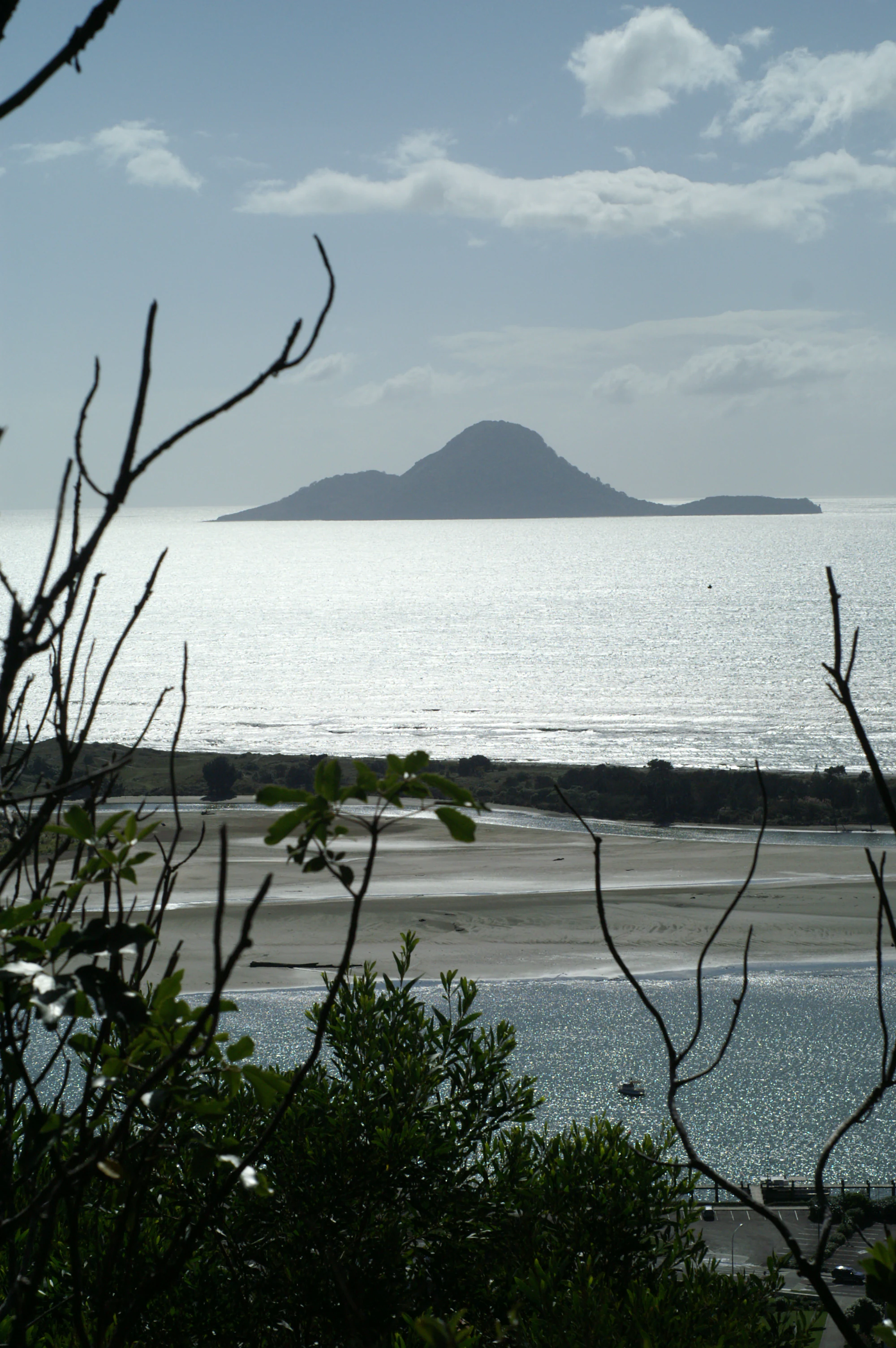
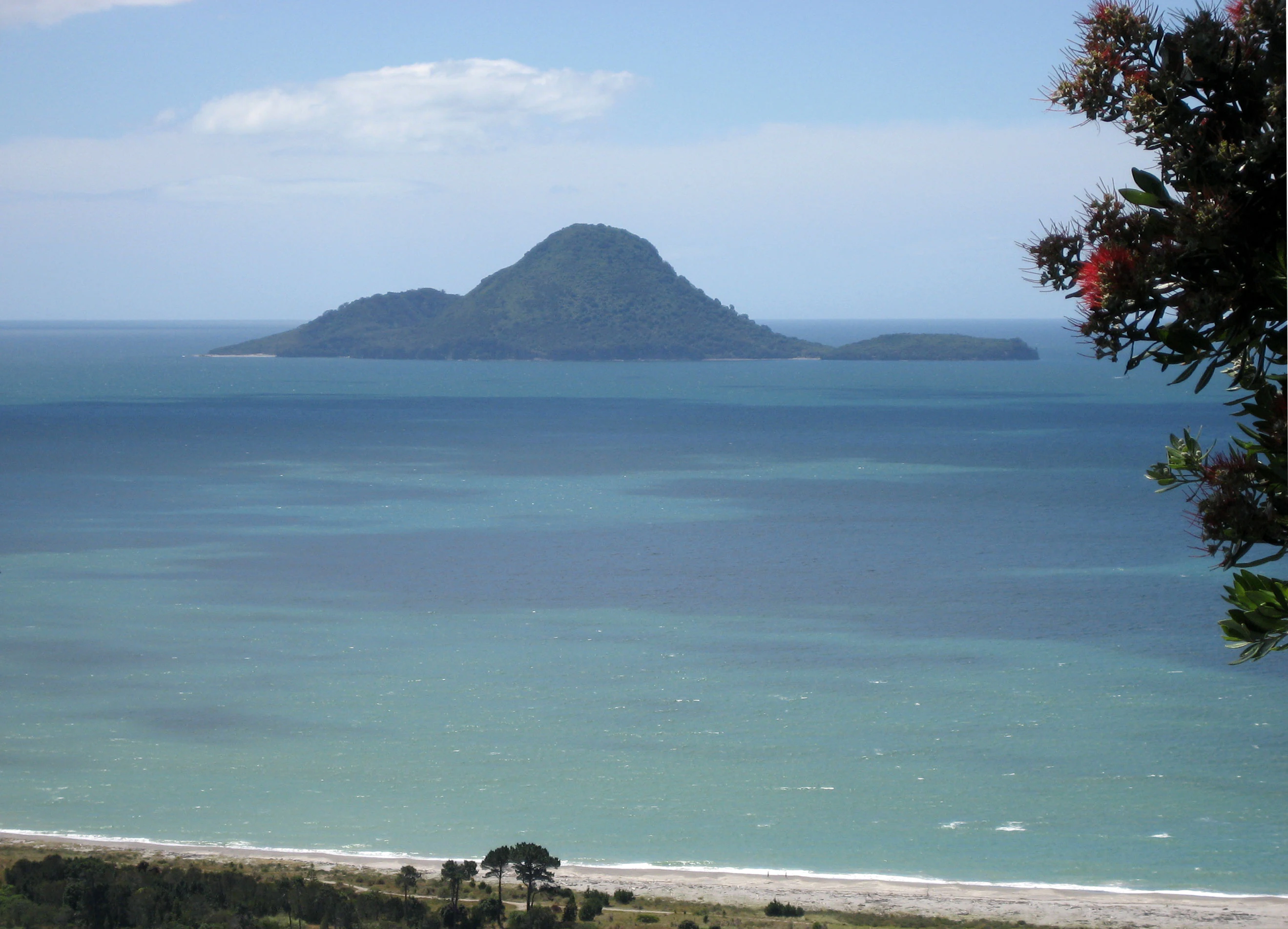
Moutohora's landscape is dominated by its volcanic origins. The island is the eroded remnant of a complex volcano that once extended higher and broader across the surrounding seafloor. What remains are two main peaks reaching about 353 metres above sea level, separated by valleys and rugged slopes that descend to the coast. Hot springs remain active in several defined areas including Sulphur Valley, McEwans Bay, and Sulphur Bay.
The shoreline itself is varied, with cliffs, bays, and accessible coves that frame the island from different directions. Views from the nearby mainland, including the Kohi Point Walkway near Whakatāne, reveal a strikingly symmetrical volcanic silhouette when seen from certain angles. Inland, vegetation and topography together create a mosaic terrain that contrasts regenerating coastal forest, scrubby ridges, and open grassy areas, all set against the broader backdrop of mountainous North Island landscapes such as the distant Putauaki (Mt Edgecumbe).
Moutohora Island ecosystems, habitats, and plant life
The ecological identity of Moutohora is fundamentally shaped by its recovery from introduced species. Once grazed and disturbed by goats, rats, cats, and rabbits, the island has been progressively restored to a healthier ecological state through systematic pest eradication and replanting. More than twelve thousand plants representing around forty-five native species now form a vegetational mosaic covering the island. Dominant communities include pōhutukawa forest, māhoe stands, kānuka woodland, bracken, and open grassland.
Altogether, the island supports roughly 190 native plant species alongside about 110 introduced species, reflecting both active restoration and the lingering botanical footprint of past land use. The result is a landscape that, despite its small size, exhibits diverse microhabitats ranging from coastal fringe and regenerating broadleaf forest to more open scrub and grassland zones.
Moutohora Island wildlife and species highlights
Moutohora's fauna is dominated by seabirds, particularly its breeding colony of grey-faced petrels, which is among the most significant on the island. Sooty shearwaters, little blue penguins, variable oystercatchers, and the threatened New Zealand dotterel also breed here. Caspian terns, North Island kākā, and New Zealand falcon are recorded as occasional or seasonal visitors. Smaller fauna includes three lizard species and forest birds, with captive-bred red-crowned parakeets also present.
The surrounding marine environment adds a major wildlife dimension. Smaller cetaceans such as common and bottlenose dolphins, pilot whales, and killer whales are the most frequently recorded marine mammals, while larger migratory baleen whales, including southern right whales and rorquals, and occasional visits by toothed whales (including beaked whales) expand the marine biodiversity. New Zealand fur seals are also present, and the broader waters support sharks and a diverse oceanic bird fauna, creating an unusually rich combination of terrestrial and marine fauna for an island of this size.
Moutohora Island conservation status and protection priorities
Moutohora's conservation significance rests on its role as a recovered wildlife refuge in the Bay of Plenty. Protection began formally in 1965 with its declaration as a wildlife management reserve, and was reinforced when the Crown purchased the island in 1984. The subsequent eradication of introduced mammals and the replanting of more than twelve thousand native plants across multiple species represent one of the more intensive island restoration efforts on New Zealand's North Island coast.
The island plays an important role in the conservation of threatened species, including grey-faced petrels, New Zealand dotterels, and the reintroduced North Island saddleback. Marine conservation value is similarly high, with the surrounding waters forming part of an important habitat zone for cetaceans, sharks, seals, and seabirds. Co-management between Ngāti Awa and the Department of Conservation reflects a partnership approach that integrates ecological restoration with indigenous cultural stewardship.
Moutohora Island cultural meaning and human context
Moutohora carries strong cultural significance for local Māori, particularly Ngāti Awa, alongside historical connections with Tūhoe through seasonal resource use. The name 'Moutohorā' is itself a shortened form of 'Motutohorā', meaning 'Whale Island' or 'Captured Whale', a reference to the southern right whale (tohorā) and the area's long marine associations. Evidence of earlier permanent Māori settlement is preserved in pā, terraces, garden sites, storage pits, and other archaeological features.
The 1999 translocation of saddlebacks (tīeke) from Cuvier Island to Moutohora deliberately echoes the traditional story of the Mataatua waka, whose voyage was accompanied by two tīeke that briefly settled on the island. Access to Moutohora today is administered jointly through Ngāti Awa concession arrangements and the Department of Conservation, reflecting an ongoing partnership between iwi and the Crown in managing the island's cultural and natural heritage.
Top sights and standout views in Moutohora Island
Moutohora offers a rare combination of active volcanic geology, regenerating native forest, and abundant seabird and marine life within a compact offshore location. Its twin eroded volcanic peaks, lingering hot springs, and historic sites of Māori and European activity provide layered interest for visitors, researchers, and conservation observers.
Equally distinctive is the island's conservation trajectory, from nineteenth-century whaling and sulphur ventures to a modern sanctuary supporting grey-faced petrels, New Zealand dotterels, and reintroduced North Island saddlebacks, all set within a marine environment frequented by dolphins, whales, and sharks in the Bay of Plenty.
Best time to visit Moutohora Island
As a restricted-access conservation island, Moutohora is visited primarily through approved scientific parties and licensed concession holders rather than general tourism. For potentially eligible visitors, the calmer, drier months of the New Zealand late spring to early autumn tend to offer more favourable sea conditions around the Bay of Plenty and clearer weather for shoreline landings. Bird activity peaks during the seabird breeding season, while marine mammal sightings, including migrating baleen whales, can vary across the broader seasonal cycle. Visitors should expect that access may be further restricted during periods of high fire danger.