
Why Na Ostrážné stands out
Na Ostrážné is best known for a population of the dusky large blue butterfly (Phengaris nausithous), a strongly endangered species of European importance that depends on a particular kind of wet meadow habitat. The site's conservation profile is shaped by the rare combination of south-facing slope, varied soil moisture, and surviving traditional meadow communities that together sustain this and other noteworthy species. It is also recognized as a small but meaningful component of the Natura 2000 network in the Czech Republic.
Na Ostrážné history and protected-area timeline
Na Ostrážné was officially designated as a přírodní památka on 25 December 2015 by the Regional Authority of the Vysočina Region. The declaration reflects growing recognition of the area's meadow biodiversity and, in particular, the importance of its population of the endangered dusky large blue butterfly. The site's subsequent recognition as part of the Natura 2000 network further aligned its protection with broader European conservation priorities for habitats and species of Community interest. The site's present character builds on a longer history of traditional meadow management in the uplands above the Vír I reservoir, but the formal protected status itself is recent.
Na Ostrážné landscape and geographic character
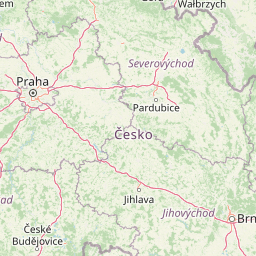
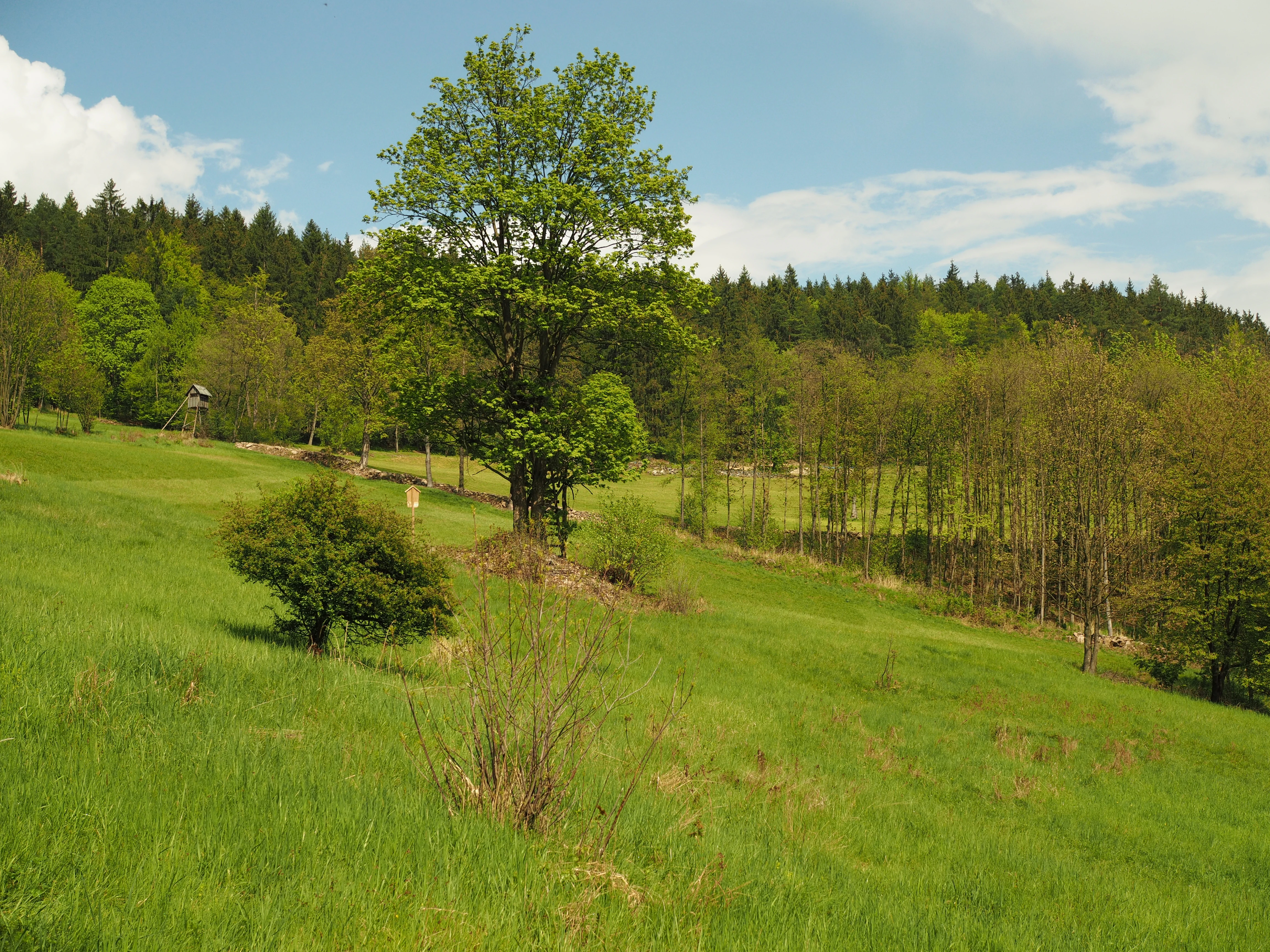
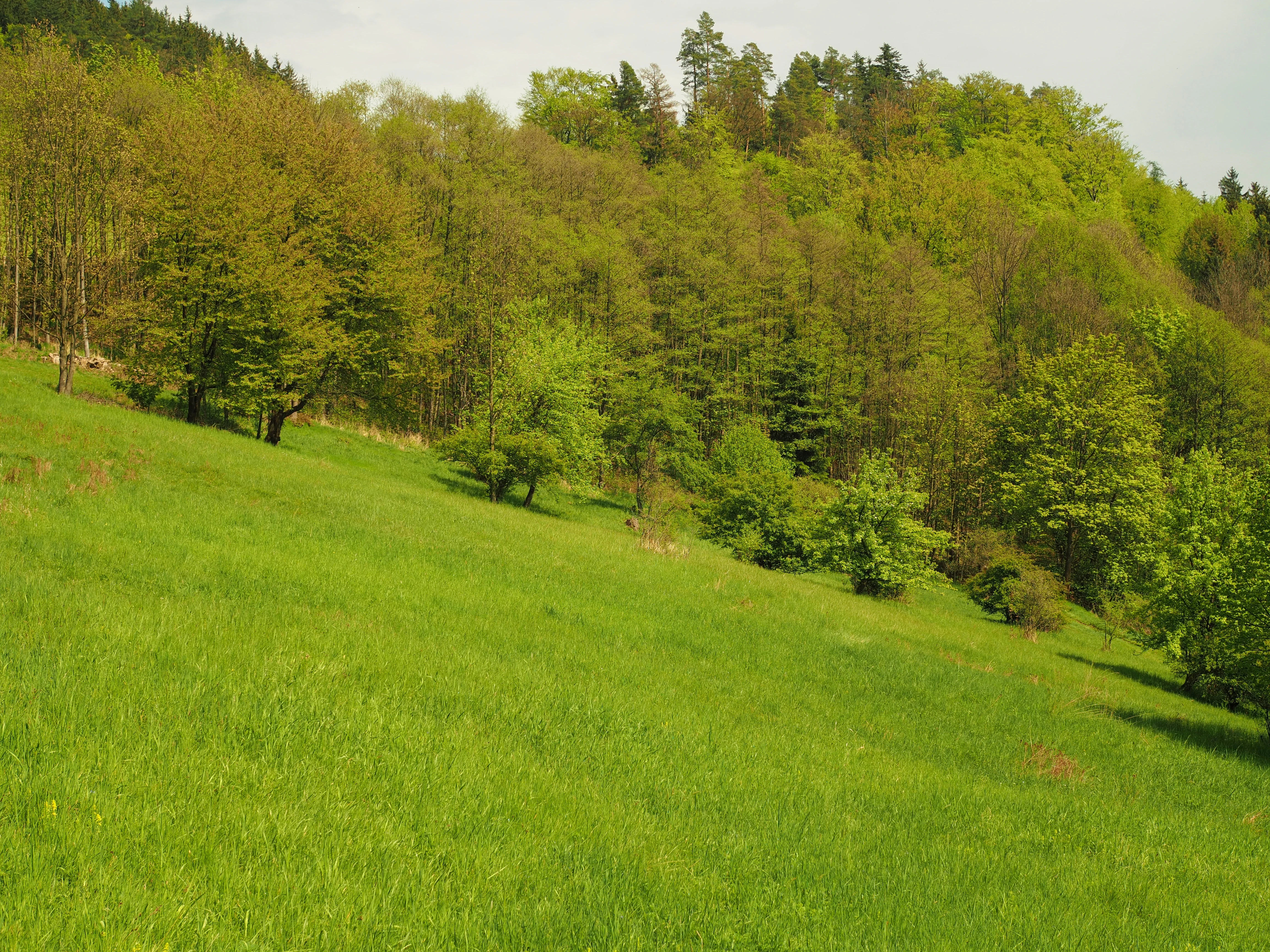
The landscape of Na Ostrážné is shaped by its position on a south-facing slope in the Bohemian-Moravian Highlands, above the waters of the Vír I reservoir. The terrain rises from the reservoir's edge to an elevation of roughly 577 meters at the upper parts of the site, creating a relatively short but ecologically expressive gradient. Exposure to the south supports warmer and drier microclimates on upper and midslope positions, while lower, flatter, or slightly concave areas retain moisture, producing the varied soil-humidity conditions that define the site's meadow mosaic. Beyond the small protected area itself, the surrounding landscape is that of the Svratecká hornatina natural park: rolling forested highland country interspersed with valleys, meadows, and the reservoir system of the Svratka river basin. This combination of woodland, water, and traditionally managed grassland gives the broader setting a layered character, in which the meadow slopes above the reservoir act as natural openings that break up the forested surroundings and concentrate biodiversity in a relatively narrow band of habitat.
Na Ostrážné ecosystems, habitats, and plant life
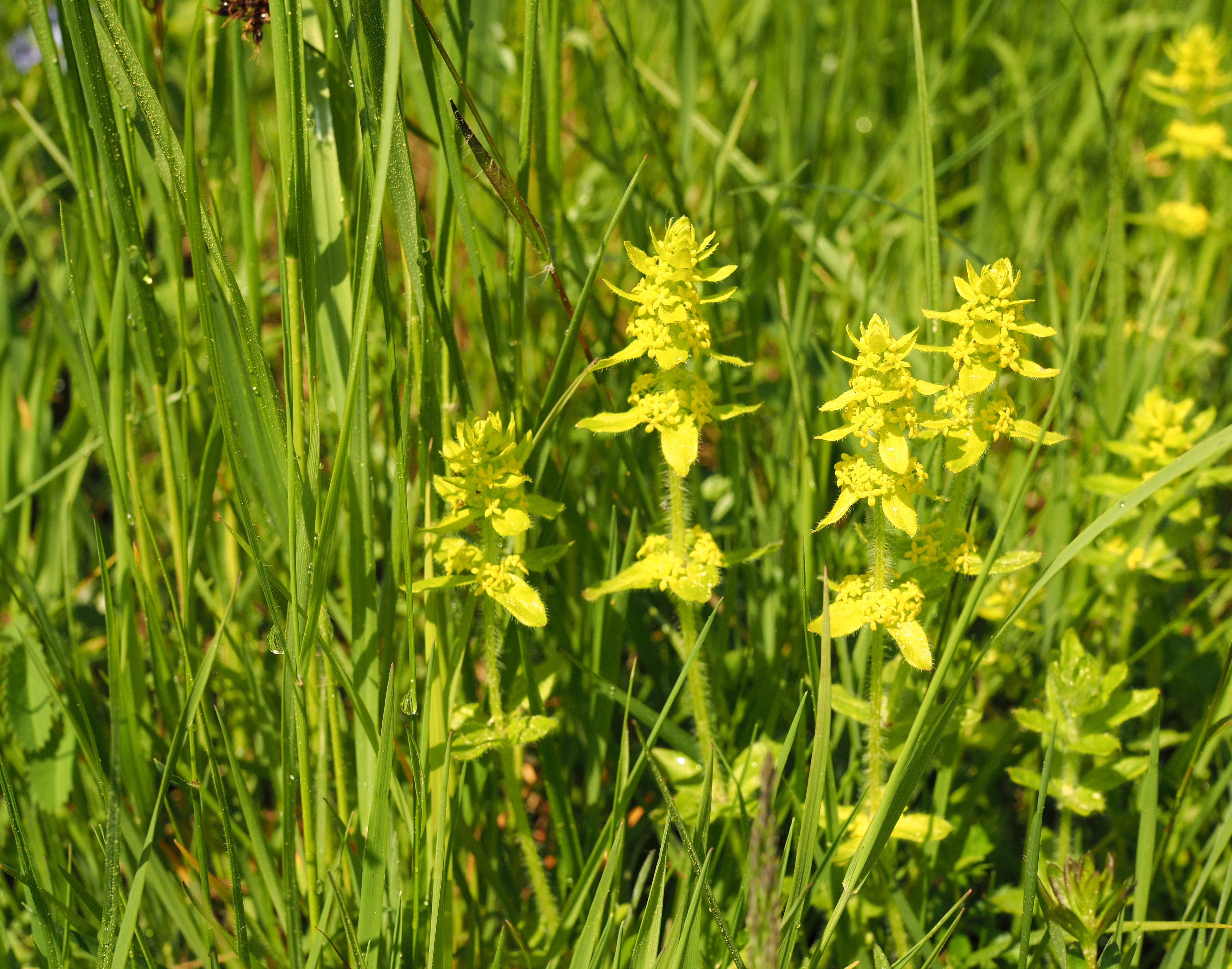
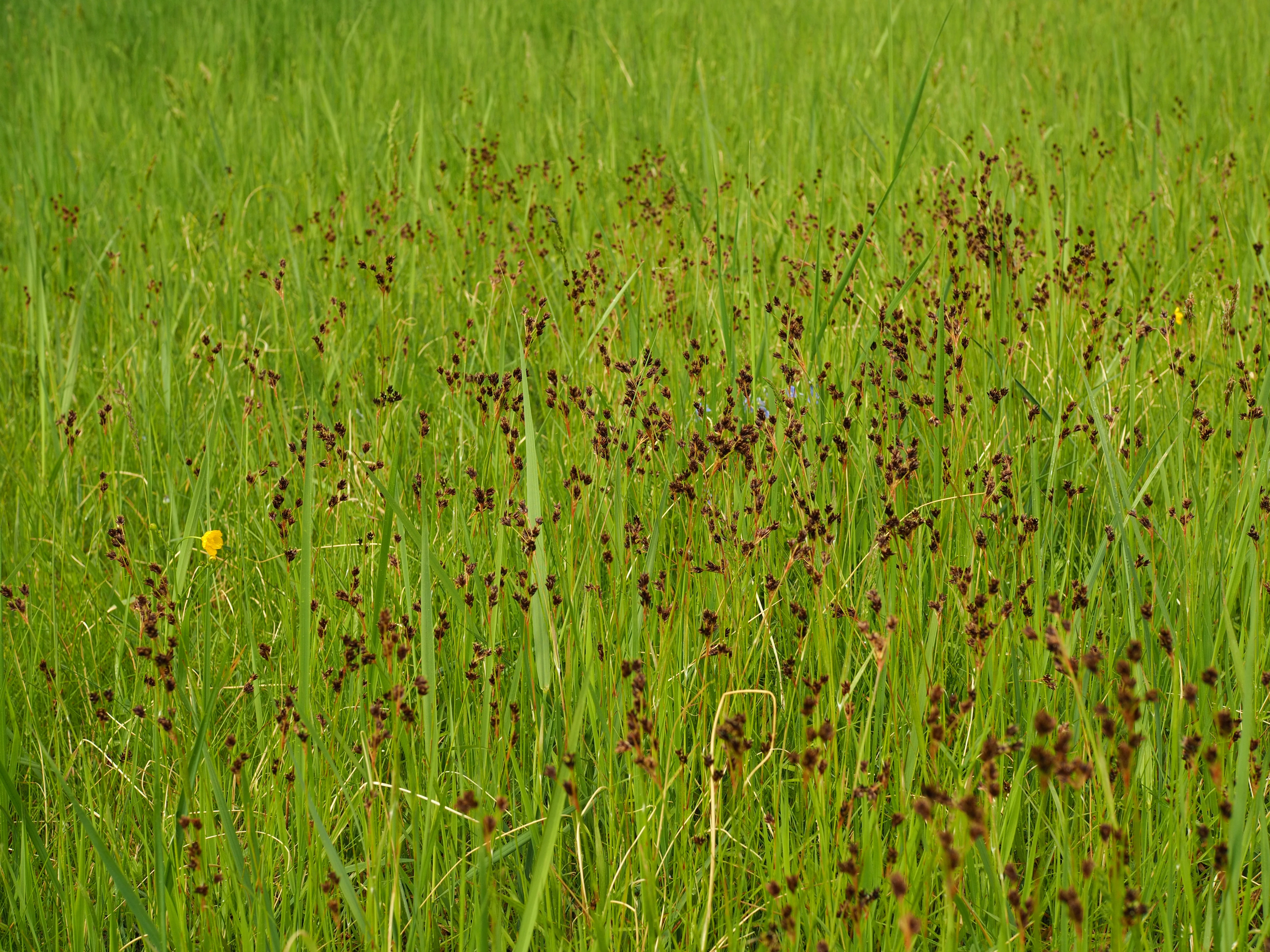
Ecologically, Na Ostrážné is defined by its mosaic of differently moist meadow habitats. Within a very small area, drier herb-rich patches transition into wetter meadow communities, creating a fine-grained habitat patchwork. This variability in moisture, exposure, and management history is central to the site's biodiversity, allowing multiple plant and animal communities to coexist in close proximity. The combination of slope position and traditional grassland management has helped maintain open conditions and the particular floristic composition that these communities require. The site's nature value cannot be separated from its role in the regional ecological network. As part of the Svratecká hornatina natural park and as a Natura 2000 site, it contributes to broader efforts to maintain semi-natural grassland habitats, meadow species, and associated invertebrates across the Vysočina Region. Its small size also makes it a useful reference site: a compact place where the dynamics between slope, moisture, vegetation, and fauna can be observed in a relatively simple and well-defined setting.
Na Ostrážné wildlife and species highlights
The most distinctive wildlife element at Na Ostrážné is the dusky large blue butterfly, Phengaris nausithous, whose population here is the main subject of the monument's protection. This butterfly is considered strongly endangered in the Czech Republic and is recognized as a species of European conservation importance, so its presence on this slope has shaped the site's formal protection. Sustaining the species requires not only the right vegetation but also the particular habitat mosaics and management conditions that the south-facing meadow slope provides. Beyond this flagship species, the broader mosaic of drier and moister meadow habitats supports a community of plants and animals typical of semi-natural central European grasslands. Such sites are generally rich in meadow-specialist plants, pollinators, and other invertebrates, alongside the more conspicuous presence of birds and small mammals that use the interface between meadow and surrounding woodland. The site's value lies less in any single species than in the maintained interplay of these groups on a small, well-defined slope.
Na Ostrážné conservation status and protection priorities
Conservation at Na Ostrážné operates at three connected levels: as a national-level přírodní památka, as a component of the broader Svratecká hornatina natural park, and as a site within the Natura 2000 network of European importance. The přírodní památka designation, declared in 2015, provides the specific legal framework that focuses protection on the meadow mosaic and its inhabiting species. The natural park offers landscape-level protection across the surrounding highland terrain, while the Natura 2000 status ties the site's conservation to the European framework for habitats and species of Community interest, particularly through the dusky large blue butterfly. The underlying conservation logic of the site is the preservation of semi-natural meadow habitat at a scale and condition that can sustain endangered invertebrates. Because such grasslands have become increasingly rare across intensively used European landscapes, even very small protected sites like Na Ostrážné can play an outsize role in maintaining regional populations of vulnerable species. Maintaining the traditional management of these meadows, alongside the broader protection that the natural park provides, is central to keeping the site's conservation value intact over time.
Na Ostrážné cultural meaning and human context
Na Ostrážné sits in a highland landscape long shaped by small-scale farming and traditional meadow management, practices that have helped maintain the open, species-rich grassland that now lies at the heart of the site's protected status. The surrounding Svratecká hornatina natural park reflects a wider regional appreciation of the interplay between human land use and landscape identity in the Bohemian-Moravian Highlands. The nearby village of Hluboké, part of the municipality of Dalečín, and the broader setting above the Vír I reservoir place the monument within a cultural geography of hilltop and valley communities whose livelihoods have historically been tied to meadow, pasture, woodland, and water. The site's protection can be read in part as a recognition that the continuation of these traditional land-use patterns is itself a form of cultural and ecological heritage worth preserving.
Top sights and standout views in Na Ostrážné
Na Ostrážné's strongest points of distinction are its compact but well-defined meadow mosaic on a south-facing slope, its population of the strongly endangered dusky large blue butterfly, and its dual status as a Czech natural monument and a Natura 2000 site. The combination of small size, sharp ecological focus, and integration into both national and European conservation frameworks gives the site a clear and meaningful profile within the Vysočina Region.
Best time to visit Na Ostrážné
The character of Na Ostrážné is most expressive during the warmer months, when the species-rich meadow communities on the south-facing slope are in active growth and flowering. Late spring through summer is the period when meadow biodiversity, including invertebrates, is most visible, and when the site's defining butterfly species and associated meadow flora are most likely to be encountered in their active phase. Outside of this window, the surrounding highland landscape remains attractive, but the specific appeal of the meadow mosaic is more subdued.