
Mori Atlas logo
Nature reserveNaturwaldreservat Riedholz

Tracing the protected forest boundaries and moist floodplain ecology of the Schweinfurt Basin

Naturwaldreservat Riedholz: A Significant Municipal Nature Reserve in the Bavarian Lowlands

Naturwaldreservat Riedholz serves as a critical reference site for natural forest development within the Steigerwaldvorland of northern Bavaria, Germany. This eleven hectare protected area near the Unkenbach stream showcases a rare bird cherry, alder, and ash forest ecosystem that remains undisturbed by timber harvesting. Visitors and researchers can trace the transition of formerly managed woodland into a self-sustaining refuge that integrates with the regional Natura 2000 protected landscape network.

lowland forestfloodplain forestash-alder woodlandbird cherry forestmunicipal nature reserveNatura 2000
A digital illustration of a sunlit forest with tall trees in the foreground, a meadow with flowers, and mountains with a cascading waterfall in the background.

Naturwaldreservat Riedholz

Nature reserve

Park overview

Structured park overview, official facts, and landscape profile for Naturwaldreservat Riedholz

Naturwaldreservat Riedholz park facts, protected area profile, and essential visitor context

Review the core facts for Naturwaldreservat Riedholz, including designation, size, terrain, visitor scale, habitats, and operating context in one park-focused overview.

About Naturwaldreservat Riedholz

Naturwaldreservat Riedholz is a small, formally protected forest reserve in the Steigerwaldvorland, the northern foreland of the Steigerwald in Lower Franconia, northern Bavaria. The roughly eleven hectare site lies in the Schweinfurt Basin, in the municipality of Schwebheim, between the villages of Grettstadt and Schwebheim. Although modest in size, it carries regional significance because of its legal status, ecological composition, and the institutional context in which it was created.

The reserve sits within a wider protective mosaic that includes the FFH site Unkenbachaue mit Sulzheimer Gipshügel und Grettstädter Wiesen, the bird protection area Schweinfurter Becken und nördliches Steigerwaldvorland, and the adjacent nature reserve Riedholz und Grettstädter Wiesen. To the southeast lies the nature reserve Sulzheimer Gipshügel, another protected element of the same lowland landscape. Together these designations reflect how a fragmented but ecologically rich lowland setting in Lower Franconia has been stitched together through European and national conservation instruments.

Ecologically, Riedholz belongs to the moist, stream-influenced landscapes of the Schweinfurt basin. Its main forest type is a Traubenkirschen-Erlen-Eschenwald, a bird cherry, alder and ash woodland, growing on wet soils associated with the Unkenbach. The site is significant because such floodplain-influenced mixed deciduous forests have become rare in intensively farmed lowland Bavaria. By setting aside a complete small patch from any timber harvest, Riedholz provides a continuous forest habitat where natural dynamics, including natural regeneration, deadwood accumulation, and ungulate browsing, can proceed without direct human interference.

In social and administrative terms, the reserve represents the municipal track of Bavarian forest protection. Unlike most Naturwaldreservate, which are managed by the Bavarian state forest, Riedholz is administered by the local community of Schwebheim. This makes it both a legal precedent and a practical demonstration of how smaller local authorities can take long-term responsibility for ecologically valuable forest patches within communal forest holdings.

Quick facts and research context for Naturwaldreservat Riedholz

Naturwaldreservat Riedholz is a roughly 11 hectare nature forest reserve located in the Steigerwaldvorland natural region of Lower Franconia, Bavaria, within the municipality of Schwebheim in the Schweinfurt district. It was formally designated in 1999 as the first Naturwaldreservat established on communal forest land in Bavaria, under Article 12a of the Bavarian Forest Act as amended in 1998. The reserve is embedded in a wider Natura 2000 mosaic, falling within the FFH site Unkenbachaue mit Sulzheimer Gipshügel und Grettstädter Wiesen and the bird protection area Schweinfurter Becken und nördliches Steigerwaldvorland.

The woodland is dominated by ash, black alder, and bird cherry on wet soils along the Unkenbach, with relict old oaks and coppice stools reflecting earlier coppice-with-standards use. Surveys have recorded ten shrub species, 18 tree species, 29 breeding bird species, and 12 longhorn beetle species, alongside a notable young-stage deadwood component that signals an ongoing transition toward an unmanaged old-growth character.

Protection and recognition

Documented terrestrial protection scope and international recognition facts

Naturwaldreservat Riedholz Protection Status and Designated Area Record

Naturwaldreservat Riedholz maintains a documented terrestrial protection scope within the regional conservation framework. Official records compile available designation details, management boundaries, and recognized international conservation status.

Protection details

Protection scope
Terrestrial
Transboundary protection
No
Park context

Deeper park guide and search-rich context for Naturwaldreservat Riedholz

Naturwaldreservat Riedholz history, landscape, wildlife, and travel context

Explore Naturwaldreservat Riedholz through its history, landscape character, ecosystems, wildlife, conservation priorities, cultural context, and seasonal travel timing in a structured park guide built for atlas discovery and search intent.

Why Naturwaldreservat Riedholz stands out

Naturwaldreservat Riedholz stands out as the first municipal Naturwaldreservat in Bavaria, a small but ecologically meaningful example of how a local community can permanently withdraw forest from management to allow natural processes to take over. Its defining feature is a near-natural bird cherry, alder, and ash floodplain forest along the Unkenbach, where wet-site ground flora thrives under the canopy and relict oaks from older coppice management still persist. The reserve is also valued as a reference site for studying the early stages of natural forest development in a landscape that was heavily worked in the past. The combination of surviving old oaks, extensive deadwood from former use, and active regeneration of ash, alder, and bird cherry gives it a clear story about how former working forests can return to self-sustaining woodland in a heavily cultivated lowland setting.
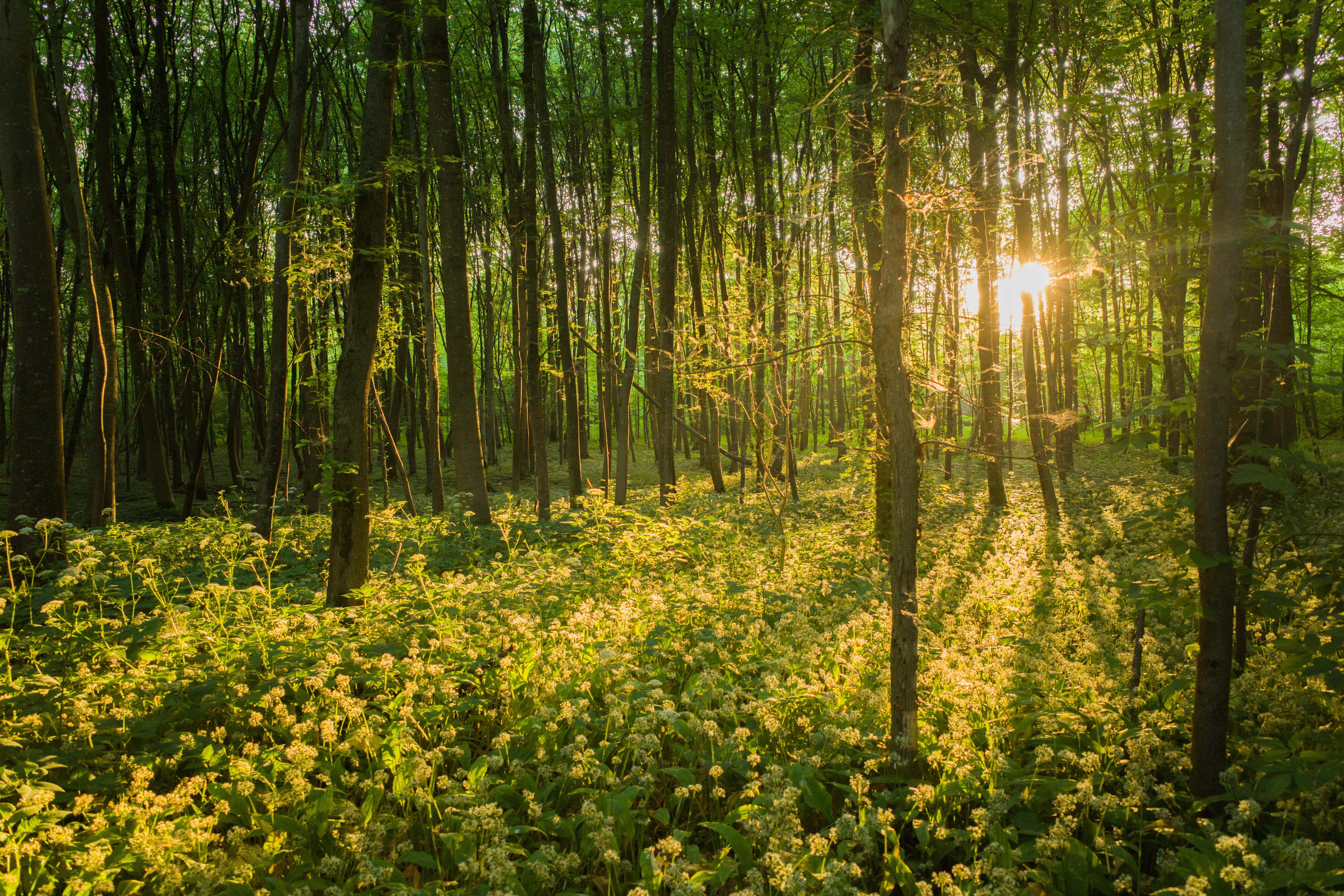
Sunlight streams through tree trunks in a dense forest, creating light rays and illuminating a patch of small white and yellow wildflowers on the forest floor.
Sunlight filtering through the canopy of the Naturwaldreservat Riedholz, illuminating the forest floor covered in wildflowers.

Naturwaldreservat Riedholz history and protected-area timeline

The origins of Naturwaldreservat Riedholz are closely tied to changes in Bavarian forest law. Until 1998, the designation of Naturwaldreservate in Bavaria was effectively limited to state forest land. A 1998 amendment to the Bayerisches Waldgesetz, the Bavarian Forest Act, opened the door for municipalities to establish their own reserves, under Article 12a, which sets out the framework for Naturwaldreservate and Naturwaldflächen. The municipality of Schwebheim acted promptly on this opportunity.

In August 1998, the community submitted an application to designate an area within its communal forest as a Naturwaldreservat. On 6 July 1999, the area known as Riedholz was formally designated as a Naturwaldreservat, becoming the first such reserve in Bavarian communal forest ownership. The reserve covers about eleven hectares and forms part of the broader communal forest of Schwebheim. Parts of the Riedholz woodland had already been left unmanaged since 1971, when the municipality decided to suspend forestry operations on about 2.3 hectares after acquiring that portion from the federal asset administration.

The pre-protection forest history of the site is also evident in its present composition. Earlier generations managed parts of the woodland as Mittelwald, coppice-with-standards, a traditional Central European system that combined periodic cutting of broadleaved coppice with scattered standard trees. After the Second World War, some sections experienced intensive timber harvesting, which interrupted the continuity of older trees. Nevertheless, the surviving old oaks and the presence of vigorous coppice stools still document this earlier management regime, giving Riedholz a layered history that is legible in its present vegetation and deadwood structure.

Naturwaldreservat Riedholz landscape and geographic character

Naturwaldreservat Riedholz lies in the gently undulating Steigerwaldvorland, the lowland foreland north of the Steigerwald range. The landscape is shaped by sedimentary substrates and the working of small lowland streams such as the Unkenbach, which crosses the reserve and gives the woodland its locally wet character. Within this agricultural region, the reserve forms a small but visually distinct deciduous woodland patch, framed by open fields and the villages of Grettstadt and Schwebheim.

Topographically, the site is low and flat to gently sloping, with moist depressions along the stream course. The wet soils and the seasonal influence of the Unkenbach are central to the woodland's appearance, producing a noticeably more humid microclimate than the surrounding farmland. The reserve is bordered to the east by Grettstadt and to the west by Schwebheim, with the larger landscape of the Schweinfurt Basin extending outward in all directions.

The terrain at Riedholz is not dramatic in scenic terms, but it is ecologically significant because such stream-influenced lowland forests have been heavily reduced across Bavaria by drainage, agricultural conversion, and past forest management. The reserve therefore represents an unusual surviving pocket of near-natural floodplain woodland, with relict standard oaks and a strongly developed ash-alder-bird cherry canopy that visually distinguishes it from the surrounding agricultural countryside.

Naturwaldreservat Riedholz ecosystems, habitats, and plant life

The reserve's ecological core is a Traubenkirschen-Erlen-Eschenwald, a near-natural deciduous forest type dominated by bird cherry, black alder, and ash. This community is characteristic of moist to wet soils along lowland streams and represents one of the more diverse broadleaved forest types in Central Europe. Botanists have documented ten shrub species and 18 tree species, with ash, black alder, and bird cherry as the principal canopy and subcanopy trees. The presence of mature oaks, alongside vigorous coppice stools, reflects the older coppice-with-standards history of the stand and adds structural complexity to the present forest.

The ground flora reflects the site's moist conditions, including a range of moisture-loving plants and the protected Frühlings-Knotenblume, a spring snowflake species regarded as an indicator of older, less disturbed woodland conditions on damp substrate. Seasonal flooding and waterlogging influence parts of the soil, which supports this characteristic wet woodland understory.

Beyond its tree and herb layer, Riedholz is notable for its structural diversity. The transition from old coppice use to long-term non-management has created a mixture of older standard trees, younger regrowth, and accumulating deadwood. The deadwood resource amounts to roughly 6.57 cubic meters per hectare, drawn mainly from willow, pedunculate oak, and black alder. While the decay process is still in an early stage and large-diameter deadwood remains limited, the increasing volumes of fallen and standing dead wood mark a clear trajectory toward a more structurally complex, old-growth-like forest.

Naturwaldreservat Riedholz wildlife and species highlights

The reserve supports a notably rich fauna for such a small area, reflecting its diverse vertical structure, variety of deadwood, and moist woodland conditions. Breeding bird surveys have recorded 29 species, including common woodland birds such as wrens, great tits, European robins, blackbirds, and chiffchaffs, alongside several woodpecker species and the more localized willow tit. The presence of spotted flycatchers is particularly meaningful, because this species depends on structurally complex, open-canopy forest with plenty of deadwood and old trees for nesting.

The deadwood in Riedholz is also a habitat for saproxylic insects. Twelve longhorn beetle species have been identified, with most preferring smaller-diameter deadwood and conditions associated with ongoing decay. The early-stage character of the deadwood, mostly from willow, oak, and alder, with limited large logs, shapes the composition of this insect assemblage, which is expected to diversify further as decomposition progresses.

In the wider context, the reserve contributes to a more extensive ecological network in the Schweinfurt Basin. It sits within both an FFH site and a bird protection area, providing breeding habitat for woodland bird communities in a region dominated by agriculture and scattered settlements. The combination of wet woodland, deadwood-rich structure, and landscape-level protection gives the site an outsized wildlife value relative to its compact size.

Naturwaldreservat Riedholz conservation status and protection priorities

From a conservation perspective, Naturwaldreservat Riedholz is significant because it permanently withdraws a small but ecologically valuable forest area from timber management, allowing natural forest dynamics to operate without direct human intervention. Under Article 12a of the Bavarian Forest Act, only forest protection and traffic safety measures are permitted, with no harvesting or silvicultural treatment. This creates an effective refugium where natural regeneration, gap formation, and deadwood accumulation can drive long-term structural and compositional change.

The reserve also plays an important role within the European Natura 2000 network. It lies entirely within the FFH site Unkenbachaue mit Sulzheimer Gipshügel und Grettstädter Wiesen and contributes to the coherence of the bird protection area Schweinfurter Becken und nördliches Steigerwaldvorland. It sits alongside the nature reserves Riedholz und Grettstädter Wiesen, which protects adjacent wet grassland, and Sulzheimer Gipshügel, which conserves a gypsum hill system with steppe-like vegetation. Together these overlapping designations protect a combination of floodplain forest, wet meadow, and gypsum grassland that is otherwise rare in intensively used Lower Franconia.

Riedholz also has a particular significance as the first municipal Naturwaldreservat in Bavaria. Its establishment demonstrates that smaller local authorities, not just the state forestry administration, can commit to long-term forest protection and thus expand the network of strictly protected woodlands in the region. As such, it serves as both a practical example and an institutional precedent for community-led conservation of natural forest in communal ownership.

Naturwaldreservat Riedholz cultural meaning and human context

The Riedholz reserve reflects the long-standing tradition of communal forest ownership in Bavaria. Forests held by local communities, rather than by the state or private individuals, have played an important role in rural Lower Franconia for centuries, supplying timber, fuelwood, grazing, and other resources. The decision of the municipality of Schwebheim to designate a part of its communal forest as a Naturwaldreservat is a notable shift within this tradition, from resource use toward permanent ecological protection.

The site's earlier use as Mittelwald, or coppice-with-standards, also carries cultural meaning. This traditional Central European forest management system combined regularly cut broadleaved regrowth, called coppice, with scattered standard trees that were preserved for higher-value timber. The legacy of this practice is still visible in the mature oaks and the stock shoots that dot Riedholz. The reserve therefore preserves not only ecological values but also a tangible record of how rural communities once shaped the Lower Franconian forest landscape.

In present-day terms, the reserve reflects a broader cultural shift in Bavarian forestry, in which small communities increasingly engage with conservation frameworks such as Natura 2000 and with statutory instruments for natural forest protection. Riedholz stands as a local expression of this transition, embedding modern conservation practice within the older fabric of communal forest heritage.

Top sights and standout views in Naturwaldreservat Riedholz

Naturwaldreservat Riedholz is the first municipal Naturwaldreservat in Bavaria, designated in 1999 under Article 12a of the Bavarian Forest Act. Its roughly eleven hectares are managed by the community of Schwebheim, rather than by the state forestry service, and the entire area is permanently excluded from timber harvesting.

Ecologically, the reserve is distinguished by a near-natural Traubenkirschen-Erlen-Eschenwald, a bird cherry, alder, and ash floodplain forest along the Unkenbach, accompanied by a moisture-loving ground flora that includes the protected Frühlings-Knotenblume. Surveys have documented 18 tree species, ten shrub species, 29 breeding bird species, and 12 longhorn beetle species, supported by an early-stage but developing deadwood resource. The reserve sits within overlapping Natura 2000 designations and adjacent nature reserves, making it a compact yet well-connected element of the protected landscape of the Schweinfurt Basin and the Steigerwaldvorland.

Best time to visit Naturwaldreservat Riedholz

Spring is particularly rewarding at Riedholz, when the woodland floor of the bird cherry, alder, and ash forest comes alive with moisture-loving plants, including the protected Frühlings-Knotenblume, a spring snowflake that flowers early in the season. The combination of fresh green foliage and active bird song also makes spring a compelling period for observing woodland birds such as wrens, robins, and chiffchaffs.

Late spring and early summer are good for general birdwatching and for appreciating the full canopy of ash, alder, and bird cherry above the Unkenbach stream. Autumn highlights the structural contrast in the forest, with mature oaks, regenerating broadleaves, and accumulating deadwood visible against the surrounding agricultural landscape. Winter, with the leaves off the trees, offers the clearest views of the forest structure, including old coppice stools and the layout of the stream-influenced terrain, though visitors should expect the typical quiet and reduced bird activity of the season.
Monthly climate preview

Long-term temperature and precipitation averages recorded at representative coordinates

Naturwaldreservat Riedholz Climate Normals and Annual Weather Patterns

Measured long-term averages from 1991 to 2020 reveal distinct annual temperature ranges and precipitation patterns across representative park coordinates. Examining the complete twelve-month record provides deeper insight into monthly climate normals and long-term meteorological trends.
Annual mean9 °C
-1 °C20 °C
Jan-1°
Feb
Mar
Apr
May13°
Jun17°
Jul20°
Aug19°
Sep15°
Oct
Nov
Dec
Warmest month
July

19.7 °C

Coolest month
January

-0.7 °C

Wettest month
July

2.4 mm/day

Driest month
April

1.3 mm/day

Park location guide

Geography guide, regional context, and park location map for Naturwaldreservat Riedholz

Naturwaldreservat Riedholz park geography, regions, and map view in Germany

Understand where Naturwaldreservat Riedholz sits in Germany through a broader geographic reading of the surrounding landscape, nearby location context, and its mapped position within the national park landscape.

How Naturwaldreservat Riedholz fits into Germany

Germany is a federal republic in Western and Central Europe with a population of over 83 million across sixteen constituent states. It is Europe's largest economy by nominal GDP and a major global exporter and importer. The capital is Berlin, and the country borders Denmark, Poland, Czech Republic, Austria, Switzerland, France, Luxembourg, Belgium, and the Netherlands.

Wider geography shaping Naturwaldreservat Riedholz in Germany

Germany is located in Western and Central Europe, spanning 357,022 km². It borders Denmark to the north, Poland and the Czech Republic to the east, Austria and Switzerland to the south, and France, Luxembourg, Belgium, and the Netherlands to the west. The country has coastlines on the Baltic Sea and North Sea to the north, with the Alps located in the southern region.

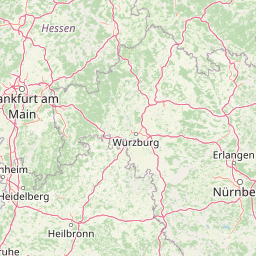
Map view of Naturwaldreservat Riedholz

Use this park location map to pinpoint Naturwaldreservat Riedholz in Germany, understand its exact geographic position, and read its mapped placement within the surrounding landscape more clearly.

Pigeon | © OpenStreetMap contributors

Visual reference of lowland woodland habitats, stream corridors, and forest regeneration

Naturwaldreservat Riedholz Photos and Protected Forest Landscape Scenery

Visual documentation captures the deciduous woodland canopy, moist soils, and Unkenbach stream corridor defining Naturwaldreservat Riedholz. Photographic records reveal how protected lowland forest vegetation develops across the surrounding agricultural terrain.

Sunlight streams through tree trunks in a dense forest, creating light rays and illuminating a patch of small white and yellow wildflowers on the forest floor.

Park atlas

Compare adjacent woodland reserves, lowland floodplain habitats, and regional protected landscapes

Explore Other Parks Near Naturwaldreservat Riedholz and Surrounding Protected Areas

Browse other protected areas and lowland forests situated across the surrounding Steigerwaldvorland region. Comparing adjacent nature reserves provides deeper geographic context for understanding regional woodland preservation and natural forest development.
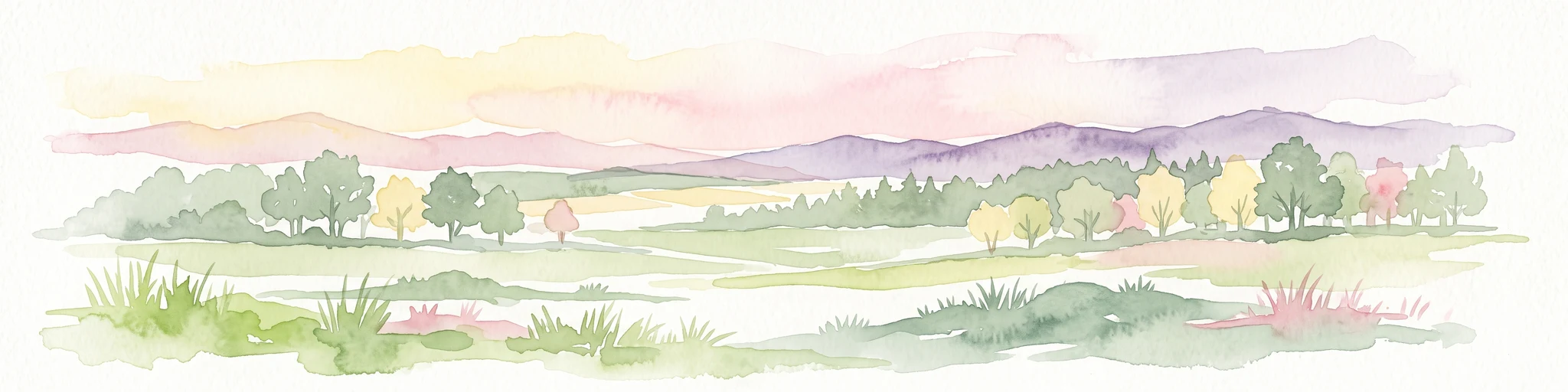
A horizontal watercolor painting showing a soft, natural landscape with rolling hills in the background, a line of trees in the midground, and a meadow with light wildflowers in the foreground.
Nature reserveSchweinfurt
About 7.1 km away#1 closest

Northwest

Saumain in der Stadt Schweinfurt Nature Reserve: Protected Main River Floodplain Geography

A vital riverine nature reserve in Schweinfurt, Bavaria

Spanning over 11 hectares within the city limits of Schweinfurt, this nature reserve protects an isolated, stable arm of the River Main. The area functions as a critical riparian habitat, featuring still water zones, emergent reeds, and hardwood floodplains that provide essential refuge in an urbanized region of Lower Franconia. Explore the geographic footprint of this protected site within the context of the greater Maintal landscape.

Area
0.116 km²
Established
1993
Relief
Lowland
Climate
Temperate
A soft, light watercolor painting of a pastoral landscape with rolling green fields, scattered trees, and distant hills under a pale yellow sky.
Nature reserveBavaria
About 15 km away#2 closest

Southwest

Sandgrasheiden am Elgersheimer Hof Nature Reserve and Main Valley Protected Landscapes

Rare sand grassland geography and conservation status in Lower Franconia, Bavaria

Sandgrasheiden am Elgersheimer Hof protects two distinct parcels of sand grassland, a rare habitat type that provides a refuge for specialized plant communities like Jurinea cyanoides. Situated within the Maintal between Schweinfurt and Dettelbach, the reserve creates a critical ecological link between agricultural plains and riverine meadow landscapes. This atlas entry details the geographic context and habitat mosaic of this significant Bavarian nature reserve.

Area
0.035 km²
Established
1999
IUCN
IV
A watercolor painting of a gentle landscape showing grassy plains, distant rolling hills, and patches of trees.
Nature reserveBayern
About 17 km away#3 closest

South

Sandfluren bei Volkach, Schwarzach am Main und Sommerach: Protected Sand Habitats

Inland dune formations and xerothermic grasslands in Bayern

Located in the Main valley, this nature reserve is defined by its inland sand dunes and drift sand flats that provide a refuge for specialized flora and fauna. As a designated Geotop and Natura 2000 site, it offers a distinct study of arid habitats surviving within an agricultural landscape. Explore the geographic boundaries and terrain mosaic that make this protected area a noteworthy feature of the Lower Franconian environment.

Area
1.048 km²
Established
1989
IUCN
IV
A soft watercolor painting of a rolling forested landscape with green hills and trees on a white background.
Nature reserveBayern
About 17 km away#4 closest

East

Naturwald Knetzberge-Böhlgrund Nature Reserve and Steigerwald Forest Geography

A mapped overview of protected broadleaf forests in Lower Franconia.

Spanning over 800 hectares, Naturwald Knetzberge-Böhlgrund is a major protected forest entity in the Steigerwald that integrates mature stands, deadwood habitats, and steep valley topographies. This area offers a unique perspective on natural forest succession and ecological preservation within the German landscape, marked by its distinct sandstone ridges and high biodiversity.

Area
8.474 km²
Established
2020
Relief
Mountain
Climate
Temperate
Watercolor painting showing rolling green hills, trees in the midground, and purple-tinted mountains in the background against a white backdrop.
Nature reservePrichsenstadt
About 17 km away#5 closest

Southeast

Naturwald Krackentännig Nature Reserve: A Protected Forest Landscape in Northern Bavaria

Geography of the Steigerwaldvorland and Gänsseegraben valley floor

Situated near Prichsenstadt, Naturwald Krackentännig acts as a refuge for ash and alder trees that thrive in the moist soils of the Lower Franconian countryside. This nature reserve provides a critical example of undisturbed forest development, showcasing a specialized ecosystem within the rolling hills of the Steigerwaldvorland and a commitment to preserving small-scale woodland habitats.

Area
0.026 km²
Established
2021
Relief
Lowland
Scope
Terrestrial
Nature reserveLandkreis Haßberge
About 18 km away#6 closest

East

Naturwald Wotansborn: A Protected Old-Growth Beech Reserve in the Heart of the Steigerwald

Ancient forest geography within the Haßberge district

Naturwald Wotansborn is a protected woodland enclave that preserves centuries-old beech trees and high concentrations of deadwood habitat. Located in the Steigerwald of Landkreis Haßberge, this reserve offers a window into natural forest cycles, housing the historic Wotansborn spring and a vital corridor for amphibian life along the Erlesbach stream.

Area
0.033 km²
Established
2020
IUCN
IV
Relief
Upland
Watercolor painting of a forest landscape with a grassy clearing and distant hills, rendered in soft green and pink tones.
Nature reserveGermany
About 19 km away#7 closest

Southeast

Naturwald Waldhaus: Geographic Mapping of an Ancient Beech Reserve in Steigerwald, Bavaria

Protected natural woodland and forest biodiversity in northern Germany.

Naturwald Waldhaus stands as a prime example of a protected forest in the Steigerwald, recognized for its exceptionally old beech stands and documented saproxylic beetle populations. This nature reserve provides essential ecological continuity within the Bamberg district, representing a rare, undisturbed woodland landscape that serves as a cornerstone for forest research in southern Germany.

Area
1.062 km²
Established
1978
Relief
Upland
Climate
Temperate
A watercolor painting of a rolling landscape with scattered trees, grasslands, and soft rolling hills in the background, rendered in pale pastel tones.
Nature reserveUnterfranken
About 23 km away#8 closest

South

Sande am Tannenbusch bei Kleinlangheim Nature Reserve: Protected Area and Atlas Overview

Geography of the Steigerwaldvorland sand landscape

Discover the ecological composition of Sande am Tannenbusch bei Kleinlangheim, a nature reserve in Unterfranken defined by its inland sand deposits and fragmented woodland footprint. This site is significant for its sand grassland mosaic, serving as a primary habitat for farmland birds and representing a specialized enclave within the broader Klosterforst region.

Area
0.382 km²
Established
1995
IUCN
IV
Relief
Lowland

Common questions about visiting, size, designation, and location context for Naturwaldreservat Riedholz

Naturwaldreservat Riedholz FAQs for park facts, access, geography, and protected area context

Find quick answers about Naturwaldreservat Riedholz, including protected-area facts, park geography, trail and visitor context, and how the park fits into its surrounding country and regional landscape.
MoriAtlas Explorer

Continue Your Protected Areas Search Across the Global Atlas

Deepen your exploration by continuing the structured search for national parks and protected areas worldwide. Utilize the comprehensive filtering capabilities to compare different conservation landscapes and refine your understanding of global park geography. Discover more about the distribution and characteristics of protected natural areas.

Global natural geography