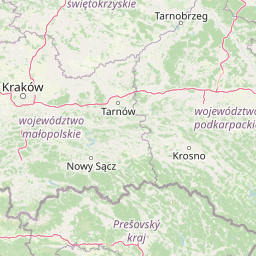
Why Ostoja Żyznów stands out
Ostoja Żyznów is best known for its exceptional loess landscape, deeply incised by dry ravines, gullies, and steep slopes covered in xerothermic grasslands. These warm, dry habitats, uncommon in this part of Poland, harbor many rare thermophilous plant species such as dwarf cherry, Moldavian and beak-shaped monkshood, and a wide range of orchids. The site is also valued for its richly varied forest mosaic. Pine-dominated coniferous forests, mixed woodlands, oak-hornbeam stands, acidophilous birch-oak forests, boggy birch-pine woodlands, and small peat bogs all occur within a relatively compact area. This combination of dry grassland, woodland, wetland, and riverine habitats makes the area ecologically distinctive despite its modest elevation and gentle overall relief.
Ostoja Żyznów history and protected-area timeline
Ostoja Żyznów was formally designated as a Site of Community Importance in 2011 as part of Poland's contribution to the Natura 2000 network under the EU Habitats Directive. The area had been recognized for its ecological value prior to this designation, and it is planned to be confirmed as a Special Area of Conservation, raising its protection status further.
Beyond its formal recognition as a Natura 2000 site, the area has a long history of traditional, low-intensity land use that shaped its present-day mosaic of habitats. Centuries of agriculture on the loess plateau, combined with limited woodland management and grazing on steep slopes, allowed xerothermic grasslands, oak-hornbeam forest fragments, and disturbed habitats to persist alongside cultivated land. The historic drainage patterns and small valley complexes also supported the development of transitional and raised peat bogs, while rivers like the Koprzywianka maintained natural floodplain features until modern regulation.
Ostoja Żyznów landscape and geographic character
The landscape of Ostoja Żyznów is dominated by a thick loess cover that gives the area a generally flat, plateau-like appearance, broken by an extraordinarily dense network of erosional features. Although average elevations lie between about 220 and 290 meters above sea level, with the highest point reaching roughly 305 meters, the terrain feels far more dissected than these modest figures suggest.
The Koprzywianka River cuts the principal valley through the site, joined by its most significant local tributary, the Kacanka, and a dense lattice of smaller, often unnamed streams. Together they have carved a system of valleys, gullies, ravines, mid-field scarps, and isolated hills with steep, sometimes cliff-like walls. The deeper valleys occasionally expose older Paleozoic strata, including Lower Cambrian rocks, beneath the younger loess blanket.
Hillsides and loess walls across the area frequently carry xerothermic grasslands, giving the landscape a characteristically warm-dry appearance unusual for this part of Poland. Where slopes are less exposed, they support various types of forest, while valley bottoms hold riparian vegetation, peatlands, and small water features, including a sizeable reservoir near the village of Szymanowice Dolne. This juxtaposition of open loess plateau, forested slopes, and incised river valleys defines the visual identity of the site.
Ostoja Żyznów ecosystems, habitats, and plant life
Ostoja Żyznów contains an unusually rich ecological mosaic for an area of its size and elevation. The dominant forest types are pine-dominated coniferous forests and mixed forests, but they are accompanied by important patches of oak-hornbeam (grąd) woodland, acidophilous birch-oak forests, and acid beech forests on appropriate substrates. Wetland and peatland habitats add further complexity, with raised bogs, transitional mires, boggy birch-pine forests, and alder swamp forests all represented.
The site also protects a striking range of open and semi-open habitats. Xerothermic grasslands of the Festuco-Brometea type cover many of the steepest loess slopes, while inland psammophilous grasslands appear on sandy substrates. Fresh meadows of the Arrhenatherion type, Molinia meadows, and willow-poplar-alder-ash floodplain forests line the river valleys. Small natural eutrophic water bodies and old river arms add still-water habitats with characteristic communities such as Nympheion and Potamion vegetation.
This concentration of contrasting habitats, from dry grasslands on loess cliffs to peat bogs and riparian forests, is the defining ecological feature of the area. Such a combination is increasingly rare in the Polish lowlands and uplands, where centuries of agricultural intensification have reduced most landscapes to cultivated fields with limited habitat diversity.
Ostoja Żyznów wildlife and species highlights
The fauna of Ostoja Żyznów reflects the diversity of its habitats, with many species of high conservation concern. Mammals include strictly protected species such as the western barbastelle bat, the European beaver, and the Eurasian otter, alongside widespread species like the beech marten, European badger, stoat, least weasel, and red squirrel.
Amphibians and reptiles are well represented, with the natterjack toad (lowland form), common toad, green toad, European tree frog, water and grass frogs, smooth and palmate newts, and several lizard and snake species including the smooth snake, sand lizard, viviparous lizard, and grass snake. The Koprzywianka and its tributaries support brook lamprey, white-finned gudgeon, and the noble crayfish, while native thick-shelled river mussel populations occur in the river itself.
The invertebrate fauna is particularly notable. Strictly protected species include the narrow-mouthed whorl snail, green hawker dragonfly, scarce large blue butterfly, dusky large blue butterfly, large copper, violet copper, and the oak long-horned beetle. More widespread species such as the small heath butterfly, scarce swallowtail, swallowtail, brimstone, and various day-flying moths are also common. Birdlife listed under the EU Birds Directive includes the common kingfisher, black woodpecker, red-backed shrike, marsh harrier, Montagu's harrier, and the corncrake, all typical of the mosaic of rivers, wet meadows, dry slopes, and woodland patches that the site supports.
Ostoja Żyznów conservation status and protection priorities
Ostoja Żyznów is protected primarily because it hosts one of the most diverse loess-associated habitat complexes in the Świętokrzyskie region. Numerous habitat types listed in Annex I of the EU Habitats Directive occur here, including Central European and subcontinental oak-hornbeam forests, lowland and montane hay meadows, acidophilous birch-oak forests, xerothermic grasslands, raised and transitional bogs, willow-poplar-alder-ash floodplain forests, acid beech forests, limestone rock communities, Molinia meadows, sand-dwelling thermophilous grasslands, riparian communities of Ranunculion fluitantis, and oak-elm-ash floodplain forests.
These habitats shelter many rare and threatened plant species, including dwarf cherry, yellow star-of-Bethlehem, Moldavian and beak-shaped monkshood, netted garlic, large-flowered anemone, Siberian bellflower, several orchid species such as the broad-leaved and marsh helleborines, and numerous others. The associated fauna includes species protected under Annex II of the Habitats Directive and Annex I of the Birds Directive, covering mammals, amphibians, fish, mollusks, dragonflies, butterflies, and breeding birds.
Together, these features justify the site's designation as a Site of Community Importance and its planned upgrade to a Special Area of Conservation within the Natura 2000 network. Conservation of Ostoja Żyznów contributes directly to the EU goal of maintaining and restoring favorable conservation status for threatened habitat types and species across Europe.
Ostoja Żyznów cultural meaning and human context
The territory of Ostoja Żyznów lies in a region with deep-rooted rural and agricultural traditions. The loess soils, while prone to erosion, have long supported farming communities on the flat plateau surfaces, while the steep valleys and wooded slopes have been used more extensively, through grazing and small-scale woodland management. This long history of low-intensity, traditional land use has helped maintain the mosaic of xerothermic grasslands, fragmented forests, and small peatlands that the site now protects.
The cultural landscape of the area is shaped by small historical villages and dispersed farmsteads scattered across the plateau and along the valleys. Local communities have coexisted with the natural features of the site for generations, and many of the existing habitat patterns reflect centuries of interaction between human activity and the loess terrain.
Top sights and standout views in Ostoja Żyznów
Ostoja Żyznów's most distinctive feature is its exceptional density of loess ravines, gullies, and xerothermic grasslands within an otherwise gently undulating agricultural plateau. These warm-dry slopes host many rare plant species that are otherwise uncommon in central Poland and form the area's most recognizable ecological signature.
Equally notable is the site's compact but rich combination of forest types, including pine and mixed forests, oak-hornbeam woodlands, acidophilous birch-oak stands, acid beech fragments, and a full suite of wetland and peatland habitats. This juxtaposition of dry, mesic, and wet habitats within a single Natura 2000 site, supported by the Koprzywianka and Kacanka river valleys, gives Ostoja Żyznów a conservation value well beyond what its modest size and elevation would suggest.
Best time to visit Ostoja Żyznów
Ostoja Żyznów is best appreciated from late spring through early autumn, when xerothermic grasslands on loess slopes come into flower and the contrast between cultivated plateau, forested ravines, and river valleys is most visually striking. Late spring is particularly rewarding for orchids and other rare thermophilous plants, while early summer highlights the richness of meadow and wetland vegetation along the river valleys.
Bird activity is most pronounced in late spring and early summer, when species such as the common kingfisher, black woodpecker, red-backed shrike, and corncrake are easiest to observe. Autumn brings subdued but atmospheric scenery to the wooded slopes, though many of the area's rare plant species are no longer in their most visible form. Winter visits are possible but offer fewer of the seasonal highlights that define the site ecologically.