Why Parc national naturel de Grande Colline stands out
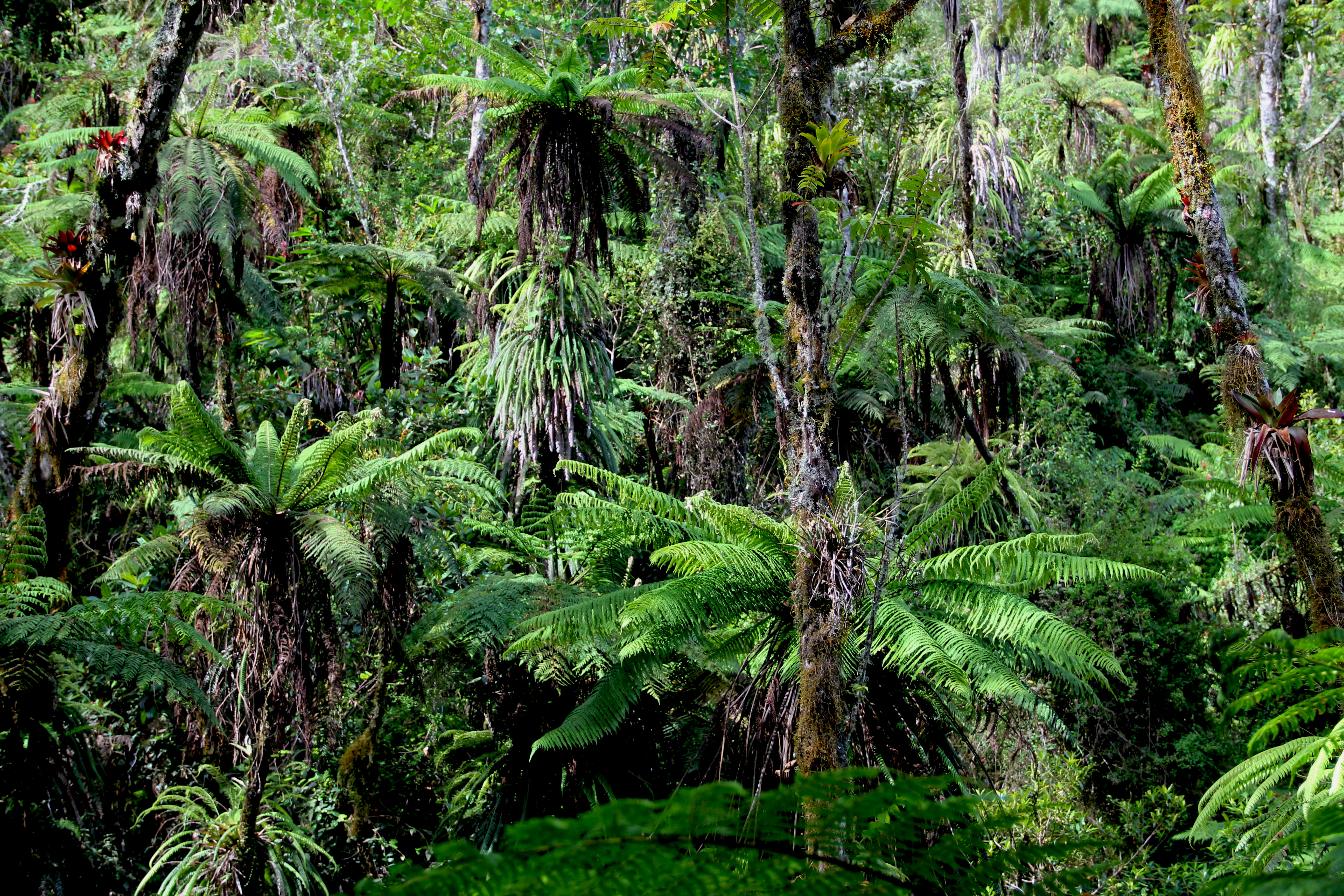
Grande Colline is best known as one of Haiti's most important strongholds of primary montane forest and as a premier site for the discovery of endemic Caribbean species. The park's high-elevation cloud and rainforests, populated with giant tree ferns and broadleaf trees above 1,800 meters, form a habitat mosaic that supports frogs, reptiles, and birds found nowhere else outside of this region. The park's scientific significance, marked by ongoing finds of new species such as undescribed Eleutherodactylus frogs, has positioned it as a key reference site within the Caribbean biodiversity hotspot. Its combination of inaccessibility, intact forest cover, and concentration of endemics makes it a defining example of Haiti's remaining wild mountain landscape.
Parc national naturel de Grande Colline history and protected-area timeline
The landscape that now forms the Parc national naturel de Grande Colline remained effectively unstudied for most of the modern era. Between 2011 and 2015, founders of the Haiti National Trust, with the financial support of the National Science Foundation and the Critical Ecosystem Partnership Fund, conducted the first systematic explorations of this remote mountain area, including aerial surveys by helicopter and subsequent ground-based field work.
Those expeditions revealed an unusually intact block of primary forest and a striking number of species new to science. The recurring discoveries of endemic species, together with growing understanding of the ecosystem and the threats it faced, built the case for formal protection. On July 23, 2014, the Haitian authorities designated the area as the Parc national naturel de Grande Colline, anchoring it within the country's national park system and placing the Massif de la Hotte's forests on the international conservation map.
Parc national naturel de Grande Colline landscape and geographic character
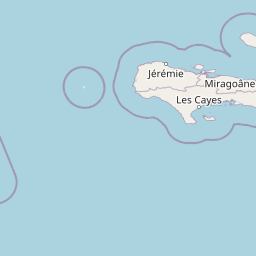
Grande Colline is defined by steep, deeply dissected mountain terrain at the core of the Massif de la Hotte. The park encompasses a chain of five named summits: Morne Desbarrières (1,843 m), Morne Grande Colline (2,025 m), Morne Petite Colline (1,860 m), and Morne Lézard (1,854 m), with the highest peaks reaching above 2,000 meters and forming the spine of the protected area. The topography is sharp and irregular, with ridges, deep ravines, and steep forested slopes that have helped preserve the area from widespread clearing.
Two major watersheds meet within the park. The Voldrogue and Roseaux basins drain much of the western and northern slopes, while a second watershed complex connects toward Tiburon and Port-Salut along the southern coast. Three primary rivers originate from these systems: Les Anglais, the Voldrogue, and the Roseaux, fed by an extensive network of tributaries that spill in nearly every direction from the central peaks. Precipitation is exceptionally high; above 2,000 meters, average annual rainfall can exceed 3,800 millimeters, sustaining dense forest cover and a permanent flow of surface water across the park's slopes.
Parc national naturel de Grande Colline ecosystems, habitats, and plant life
The vegetation of Grande Colline is dominated by primary forest, an increasingly rare asset in modern Haiti. Roughly 92% of the park's forested area is classified as subtropical low-mountain humid rainforest, with an additional 8% characterized as subtropical humid rainforest in higher zones. Above approximately 1,800 meters, the forest composition shifts visibly, with stands of giant tree ferns and broadleaf trees giving the higher slopes a distinctive cloud-forest character.
Throughout the Massif de la Hotte, pines are also present, contributing to the diversity of canopy types across the elevation gradient. The high rainfall and persistent humidity create conditions favorable for mosses, epiphytes, and moisture-loving understory plants, while the cool, mist-shrouded elevations above 2,000 meters support communities structurally similar to true cloud forest. This combination of dense canopy layers, persistent moisture, and varied elevation makes Grande Colline an unusually rich ecological reservoir compared with surrounding lowlands.
Parc national naturel de Grande Colline wildlife and species highlights
Grande Colline has gained international attention for its exceptional concentration of endemic wildlife, particularly amphibians. The park is home to Eleutherodactylus amadeus and to at least one additional undescribed Eleutherodactylus species, alongside other frogs tied closely to the streams and seepages of the primary forest. Other native frogs, such as Eleutherodactylus semipalmatus, inhabit the moist forest floor and watercourses of the reserve, benefiting from the shaded, humid conditions that older forest provides.
Broader surveys of the area have recorded roughly 20 frog species (some of which appear restricted to Grande Colline itself), 17 reptile species, and 19 bird species. Endemic and range-restricted birds include the Rufous-throated Solitaire (Myadestes genibarbis), the Hispaniolan Lizard Cuckoo (Coccyzus longirostris), and the Hispaniolan Trogon (Priotelus roseigaster), all of which mark Grande Colline as a key stronghold for Hispaniola's distinctive avifauna. Reptile diversity is similarly linked to the park's isolation, including species such as Anolis rupinae, which illustrate the broader pattern of endemism that defines the Massif de la Hotte.
Parc national naturel de Grande Colline conservation status and protection priorities
Parc national naturel de Grande Colline holds conservation significance well beyond its modest surface area. The park lies within the Caribbean biodiversity hotspot and protects a substantial block of intact primary forest in a nation where deforestation, driven by charcoal production, agriculture, and extraction of construction materials, remains intense. By safeguarding elevated forest cover, the park helps maintain habitat conditions for species that depend on the cool, humid microclimates of the Massif de la Hotte and cannot survive on cleared or degraded land.
The 2014 designation, supported by research from the Haiti National Trust and partners, formalized a recognition that the area's ecological value was irreplaceable. The park's design as an IUCN Category II reserve underlines its role in preserving natural ecosystems for scientific, ecological, and watershed functions. Continued scientific exploration is expected to yield further discoveries, reinforcing Grande Colline's standing as both a conservation refuge and a critical reference site for understanding Caribbean biodiversity.
Top sights and standout views in Parc national naturel de Grande Colline
Parc national naturel de Grande Colline is anchored by a remote five-peak mountain chain rising above 2,000 meters within the Massif de la Hotte, with nearly all of its area cloaked in primary forest. The park is a recognized Caribbean biodiversity hotspot, celebrated for endemic frogs of the genus Eleutherodactylus and for endemic Hispaniolan bird species such as the Hispaniolan Trogon and the Hispaniolan Lizard Cuckoo.
Its exceptionally high rainfall, sometimes exceeding 3,800 millimeters per year at the highest elevations, sustains dense subtropical rainforest and permanently flowing rivers that feed three major southern watersheds. Combined with its inaccessibility and intact forest cover, this makes Grande Colline one of Haiti's most distinctive protected landscapes and an important center for ongoing scientific discovery.
Best time to visit Parc national naturel de Grande Colline
The park's climate is dominated by very high rainfall throughout much of the year, particularly above 1,800 meters, where persistent moisture supports its cloud-forest character. Conditions can vary between wetter and relatively drier intervals, but visitors should generally anticipate humid, lush scenery at all times. Cooler temperatures at higher elevations and frequent cloud immersion around the peaks create an atmospheric montane environment regardless of season.
Because of the steep terrain, dense vegetation, and limited access infrastructure, exploration of Grande Colline has historically been limited to scientific expeditions rather than regular tourism. Anyone planning an actual visit should expect challenging conditions, full forest immersion, and the possibility of encountering deeply wet conditions that further emphasize the park's wild, undisturbed character.