Why Pico Bonito National Park stands out
Pico Bonito is renowned for its dramatic mountain scenery rising abruptly from the Caribbean coastal plain, creating one of the most visually striking protected landscapes in Central America. The park's exceptional biodiversity stems from its position at the convergence of North and South American biogeographic realms, with species from both continents meeting in this mountainous corridor. Pico Bonito has become a premier birdwatching destination, with the park and surrounding region recording hundreds of bird species including numerous migratory species that travel through the Mesoamerican flyway. The combination of whitewater rivers descending steep mountain canyons, cloud-draped peaks, and accessible forest trails makes the area popular for hiking, kayaking, and rafting. The park's carbon sequestration partnership with the World Bank's BioCarbon Fund represents an innovative model for combining conservation with climate mitigation and community development.
Pico Bonito National Park history and protected-area timeline
Pico Bonito National Park was established on January 1, 1987, formalizing protection for the mountainous terrain that had long been recognized for its ecological significance and scenic value. The creation of the protected area reflected a growing Honduran commitment to conserving the nation's natural heritage during a period when Central American countries were developing more sophisticated approaches to protected area management. The Pico Bonito National Park Foundation (FUPNAPIB) was established in 1993 through national legislative authorization, creating a dedicated nonprofit entity to support park management and conservation programming. The foundation formalized a co-management agreement with the State Forest Administration, allowing nongovernmental expertise and resources to complement governmental regulatory authority. In 2005, the foundation launched an innovative carbon sequestration project in partnership with the EcoLogic Development Fund and the World Bank's BioCarbon Fund, representing one of the first large-scale forest carbon initiatives in Central America. This program aimed to mitigate climate change impacts while providing training and employment in reforestation and agroforestry for local communities living in the buffer zones surrounding the core protected area.
Pico Bonito National Park landscape and geographic character
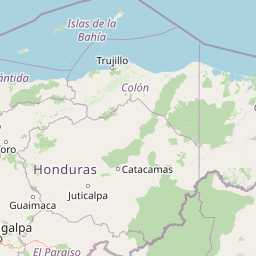
The landscape of Pico Bonito National Park is defined by the steep, rugged terrain of the Cordillera Nombre de Dios, a mountain range that forms the northernmost extension of the Central American highlands along the Caribbean coast of Honduras. The terrain features dramatic elevation changes, with mountain ridges and valleys descending sharply from high peaks toward the coastal plain near La Ceiba. Numerous streams and small rivers originate in the park's upper elevations, cutting through narrow valleys and descending as whitewater cascades before reaching the lower slopes. The highest point within the park reaches approximately 2,480 meters, where summit areas often remain shrouded in clouds when moisture-laden trade winds encounter the rising terrain. Lower elevations feature more gentle terrain transitioning toward the coastal wetland areas that fringe the Caribbean. The visual impact of the mountains rising directly from the sea-level coastal fringe creates a striking backdrop visible from the nearby city of La Ceiba and from boats approaching the Honduran coast.
Pico Bonito National Park ecosystems, habitats, and plant life
The ecological character of Pico Bonito National Park reflects its extraordinary elevation range and position at a biogeographic crossroads. The lower elevations support tropical wet forest characterized by tall trees, dense canopy, and high species diversity typical of lowland Central American rainforests. As elevation increases, the forest transitions through premontane zones where temperature decreases and moisture patterns shift, eventually reaching elfin cloud forest at the highest elevations where constant mist and reduced temperatures create specialized conditions. This vertical sequence allows numerous species to find appropriate habitat within the park's boundaries, with different species groups dominating at different elevations. The park's location within the Mesoamerican Biological Corridor means it plays a role in maintaining regional connectivity for wildlife populations that need to move between higherland and lowland habitats seasonally or over longer time scales. Forest protection programs managed by the foundation address threats from logging, agricultural expansion, and other activities that could degrade the natural vegetation cover that sustains the park's biodiversity.
Pico Bonito National Park wildlife and species highlights
Pico Bonito National Park supports significant wildlife populations across its diverse habitats, with particular prominence as a birdwatching destination. The park and surrounding region have recorded hundreds of bird species, including both resident tropical species and migratory birds that pass through during seasonal movements along the Mesoamerican flyway. The varied elevation zones provide habitat for different bird communities, from lowland species in the humid forest to highland specialists adapted to cloud forest conditions. The mountainous terrain and forest cover also provide refuge for numerous mammal species, though specific species documentation varies across different sources. The aquatic habitats created by the park's streams and rivers support fish populations and provide habitat for amphibians whose life cycles require both aquatic and terrestrial environments. The overall biodiversity reflects Honduras's position as one of the more biologically diverse countries in Central America, with the protected mountain landscapes serving as critical refuges for species that require intact forest habitats.
Pico Bonito National Park conservation status and protection priorities
Pico Bonito National Park represents an important conservation priority within Honduras and the broader Mesoamerican region. The protected area safeguards significant biodiversity by preserving forest cover across a dramatic elevation gradient that would otherwise face pressure from agriculture, logging, and development. The park's inclusion in the Mesoamerican Biological Corridor connects it to a regional conservation network designed to maintain ecological connectivity across international boundaries. The management model combining governmental oversight with nonprofit foundation support has enabled additional conservation programming beyond basic protection, including environmental education initiatives that build local support for conservation and gender equality programs that ensure diverse community participation in natural resource stewardship. The carbon sequestration project launched in 2005 demonstrates how conservation areas can contribute to climate mitigation while generating sustainable livelihood opportunities for surrounding communities through reforestation and agroforestry activities.
Pico Bonito National Park cultural meaning and human context
The area surrounding Pico Bonito National Park includes communities whose history and livelihoods connect to the mountainous landscape now protected within the park boundaries. The municipality of El Porvenir, where some of the park's terrain is located, has historically encompassed both agricultural land and forest areas. The park's buffer zone includes communities whose relationship with the natural environment involves both traditional land use practices and increasing engagement with conservation-based economic opportunities. The management approach recognizes that long-term conservation success depends on community wellbeing, leading to programs that support sustainable livelihoods and involve local residents in protection activities. The proximity to La Ceiba, one of Honduras's major Caribbean coastal cities, provides the primary access point for visitors and connects the park to regional tourism infrastructure.
Top sights and standout views in Pico Bonito National Park
Pico Bonito National Park offers visitors the opportunity to experience dramatic mountain wilderness within a compact and accessible protected area near Honduras's Caribbean coast. The steep peaks rising from near sea level create a landscape of exceptional scenic beauty, with cloud-covered summits visible from the coastal plain. The park's trail systems allow visitors to hike through multiple forest types within a single day of walking, experiencing the transition from tropical lowland forest to cloud forest as they ascend. Whitewater rivers descending the mountain slopes provide rafting and kayaking opportunities, while the forest canopy supports prolific birdlife that draws birdwatchers from around the world. The combination of outdoor activities, ecological diversity, and the innovative community-based conservation model makes Pico Bonito notable among Central American protected areas.
Best time to visit Pico Bonito National Park
The climate in Pico Bonito National Park reflects its Caribbean coastal location, with relatively consistent temperatures throughout the year and precipitation patterns influenced by the wet season typically running from May through November. The surrounding region receives substantial rainfall, creating lush forest conditions but also meaning that trail conditions may be muddy and stream crossings more challenging during wetter months. The drier season from December through April generally offers more comfortable conditions for hiking and outdoor activities, though rainfall can occur at any time given the humid tropical setting. Higher elevations within the park tend to be cooler and often enveloped in cloud or mist regardless of season, adding to the atmospheric quality of cloud forest environments. Visitors interested in birdwatching may find different species active during different seasons, with migratory species present during the northern winter months.