

Mori Atlas logo
National parkLa Muralla National Park

Explore the mapped boundaries and regional setting of this Honduran national park.

La Muralla National Park: Discover Protected Landscape and National Park Geography

La Muralla National Park stands as a protected natural area offering insights into Honduran geography and conservation landscapes. As a designated national park, it provides a unique opportunity to explore mapped park boundaries and understand its place within the regional context. This page serves as an atlas entry for La Muralla National Park, focusing on its geographic identity and the value it holds for structured landscape discovery.

Cloud ForestNational ParkHondurasOlanchoMontane ForestBiodiversity

La Muralla National Park

National park

Park overview

Structured park overview, official facts, and landscape profile for La Muralla National Park

La Muralla National Park park facts, protected area profile, and essential visitor context
Review the core facts for La Muralla National Park, including designation, size, terrain, visitor scale, habitats, and operating context in one park-focused overview.

About La Muralla National Park

La Muralla National Park occupies a critical position in Honduras' protected area network, safeguarding substantial tracts of cloud forest within the Sierra de Agalta mountain range. The park's establishment in 1993 reflected growing recognition of the ecological importance of Olancho's montane forests, which receive significant precipitation and support distinct ecological communities adapted to persistent mist and cloud cover. The protected area extends across multiple municipalities, with approximately 80 percent located within La Unión municipality and the remaining area split between Jano and Esquipulas del Norte. Beyond the core protected zone, a buffer area of comparable size provides transitional habitat and supports broader landscape connectivity. The park faces the challenge common to many Honduran protected areas: limited government resources for enforcement and management have created reliance on community organizations and international conservation partnerships to maintain protection effectiveness.

Quick facts and research context for La Muralla National Park

La Muralla National Park encompasses roughly 210 square kilometers of protected land plus a buffer zone of approximately 132 square kilometers, located in the Olancho Department of Honduras. The park was established in 1993 and falls under IUCN Category II protection. The terrain is characterized by mountainous cloud forest environments within the Sierra de Agalta, with elevations supporting diverse ecological zones. The park sits at coordinates approximately 15 degrees north latitude in central Honduras.

Park context

Deeper park guide and search-rich context for La Muralla National Park

La Muralla National Park history, landscape, wildlife, and travel context
Explore La Muralla National Park through its history, landscape character, ecosystems, wildlife, conservation priorities, cultural context, and seasonal travel timing in a structured park guide built for atlas discovery and search intent.

Why La Muralla National Park stands out

La Muralla National Park is best known for its remarkable orchid diversity, with 123 species documented within the park boundaries. It also stands out for the discovery of three plant genera endemic to Honduras: Bartlettina williamsii, Saurauia molinae, and Tetrorchirium molinae. The park's biodiversity surveys have documented over 850 plant species, representing 410 genera across 127 botanical families, making it one of the most botanically significant protected areas in Honduras. The cloud forest habitats support complex ecological communities that are increasingly important as conservation priorities in Central America.

La Muralla National Park history and protected-area timeline

La Muralla was designated as a national park in January 1993, entering Honduras' protected area system during a period of expanding conservation legislation in Central America. Shortly after establishment, the Organization for the Protection of National Park La Muralla (OPMA) formed to support the park's management, though this community group eventually ceased operations due to insufficient funding. In 2002, the Association of Community Services Union (ASECUN) emerged to provide ongoing community support for La Muralla and related environmental initiatives. Conservation efforts have also involved the Honduran Institute of Forestry Conservation (ICF), the PANAM Foundation, the Project for Forests and Rural Productivity (PBPR), and The Nature Conservancy. Biodiversity documentation efforts began in 1992 through the Forestry Conservation Project of Honduras (CONSEFORH), which conducted the first systematic surveys of the park's flora.

La Muralla National Park landscape and geographic character

The terrain of La Muralla National Park consists of rugged mountainous topography characteristic of the Sierra de Agalta, a significant mountain range in central Honduras. The landscape features steep slopes, narrow valleys, and elevation changes that create diverse microclimates and habitat gradients. Cloud forest dominates the higher elevations where moisture from persistent mist supports dense vegetation. The mountain terrain channels water through numerous small streams and drainage systems that feed into broader watershed networks in Olancho. The combination of elevation, aspect, and moisture creates a visually distinctive landscape of forested ridges descending into shadowed ravines.

La Muralla National Park ecosystems, habitats, and plant life

The ecological character of La Muralla is defined by its cloud forest environments, which represent some of the most biodiverse habitats in Honduras. The montane forests feature diverse tree species across multiple botanical families, with melastome, Lauraceae, Passifloraceae, and Solanaceae families well represented in documented surveys. The 2001 Paseo Pantera project cataloged 859 plant species within the park, including 65 newly recorded species for Honduras and three genera endemic to the country. These endemic discoveries, including Bartlettina williamsii, Saurauia molinae, and Tetrorchirium molinae, highlight the park's significance for botanical conservation. The cloud forest structure supports multiple vegetation layers, from canopy emergents through understory to ground cover, creating complex habitat complexity.

La Muralla National Park wildlife and species highlights

While the source material provides extensive botanical documentation, specific wildlife details are limited. The cloud forest environments of La Muralla would be expected to support diverse bird communities, small mammals, and arthropod fauna typical of Honduran montane forests. The park's protected status provides crucial habitat for species dependent on intact forest ecosystems. The biodiversity studies focused primarily on plant documentation, suggesting that wildlife surveys may represent an area for future research to fully characterize the park's fauna.

La Muralla National Park conservation status and protection priorities

La Muralla National Park represents an important conservation target within Honduras, protecting forest habitats that face pressure from logging, agriculture expansion, and fuelwood collection across Olancho. The discovery of endemic plant species within the park underscores its irreplaceable conservation value. However, the park's management has struggled with limited government support, a challenge affecting many protected areas in Honduras. Community organizations and international partnerships have provided essential support for conservation activities. The buffer zone surrounding the core protected area helps maintain landscape connectivity and provides a transitional area where sustainable land use practices can reduce edge effects on the park's interior habitats.

La Muralla National Park cultural meaning and human context

La Muralla National Park is situated within Olancho Department, one of Honduras' most sparsely populated regions where traditional agricultural practices and forest dependency remain part of local livelihoods. The park's territory spans three municipalities, with community groups like ASECUN playing roles in supporting both conservation and local development objectives. The relationship between park management and surrounding communities represents an important dimension of the protected area's long-term viability, as local support influences enforcement effectiveness and sustainable resource use in buffer zones.

Top sights and standout views in La Muralla National Park

The park's 123 documented orchid species represent a major highlight, making it particularly significant for orchid enthusiasts and botanical researchers. The presence of three Honduras-endemic plant genera distinguishes La Muralla from most other Central American protected areas. The extensive plant documentation, with nearly 860 species recorded, provides a relatively thorough baseline for understanding the park's botanical richness. The cloud forest setting creates atmospheric landscapes of mist-covered ridges and verdant ravines that define the park's visual character.

Best time to visit La Muralla National Park

The optimal visiting period for La Muralla National Park falls during the dry season typically spanning December through April, when conditions facilitate easier trail access and clearer visibility. The park's cloud forest character means that mist and moisture persist year-round, with the wet season from May through November bringing heavier rainfall that can complicate exploration. The dry months offer the most stable conditions for visitors interested in wildlife observation and landscape photography, though the cloud forest's characteristic mist remains part of the experience regardless of season. Morning hours often provide the best opportunities for wildlife activity and atmospheric conditions.
Park location guide

Geography guide, regional context, and park location map for La Muralla National Park

La Muralla National Park park geography, regions, and map view in Honduras
Understand where La Muralla National Park sits in Honduras through a broader geographic reading of the surrounding landscape, nearby location context, and its mapped position within the national park landscape.

How La Muralla National Park fits into Honduras

Honduras, officially the Republic of Honduras, is a Central American nation with a predominantly Mestizo population. It gained independence in 1821 and operates as a unitary presidential republic. The country faces significant economic challenges, with over 70% of its population living in poverty, though it possesses valuable natural resources including minerals, coffee, and tropical fruits.

Wider geography shaping La Muralla National Park in Honduras

Honduras is located in Central America, bordering Guatemala to the west, El Salvador to the southwest, Nicaragua to the southeast, the Pacific Ocean to the south at the Gulf of Fonseca, and the Caribbean Sea to the north at the Gulf of Honduras. The terrain includes mountainous regions and coastal lowlands.

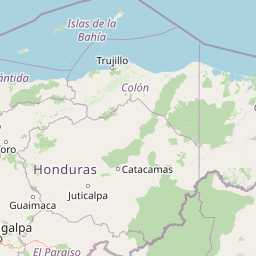
Map view of La Muralla National Park

Use this park location map to pinpoint La Muralla National Park in Honduras, understand its exact geographic position, and read its mapped placement within the surrounding landscape more clearly.

Pigeon | © OpenStreetMap contributors

Location context for La Muralla National Park

Olancho
Park atlas

Explore other protected areas, compare national parks, and trace the regional cloud forest geography surrounding La Muralla National Park in Honduras.

Discover More Protected Areas Near La Muralla National Park, Honduras, and Explore Regional Cloud Forest Landscapes
Following your exploration of La Muralla National Park, browse other national parks and protected areas across the mountainous Olancho Department of Honduras, including adjacent conservation landscapes. Compare diverse montane ecosystems within this geographic overview to discover similar cloud forest environments and regional biodiversity.
National parkHonduras

Montaña de Yoro National Park: Honduran National Park Atlas and Protected Landscape Exploration

Understanding its mapped boundaries and regional geography.

This card details Montaña de Yoro National Park, a designated national park in Honduras, offering a focused look at its protected landscape. It provides essential geographic context, helping users to understand the park's mapped boundaries and its significance within the broader atlas of Honduran protected areas. Explore the specific terrain and regional setting that define Montaña de Yoro National Park.

Area
154.8 km²
Established
1987
IUCN
II
Relief
Mountain
National parkHonduras

Sierra de Agalta National Park: National Park within Honduras's Protected Landscape Atlas

Explore mapped boundaries and natural terrain details.

Sierra de Agalta National Park is a protected national park in Honduras, offering valuable insight into the country's natural geography and conservation efforts. As a key entity within the broader atlas of protected lands, this park's mapped boundaries and surrounding terrain provide a foundation for understanding its ecological significance and regional context. Discover the geographic identity of Sierra de Agalta National Park and its contribution to Honduras's protected areas.

Area
207.85 km²
Established
1987
IUCN
II
Relief
Mountain
National parkHonduras

Pico Pijol National Park: National Park within the Honduran Geographic Atlas

Explore its mapped boundaries and protected landscape context.

Pico Pijol National Park stands as a protected area within Honduras, offering critical insight into the nation's natural landscapes. This detail page provides essential context for understanding its geographic positioning and mapped boundaries, serving as a foundational element for broader atlas-based exploration of protected regions in Central America. Discover the park's unique identity as a national park and its contribution to regional geographic understanding.

Area
122.1 km²
Established
1987
IUCN
II
Relief
Mountain
National parkHonduras

Jeannette Kawas National Park: A Protected Landscape within Honduran Geography

Explore the mapped boundaries and regional setting of this national park.

Jeannette Kawas National Park is a vital protected area whose geographic identity is central to understanding the natural landscape of Honduras. This page serves as a detailed exploration point, focusing on the park's mapped boundaries and its role within the country's protected lands atlas. Discover the unique aspects of this national park's terrain and its contribution to regional geographic context, providing a factual basis for atlas-driven learning.

Area
781.62 km²
Established
1994
IUCN
II
Relief
Highland
National parkAtlántida Department

Punta Izopo National Park: Honduran National Park with Defined Protected Boundaries

Explore the geographic setting of this protected landscape.

Punta Izopo National Park is a protected natural area situated within the Atlántida Department of Honduras. As a national park, it represents a significant entity for exploring Honduran geography and mapped conservation lands. This park detail page provides context on its protected boundaries and its role within the regional landscape atlas.

Area
112 km²
Established
1992
IUCN
II
Relief
Lowland
National parkColón Department

Capiro Calentura National Park: Honduran National Park Atlas and Protected Landscape

Discover mapped geography and protected area context in Colón Department.

Access detailed geographic information and mapped boundaries for Capiro Calentura National Park, a key protected area within Honduras' Colón Department. This entry offers an atlas-style perspective on the park's landscape and its regional setting, supporting structured discovery of national parks and conservation lands.

Area
80.82 km²
Established
1992
IUCN
II
Climate
Tropical
National parkHonduras

Montaña de Comayagua National Park: Honduras National Park and Protected Area Geography

Explore mapped boundaries and natural terrain within Central America.

Montaña de Comayagua National Park stands as a vital protected area, contributing significantly to the geographic tapestry of Honduras. This national park offers a focused perspective for atlas exploration, allowing users to trace its mapped boundaries and comprehend its role within the regional landscape. Delve into the park's protected identity and its unique position in the mapped geography of Central America.

Area
184.8 km²
Established
1987
IUCN
II
Relief
Mountain
National parkHonduras

Cerro Azul Meámbar National Park: Protected Area and Mapped Landscape Context

Explore its geography and national park boundaries in Honduras.

Cerro Azul Meámbar National Park offers a unique perspective on Honduras's protected lands and national park geography. This entry provides an atlas-style overview of its mapped boundaries and its regional landscape context, crucial for understanding the distribution of conservation areas within Central America. Gain insight into its protected area status and geographic identity for focused landscape discovery.

Area
300 km²
Established
1987
IUCN
II
Relief
Mountain

Common questions about visiting, size, designation, and location context for La Muralla National Park

La Muralla National Park FAQs for park facts, access, geography, and protected area context
Find quick answers about La Muralla National Park, including protected-area facts, park geography, trail and visitor context, and how the park fits into its surrounding country and regional landscape.
MoriAtlas Explorer

Continue Your Protected Areas Search Across the Global Atlas

Deepen your exploration by continuing the structured search for national parks and protected areas worldwide. Utilize the comprehensive filtering capabilities to compare different conservation landscapes and refine your understanding of global park geography. Discover more about the distribution and characteristics of protected natural areas.

Global natural geography