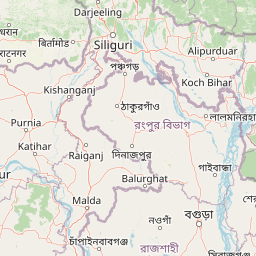
Why Raimona National Park stands out
Raimona National Park is best known for its significant populations of Asian elephants, gaur (Indian bison), and the endemic golden langur, a primate species found almost exclusively in this region of Assam. The park also supports a remarkable diversity of large mammals including Bengal tigers, leopards, clouded leopards, and various deer species. Its location within the Eastern Himalaya Biodiversity Hotspot and role as a tiger reserve buffer contribute to its conservation significance. The park has been recognized as an Important Bird and Biodiversity Area, hosting species such as the white-bellied heron, Bengal florican, and numerous hornbill species.
Raimona National Park history and protected-area timeline
The conservation history of Raimona National Park spans several decades of recommendation and advocacy. The area was initially proposed for protection as the Ripu-Chirang Wildlife Sanctuary, encompassing portions of the Ripu Reserved Forest and Chirang Reserved Forest. This recommendation stemmed from the area's exceptional significance for conserving viable populations of Asian elephants, gaur (Indian bison), and the endangered golden langur, all of which maintain substantial populations in this portion of Assam. After years of consideration, Raimona was formally declared a national park on June 5, 2021, announced by the Chief Minister of Assam at Gandhi Mandap in Guwahati on World Environment Day. The formal notification followed in the Assam Gazette on June 9, 2021. The park was carved from the northern portion of the notified Ripu Reserve Forest, creating a dedicated protected area that had long been recommended for higher conservation status.
Raimona National Park landscape and geographic character
Raimona National Park occupies the Himalayan foothill terrain in extreme western Assam, characterized by gently undulating slopes descending from the main Himalayan range into the Brahmaputra valley. The landscape features a network of river systems that define the park's boundaries, with the Sankosh River forming the western limit along the border between Assam and West Bengal, while the Saralbhanga River marks the northern and eastern boundaries. The terrain supports a mix of semi-evergreen and moist deciduous forest types typical of the Himalayan foothill ecosystem. The elevation gradient from the foothills down to the valley transition creates diverse microhabitats within the park's boundaries. This physical setting places the park at the northwestern edge of the Eastern Himalaya, where Himalayan mountain ecosystems transition into the more humid subtropical landscapes of the Brahmaputra basin.
Raimona National Park ecosystems, habitats, and plant life
The ecological character of Raimona National Park reflects its position in the Himalayan foothills and its inclusion within the Eastern Himalaya Biodiversity Hotspot. The park harbors approximately 380 varieties of plants and orchids, indicating significant botanical diversity. The forest composition includes semi-evergreen and moist deciduous vegetation communities that support the park's diverse fauna. This region represents a critical ecological corridor connecting the Himalayan mountain chain with the broader South Asian protected area network. The contiguous forest linkage with Ripu Reserve Forest creates a larger landscape unit that maintains ecological processes across wider geographic areas, supporting species that require extensive habitat ranges. The river boundaries also provide aquatic and riparian habitats that complement the terrestrial forest environments.
Raimona National Park wildlife and species highlights
Raimona National Park supports an impressive array of mammalian species, with particularly notable populations of large herbivores and predators. The park is renowned for its Asian elephant population, which moves through the forested foothills in search of resources. Gaur, the largest wild cattle species in Asia, maintains significant numbers in the park's grasslands and forest edges. The golden langur, one of the rarest primates in India and endemic to this specific region of Assam, finds crucial habitat within Raimona's forests. Predator diversity includes Bengal tigers, leopards, and clouded leopards, while smaller carnivores such as dholes (wild dogs), Asian golden cats, and various mongoose species inhabit the understory. The ungulate community includes sambar, chital, hog deer, and barking deer, providing prey base for predators. The primate community also includes slow lorises, Assamese macaques, and Rhesus monkeys. Notable smaller mammals include the Chinese pangolin, Himalayan black bear, Himalayan serow, Himalayan porcupine, and the vulnerable hispid hare. The avifauna is exceptionally diverse, featuring the white-bellied heron as a flagship bird species, along with swamp francolin, various pheasants including grey peacock pheasant, and the Indian peafowl. Vulture species including slender-billed vulture and white-backed vulture occur here, while the Bengal florican represents a critically important ground bird. The hornbill diversity is particularly notable, with great pied hornbill, wreathed hornbill, rufous-necked hornbill, and Indian grey hornbill all present. Other significant birds include Oriental darter, lesser adjutant, various falconets, bazas, osprey, imperial pigeons, parakeets, hill myna, and scaly thrush.
Raimona National Park conservation status and protection priorities
Raimona National Park plays a critical conservation role as part of the larger Manas Tiger Reserve landscape, serving as the westernmost buffer to this renowned tiger conservation area. Its establishment as a national park in 2021 elevated protection for an area that had long been recommended for wildlife sanctuary status due to its significance for elephants, gaur, and golden langur. The park's position within the Eastern Himalaya Biodiversity Hotspot places it in one of the world's most significant centers of biodiversity. The contiguous forest linkage with Ripu Reserve Forest creates a larger conservation landscape essential for maintaining population connectivity for wide-ranging species including elephants and tigers. Recognition as an Important Bird and Biodiversity Area highlights the site's significance for avian conservation, with several threatened species present. The park contributes to India's network of protected areas aimed at preserving representative samples of Himalayan ecosystems and their characteristic species.
Raimona National Park cultural meaning and human context
Raimona National Park is located within the Bodoland Territorial Region, an area inhabited by the Bodo people and other ethnic communities who have historically maintained relationships with the forested landscapes of western Assam. The region's forest areas have been part of traditional land use patterns involving shifting cultivation and resource gathering by local communities. The establishment of the park as part of the Bodoland Territorial Region's conservation framework represents contemporary efforts to balance wildlife protection with the interests of local communities who share this landscape. The park's proximity to the Sankosh River, which forms the boundary with West Bengal, places it at a cultural crossroads between Assam's Bodo-dominated western region and the adjacent state.
Top sights and standout views in Raimona National Park
Raimona National Park stands out for its recent establishment as one of India's newest national parks, created specifically to protect a critical corridor in the Manas Tiger Reserve ecosystem. The park's significance for Asian elephants and tigers places it in India's premier tier of tiger landscape conservation. The golden langur population represents an endemic species conservation priority, as this primate is largely restricted to this specific region of Assam. The exceptional bird diversity, with species ranging from white-bellied heron to multiple hornbill species, makes the park a destination of interest for ornithologists. The combination of Himalayan foothill terrain, semi-evergreen forests, and river boundaries creates a visually diverse landscape within a relatively compact protected area. The park's role as a buffer to Manas Tiger Reserve connects it to India's oldest tiger reserve and a UNESCO World Heritage Site.
Best time to visit Raimona National Park
The optimal period to visit Raimona National Park corresponds with the dry winter months from November through March, when reduced rainfall makes wildlife viewing more accessible and the risk of flooding in low-lying areas decreases. The post-monsoon season brings lush vegetation but can involve difficult access due to high water levels in rivers and streams. Summer months from April to June offer excellent opportunities for spotting elephants and other wildlife at water sources, though temperatures can become quite high. The monsoon season from June to September brings heavy rainfall to the Himalayan foothills and is generally less suitable for park visits. The winter months provide comfortable temperatures for wildlife observation and allow access to higher elevation trails within the park's foothill terrain.