
Mori Atlas logo
Nature reserveRezerwat przyrody Bagno Bocianowskie

Mapping the forest communities, inland dunes, and peatland mosaics of the Polish lowlands

Rezerwat przyrody Bagno Bocianowskie: A Protected Nature Reserve in Mazowieckie Voivodeship

(Rezerwat przyrody „Bagno Bocianowskie”)

Rezerwat przyrody Bagno Bocianowskie represents a compact and ecologically significant nature reserve situated within the broader landscape of the Mazowiecki Park Krajobrazowy. This protected area showcases the distinct interplay between glacial sand dunes and water-filled peat depressions, creating a mosaic of sphagnum alder bog woodland and acidic oak forest. The reserve offers a clear window into the regional geography of the Garwolińska Plain, where diverse plant life and lowland forest habitats thrive within a sheltered, low-lying environment.

nature reservepeatlandbog woodlandinland dunesacidic oak forestpine forest
Stylized digital illustration of a calm, reflective pool in a wetland, surrounded by tall pine trees and distant purple mountains under a soft pink sunset sky.

Rezerwat przyrody Bagno Bocianowskie

Nature reserve

Park overview

Structured park overview, official facts, and landscape profile for Bagno Bocianowskie Nature Reserve

Bagno Bocianowskie Nature Reserve park facts, protected area profile, and essential visitor context

Review the core facts for Bagno Bocianowskie Nature Reserve, including designation, size, terrain, visitor scale, habitats, and operating context in one park-focused overview.

About Bagno Bocianowskie Nature Reserve

Bagno Bocianowskie lies in the eastern part of the Masovian Voivodeship, just beyond the built-up area of Celestynów, and forms one of the smaller but ecologically focused protected areas embedded in the larger Mazowiecki Park Krajobrazowy. Despite its modest size, the reserve captures a landscape pattern that is highly characteristic of the broader Garwolińska Plain: gentle inland dunes formed from glacial and post-glacial outwash sands, diversified by shallow depressions in which peat has accumulated over thousands of years.

Administratively and ecologically, the reserve functions as a reference site for bog-forest communities in the lowlands near Warsaw. Its protection status is classified as partial, meaning that active forest management is allowed in some zones while the most ecologically sensitive central pockets are kept free of intervention. This approach reflects the reserve's dual role: safeguarding mature, often boggy forest stands for their biological value while maintaining enough surrounding woodland to maintain forest continuity with the surrounding landscape park.

From a visitor's perspective, the reserve is primarily a quiet forest-park experience. The terrain is gentle, the canopy largely closed, and the most visually distinctive features are the dark, water-filled bog hollows at the heart of the area. The reserve is one of the places where the ecological character of the Mazowiecki Park Krajobrazowy, often perceived simply as a flat pine forest, reveals itself as a much richer mosaic of dry, wet, and boggy communities.

Quick facts and research context for Bagno Bocianowskie Nature Reserve

Bagno Bocianowskie is a partial-protection forest nature reserve in the village-administrative area of Celestynów, within the Masovian Voivodeship and the Mazowiecki Park Krajobrazowy. Created in 1982 by order of the Ministry of Forestry and Wood Industry, it covers about 69 hectares on the Garwolińska Plain, a lowland mesoregion characterized by outwash sands, dune fields, and peat deposits.

Dominant forest types are sphagnum alder bog woodland and acidic oak forest, with Scots pine as the prevailing tree species. The reserve includes a central peat-hollow feature known locally as Gołe bagno and several small bog pools that still carry relict wetland vegetation from earlier peat extraction.

Protection and recognition

Documented terrestrial protection scope, designation history, and recognition data

Rezerwat przyrody Bagno Bocianowskie Protection Status and Recognition

Rezerwat przyrody Bagno Bocianowskie maintains a documented terrestrial protection scope within the regional protected area framework. Official records compile available designation history and international recognition sources to support structured conservation analysis.

Protection details

Protection scope
Terrestrial
Transboundary protection
No
Park context

Deeper park guide and search-rich context for Bagno Bocianowskie Nature Reserve

Bagno Bocianowskie Nature Reserve history, landscape, wildlife, and travel context

Explore Bagno Bocianowskie Nature Reserve through its history, landscape character, ecosystems, wildlife, conservation priorities, cultural context, and seasonal travel timing in a structured park guide built for atlas discovery and search intent.

Why Bagno Bocianowskie Nature Reserve stands out

The reserve is best known for its compact illustration of how dune terrain and peatland ecosystems overlap in the central Mazovian lowlands. Its most distinctive ecological feature is the combination of sphagnum alder bog woodland with acidic dry oak forest, framed by inland sand dunes and small, peat-filled depressions. It is also notable for the surviving bog pools in the central hollow, which preserve rare wetland plants such as northern water-lily, common bladderwort, and round-leaved sundew, all growing within a few dozen hectares. These open bog patches contrast sharply with the surrounding pine-dominated forest, giving the reserve a striking internal landscape mosaic.
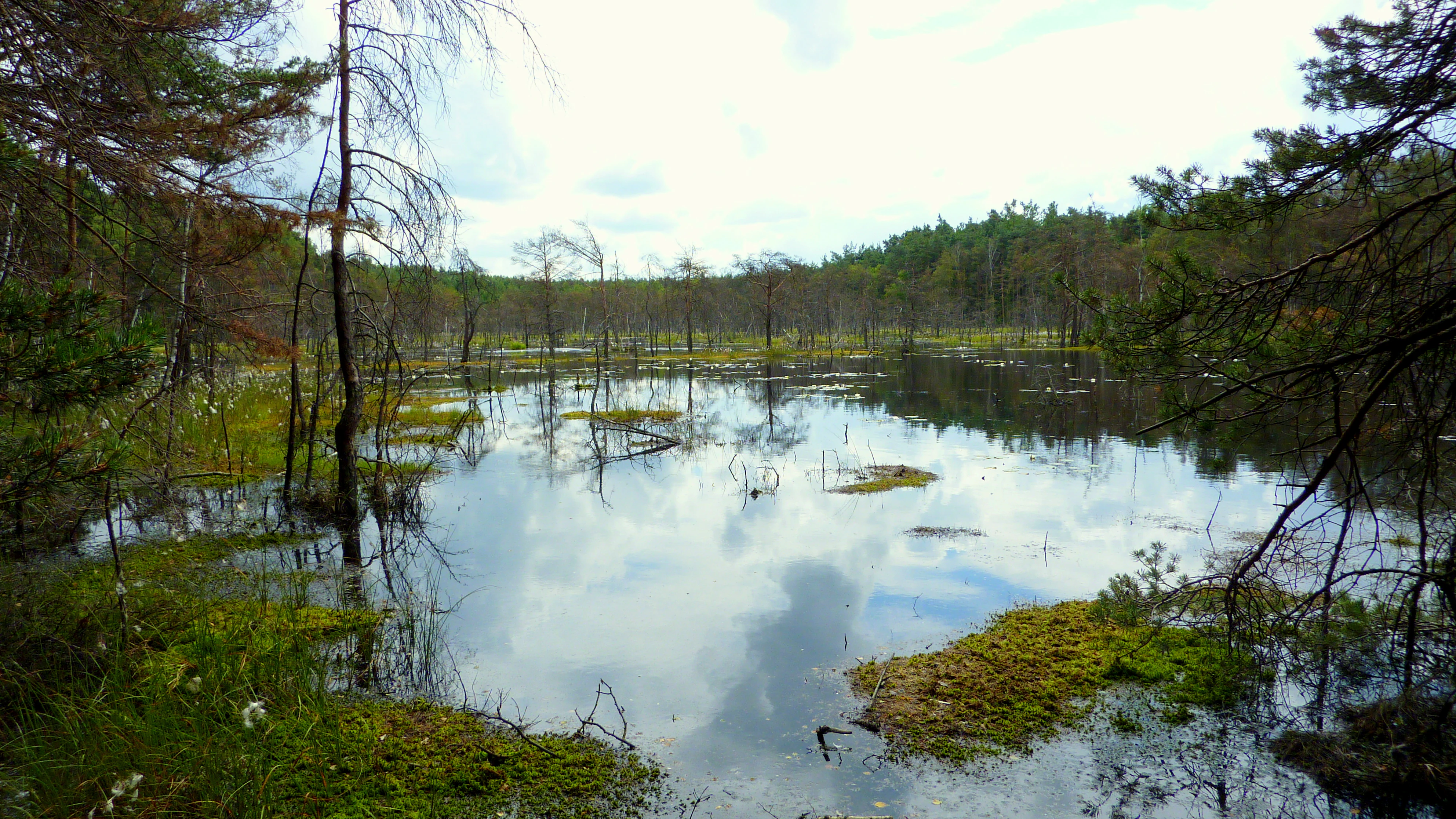
A swampy forest clearing with reflective standing water and sparse trees under a cloudy sky.
A view of the wetland forest habitat within Rezerwat przyrody Bagno Bocianowskie.

Bagno Bocianowskie Nature Reserve history and protected-area timeline

The Bagno Bocianowskie reserve was created on 12 October 1982 by regulation of the Polish Ministry of Forestry and Wood Industry under Monitor Polski item 234. From the outset, the rationale for protection was explicitly ecological: to preserve the numerous plant communities, especially forest communities, that occupy the shifting terrain between inland dunes and peat deposits, along with notable trees and protected plant localities.

The original protected area was given as 68.98 hectares, a figure now commonly cited as 68.93 hectares, reflecting minor revisions in boundary surveying. Importantly, the reserve was designated from the beginning as a partial-protection nature reserve, indicating that while most of the area would be managed for conservation, some degree of forestry activity could continue in line with the reserve's protective purpose.

The timing of the reserve's creation, in the early 1980s, was part of a broader wave of nature reserve designations across lowland Poland, when attention turned to safeguarding surviving peatland fragments before further drainage, peat extraction, or afforestation changes could degrade them. The reserve's central feature, the peat hollow known as Gołe bagno, remains a relic of the historical peat-cutting activity that once occurred in the region before formal protection was put in place.

Bagno Bocianowskie Nature Reserve landscape and geographic character

The reserve sits on the Garwolińska Plain, a lowland mesoregion shaped by Pleistocene glaciation and subsequent wind and water sorting of outwash sediments. The surface of the reserve is gently undulating rather than flat: low dune ridges and sand mounds alternate with broad, shallow depressions. Sand is the dominant substrate, and this substrate gradient is one of the defining physical features of the area.

The dunes provide the dry substrate on which pine and oak forests have established, while the depressions, where groundwater historically rose close to the surface, accumulated peat over time. Small relic bog pools survive within these depressions; many are direct remnants of manual peat cutting that took place before the area was protected. Today, the deepest peat-hollow in the center is known as Gołe bagno, an open wetland contrasting with the otherwise closed forest canopy of the reserve.

Overall, the landscape reads as a quiet forested lowland punctuated by dark, water-filled clearings, with elevation changes too subtle to register on a casual walk but significant enough to control where bog, mixed mire, and dry forest appear in the vegetation mosaic.

Bagno Bocianowskie Nature Reserve ecosystems, habitats, and plant life

Ecologically, the reserve is defined by the close coexistence of boggy and dry forest communities across a very small area. The largest habitat share is occupied by sphagnum alder bog woodland, a wet, peat-accumulating forest in which alder trees grow on a floating or semi-floating mat of peat and sphagnum mosses. The second-largest habitat type is acidic dry oak forest, found especially on the slightly elevated dune surfaces, where sandy and nutrient-poor soils favor oak and pine over more demanding broadleaf species.

Pine is overwhelmingly the dominant tree across the entire reserve, reflecting the sandy substrate and historical forest management patterns. The acidic oak forests add structural and species diversity, while the bog woodlands support entirely different plant communities, including sphagnum mosses, bog shrubs, and specialized wetland herbs.

Where the bog hollows remain open, a distinctive peat-edge flora persists. The reserve's combination of closed-canopy bog forest, dry oak-dominated dune forest, and small open bog pools gives it a habitat diversity that is unusually high for an inland reserve of its size.

Bagno Bocianowskie Nature Reserve wildlife and species highlights

The reserve functions as a refuge for large lowland mammals typical of the Mazovian forest belt. Moose, wild boar, and roe deer are recorded here, using the closed canopy cover of the pine-dominated forest and the more open edge zones along the bog hollows for feeding and movement.

The wetlands associated with the reserve, particularly the open peat pools and adjacent wet forest, provide habitat for waterbirds and wetland bird species associated with inland peatland complexes. Although the reserve itself is too small to support major breeding colonies, the surrounding landscape park and connected forests enlarge the effective range available to these species.

The presence of moose is particularly noteworthy: the species has expanded across much of lowland Poland in recent decades, and protected forest reserves such as Bagno Bocianowskie, with their combination of wet forest and quiet conditions, form important nodes in the network of habitats used by this recovering population.

Bagno Bocianowskie Nature Reserve conservation status and protection priorities

Bagno Bocianowskie is part of the network of small nature reserves that protect representative examples of lowland Poland's bog and dune-forest ecosystems. Its conservation value lies less in its size than in the compactness and clarity of the ecological patterns it protects: bog woodland, acidic dry oak forest, relict peat pools, and the dune landscape that ties them together.

By safeguarding a section of the Garwolińska Plain's inland dunes along with their peat-filled depressions, the reserve also contributes to regional hydrological stability. Peat accumulations store water and carbon, and protecting them from drainage, peat extraction, or intensive forestry is part of why the reserve was created and continues to be managed as partial-protection territory.

The reserve's location inside the Mazowiecki Park Krajobrazowy adds a further layer of buffering, allowing ecological processes in the reserve to operate within a wider, lower-intensity landscape context rather than being isolated as an island of forest in an otherwise heavily used terrain.

Bagno Bocianowskie Nature Reserve cultural meaning and human context

There is no strongly documented cultural or indigenous dimension tied specifically to this reserve. The local cultural context is shaped by the broader rural and forest-management history of the Celestynów area in Otwock County, where forestry, small-scale peat use, and traditional lowland agriculture have long coexisted.

The name Bagno Bocianowskie itself, meaning roughly Stork's Bog, reflects the long-standing local association between wetland habitats and the conspicuous waterbird life that has historically drawn attention to such places in the Mazovian landscape. The reserve's central feature, Gołe bagno, similarly carries a descriptive Polish place-name that hints at its open, sparsely vegetated character.

Top sights and standout views in Bagno Bocianowskie Nature Reserve

A compact dune-and-bog forest mosaic within the Mazowiecki Park Krajobrazowy, showcasing sphagnum alder bog woodland alongside acidic oak forest. The reserve includes a central open peat hollow, Gołe bagno, and relic bog pools harboring northern water-lily, common bladderwort, and round-leaved sundew. Despite covering only about 69 hectares, it provides habitat for moose, wild boar, roe deer, and wetland-associated birdlife, illustrating how much ecological diversity can be packed into a lowland Polish forest reserve.

Best time to visit Bagno Bocianowskie Nature Reserve

As a quiet forest reserve with little surface water exposure and no major infrastructure, Bagno Bocianowskie can be appreciated throughout much of the year. Late spring and early summer bring the freshest peat-edge vegetation around the bog pools and the most active birdlife in and around the wetter parts of the reserve. In autumn, the oak and mixed broadleaf component within the otherwise pine-dominated forest adds warm color tones, while frozen peat hollows in winter can make the open central wetland easier to observe from the surrounding forest paths.
Monthly climate preview

Long-term monthly temperature and precipitation data from representative park coordinates

Rezerwat przyrody Bagno Bocianowskie Climate Normals and Annual Temperature Patterns

Representative coordinates record measured multi-year temperature variations alongside steady monthly precipitation levels across the protected area. Examining the complete twelve-month record reveals detailed annual weather cycles and long-term climatic trends.
Annual mean8 °C
-4 °C20 °C
Jan-4°
Feb-2°
Mar
Apr
May14°
Jun18°
Jul20°
Aug20°
Sep14°
Oct
Nov
Dec-2°
Warmest month
July

20.2 °C

Coolest month
January

-3.7 °C

Wettest month
July

2.5 mm/day

Driest month
March

1.3 mm/day

Park location guide

Geography guide, regional context, and park location map for Bagno Bocianowskie Nature Reserve

Bagno Bocianowskie Nature Reserve park geography, regions, and map view in Poland

Understand where Bagno Bocianowskie Nature Reserve sits in Poland through a broader geographic reading of the surrounding landscape, nearby location context, and its mapped position within the national park landscape.

How Bagno Bocianowskie Nature Reserve fits into Poland

Poland, officially the Republic of Poland, is a Central European country spanning from the Baltic Sea in the north to the Carpathian Mountains in the south. It borders Germany, Czech Republic, Slovakia, Ukraine, Belarus, Lithuania, and Kaliningrad Oblast. The country has a temperate climate, diverse landscapes, and is known for its rich history, cultural heritage, and strong economic position within the EU.

Wider geography shaping Bagno Bocianowskie Nature Reserve in Poland

Poland occupies 312,696 km2 in Central Europe, extending from the Baltic Sea coast in the north to the Sudetes and Carpathian Mountains in the south. It borders Germany to the west, Czech Republic and Slovakia to the south, Ukraine and Belarus to the east, and Lithuania and Kaliningrad Oblast to the northeast. The landscape includes lowland plains, uplands, and mountain ranges.

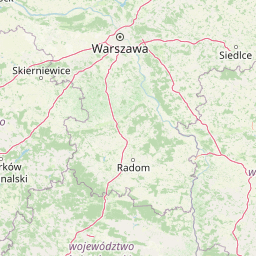
Map view of Bagno Bocianowskie Nature Reserve

Use this park location map to pinpoint Bagno Bocianowskie Nature Reserve in Poland, understand its exact geographic position, and read its mapped placement within the surrounding landscape more clearly.

Pigeon | © OpenStreetMap contributors

Location context for Bagno Bocianowskie Nature Reserve

Mazowieckie Voivodeship

Visualizing the inland sand dunes, bog woodlands, and peat depressions of the Masovian lowland nature reserve

Rezerwat przyrody Bagno Bocianowskie Photos and Landscape Scenery

Visual records capture the distinctive mosaic of pine canopies, dry oak ridges, and open peat pools across the lowland reserve. Photographic documentation reveals the subtle topographical transitions between glacial sand dunes and water-filled bog depressions in central Poland.

A swampy forest clearing with reflective standing water and sparse trees under a cloudy sky.

Park atlas

Compare adjacent lowland reserves and regional protected landscapes across the Masovian plains.

Parks Near Rezerwat Przyrody Bagno Bocianowskie and Surrounding Protected Areas

Browsing other parks near Rezerwat przyrody Bagno Bocianowskie reveals connected lowland forest ecosystems and similar glacial dune formations. Examining these protected areas offers broader geographic context for the surrounding regional landscape.
Nature reserveMasovian Voivodeship
About 7.5 km away#1 closest

Northwest

Rezerwat przyrody Mszar Pogorzelski: Peatland Protected Area and Wetland Landscape Mapping

Regional landscape context in Masovian Voivodeship

Located in the eastern reaches of Otwock, Rezerwat przyrody Mszar Pogorzelski preserves a rare gradient of raised bogs and pine forest edge habitats. This site offers valuable insight into the sandy lowland geography of east-central Poland and acts as a localized refuge for bog vegetation within the protected Mazovian Landscape Park zone.

Area
0.351 km²
Established
1987
Relief
Lowland
Climate
Temperate
Protected landscapeMasovian Voivodeship
About 21 km away#2 closest

West

Chojnowski Park Krajobrazowy: Atlas of Protected Landscapes and Forested Terrain

Geographic overview of the Masovian Voivodeship forest belt

Investigate the topographical complexity of Chojnowski Park Krajobrazowy, where flat glacial plains meet the dramatic Vistula escarpment. This protected area offers detailed mapping of forest stands, aquatic habitats, and riparian zones within the Masovian landscape, providing an essential look at the ecological connectivity of the region south of Warsaw.

Area
67.96 km²
Established
1993
Relief
Lowland
Climate
Temperate
A soft watercolor illustration of a winding river flowing through a green valley with forested hills in the background.
Nature reserveMazowieckie
About 24 km away#3 closest

Northwest

Rezerwat przyrody Morysin: Protected Floodplain Landscapes and Historic Forest Reserves

A riparian heritage site in the Mazowieckie region

Situated in the Vistula floodplain, Rezerwat przyrody Morysin stands as a significant protected area defined by its massive old-growth trees and layered cultural history. The terrain incorporates diverse wetland features, including the Sobieski Canal and Wilanówka stream, creating a vital habitat for cavity-nesting species and a rare example of integrated natural and historic preservation.

Area
0.535 km²
Established
1996
Relief
Lowland
Climate
Temperate
A wide watercolor illustration showing a river flowing through a grassy landscape with a line of trees in the background, rendered in soft greens, pinks, and purples.
Nature reserveMazovian Voivodeship
About 37 km away#4 closest

North

Rezerwat przyrody Dębina Nature Reserve: Exploring Protected Landscapes in Mazovian Voivodeship

A preserved oak-hornbeam forest featuring glacial erratics and ancient woodland

Rezerwat przyrody Dębina is a significant nature reserve situated in the Mazovian Voivodeship, noted for its 200-year-old oak stands and multi-species deciduous canopy. As the oldest protected area in the region, it preserves a vital remnant of the Polish Lowlands landscape, offering a dense, ecologically rich forest environment defined by subtle topography and unique Pleistocene glacial boulders.

Area
0.512 km²
Established
1952
Relief
Lowland
Climate
Temperate
Nature reserveMazovia Voivodeship
About 40 km away#5 closest

East

Dąbrowy Seroczyńskie Nature Reserve: Protected Lowland Forest Geography and Mapped Boundaries

Regional woodland complex in Mazovia Voivodeship

Dąbrowy Seroczyńskie Nature Reserve protects a substantial sessile oak forest in central-eastern Poland. This lowland woodland area features varied topography between 175 and 192 meters above sea level, preserving significant forest floor plant communities and characteristic lowland fauna within the broader context of the Siedlce region and the Łuków protected landscape.

Area
5.502 km²
Established
1987
Relief
Lowland
Access
Access unknown
Nature reserveMazovia Voivodeship
About 44 km away#6 closest

South

Rezerwat przyrody Dęby Biesiadne im. Mariana Pulkowskiego: Mazovia Region Nature Reserve

Ancient oak-hornbeam forest and lowland protected landscape

This nature reserve in the Mazovia Voivodeship protects a dense mosaic of riparian and upland deciduous forest. Centered on a 220-year-old oak stand, the protected area offers a clear look at the classic woodland ecology of the Polish lowlands, providing significant value for those mapping regional forest remnants and natural vegetation zones.

Area
0.172 km²
Established
2006
Water
Minor water
National parkMasovian Voivodeship
About 44 km away#7 closest

Northwest

Kampinos National Park: Geographic Profile and Protected Forest Landscape Map

Inland dune formations and wetland habitats in Masovian Voivodeship

The expansive woodland of Kampinos National Park represents a critical protected area in Poland, characterized by its parabolic sand dunes and low-lying marshes. Gain insights into the geomorphological features of this UNESCO biosphere reserve and trace the complex hydrological network that defines its unique forest environment.

Area
385.44 km²
Established
1959
IUCN
II
Relief
Lowland
A soft watercolor illustration of a marshy landscape with low rolling hills, scattered trees, and a winding stream, rendered in light green and yellow tones on a white background.
National parkMasovian Voivodeship
About 44 km away#8 closest

Northwest

Kampinoski Park Narodowy: Mapping the Inland Dune and Wetland Landscapes of Central Poland

A vital protected area in Masovian Voivodeship

The landscape of Kampinoski Park Narodowy is defined by the Grochalskie Piachy dune complex and diverse riparian habitats. This atlas entry covers the geological history and protected boundaries of this significant lowland forest, tracing the Vistula river valley's influence on the surrounding terrain and ecological character.

Area
385.443 km²
Established
1959
Visitors
1M annual
Relief
Lowland

Common questions about visiting, size, designation, and location context for Bagno Bocianowskie Nature Reserve

Bagno Bocianowskie Nature Reserve FAQs for park facts, access, geography, and protected area context

Find quick answers about Bagno Bocianowskie Nature Reserve, including protected-area facts, park geography, trail and visitor context, and how the park fits into its surrounding country and regional landscape.
MoriAtlas Explorer

Continue Your Protected Areas Search Across the Global Atlas

Deepen your exploration by continuing the structured search for national parks and protected areas worldwide. Utilize the comprehensive filtering capabilities to compare different conservation landscapes and refine your understanding of global park geography. Discover more about the distribution and characteristics of protected natural areas.

Global natural geography