Mori Atlas logo
Nature reserveRezerwat przyrody Mazury

A classic water and forest landscape featuring glacial lake islands and mature deciduous woodland stands.

Rezerwat przyrody Mazury Protected Nature Reserve in the Warmian-Masurian Voivodeship of Poland

The Rezerwat przyrody Mazury nature reserve protects a mosaic of glacial lake water and dense forest cover within the Ełk Lake District. Stretching across roughly 388 hectares between lakes Szwałk Wielki, Piłwąg, and Łaźno, this protected area preserves representative Mazurian mixed deciduous forests and distinctive island environments. Discover the geographic character of this woodland landscape and its relationship to the broader environmental context of the nearby Borecka Forest.

landscape reservemixed deciduous forestglacial lakeslake islandsMasurian Lake DistrictBorecka Forest region

Rezerwat przyrody Mazury

Nature reserve

Park overview

Structured park overview, official facts, and landscape profile for Mazury Nature Reserve

Mazury Nature Reserve park facts, protected area profile, and essential visitor context

Review the core facts for Mazury Nature Reserve, including designation, size, terrain, visitor scale, habitats, and operating context in one park-focused overview.

About Mazury Nature Reserve

Mazury Nature Reserve is a protected landscape area in northeastern Poland, situated in the Warmian-Masurian Voivodeship within the Olecko County and the gmina of Kowale Oleckie. The reserve is managed in connection with the Czerwony Dwór Forest District, placing it within the institutional framework used to protect the forests of this part of the Masurian Lake District.

Geographically, the reserve occupies part of the Ełk Lake District (Pojezierze Ełckie), a mesoregion shaped by glacial processes and dotted with lakes, islands, and undulating forested terrain. The protected territory lies between three named lakes: Szwałk Wielki, Piłwąg, and Łaźno, and explicitly includes the eastern portion of Lake Piłwąg together with its three forested islands. This combination of terrestrial and aquatic surface gives the reserve a strong lake-and-forest identity.

The purpose behind establishing the reserve is the preservation of landscape qualities which are characteristic of the wider Puszcza Borecka (Borecka Forest) region. Rather than focusing narrowly on a single habitat type, Mazury Nature Reserve is intended to conserve the integrated water-and-forest scenery of the area, along with the natural forest communities that belong to it. The current protected area totals around 388 hectares, slightly larger than the 372.69 hectares originally listed in the founding act.

Ecologically, the area is notable for the presence of mature Mazurian variant grąd forests, a type of mixed deciduous woodland typical of this part of Poland. The reserve's mature tree stands and rich herb layer give it significance beyond purely scenic value, providing an example of a well-preserved regional forest type embedded in a glacial lake landscape.

Quick facts and research context for Mazury Nature Reserve

Mazury Nature Reserve is a landscape reserve (rezerwat krajobrazowy) in the Warmian-Masurian Voivodeship, Poland, administered within the Czerwony Dwór Forest District. It covers about 388 hectares of forested land between the lakes Szwałk Wielki, Piłwąg, and Łaźno, including the eastern part of Lake Piłwąg and its three wooded islands.

The reserve lies in the Ełk Lake District mesoregion, part of the larger Masurian Lake District. It was established on 3 December 1981 by ministerial order, with the founding act citing an area of 372.69 hectares. The protected goal is the conservation of the landscape and natural forest communities characteristic of Borecka Forest.

Protection and recognition

Terrestrial protected area metrics and formal designation records

Rezerwat przyrody Mazury Protection Status and Conservation Recognition

Rezerwat przyrody Mazury maintains a documented terrestrial protection status covering natural habitats and regional landscape features. Official records outline the formal conservation scope, management framework, and recognized international designations associated with the protected territory.

Protection details

Protection scope
Terrestrial
Park context

Deeper park guide and search-rich context for Mazury Nature Reserve

Mazury Nature Reserve history, landscape, wildlife, and travel context

Explore Mazury Nature Reserve through its history, landscape character, ecosystems, wildlife, conservation priorities, cultural context, and seasonal travel timing in a structured park guide built for atlas discovery and search intent.

Why Mazury Nature Reserve stands out

Mazury Nature Reserve is best known for its protection of a classic Masurian water-and-forest landscape, where stretches of mature forest meet the shores of glacial lakes and small forested islands. The reserve is particularly valued for its well-developed stands of Mazurian-type mixed deciduous forest (grąd), with a balanced mix of lime, maple, oak, elm, hornbeam, and spruce. It also represents a characteristic fragment of the landscape associated with the nearby Borecka Forest, combining lakeshore scenery with richly structured woodland habitats. The presence of three small forested islands on Lake Piłwąg adds a distinctive element to its visual and ecological character.

Mazury Nature Reserve history and protected-area timeline

Mazury Nature Reserve was established by order of the Minister of Forestry and the Wood Industry on 3 December 1981, as recorded in the Polish legal gazette (Monitor Polski) of that year. The founding instrument set the original protected area at 372.69 hectares.

The reserve was created with the explicit aim of preserving the landscape character of the water-and-forest territory associated with the nearby Borecka Forest, along with its natural forest communities. Over time, the quoted area of the reserve was revised slightly upward to about 388 hectares, reflecting more accurate measurements of the protected territory, while the underlying purpose and legal designation as a landscape reserve remained unchanged.

Mazury Nature Reserve landscape and geographic character

The landscape of Mazury Nature Reserve is shaped by the glacial history of the Masurian Lake District. The terrain consists of forested upland set between three lakes: Szwałk Wielki, Piłwąg, and Łaźno, with the protected territory also extending into the eastern portion of Lake Piłwąg itself. The result is a mosaic where woodland shorelines meet open water, and where small islands add visual variety to the lake surface.

Three forested islands within the eastern part of Lake Piłwąg belong to the reserve, providing a distinctive element of the surrounding scenery. The broader position of the area within the Ełk Lake District means the local topography reflects typical Masurian features: post-glacial lakes, undulating ground moraine, and extensive forest cover. The interplay of lakes, islands, and well-developed stands of broadleaf and mixed forest defines the visual identity of the reserve.

This combination of forested land, lake water, and small wooded islands is the core of the landscape value the reserve was created to protect, mirroring the scenic character of the larger Borecka Forest landscape found nearby.

Mazury Nature Reserve ecosystems, habitats, and plant life

The ecological character of Mazury Nature Reserve is dominated by mature Mazurian variant grąd forests, a type of mixed deciduous woodland rich in broadleaf species. The forest stands are notable for their well-developed structure and relatively mature age, giving the reserve an unusually complete expression of this regional habitat.

Tree composition in the reserve reflects the defining species of the Mazurian grąd, including small-leaved lime, sycamore maple, pedunculate oak, wych elm, hornbeam, and Norway spruce. This combination of broadleaf trees with coniferous elements is characteristic of the ecological transition zones typical of the Masurian Lake District.

On the ground, the reserve supports a rich herb layer, with flowering plants such as wood anemone, common foxglove, two-flowered clover, and fragrant Solomon's seal among the species present. The combination of diverse tree species and a varied herbaceous understorey gives the forests of the reserve their ecological depth and supports the natural forest communities the reserve was created to safeguard.

Mazury Nature Reserve wildlife and species highlights

The forest and lakeshore habitats of Mazury Nature Reserve support an animal community typical of mature mixed woodland and lake margin environments in the Masurian Lake District. The combination of mature broadleaf stands, mixed spruce and deciduous trees, shoreline vegetation, and small forested islands provides a range of habitats for woodland birds and forest-dwelling fauna.

Large undisturbed forest tracts such as those within the reserve are particularly important for species tied to mature canopy and structural diversity, supporting typical woodland birdlife, small mammals, and a broader food web associated with mixed deciduous and coniferous forest. The inclusion of lake waters and small forested islands further broadens the habitat range, supporting lake-associated species along with forest interior fauna.

Mazury Nature Reserve conservation status and protection priorities

Mazury Nature Reserve was specifically created to protect the natural landscape and forest communities of the Borecka Forest region, giving the area defined conservation significance beyond simple scenic protection. As a landscape reserve, its primary concern is the preservation of the integrated water-and-forest scenery that characterizes this part of the Masurian Lake District, together with the natural forest ecosystems that depend on it.

The reserve's stands of Mazurian variant grąd forest represent an important regional example of mature mixed deciduous woodland, a habitat type that has been substantially reduced elsewhere in Poland. By safeguarding a sizeable, well-developed example of this forest type alongside associated lake and island habitats, the reserve contributes to the broader conservation of forest biodiversity in the Warmian-Masurian region.

Top sights and standout views in Mazury Nature Reserve

A preserved water-and-forest landscape in the Masurian Lake District, stretching between three glacial lakes and including the eastern portion of Lake Piłwąg with its three small forested islands. The reserve is notable for holding well-developed Mazurian grąd forests, with mature stands of lime, maple, oak, elm, hornbeam, and spruce, and a rich herb layer that includes wood anemone and common foxglove.

As one of the protected fragments of the landscape associated with Borecka Forest, the reserve offers a representative cross-section of northeastern Poland's classic Masurian scenery, combining lake shorelines, wooded islands, and structurally rich mixed woodland within a single protected area.

Monthly climate preview

Long-term representative monthly temperature and precipitation data for Rezerwat przyrody Mazury

Rezerwat przyrody Mazury Climate Normals and Measured Annual Temperature Patterns

Representative coordinate records show measured monthly temperature variations alongside steady precipitation rates across the twelve-month climatology period. Detailed monthly climate profiles provide a complete numerical breakdown of long-term temperature ranges and precipitation normals.
Annual mean7 °C
-5 °C18 °C
Jan-5°
Feb-4°
Mar
Apr
May12°
Jun16°
Jul18°
Aug18°
Sep13°
Oct
Nov
Dec-3°
Warmest month
July

18.2 °C

Coolest month
January

-5 °C

Wettest month
July

2.8 mm/day

Driest month
March

1.5 mm/day

Park location guide

Geography guide, regional context, and park location map for Mazury Nature Reserve

Mazury Nature Reserve park geography, regions, and map view in Poland

Understand where Mazury Nature Reserve sits in Poland through a broader geographic reading of the surrounding landscape, nearby location context, and its mapped position within the national park landscape.

How Mazury Nature Reserve fits into Poland

Poland, officially the Republic of Poland, is a Central European country spanning from the Baltic Sea in the north to the Carpathian Mountains in the south. It borders Germany, Czech Republic, Slovakia, Ukraine, Belarus, Lithuania, and Kaliningrad Oblast. The country has a temperate climate, diverse landscapes, and is known for its rich history, cultural heritage, and strong economic position within the EU.

Wider geography shaping Mazury Nature Reserve in Poland

Poland occupies 312,696 km2 in Central Europe, extending from the Baltic Sea coast in the north to the Sudetes and Carpathian Mountains in the south. It borders Germany to the west, Czech Republic and Slovakia to the south, Ukraine and Belarus to the east, and Lithuania and Kaliningrad Oblast to the northeast. The landscape includes lowland plains, uplands, and mountain ranges.

Map view of Mazury Nature Reserve

Use this park location map to pinpoint Mazury Nature Reserve in Poland, understand its exact geographic position, and read its mapped placement within the surrounding landscape more clearly.

Pigeon | © OpenStreetMap contributors

Location context for Mazury Nature Reserve

Warmian-Masurian Voivodeship
Park atlas

Compare regional lake and forest landscapes across northeastern Poland

Explore Other Parks Near Rezerwat przyrody Mazury and Surrounding Protected Areas

Browsing other parks near Rezerwat przyrody Mazury reveals connected water and forest ecosystems found throughout the Masurian Lake District. Examining adjacent protected landscapes provides valuable regional context for comparing post glacial terrain and woodland habitats.
Nature reserveWarmian-Masurian Voivodeship
About 30 km away#1 closest

Northeast

Mechacz Wielki Nature Reserve: Geographic Records of Protected Peatlands in Northeastern Poland

Mapping the raised bog and forest ecosystems of the Romincka Forest.

Mechacz Wielki Nature Reserve represents a critical example of raised bog geography and peat-forming processes in Poland. This record details the reserve as a core feature of the Romincka Forest, focusing on its transition from open moss-dominated surfaces to complex boggy pine forests and wetland habitats. Gain insight into the regional landscape characteristics that shape this unique northeastern protected area.

Area
1.467 km²
Established
1974
Relief
Lowland
Scope
Terrestrial
Nature reserveWarmian-Masurian Voivodeship
About 39 km away#2 closest

South

Rezerwat przyrody Jezioro Zdedy Nature Reserve: Protected Wetland and Migratory Habitat

Geography and landscape of the Masurian Plain, Poland

Rezerwat przyrody Jezioro Zdedy protects a diverse wetland ecosystem characterized by sedge meadows, emergent reedbeds, and rare swamp forest communities. Positioned on the Masurian Plain, this reserve acts as a sanctuary for migratory birds and large mammals, providing an essential look at the post-glacial geography and active conservation landscapes of northeastern Poland.

Area
1.816 km²
Established
2003
Relief
Lowland
Scope
Terrestrial
Watercolor painting of a tranquil marshland scene with reeds in the foreground, rolling green hills, and a pale sky.
Nature reservePodlaskie Voivodeship
About 42 km away#3 closest

East

Ostoja Augustowska Nature Reserve: Protected Forest and Wetland Atlas of Podlaskie

Mapped wilderness corridors in the Polish lowlands

Ostoja Augustowska serves as a major ecological hub in Podlaskie Voivodeship, comprising extensive pine and spruce woodlands linked with diverse peatland systems. The site provides a critical corridor for rare forest wildlife while preserving ancient stands of old-growth timber. Gain insights into the complex geography of this Natura 2000 protected territory through its documented terrain, hydrological networks, and mosaic of rare boreal habitat types.

Area
1,070.69 km²
Established
2009
Relief
Lowland
Climate
Temperate
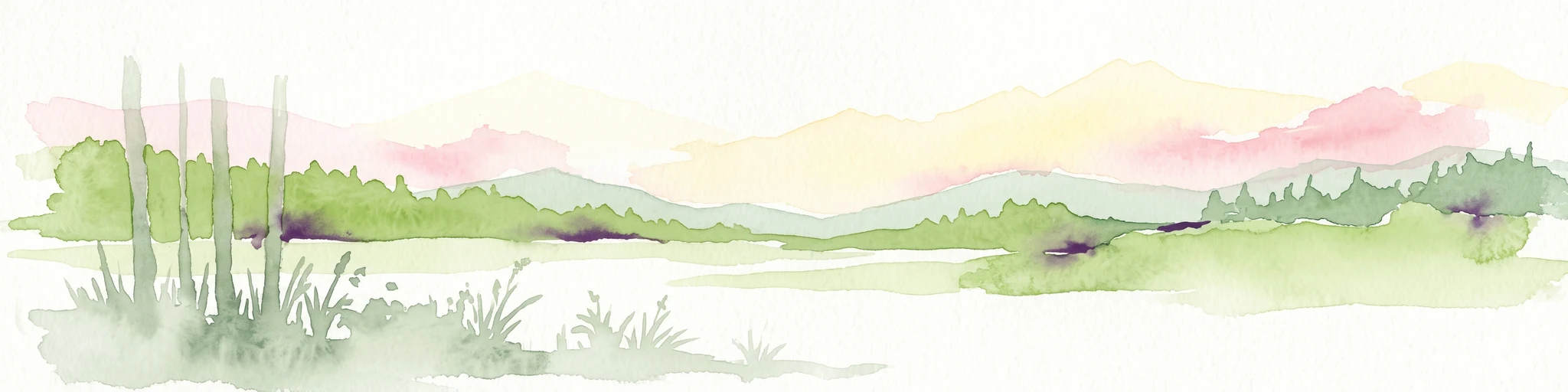
A horizontal watercolor illustration of a lake landscape, featuring soft greens and pinks, showing marshy foreground vegetation, calm water, islands, and a distant treeline.
Nature reserveWarmian-Masurian Voivodeship
About 45 km away#4 closest

Northwest

Rezerwat przyrody Jezioro Siedmiu Wysp: Protected Wetland Geography and Map Overview

Wetland ecosystems in the Warmian-Masurian Voivodeship

Examine the geographic layout of Rezerwat przyrody Jezioro Siedmiu Wysp, encompassing Lake Oświn, the Oświnka River corridor, and extensive peat-forming marshes. This protected area offers insight into Masurian wetland dynamics, including the interplay between open water, meadow grazing by konik polski horses, and critical habitats for diverse waterfowl populations across the Polish border region.

Area
17.63 km²
Established
1956
Relief
Lowland
Climate
Temperate
Protected landscapePodlaskie Voivodeship
About 46 km away#5 closest

East

Suwalski Park Krajobrazowy: Glacial Terrain and Protected Landscape Atlas

Mapping the post-glacial geography of Podlaskie Voivodeship

Suwalski Park Krajobrazowy represents a highly distinct glacial environment within the Polish lowlands. Explore the distribution of its iconic morainic landforms, extensive boulder reserves, and the deep basin of Lake Hańcza. The park provides critical geographic context for understanding the interplay between ice-transported geology and local hydrological features in northeastern Poland.

Area
63.38 km²
Established
1976
Relief
Upland
Climate
Temperate
National parkPodlaskie Voivodeship
About 52 km away#6 closest

East

Wigierski Park Narodowy: Mapped Protected Landscapes of Northeastern Poland

A regional atlas of postglacial terrain and lake ecosystems.

Wigierski Park Narodowy represents a vital expanse of protected land in the Podlaskie Voivodeship. This profile offers insights into its glacial moraine ridges, kettle hole topography, and the specific distribution of forest-fringed bog habitats that define this distinct segment of the Lithuanian Lake District.

Area
150.898 km²
Established
1989
Visitors
110K annual
Relief
Upland
Watercolor illustration showing lakes, green vegetation, and hills in the background
National parkPodlaskie Voivodeship
About 52 km away#7 closest

East

Wigry National Park: Protected Area Atlas of Poland's Glacial Lake District

Explore mapped landscapes and wetland ecosystems in Podlaskie Voivodeship

Delve into the geography of Wigry National Park, a national park situated in the Podlaskie Voivodeship of northeastern Poland. This protected area is defined by its glacial landscape, featuring 42 lakes including the expansive Lake Wigry, alongside critical wetland habitats and significant peat bogs. Discover the mapped boundaries and ecological importance of Wigry National Park, renowned as a prime location for beaver populations and a vital component of Poland's protected lands atlas.

Area
150.86 km²
Established
1989
IUCN
II
Visitors
110K annual
Watercolor painting showing a wetland scene with reeds, patches of water, and trees under a light sky
National parkPodlaskie Voivodeship
About 61 km away#8 closest

Southeast

Biebrza National Park: Protected Fenlands and River Basin Geography in Northeastern Poland

Tracing the largest lowland peat bog complex in the European landscape

Biebrza National Park serves as the premier protected wetland area in Poland, characterized by its vast, intact marshlands and the meandering Biebrza River valley. This geographic profile details the park's critical fen ecosystems, floodplain dynamics, and distinctive habitats that support diverse avian and mammalian populations within the Podlaskie region.

Area
592.23 km²
Established
1993
IUCN
II
Relief
Lowland

Common questions about visiting, size, designation, and location context for Mazury Nature Reserve

Mazury Nature Reserve FAQs for park facts, access, geography, and protected area context

Find quick answers about Mazury Nature Reserve, including protected-area facts, park geography, trail and visitor context, and how the park fits into its surrounding country and regional landscape.
MoriAtlas Explorer

Continue Your Protected Areas Search Across the Global Atlas

Deepen your exploration by continuing the structured search for national parks and protected areas worldwide. Utilize the comprehensive filtering capabilities to compare different conservation landscapes and refine your understanding of global park geography. Discover more about the distribution and characteristics of protected natural areas.

Global natural geography