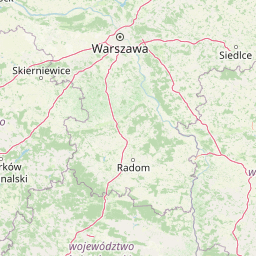
Why Rezerwat przyrody Mięćmierz stands out
The reserve is best known for conserving xerothermic grassland communities of the Festuco-Brometea class and related fringe vegetation, in which rare, protected, and regionally red-listed plant species play a major role. Among its most distinctive botanical features are populations of Inuletum ensifoliae with narrow-leaved inula, stand-outs of Trifolio-Geranietea fringe communities, and notable occurrences of Siberian bellflower, spring pheasant's eye, cross gentian, large-flowered anemone, and marjoram-leaved origanum-type species. Equally distinctive is the reserve's landscape role: it protects open viewpoints over the deeply incised Vistula canyon, integrating its ecological value with the scenic character of the Małopolska Vistula Gorge.
Rezerwat przyrody Mięćmierz history and protected-area timeline
Rezerwat przyrody Mięćmierz is a very recent protected area. It was formally established on 20 May 2023 through an order by the Regional Director for Environmental Protection in Lublin dated 5 May 2023, published in the official journal of the Lubelskie Voivodeship (Dz. Urz. Woj. Lub. 2023, item 3321).
The designation responded to long-standing recognition of the botanical importance of the dry slopes above the Vistula near the settlements of Mięćmierz and Albrechtówka, particularly their xerothermic grassland communities and rare flora. By placing the entire area inside the existing Kazimierski Park Krajobrazowy and aligning it with the Natura 2000 site "Przełom Wisły w Małopolsce," the reserve was integrated into an already layered regional protection framework rather than created as an isolated patch.
At the time of its creation, the reserve did not yet have a formal protection plan or a set of conservation tasks, leaving practical management to the broader landscape park framework and to general nature protection law in Poland.
Rezerwat przyrody Mięćmierz landscape and geographic character
The reserve occupies a fragment of the western slope of the Małopolska Vistula Gorge, where the river cuts a narrow, canyon-like valley roughly one kilometer wide. Topographically, Mięćmierz is made up of two separate enclaves: Mięćmierz I, which corresponds to the so-called Vistula scarp, and Mięćmierz II, lying further to the northeast near Albrechtówka and containing a small dry valley known locally as the "sucha dolinka."
The terrain is shaped by calcium-rich substrates and strong sun exposure, producing open, steppe-like slopes rather than dense woodland. These conditions give the reserve its characteristic combination of warm, dry ground, sharp micro-topography, and broad panoramic openings over the Vistula below. From grassy ledges at the reserve's edge, visitors look down into the deeply incised river valley with its steep loess and limestone walls, one of the most photographed sections of Poland's lower Vistula.
Rezerwat przyrody Mięćmierz ecosystems, habitats, and plant life
Ecologically, Mięćmierz is defined by xerothermic, or warm-loving, dry grasslands belonging to the Festuco-Brometea class, in particular communities of the Inuletum ensifoliae type dominated by narrow-leaved inula. Along the edges of these swards, herb-rich fringe communities of the Trifolio-Geranietea sanguineae class add taller, more shade-tolerant flowering plants.
The reserve's habitat mosaic is deliberately non-forest, corresponding to the official classification of meadow, pasture, grassland, and scrubland ecosystems, specifically the xerothermic grassland subtype. This open structure is what allows the specialized flora to persist: removing the scrub and tree cover is essential to maintaining the dry, sun-baked microclimate that these rare species require.
Although small, the reserve functions as a compact ecological refugium within a much larger network of protected dry-grassland habitat along the Vistula gorge, contributing to the survival of plant communities that have largely disappeared from the more intensively farmed Polish lowlands.
Rezerwat przyrody Mięćmierz wildlife and species highlights
The fauna of Mięćmierz is dominated by invertebrates adapted to warm, dry, often calcium-rich conditions. Thermophilic and calciphilic invertebrates make up the bulk of recorded species, with spiders being particularly well studied and beetles, reptiles, and small mammals also represented.
Among the protected and threatened animals recorded in the reserve are the Pontic leaf beetle (a rare chrysomelid beetle associated with xerothermic habitats), the slow worm, the grass snake, the steppe cricket, the yellowish snail, and the spotted whip snake, a reptile of conservation concern in Poland. Their presence underlines the reserve's role as a refuge for species that depend on the unique combination of dry grassland, rocky slopes, and warm microclimate found along the Vistula gorge.
Rezerwat przyrody Mięćmierz conservation status and protection priorities
Conservation value at Mięćmierz rests on the concentration, in a very small area, of xerothermic habitat and rare, legally protected flora and fauna. With more than 100 plant species documented and about 30 of them subject to formal protection, the reserve packs an unusually high density of conservation interest into roughly eleven hectares, making it a key local stronghold for dry-grassland biodiversity.
On a broader scale, the reserve is fully nested within the Kazimierski Park Krajobrazowy and within the Natura 2000 Special Area of Conservation "Przełom Wisły w Małopolsce" (PLH 060045), with partial overlap into the Special Protection Area "Małopolski Przełom Wisły" (PLB 140006). This layering reinforces its protection: even though Mięćmierz has no buffer zone of its own and, as of mid-2023, lacks an individual protection plan, it sits inside a strong regional and European network of complementary designations that together safeguard its xerothermic habitats and the rare species they support.
Top sights and standout views in Rezerwat przyrody Mięćmierz
Two-enclave structure comprising the Vistula scarp and the dry valley near Albrechtówka; formally nested inside the Kazimierski Park Krajobrazowy and key Natura 2000 sites; high density of rare flora in a very compact area; iconic viewpoint over the canyon-like Vistula valley; one of the youngest nature reserves in the Lublin region, designated in 2023.
Best time to visit Rezerwat przyrody Mięćmierz
Late spring and early summer, broadly from late May through July, are the most rewarding time to experience Mięćmierz, when warm-loving xerothermic grasslands are in full bloom and the rare species in the Inuletum ensifoliae and fringe communities are at their most visible. The dry, sun-exposed slopes are also at their most characteristic in this period, and the open viewpoints over the Vistula gorge are most striking under clear summer skies. Autumn visits can have their own appeal for landscape color and for invertebrates, but the reserve's defining botanical display is concentrated in the late spring to early summer window.