Mori Atlas logo
Nature reserveRezerwat przyrody Minokąt

A critical nature reserve situated within the Central Roztocze upland forest mosaic

Rezerwat przyrody Minokąt: Mapping the Protected Carpathian Forest Landscapes of Poland

Rezerwat przyrody Minokąt represents a vital fragment of mature Carpathian fir and beech forest within the Central Roztocze mesoregion of southeastern Poland. This nature reserve serves as a protected ecological anchor, featuring fertile beech forest communities and ancient trees that stand as natural monuments. The reserve is carefully integrated into the wider Roztocze landscape, connecting local forest habitats with regional conservation frameworks and Natura 2000 protected networks.

forest reserveCarpathian beech forestfir-beech forestRoztoczeprotected landscapeNatura 2000

Rezerwat przyrody Minokąt

Nature reserve

Park overview

Structured park overview, official facts, and landscape profile for Minokąt Nature Reserve

Minokąt Nature Reserve park facts, protected area profile, and essential visitor context

Review the core facts for Minokąt Nature Reserve, including designation, size, terrain, visitor scale, habitats, and operating context in one park-focused overview.

About Minokąt Nature Reserve

Minokąt Nature Reserve is a small but ecologically focused protected area in southeastern Poland. Although it covers only around twenty-three hectares, it represents an example of the kind of mature Carpathian fir-beech forest that historically characterized parts of the Roztocze range, where the rolling terrain of the Polish uplands meets the climatic influence of the Carpathian foothills.

The reserve is registered as a forest reserve of the phytocenotic community type, meaning its primary purpose is the conservation of a representative plant community rather than a single rare species. The forest community in question belongs to the fertile Carpathian beech forest group, a habitat that combines European beech with silver fir and a diverse ground layer typical of moist, fertile slopes in this transitional zone.

In addition to the forest stand as a whole, several individual fir trees within Minokąt meet the criteria for natural monument status, suggesting that the reserve preserves not only a characteristic community but also some older, structurally important trees. This makes it relevant both for habitat-level conservation and for the recognition of individual veteran trees as part of Poland's natural heritage.

Geographically, Minokąt lies on the Central Roztocze mesoregion, a recognized physical-geographical unit that gives the area much of its identity. Administratively, the reserve sits within Kadłubiska in Narol commune, in Lubaczów County of the Subcarpathian Voivodeship, placing it near the eastern edge of Poland's protected Carpathian foothills landscapes.

Quick facts and research context for Minokąt Nature Reserve

Minokąt is a phytocenotic forest reserve of the forest community subtype, meaning it was created to preserve a representative plant community rather than a specific species, geological feature, or landscape. It protects a fir-beech stand associated with fertile Carpathian beech forest on the Central Roztocze.

The reserve lies within Kadłubiska in Narol commune, Lubaczów County, Subcarpathian Voivodeship. Its establishment is documented in the 1996 Polish official journal, and its recorded current area is around 23 hectares. It is embedded in the Roztocze Protected Landscape Area and lies within Natura 2000 sites designated for both habitat and bird conservation.

Protection and recognition

Documented terrestrial protection scope and administrative recognition details

Rezerwat przyrody Minokąt Protection Status and Conservation Records

Rezerwat przyrody Minokąt maintains a documented terrestrial protection scope within national conservation records. Detailed designation history and management frameworks provide structured insight into local environmental safeguarding.

Protection details

Protection scope
Terrestrial
Transboundary protection
No
Park context

Deeper park guide and search-rich context for Minokąt Nature Reserve

Minokąt Nature Reserve history, landscape, wildlife, and travel context

Explore Minokąt Nature Reserve through its history, landscape character, ecosystems, wildlife, conservation priorities, cultural context, and seasonal travel timing in a structured park guide built for atlas discovery and search intent.

Why Minokąt Nature Reserve stands out

Minokąt is best known for protecting a fragment of Carpathian fir-beech forest with a well-developed fertile Carpathian beech forest understory on the Polish Roztocze. The reserve's defining trait is this specific forest community, combined with the presence of older fir trees regarded as candidates for natural monument status. Its integration into the broader Roztocze conservation landscape, including both its namesake Natura 2000 habitat site and the regional Roztocze bird protection area, also helps define its role within the wider network of Polish nature reserves.

Minokąt Nature Reserve history and protected-area timeline

Minokąt Nature Reserve was established in 1996 through an official act published in the Polish official journal (Monitor Polski), which recorded the reserve's creation, its legal designation, and its original planned boundaries. The act specified the protection of a Carpathian fir-beech forest with a fertile Carpathian beech forest understory, and also noted the presence of fir trees meeting natural monument criteria within the reserve's area.

The reserve carries a sequential number in the regional registry, indicating its integration into the structured system of forest reserves managed in the Subcarpathian region. While its establishment was relatively late compared to some of Poland's older reserves, it reflects the late twentieth-century expansion of Poland's nature reserve system, particularly the recognition of representative forest communities in transition zones like the Roztocze.

Its subsequent inclusion within the Roztocze Protected Landscape Area and the Natura 2000 network helped anchor the reserve within a broader regional conservation framework, recognizing its value not only as an isolated forest patch but as part of a larger connected landscape of protected habitats and bird areas across the Polish Roztocze.

Minokąt Nature Reserve landscape and geographic character

The reserve lies within the Central Roztocze mesoregion, a landscape zone characterized by gentle upland terrain marking the transition from the lowlands of southeastern Poland toward the Carpathian foothills. The Roztocze is known for its softly rolling hills, loess and sandy substrates, and a mixture of forest, agricultural land, and patches of meadow that together create a mosaic landscape.

Within this setting, Minokąt occupies a forested locality near the village of Kadłubiska in Narol commune. The terrain of the reserve reflects the broader Roztocze character: rather than dramatic peaks or rugged features, the area is defined by mature forest on rolling ground, where topography, soil fertility, and microclimate combine to support the kind of moist, fertile forest community that the reserve was created to protect.

The forested setting connects visually and ecologically to the surrounding Roztocze Protected Landscape Area, which buffers the reserve with additional woodland and semi-natural terrain. The overall impression of Minokąt's landscape is therefore not one of dramatic scenery, but of a characteristic, well-preserved fragment of upland forest in a region where such mature forest communities have become increasingly rare.

Minokąt Nature Reserve ecosystems, habitats, and plant life

Minokąt's ecological identity is rooted in the fertile Carpathian beech forest community, a phytosociological concept describing mixed beech and fir forests on nutrient-rich, moist soils with a luxuriant herbaceous ground layer. Although the reserve is small, it represents the structural and compositional elements typical of this community, including a canopy of European beech and silver fir above a diverse understory.

The reserve's formal classification as a phytocenotic, forest-community reserve reflects this emphasis on conserving the plant community as a whole. Rather than focusing narrowly on a single rare species, the protection framework aims to maintain the integrity of the forest stand, its species composition, and its characteristic ground vegetation, which together provide habitat for a wide range of associated woodland organisms.

As part of the broader Roztocze Protected Landscape Area and the Natura 2000 habitat network, the reserve also contributes to landscape-level ecological continuity on the Central Roztocze. This positioning makes it ecologically meaningful beyond its own boundaries, as a component of a wider matrix of forests, grasslands, and protected habitats that together sustain the region's biodiversity.

Minokąt Nature Reserve wildlife and species highlights

Source material does not provide detailed information about specific wildlife species present in Minokąt Nature Reserve beyond the broader habitat context. While mature fir-beech forests of this type are typically associated with woodland bird communities, small forest mammals, and a range of invertebrates tied to old-growth features, the available source does not document specific fauna in the reserve itself.

Minokąt Nature Reserve conservation status and protection priorities

The reserve's formal designation as a phytocenotic forest reserve signals its primary conservation purpose: preserving a representative example of the fertile Carpathian beech forest community on the Polish Roztocze. By protecting both the canopy trees and the characteristic herb layer, the reserve helps maintain a forest type that has been reduced across much of central Europe through historical land use change.

The presence of fir trees considered candidates for natural monument status adds an additional layer of conservation significance, recognizing individual old trees as important elements of the reserve's natural heritage. Such veteran trees often support microhabitats like cavities, dead wood, and bark features that contribute disproportionately to forest biodiversity.

Minokąt is also embedded in larger conservation frameworks. It lies within the Roztocze Protected Landscape Area and overlaps with the Natura 2000 habitat site that bears its name, as well as a separate Natura 2000 bird protection area covering the wider Roztocze. This stacking of designations at local, regional, and European levels reflects the reserve's recognized value within both Polish and EU-level conservation policy, and helps connect its protection to broader efforts to safeguard Carpathian-influenced forest habitats in southeastern Poland.

Minokąt Nature Reserve cultural meaning and human context

Source material does not provide specific information about cultural, historical, or indigenous context related to Minokąt Nature Reserve beyond its administrative location in Kadłubiska, Narol commune.

Top sights and standout views in Minokąt Nature Reserve

Minokąt's strongest defining trait is its protection of a Carpathian fir-beech forest community with a characteristic fertile beech forest understory, on a site where older firs may qualify as natural monuments.

Its small scale contrasts with its strong integration into regional and European conservation frameworks, including the Roztocze Protected Landscape Area and two Natura 2000 sites, giving the reserve a meaningful role far beyond its modest size.

Best time to visit Minokąt Nature Reserve

As a small forest reserve in the Central Roztocze, Minokąt's atmospheric appeal shifts with the seasons in ways typical of temperate deciduous and mixed forests. Late spring and early summer highlight the fresh green canopy and the most diverse display in the herb layer of fertile Carpathian beech forests, while autumn brings the characteristic coloration of beech and fir stands on the Roztocze uplands. Winter reveals the structural character of the forest, including the larger fir trees noted in the reserve's protection rationale. Visitors should treat the reserve primarily as a quiet site for understanding Carpathian forest ecology rather than as a busy destination.

Monthly climate preview

Long-term representative coordinate measurements for temperature and precipitation

Rezerwat przyrody Minokąt Climate Normals and Annual Temperature Rhythm

Representative coordinate records show measured monthly temperature ranges and precipitation rates spanning twelve distinct periods across the protected area. Reviewing the complete monthly profile provides detailed long-term averages for analyzing annual meteorological patterns.
Annual mean8 °C
-4 °C20 °C
Jan-4°
Feb-3°
Mar
Apr
May14°
Jun18°
Jul20°
Aug19°
Sep14°
Oct
Nov
Dec-3°
Warmest month
July

19.8 °C

Coolest month
January

-4.3 °C

Wettest month
July

2.7 mm/day

Driest month
January

1.2 mm/day

Park location guide

Geography guide, regional context, and park location map for Minokąt Nature Reserve

Minokąt Nature Reserve park geography, regions, and map view in Poland

Understand where Minokąt Nature Reserve sits in Poland through a broader geographic reading of the surrounding landscape, nearby location context, and its mapped position within the national park landscape.

How Minokąt Nature Reserve fits into Poland

Poland, officially the Republic of Poland, is a Central European country spanning from the Baltic Sea in the north to the Carpathian Mountains in the south. It borders Germany, Czech Republic, Slovakia, Ukraine, Belarus, Lithuania, and Kaliningrad Oblast. The country has a temperate climate, diverse landscapes, and is known for its rich history, cultural heritage, and strong economic position within the EU.

Wider geography shaping Minokąt Nature Reserve in Poland

Poland occupies 312,696 km2 in Central Europe, extending from the Baltic Sea coast in the north to the Sudetes and Carpathian Mountains in the south. It borders Germany to the west, Czech Republic and Slovakia to the south, Ukraine and Belarus to the east, and Lithuania and Kaliningrad Oblast to the northeast. The landscape includes lowland plains, uplands, and mountain ranges.

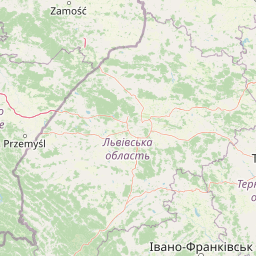
Map view of Minokąt Nature Reserve

Use this park location map to pinpoint Minokąt Nature Reserve in Poland, understand its exact geographic position, and read its mapped placement within the surrounding landscape more clearly.

Pigeon | © OpenStreetMap contributors
Park atlas

Compare adjacent forest reserves and regional conservation networks in southeastern Poland.

Parks Near Rezerwat przyrody Minokąt and Surrounding Protected Landscapes

Visitors exploring Rezerwat przyrody Minokąt can browse adjacent forest reserves and protected landscapes across the Central Roztocze mesoregion. Comparing nearby natural areas reveals broader ecological patterns and the wider distribution of mature upland forests.
Nature reservePoland
About 3.2 km away#1 closest

West

Uroczyska Puszczy Solskiej: Protected Forest and Peatland Landscape in Eastern Poland

Natura 2000 nature reserve encompassing diverse lowland forest mosaics

Uroczyska Puszczy Solskiej spans over 34,000 hectares of eastern Poland, forming a vital protected mosaic of raised bogs, transitional mires, and varied forest communities. This area provides a crucial reference for peatland and wetland ecology, supporting a wide range of forest-dependent species within a landscape shaped by glacial and fluvial processes.

Area
346.715 km²
Established
2009
Relief
Lowland
Climate
Temperate
Protected areaPodkarpackie Voivodeship
About 8.9 km away#2 closest

Southeast

Uroczyska Roztocza Wschodniego: Protected Area and Forested Ridge Geography

Extensive forest sanctuary in the Podkarpackie Voivodeship

Uroczyska Roztocza Wschodniego comprises vast, compact forest tracts on the Eastern Roztocze, defined by high-value woodland communities including beech and oak-hornbeam forests. The area functions as a critical protected landscape that supports diverse fauna and complex hydrological corridors within a significant regional conservation network.

Area
58.1 km²
Established
2011
Relief
Upland
Climate
Temperate
Nature reservePoland
About 26 km away#3 closest

Northwest

Rezerwat przyrody Debry Nature Reserve: Geography, Forest Ecology, and Protected Boundaries

Exploring the Carpathian-linked landscapes of the Polish Roztocze

Rezerwat przyrody Debry stands as a significant nature reserve in eastern Poland, known for protecting a mosaic of upland fir and fertile beech forest communities. The landscape features deep, characteristic erosional incisions that host a rich array of montane plant species. This area is essential for understanding the regional distribution of protected forest ecosystems and the complex relief of the Roztocze plateau.

Area
1.796 km²
Established
1983
Relief
Upland
Climate
Temperate
Watercolor painting of a lake surrounded by trees and hills under a pale sky
National parkLublin Voivodeship
About 29 km away#4 closest

West

Roztocze National Park: Geographic Insights into Poland's Premier Upland Protected Forest Area

Mapping forest heritage and river valleys in the Lublin Voivodeship.

Roztocze National Park offers a detailed look at one of Poland's most significant upland protected landscapes. Explore the distribution of ancient monument trees, the expansive Wieprz river valley, and the diverse terrain of the Roztocze range. This overview provides a clear understanding of the park's physical boundaries, forest ecosystems, and its role as a critical wildlife corridor within the broader Lublin Voivodeship geography.

Area
84.83 km²
Established
1974
IUCN
II
Visitors
134K annual
Watercolor painting of a tranquil wetland landscape with a river flowing through lush green trees and soft, rolling hills in the background.
National parkLublin Voivodeship
About 29 km away#5 closest

Northwest

Roztoczański Park Narodowy: Mapping the Protected Upland Ridges and Forest Ecosystems

Geographic overview of the Lublin Voivodeship wilderness zone.

The Roztoczański Park Narodowy preserves a vital expanse of temperate mixed forest across the Roztocze upland. This protected area features a unique intersection of Western and Eastern European flora, sheltered within a landscape of geological ridges, winding river valleys, and rare peat bogs. The park represents a key study in regional conservation through its strictly managed forest reserves and the restoration of the Polish konik horse.

Area
84.83 km²
Established
1974
Visitors
134K annual
Relief
Upland
Protected areaPodkarpackie Voivodeship
About 35 km away#6 closest

Southwest

Łukawiec Protected Area Mapping and Landscape Context in the Podkarpackie Voivodeship

Fragmented forest and wetland habitats in southeastern Poland

Łukawiec represents a vital ecological intersection in the Podkarpackie Voivodeship, preserving rare forest types and wetland systems on the Płaskowyż Tarnogrodzki plateau. This site is defined by its complex mosaic of riparian woodlands, Molinia meadows, and boggy coniferous patches that sustain a variety of protected animal species.

Area
22.702 km²
Established
2011
Relief
Upland
Scope
Terrestrial
Nature reservePodkarpackie Voivodeship
About 42 km away#7 closest

Southwest

Rezerwat przyrody Moczary: Geographic Overview and Protected Forest Reserve Mapping

Botanical sanctuary and lowland forest habitat in Podkarpackie.

Rezerwat przyrody Moczary represents a focused, twelve-hectare protected forest area known for its exceptional concentration of glacial relicts and diverse herbaceous understory. Located within the Natura 2000 Łukawiec site, this reserve offers a detailed look at lowland oak-hornbeam ecology and sub-Carpathian botanical signatures across the Płaskowyż Tarnogrodzki mesoregion.

Area
0.124 km²
Established
2004
Relief
Lowland
Scope
Terrestrial
Protected landscapeLublin Voivodeship
About 47 km away#8 closest

Northwest

Szczebrzeszyński Park Krajobrazowy: Protected Area Mapping in the Lublin Voivodeship

Highland forests, loess gullies, and protected peatland habitats

The Szczebrzeszyński Park Krajobrazowy forms a critical part of the regional Roztocze protected network. Its geography combines high-altitude forested hills, the deeply carved Piekiełko ravine system, and open bog woodland, providing a comprehensive mapped overview of the Western Roztocze highlands.

Area
193.71 km²
Established
1991
Relief
Upland
Climate
Temperate

Common questions about visiting, size, designation, and location context for Minokąt Nature Reserve

Minokąt Nature Reserve FAQs for park facts, access, geography, and protected area context

Find quick answers about Minokąt Nature Reserve, including protected-area facts, park geography, trail and visitor context, and how the park fits into its surrounding country and regional landscape.
MoriAtlas Explorer

Continue Your Protected Areas Search Across the Global Atlas

Deepen your exploration by continuing the structured search for national parks and protected areas worldwide. Utilize the comprehensive filtering capabilities to compare different conservation landscapes and refine your understanding of global park geography. Discover more about the distribution and characteristics of protected natural areas.

Global natural geography