Why Ryazan-Say Botanical Zakaznik stands out
The reserve is best known for sheltering a natural enclave of subtropical vegetation deep inside the mountains of western Kyrgyzstan. Species such as Griffith's sophora, wild fig, common pomegranate, and a local wild grape variety grow here in canyon-bottom conditions that are highly atypical for the country. It is also recognized as an important example of a botanical zakaznik, a Soviet-era management category dedicated to the conservation of specific plant species and habitats rather than entire ecosystems. As such, it represents one of the country's focused efforts to preserve rare and relict plant populations in a constrained geographic setting.
Ryazan-Say Botanical Zakaznik history and protected-area timeline
The Ryazan-Say Botanical Zakaznik was formally established on 12 June 1987 under Resolution No. 269 of the Council of Ministers of the Kyrgyz SSR, which simultaneously created the reserve and approved its official regulation (Polozhenie). The Soviet-era decree reflects the period's strong emphasis on cataloguing and protecting rare plant species through dedicated botanical reserves.
The reserve was created specifically to safeguard the wild subtropical flora of the Ryazan-Say gorge, a plant community of republican botanical significance. From its establishment, it has functioned as a habitat-management reserve rather than a strict wilderness area, focusing on conservation, reproduction, and restoration of targeted rare species listed in the Red Book of Kyrgyzstan.
The reserve's continued inclusion in national botanical inventories and conservation plans highlights its ongoing role as one of several small but specialist protected territories in Kyrgyzstan where the main legacy of the Soviet zakaznik system lives on in a modern framework.
Ryazan-Say Botanical Zakaznik landscape and geographic character
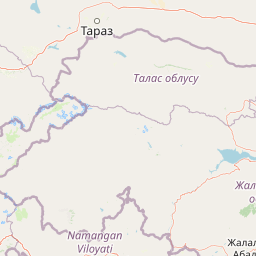
The landscape of Ryazan-Say Botanical Zakaznik is defined by the narrow, steep-walled corridor of the Ryazan-Say gorge and its tributary Altynalchi stream. The reserve occupies the entire basin of the Altynalchi, which flows into Ryazan-Say from the right, and then continues downstream as a narrow strip of around forty meters in width along the floodplain of Ryazan-Say itself.
This configuration produces a strongly linear topography: the protected area follows the natural drainage lines of the gorge rather than spreading across broad plateaus or ridges. The streams funnel moisture and seasonal runoff into the canyon bottom, creating sheltered microclimates that differ sharply from the surrounding open mountain slopes.
The lower edge of the reserve reaches the Naryn River, one of the major river systems of Kyrgyzstan. This connection to the Naryn corridor gives the zakaznik a clear topographic anchor, while the steep, rocky setting of the upper basin defines most of the reserve's interior character.
Ryazan-Say Botanical Zakaznik ecosystems, habitats, and plant life
The defining natural feature of Ryazan-Say is its relict subtropical plant community, which thrives in a microclimatic niche far north of where similar vegetation normally occurs. The gorge collects warmth from sun-heated rocks, retains moisture from the stream system, and shelters plants from harsh mid-altitude winds, producing conditions that allow several warmth-loving species to persist naturally.
Key species include Griffith's sophora, a wild fig population (sometimes called the wine berry in local botanical tradition), the common pomegranate, and a distinctive local wild grape variety. Several medicinal plants of republican importance also occur here, contributing to the botanical richness of the site.
The habitat mosaic is concentrated rather than extensive, blending rocky slope vegetation, riparian shrub cover, and floodplain strips along the streams. This compact ecological structure is what makes the territory a botanical zakaznik rather than a broader biosphere reserve, with management focused tightly on maintaining and restoring rare plant populations in this particular microhabitat.
Ryazan-Say Botanical Zakaznik conservation status and protection priorities
Ryazan-Say Botanical Zakaznik holds clear conservation significance as one of Kyrgyzstan's dedicated botanical reserves, established specifically to maintain rare plant populations of republican value. Its IUCN Category IV status reflects a focused management mission: protecting particular species and habitats rather than entire ecosystems, and allowing controlled, non-destructive use of the surrounding landscape.
The reserve contributes to national conservation efforts by acting as a refuge for species listed in the Red Book of Kyrgyzstan, including Griffith's sophora, wild fig, common pomegranate, and a local wild grape. By concentrating protection on a small but ecologically distinct site, the zakaznik plays an outsized role in preserving genetic resources of warmth-loving plants that would otherwise be vulnerable to grazing, fuelwood collection, and land conversion.
Its value lies as much in future restoration potential as in current preservation, since the species it shelters could serve as genetic material for reintroduction or strengthening of similar plant communities elsewhere in the country.
Top sights and standout views in Ryazan-Say Botanical Zakaznik
Ryazan-Say Botanical Zakaznik stands out for the unusual concentration of subtropical plant species within its small footprint. Few other places in Kyrgyzstan bring together wild fig, pomegranate, and rare grape varieties under formal botanical protection in the same river gorge.
The reserve is also notable for being a textbook example of a Soviet-era botanical zakaznik that has retained its original conservation mission into the modern era, providing a long-running case study for focused habitat management in Central Asia.
Best time to visit Ryazan-Say Botanical Zakaznik
The best time to experience Ryazan-Say Botanical Zakaznik is during the warmer months, when subtropical plant species are in active growth and fruit, and when the streams and canyon vegetation are at their most lush. Late spring through early autumn brings out the full character of the rare fig, pomegranate, and grape populations, along with the broader riparian habitat along the Ryazan-Say and Altynalchi streams.
Winter visits are feasible in good weather but offer a much quieter, less expressive botanical season, since snow and cold limit the visibility of the reserve's defining plant communities. Travelers interested in the reserve's relict subtropical character will find warmer-season conditions far more rewarding for both observation and photography.