Mori Atlas logo
National parkSaguaro National Park

Discover the geographic identity and natural terrain of this distinct protected land.

Saguaro National Park National Park: Protected Landscape Geography and Mapped Boundaries in Pima County

Saguaro National Park stands as a unique protected landscape, offering rich insights into its geographic setting and natural terrain. Situated within Pima County, this national park presents a distinct area for atlas-driven discovery, focusing on its mapped boundaries and regional geological context. Explore the distinct features that define this protected area and understand its place within the broader landscape.

Sonoran DesertArizona National ParksDesert LandscapeSky IslandsCactus EcosystemsWilderness Areas

Saguaro National Park

National park

Park overview

Structured park overview, official facts, and landscape profile for Saguaro National Park

Saguaro National Park park facts, protected area profile, and essential visitor context
Review the core facts for Saguaro National Park, including designation, size, terrain, visitor scale, habitats, and operating context in one park-focused overview.

About Saguaro National Park

Saguaro National Park stands as a premier example of Sonoran Desert conservation, protecting a landscape that has defined the visual and cultural identity of the American Southwest. The park's two districts flank Tucson, creating a green ribbon of protected desert that buffers the city from development while providing habitat for desert wildlife and recreation opportunities for residents and visitors alike. The Tucson Mountain District preserves volcanic terrain formed around 70 million years ago when explosive eruptions built the Tucson Mountains and a massive caldera collapsed at their center. The Rincon Mountain District tells a different geological story, where ancient granitic rocks from deep underground were eventually exposed at the surface through 30 million years of crustal stretching and faulting along the Catalina Detachment Fault. This geological complexity underlies the ecological diversity that makes the park special. The Rincons rise to 8,666 feet at Mica Mountain, creating a vertical gradient that supports multiple distinct plant communities from desert scrub at the base to mixed conifer forest at the summit. This elevational range, combined with the mountains' position as one of the Madrean Sky Islands between the Rocky Mountains and Sierra Madre, makes the park extraordinarily biodiverse. The park contains more than 450 archaeological sites documenting thousands of years of human presence, from Hohokam villages to historic mining operations and ranching homesteads.

Quick facts and research context for Saguaro National Park

Saguaro National Park occupies 91,716 acres in Pima County, Arizona, divided between two districts roughly 10 miles west and east of Tucson. The park was established as a national monument in 1933 through the Antiquities Act and achieved national park status in 1994. The Tucson Mountain District covers approximately 25,000 acres while the larger Rincon Mountain District encompasses about 67,000 acres. About 71,000 acres of the park are designated wilderness. The Rincon Mountains are part of the Madrean Sky Islands, a chain of mountain ranges that function as biological stepping stones between the Rocky Mountains and Sierra Madre in Mexico, supporting exceptionally high biodiversity.

Park context

Deeper park guide and search-rich context for Saguaro National Park

Saguaro National Park history, landscape, wildlife, and travel context
Explore Saguaro National Park through its history, landscape character, ecosystems, wildlife, conservation priorities, cultural context, and seasonal travel timing in a structured park guide built for atlas discovery and search intent.

Why Saguaro National Park stands out

Saguaro National Park is best known for its extraordinary saguaro cactus forest, the largest concentration of these iconic desert giants in the world with an estimated 1.8 million individuals. The park protects the most accessible examples of Sonoran Desert landscape in the United States, with dramatic rocky mountain backdrops rising from expanses of desert scrub and grassland. The two districts present contrasting geological character: the Tucson Mountain District features volcanic rock formations dating back roughly 70 million years, while the Rincon Mountain District exposes ancient crystalline gneiss that originated deep beneath the Tucson Mountains before being displaced and uplifted through tectonic processes. The Rincon Mountains also contain higher-elevation ecosystems including oak woodland, pine-oak woodland, pine forest, and mixed conifer forest that do not exist in the Tucson Mountain District.

Saguaro National Park history and protected-area timeline

The lands within Saguaro National Park have supported human habitation for millennia. The earliest known residents were the Hohokam, who established villages in the area between AD 200 and 1450, leaving behind petroglyphs and pottery fragments still visible in the park today. Descendants of these ancient peoples may include the Sobaipuri of the Tucson Basin and the Tohono O'odham to the west. Spanish explorers first entered the region in 1539-1540, and non-native settlement began in 1692 with the founding of San Xavier Mission along the Santa Cruz River. The area remained lightly developed until the mid-19th century, after Arizona became part of the United States and the Apache Wars ended in 1886. Homesteaders, ranchers, and miners then moved into the Tucson and Rincon Mountains, with mining operations continuing intermittently through 1942. In 1920, members of the University of Arizona's Natural History Society proposed establishing a protected area for saguaro cacti. After years of effort, publisher Frank Harris Hitchcock persuaded President Herbert Hoover to create Saguaro National Monument in 1933 using the Antiquities Act. The monument initially covered only the Rincon Mountain area. President John F. Kennedy added the Tucson Mountain District in 1961, and Congress elevated the combined areas to national park status in 1994.

Saguaro National Park landscape and geographic character

Saguaro National Park encompasses two dramatically different mountain landscapes within the Sonoran Desert. The Tucson Mountain District features volcanic terrain with exposed breccia, lava flows, and the remnants of a collapsed caldera roughly 12 miles across. The district's highest point is Wasson Peak at 4,687 feet. The landscape supports desert scrub communities at lower elevations transitioning to desert grassland higher up. The Rincon Mountain District presents a starkly different character, with ancient crystalline gneiss dominating the visible rock. The Rincons rise more steeply to 8,666 feet at Mica Mountain, creating higher-elevation habitats that support oak woodland, pine-oak woodland, pine forest, and mixed conifer forest. These higher elevations receive more precipitation and support species found nowhere else in the park. The park lies within the watershed of the generally dry Santa Cruz River, with Rincon Creek containing the largest riparian zone. Both districts contain numerous washes that are usually dry but subject to flash flooding during summer rains.

Saguaro National Park ecosystems, habitats, and plant life

The plant communities within Saguaro National Park vary dramatically with elevation and between the two districts. The Tucson Mountain District contains desert scrub at lower elevations and desert grassland slightly higher. The Rincon Mountain District adds four additional communities at higher elevations: oak woodland, pine-oak woodland, pine forest, and mixed conifer forest featuring Douglas-fir, Ponderosa pine, white fir, and Gambel oak. The park's signature plant is the saguaro cactus, which grows nowhere else in the world naturally. These giants may live 200 years, reach 60 feet in height, and weigh up to 4,800 pounds when hydrated. The first arm typically appears when the cactus is 50 to 100 years old. An estimated 1.8 million saguaros grow in the park, alongside 24 other cactus species including fishhook barrel, staghorn cholla, pinkflower hedgehog, Engelman's prickly pear, teddybear cholla, and jumping cholla. Scientific inventories have documented 389 species of vascular plants, 25 non-vascular plants, and 197 species of fungi. The most serious invasive threat is buffelgrass, a drought-tolerant African grass first detected in the park in 1989 that creates significant fire hazards.

Saguaro National Park wildlife and species highlights

Saguaro National Park supports remarkable wildlife diversity across its range of habitats. Mammal inventories have confirmed 30 species including cougars, coyotes, bobcats, white-tailed deer, mule deer, javelinas, gray foxes, black-tailed jackrabbits, desert cottontails, ring-tailed cats, white-nosed coatis, ground squirrels, and packrats. The endangered lesser long-nosed bat migrates between the park and Mexico seasonally. The park hosts 107 bird species, including uncommon species like the vermilion flycatcher and whiskered screech owl, along with great horned owls, cactus wrens, ravens, kestrels, turkey vultures, roadrunners, Gila woodpeckers, red-tailed hawks, quails, and hummingbirds. The Mexican spotted owl is listed as threatened. Thirty-six reptile species include desert tortoises, diamondback rattlesnakes, coral snakes, Gila monsters, and various lizards. Three amphibian species inhabit the park: canyon tree frog, lowland leopard frog, and Couch's spadefoot toad. The most serious immediate threat to wildlife is roadkill, with approximately 50,000 vertebrates dying annually on park roads.

Saguaro National Park conservation status and protection priorities

Saguaro National Park represents one of the most significant protected areas for Sonoran Desert conservation in the United States. The park preserves viable populations of the iconic saguaro cactus and protects diverse habitats across an elevation gradient that supports multiple distinct ecosystems. The Rincon Mountains' status as one of the Madrean Sky Islands makes them particularly important for biodiversity, as they function as stepping stones enabling species migration between the Rocky Mountains and Sierra Madre in Mexico. About 71,000 acres of the park are designated wilderness, providing core habitat protection. However, the park faces serious conservation challenges. Urban sprawl, pollution, light pollution, and habitat fragmentation from surrounding development stress wildlife populations. Invasive buffelgrass poses a severe fire risk and is considered impossible to eliminate. Climate change has already raised temperatures about 4 degrees Fahrenheit since 1900. Road mortality affects roughly 50,000 vertebrates annually. The Desert Research Learning Center supports scientific monitoring and research to inform conservation management.

Saguaro National Park cultural meaning and human context

The lands now within Saguaro National Park have been inhabited for at least 1,800 years. The Hohokam were the earliest known residents, establishing villages between AD 200 and 1450 and leaving behind petroglyphs, pottery fragments, and other artifacts throughout the park. Spanish explorers arrived in the 1530s and 1540s, followed by missionaries and later settlers. The area remained relatively undeveloped until after Arizona became a U.S. territory and the Apache Wars ended in 1886. Mining operations, including the Copper King Mine producing copper, gold, lead, zinc, and molybdenum, operated until 1942. Ranching continued on private in-holdings until the mid-1970s. The park contains more than 450 archaeological sites and more than 60 historic structures, including the Freeman Homestead on the Arizona State Register of Historic Places and Manning Cabin on the National Register. The Civilian Conservation Corps built many structures in the 1930s and 1940s that remain in use today.

Top sights and standout views in Saguaro National Park

Saguaro National Park offers visitors the chance to experience the quintessential Sonoran Desert landscape with its iconic saguaro cacti standing as silent sentinels against dramatic mountain backdrops. The park's two districts provide contrasting experiences: the Tucson Mountain District features shorter trails through volcanic terrain with easily accessible Hohokam petroglyphs at Signal Hill, while the Rincon Mountain District offers higher elevations, the 8.3-mile Cactus Forest Loop Drive, and access to wilderness camping. More than 165 miles of trails traverse the park, supporting hiking, cycling, and horseback riding. The Arizona Trail passes through the Rincon Mountain District, and the entire park lies within the Madrean Sky Islands, one of Earth's most biodiverse mountain complexes. Visitors can explore historic structures built by the Civilian Conservation Corps, view diverse wildlife from cougars to cactus wrens, and witness the incredible variety of plant life that makes this corner of Arizona so ecologically significant.

Best time to visit Saguaro National Park

Saguaro National Park can be visited year-round, though the climate shapes the experience significantly. Summer brings intense heat with temperatures exceeding 100 degrees Fahrenheit and brief but violent monsoon rains accompanied by lightning, dust storms, and flash floods. The most comfortable season for hiking is fall through early spring, from October through April, when daytime temperatures range from the 60s to 80s Fahrenheit. Winter months occasionally bring snow at higher elevations in the Rincon Mountains, while spring offers spectacular wildflower displays. Visitors should be aware that summer rains can create hazardous conditions on trails and in washes, while extreme heat during June through September can be dangerous for unprepared hikers. The park's two visitor centers provide information about current trail conditions and safety concerns. Early morning visits are recommended to avoid the hottest part of the day and potentially spot wildlife active during dawn hours.
Park location guide

Geography guide, regional context, and park location map for Saguaro National Park

Saguaro National Park park geography, regions, and map view in United States of America
Understand where Saguaro National Park sits in United States of America through a broader geographic reading of the surrounding landscape, nearby location context, and its mapped position within the national park landscape.

How Saguaro National Park fits into United States of America

The United States of America is a federal presidential republic and one of the world's largest countries by area and population. It consists of 50 states across a vast territory spanning multiple time zones, with its capital in Washington, D.C. and largest city in New York City. The nation has a diverse economy, influential political system, and significant cultural and military presence globally.

Wider geography shaping Saguaro National Park in United States of America

The United States occupies a vast territory in North America, bordered by Canada to the north and Mexico to the south. The 48 contiguous states stretch from the Atlantic to the Pacific Ocean, while Alaska occupies the northwestern region and Hawaii is an archipelago in the Pacific. The country encompasses diverse terrain including the Rocky Mountains, Appalachian Mountains, Great Plains, and extensive river systems.

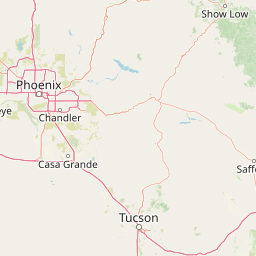
Map view of Saguaro National Park

Use this park location map to pinpoint Saguaro National Park in United States of America, understand its exact geographic position, and read its mapped placement within the surrounding landscape more clearly.

Pigeon | © OpenStreetMap contributors

Location context for Saguaro National Park

ArizonaPima County
Park atlas

Explore additional protected landscapes and desert ecosystems within Arizona's Sonoran region.

Discover Other National Parks and Protected Areas Near Saguaro National Park
Continue your protected area discovery beyond Saguaro National Park by exploring nearby national parks and related conservation landscapes in the Sonoran Desert. This regional park-list view allows for direct geographic comparison, highlighting shared desert features and diverse mountain terrain across Arizona.
National parkNavajo County

Petrified Forest National Park: National Park Protected Landscape and Geographic Atlas

Explore its mapped terrain and regional park context.

Petrified Forest National Park represents a significant protected landscape within Navajo County, Arizona, offering focused insights into its unique terrain and geographic distribution. As a national park, it provides valuable data for understanding mapped park boundaries, regional landscape context, and its role within the broader atlas of protected areas. Discover the specific geographic features and natural identity that define this unique natural reserve.

Area
895.94 km²
Established
1962
IUCN
II
Visitors
644.9K annual
National parkNew Mexico

White Sands National Park: National Park with Unique Dune Landscape in New Mexico

Explore its protected boundaries and desert geography.

White Sands National Park is a protected national park renowned for its stunning gypsum dunes, offering a unique landscape within New Mexico's geography. This page provides detailed information on its mapped protected area, serving as a valuable resource for understanding the park's specific geographic context and its identity as a significant protected natural landscape.

Area
601.3 km²
Established
2019
IUCN
V
Visitors
729.1K annual
National parkBaja California

San Lorenzo Marine Archipelago National Park: Protected Area and Mapped Landscape Geography

Explore its national park status and regional context in Baja California.

Delve into San Lorenzo Marine Archipelago National Park, a key protected area contributing to Baja California's diverse geography. As a national park, its mapped boundaries and unique landscape characteristics provide essential data for atlas exploration and understanding regional conservation efforts. This entry focuses on the park's identity as a mapped protected entity, ideal for researchers and explorers seeking structured geographic insights into natural reserves.

Area
504.42 km²
Established
2005
IUCN
II
Relief
Upland
National parkArizona

Grand Canyon National Park: Arizona National Park Protected Landscape & Geography

Explore mapped boundaries and regional atlas context.

Grand Canyon National Park stands as a premier national park, showcasing a unique protected landscape within Arizona's diverse geography. This detailed entry focuses on the park's specific geographic identity, its mapped boundaries, and its significance within the regional atlas. Discover the contours of this protected area and its place in the natural terrain of the American Southwest.

Area
4,926.08 km²
Established
1919
IUCN
II
Visitors
4.9M annual
Watercolor painting of a mountainous landscape with pine trees, rolling hills, and a pastel sky
National parkBaja California

Sierra de San Pedro Mártir National Park: Protected Landscape and Geographic Exploration

National park boundaries and natural terrain in Baja California.

Sierra de San Pedro Mártir National Park is a vital protected landscape situated in Baja California. This destination offers users a focused atlas exploration of its national park status, detailing its geographic setting and mapped protected area. Understand the park's specific place within the region, examining its natural terrain and boundaries for a clear geographic context, essential for any structured discovery of Mexico's conserved lands.

Area
729.09 km²
Established
1947
IUCN
II
Relief
Mountain
National parkEnsenada Municipality

Constitution 1857 National Park National Park: Mapped Protected Landscape Discovery

Geographic context and park boundaries for Ensenada Municipality.

Delve into the protected landscape of Constitution 1857 National Park, a key national park entity located in the Ensenada Municipality. This resource highlights the park's distinct geographic features and mapped protected area, crucial for atlas exploration and understanding the regional natural terrain. Gain structured insight into the park's identity and its role within the wider geographic context.

Area
50.09 km²
Established
1962
IUCN
II
Relief
Mountain
National parkOcampo Municipality

Basaseachic Falls National Park: National Park Geography and Mapped Boundaries

Explore protected lands within Ocampo Municipality.

Basaseachic Falls National Park serves as a key protected area within Ocampo Municipality, Mexico. This page provides detailed geographic information and mapped boundaries, essential for understanding its landscape context and its significance as a national park. Dive into the atlas-style data to appreciate the park's protected terrain and its contribution to the regional geography, offering a factual discovery experience.

Area
58.03 km²
Established
1981
IUCN
II
Relief
Mountain
National parkChihuahua

Cumbres de Majalca National Park: National Park Discovery and Geographic Context in Chihuahua

Mapped protected landscape exploration in Chihuahua.

Delve into the protected landscape of Cumbres de Majalca National Park, a national park situated in the Chihuahua region of Mexico. This entry provides essential geographic context and details on its mapped boundaries, serving as a key point for atlas-based exploration of Mexico's protected areas. Understand its specific contribution to the regional geography and conservation landscape.

Area
47.72 km²
Established
1939
IUCN
II
Relief
Mountain

Common questions about visiting, size, designation, and location context for Saguaro National Park

Saguaro National Park FAQs for park facts, access, geography, and protected area context
Find quick answers about Saguaro National Park, including protected-area facts, park geography, trail and visitor context, and how the park fits into its surrounding country and regional landscape.
MoriAtlas Explorer

Continue Your Protected Areas Search Across the Global Atlas

Deepen your exploration by continuing the structured search for national parks and protected areas worldwide. Utilize the comprehensive filtering capabilities to compare different conservation landscapes and refine your understanding of global park geography. Discover more about the distribution and characteristics of protected natural areas.

Global natural geography