Mori Atlas logo
Wildlife reserveSaman Bird Sanctuary

Mapped boundaries and hydrological features of this important inland freshwater wildlife reserve

Saman Bird Sanctuary: A Detailed Geographic Atlas of the Wetland Landscapes in Uttar Pradesh

Saman Bird Sanctuary serves as a primary inland wetland habitat within the agricultural terrain of western Uttar Pradesh, India. This protected wildlife reserve centres on a seasonal, rain-fed oxbow lake that supports significant resident breeding colonies of herons, egrets, and sarus cranes. The sanctuary functions as a critical wintering ground for migratory flocks and plays a vital role in regional groundwater recharge across the alluvial plains.

wetlandbird sanctuaryRamsar sitemigratory birdsbirdwatchingoxbow lake

Saman Bird Sanctuary

Wildlife reserve

Park overview

Structured park overview, official facts, and landscape profile for Saman Bird Sanctuary

Saman Bird Sanctuary park facts, protected area profile, and essential visitor context

Review the core facts for Saman Bird Sanctuary, including designation, size, terrain, visitor scale, habitats, and operating context in one park-focused overview.

About Saman Bird Sanctuary

Saman Bird Sanctuary is a protected inland wetland located in the village of Saman, in the Mainpuri district of western Uttar Pradesh. The site lies in an agricultural landscape on flat ground, centred on a seasonal, rain-fed oxbow lake. Its boundaries are defined by local roads and village edges: the Kishni-Karhal road runs along the north, the western side follows the border between Saman and the village of Sauj, and the southern boundary marks the limit with Sarsai Helu in adjacent Etawah district.

The sanctuary covers roughly 525 hectares, although the official government designation and GIS measurements differ slightly. A distinctive feature of the site is that around three-quarters of the designated area is privately owned land, placing the wetland within a working agricultural setting rather than a wholly state-controlled reserve.

Ecologically, Saman is known as both a breeding habitat and a wintering ground. The lake supports nesting colonies of black-crowned night herons, egrets, and Indian pond herons, and at least one breeding pair of black-necked storks. Greater spotted eagles are present year-round, while sarus cranes breed locally in small numbers. During winter, the site hosts large migratory flocks, and over 180 bird species have been recorded in total.

Recognition of the wetland's importance grew with its inclusion as an Indian Ramsar site in December 2019. This designation confirmed Saman's role in protecting a functioning oxbow habitat, supporting waterbird diversity, and contributing to groundwater recharge in the region. For visitors and naturalists, the sanctuary offers one of the more accessible bird-watching destinations in western Uttar Pradesh, lying in proximity to Mainpuri and within broader reach of Agra.

Quick facts and research context for Saman Bird Sanctuary

Saman Bird Sanctuary is located in the village of Saman in the Mainpuri district of western Uttar Pradesh, India. The site covers roughly 525 hectares of land surrounding a seasonal oxbow lake, with most of the designated area in private ownership. It was designated as a Ramsar Wetland in December 2019 under reference number 2413.

The sanctuary is administered under IUCN Category IV as a habitat and species management area, with the Uttar Pradesh Government as the governing body. The wetland is significant both as a seasonal refuge for migratory waterbirds and as habitat for resident breeding species such as sarus cranes, black-crowned night herons, and black-necked storks.

Protection and recognition

Documented terrestrial protection history and international designation data

Saman Bird Sanctuary Protection Status and Ramsar Site Recognition

Saman Bird Sanctuary maintains established terrestrial protection status backed by official Ramsar wetland designation records established in 2019. Comprehensive conservation records trace formal recognition history and management scope for this protected area.

International recognition

Protection details

Protection scope
Terrestrial
Designated year
2019
Transboundary protection
No
Park context

Deeper park guide and search-rich context for Saman Bird Sanctuary

Saman Bird Sanctuary history, landscape, wildlife, and travel context

Explore Saman Bird Sanctuary through its history, landscape character, ecosystems, wildlife, conservation priorities, cultural context, and seasonal travel timing in a structured park guide built for atlas discovery and search intent.

Why Saman Bird Sanctuary stands out

Saman Bird Sanctuary is best known for its seasonal oxbow lake that supports both resident breeding waterbirds and very large wintering populations of migratory species. The presence of mixed heron and egret colonies, alongside breeding sarus cranes and black-necked storks, gives the wetland a distinctive breeding-bird identity within an otherwise heavily agricultural part of Uttar Pradesh. The site is also recognized for its winter congregations, when flocks numbering in the tens of thousands arrive to use the wetland. Combined with its Ramsar designation in 2019, this combination of resident and migratory bird interest has positioned Saman as a regionally important inland wetland for birdwatching and habitat conservation.

Saman Bird Sanctuary history and protected-area timeline

The wetland surrounding the village of Saman has long functioned as a seasonal oxbow lake within the agricultural plains of Mainpuri district. Its formal recognition as a conservation site progressed when it was designated as a protected Ramsar wetland on 2 December 2019, under reference number 2413 of the Ramsar Convention.

This designation marked the international acknowledgement of the area's ecological value, particularly its role in supporting breeding waterbirds and large wintering populations of migratory species. The sanctuary is classified as an IUCN Category IV protected area, focused on habitat and species management, and is administered by the Uttar Pradesh Government.

Saman Bird Sanctuary landscape and geographic character

The landscape of Saman Bird Sanctuary is defined by flat alluvial terrain typical of western Uttar Pradesh, centred on a seasonal, rain-fed oxbow lake. The wetland lies at the meeting of agricultural fields and small village settlements, with the Kishni-Karhal road running along its northern edge and village boundaries shaping the rest of the perimeter.

The sanctuary's character changes with the seasons. During dry periods it functions largely as an open lake and surrounding marshy ground, while in the wetter months the water spreads into a broader shallow wetland. Because approximately three-quarters of the designated area is privately owned farmland, the protected landscape is closely interwoven with cultivated land, rural villages, and local field patterns.

The setting offers wide, open views across the plain, with the oxbow curve of the lake providing a central focal point. This combination of lowland geography, seasonal hydrology, and proximity to human habitation shapes the overall visual and ecological identity of the sanctuary.

Saman Bird Sanctuary ecosystems, habitats, and plant life

The sanctuary's natural character is shaped by an inland oxbow lake system that supports both aquatic and wetland-edge vegetation. Aquatic plants at Saman include mosquitofern, Cyperus alopecuroides, waterthyme, and Smithia sensitiva, contributing to a mosaic of submerged and emergent plant cover typical of small seasonal wetlands in the Gangetic plain.

Around the lake, the wetland transition zones include reedbeds, marshy margins, and patches of grassland interspersed with adjacent cropland. This habitat variety creates the conditions required for mixed-species waterbird colonies and supports a range of waders, herons, and smaller passerines in the surrounding scrub and tree lines.

Seasonality plays a defining role in the ecology of the site. During the dry months, water is concentrated within the oxbow, while in the monsoon season the lake expands, replenishing aquatic vegetation and feeding the shallow basins that migratory and resident species depend on. Beyond its wildlife values, the wetland also contributes to groundwater recharge across the surrounding area.

Saman Bird Sanctuary wildlife and species highlights

Saman's wildlife significance centres on its birdlife, which is exceptionally diverse for a small inland wetland. The site supports around 150 nests of black-crowned night herons, egrets, and Indian pond herons in mixed breeding colonies. Several pairs of sarus cranes breed locally, and at least one pair of black-necked storks has been documented nesting at the wetland.

The sanctuary's raptor community includes resident greater spotted eagles as well as smaller hunters such as Egyptian vultures, sparrowhawks, black-shouldered kites, crested serpent eagles, and black kites. Throughout the winter months, the lake becomes a temporary home for tens of thousands of migratory birds, with regular winter counts exceeding fifty thousand individuals. In total, some 187 bird species have been recorded at Saman.

Beyond birds, the wetland supports mammals typical of rural Uttar Pradesh, including nilgai, jackal, mongoose, and hare. Reptiles are also present, with the Bengal monitor lizard noted as a resident species. Smaller birds recorded near the sanctuary include magpie-robin, rufous-fronted prinia, little green bee-eater, tailor bird, ashy prinia, Indian grey hornbill, lineated barbet, yellow-footed green pigeon, and Asian openbill.

Saman Bird Sanctuary conservation status and protection priorities

Saman Bird Sanctuary carries notable conservation significance for an inland wetland embedded in a heavily agricultural landscape. The site was recognized as a Ramsar Wetland in December 2019, placing it within the global network of important wetlands and acknowledging its function as habitat for waterbirds, aquatic plants, and the broader wetland ecosystem.

The sanctuary is managed as an IUCN Category IV protected area, with a focus on habitat and species management. Its designation reflects concern for the protection of resident breeding species such as sarus cranes, black-necked storks, and mixed heron colonies, as well as the conservation of seasonal habitat for migratory waterbirds using the Central Asian flyway.

Because most of the designated area remains in private ownership, conservation at Saman depends heavily on balancing agricultural use with the protection of the wetland itself. The site also provides wider environmental services, including groundwater recharge, supporting both ecological and human needs in the surrounding region.

Top sights and standout views in Saman Bird Sanctuary

Saman Bird Sanctuary stands out for the combination of an internationally recognized Ramsar wetland with a working agricultural landscape. Its mixed heron and egret colonies, breeding sarus cranes, and seasonal presence of black-necked storks and greater spotted eagles give it strong year-round bird interest, while winter flocks regularly exceed fifty thousand migratory birds.

With a recorded bird list approaching 187 species and an accessible location near Mainpuri in western Uttar Pradesh, the sanctuary is a distinctive destination for birdwatching in the Indo-Gangetic plain.

Best time to visit Saman Bird Sanctuary

Saman Bird Sanctuary is best experienced between November and February, when the cooler winter months bring large flocks of migratory waterbirds to the wetland. This period also coincides with the strongest birdwatching opportunities, as resident species such as sarus cranes and raptors remain active alongside the seasonal arrivals, and the lake and its margins provide the clearest conditions for observation.
Monthly climate preview

Long-term temperature and precipitation trends across twelve recorded intervals

Saman Bird Sanctuary Climate Normals and Annual Weather Patterns

Representative coordinate sampling reveals measured annual shifts in temperature and precipitation normals for Saman Bird Sanctuary from 1991 to 2020. Reviewing the comprehensive twelve-month record provides detailed monthly metrics for comparing long-term thermal and moisture rhythms.
Annual mean26 °C
15 °C36 °C
Jan15°
Feb19°
Mar25°
Apr32°
May36°
Jun36°
Jul32°
Aug30°
Sep28°
Oct26°
Nov21°
Dec17°
Warmest month
June

36.4 °C

Coolest month
January

15.2 °C

Wettest month
July

6.5 mm/day

Driest month
November

0.1 mm/day

Park location guide

Geography guide, regional context, and park location map for Saman Bird Sanctuary

Saman Bird Sanctuary park geography, regions, and map view in India

Understand where Saman Bird Sanctuary sits in India through a broader geographic reading of the surrounding landscape, nearby location context, and its mapped position within the national park landscape.

How Saman Bird Sanctuary fits into India

India is a South Asian country bordered by the Indian Ocean, Arabian Sea, and Bay of Bengal. It shares land borders with Pakistan, China, Nepal, Bhutan, Bangladesh, and Myanmar. The country has a population of over 1.4 billion people and operates as a federal parliamentary republic with its capital in New Delhi.

Wider geography shaping Saman Bird Sanctuary in India

India occupies the Indian subcontinent in South Asia, bordered by the Arabian Sea to the southwest, the Bay of Bengal to the southeast, and the Indian Ocean to the south. It shares land borders with Pakistan to the west, China, Nepal, and Bhutan to the north, and Bangladesh and Myanmar to the east. The territory also includes the Andaman and Nicobar Islands in the Indian Ocean.

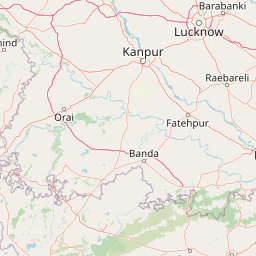
Map view of Saman Bird Sanctuary

Use this park location map to pinpoint Saman Bird Sanctuary in India, understand its exact geographic position, and read its mapped placement within the surrounding landscape more clearly.

Pigeon | © OpenStreetMap contributors

Location context for Saman Bird Sanctuary

Mainpuri districtUttar Pradesh
Park atlas

Compare adjacent wetland habitats and regional protected areas across the alluvial plain.

Parks Near Saman Bird Sanctuary And Related Protected Landscapes

Browse other parks near Saman Bird Sanctuary to evaluate regional wetland ecosystems and surrounding conservation areas. Expanding the geographic comparison reveals connected freshwater habitats across the agricultural landscape of western Uttar Pradesh.
A watercolor illustration of a calm, marshy wetland landscape with soft green and earthy tones, featuring distant vegetation, a small island, and foreground trees.
Wildlife reserveUttar Pradesh
83 km away#1 closest

East

Sandi Bird Sanctuary: Wetland Reserve and Geographic Landscape in Uttar Pradesh, India

A Ramsar-designated protected area in the Indo-Gangetic plains

Sandi Bird Sanctuary represents a critical protected wetland ecosystem in Uttar Pradesh, featuring the 309-hectare Dahar Jheel. This reserve acts as a focal point for birdlife in northern India, providing essential marshland habitat alongside the River Garra. The geography reflects the flat, alluvial nature of the Gangetic plain, offering deep insights into regional wetland conservation and migratory ecology.

Area
3.09 km²
Established
1990
IUCN
IV
Relief
Lowland
Wildlife reserveUttar Pradesh
About 131 km away#2 closest

Northwest

Shekha Bird Sanctuary: Wildlife Reserve and Wetland Geography in the Uttar Pradesh Ganges Plain

A perennial freshwater lake habitat for migratory waterbirds.

Located near Aligarh in the upper Ganges plain, Shekha Bird Sanctuary functions as a high-value wildlife reserve. This protected wetland, fed by local canal systems, supports a concentrated population of resident and migratory waterbirds, offering a clear window into the ecological importance of small-scale freshwater landscapes in densely populated agricultural regions.

Area
0.25 km²
Established
2009
IUCN
IV
Relief
Lowland
Wildlife reserveUttar Pradesh
132 km away#3 closest

West

Sur Sarovar Wildlife Reserve: A Protected Wetland Sanctuary in Uttar Pradesh

Mapped freshwater landscapes and migratory bird habitats.

Sur Sarovar serves as a significant wildlife reserve in Uttar Pradesh, characterized by the distinct geometric shape of Keetham Lake. This protected wetland provides essential breeding habitat for diverse waterbird species across its shallow margins and islands. The area also hosts a vital sloth bear rescue center, anchoring its status as a key site for wildlife rehabilitation and conservation efforts within the broader Gangetic plains region.

Area
7.13 km²
Established
1991
Water
Water-dominated
Watercolor illustration of a lush wetland scene with low hills in the background and a winding stream through green fields.
Wildlife reserveUttar Pradesh
151 km away#4 closest

East

Nawabganj Bird Sanctuary: Geographic Overview and Protected Wetland Landscape in Uttar Pradesh

A Ramsar-recognized lake ecosystem and wildlife reserve.

Located in the Unnao district, Nawabganj Bird Sanctuary features a significant freshwater lake that serves as a vital hydrological heart for the region. The sanctuary creates an essential ecological mosaic of reed-fringed water, dry land patches, and woodland edges. This protected landscape plays a foundational role in conservation efforts for migratory waterfowl and resident species on the Indo-Gangetic plain, offering unique insights into wetland terrain mapping.

IUCN
IV
Relief
Lowland
Access
Easy access
Scope
Terrestrial
Watercolor illustration of a wetland landscape with grasses, trees, and a sunset
National parkIndia
159 km away#5 closest

West

Keoladeo National Park: India's Renowned Wetland Bird Sanctuary and Protected Landscape

Explore its mapped terrain and critical avian habitat near Bharatpur.

Keoladeo National Park, a designated national park in India, represents a critical hub for wetland conservation and avian biodiversity. The park's meticulously managed wetland system, a mosaic of shallow waters and grasslands, provides essential habitat for thousands of resident and migratory birds from across Eurasia. Situated near Bharatpur, this protected landscape offers a unique opportunity to study the intersection of arid and fertile plains geography and serves as a vital stopover point on major bird flyways, underscoring its importance in regional conservation efforts.

Area
28.7 km²
Established
1982
IUCN
II
Visitors
147K annual
National parkLakhimpur Kheri district
210 km away#6 closest

Northeast

Dudhwa National Park: Terai Grasslands and Alluvial Plain Geography within Lakhimpur Kheri

Discover the mapped protected landscape of this vital Indian national park.

Dudhwa National Park in Lakhimpur Kheri district stands as a crucial example of the Terai grassland ecosystem, characterized by its expansive alluvial plains and marshy habitats. This page provides an atlas-style exploration of its protected landscape, detailing the unique terrain and geographic context essential for understanding its conservation significance.

Area
614 km²
Established
1977
IUCN
II
Visitors
26K annual
National parkMadhya Pradesh
About 214 km away#7 closest

Southwest

Madhav National Park: National Park Atlas and Protected Landscape Identity

Mapping the geography and protected boundaries of Madhav National Park.

Delve into the detailed geographic profile of Madhav National Park, a vital national park situated in Madhya Pradesh, India. This section offers an atlas-centric perspective, highlighting the park's protected landscape characteristics and its precise location within the regional geography. Uncover its mapped boundaries and understand its role as a key protected area for comprehensive geographic exploration.

Area
354 km²
Established
1956
IUCN
II
Visitors
500 annual
Watercolor scene of grassy fields and a winding river with distant hills and trees
National parkSudurpashchim Province
About 226 km away#8 closest

Northeast

Shuklaphanta National Park: A National Park in Nepal's Sudurpashchim Province

Explore mapped protected areas and regional landscape context.

Shuklaphanta National Park is a key protected landscape within Sudurpashchim Province, Nepal. As a designated national park, its geographic identity is significant for understanding regional conservation and natural terrain. This entry focuses on its mapped boundaries and role as a protected area, providing foundational geographic context for atlas exploration and discovery of Nepal's natural landscapes.

Area
305 km²
Established
2017
IUCN
II
Relief
Lowland

Common questions about visiting, size, designation, and location context for Saman Bird Sanctuary

Saman Bird Sanctuary FAQs for park facts, access, geography, and protected area context

Find quick answers about Saman Bird Sanctuary, including protected-area facts, park geography, trail and visitor context, and how the park fits into its surrounding country and regional landscape.
MoriAtlas Explorer

Continue Your Protected Areas Search Across the Global Atlas

Deepen your exploration by continuing the structured search for national parks and protected areas worldwide. Utilize the comprehensive filtering capabilities to compare different conservation landscapes and refine your understanding of global park geography. Discover more about the distribution and characteristics of protected natural areas.

Global natural geography