
Why Shuklaphanta National Park stands out
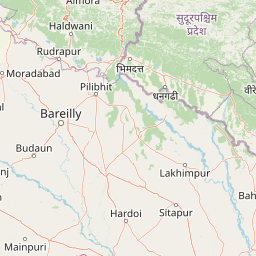
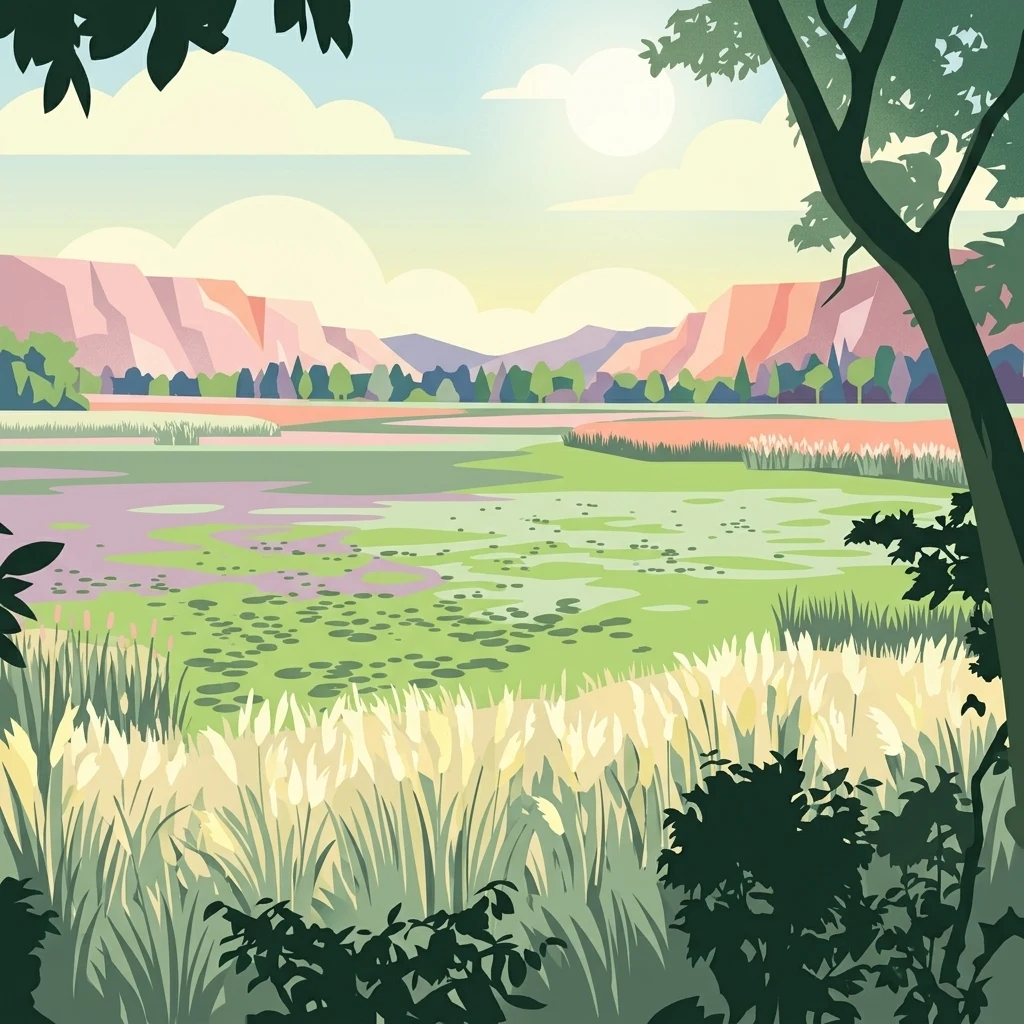
Shuklaphanta National Park is best known for harboring the world's largest population of barasingha (swamp deer), with approximately 1,674 individuals counted in 2007. The park's signature feature is the Shukla Phanta, the largest continuous grassland in Nepal, which forms the core habitat for this endangered cervid. The park also serves as a critical refuge for Bengal floricans,arge raptors, and waterfowl. Its position in the far-western Terai makes it an important corridor for wildlife migration between Nepal and India, connecting to Pilibhit Tiger Reserve through a southern wildlife corridor. The park supports significant populations of Indian rhinoceros, Asian elephants, and predators including tigers and leopards.
Shuklaphanta National Park history and protected-area timeline
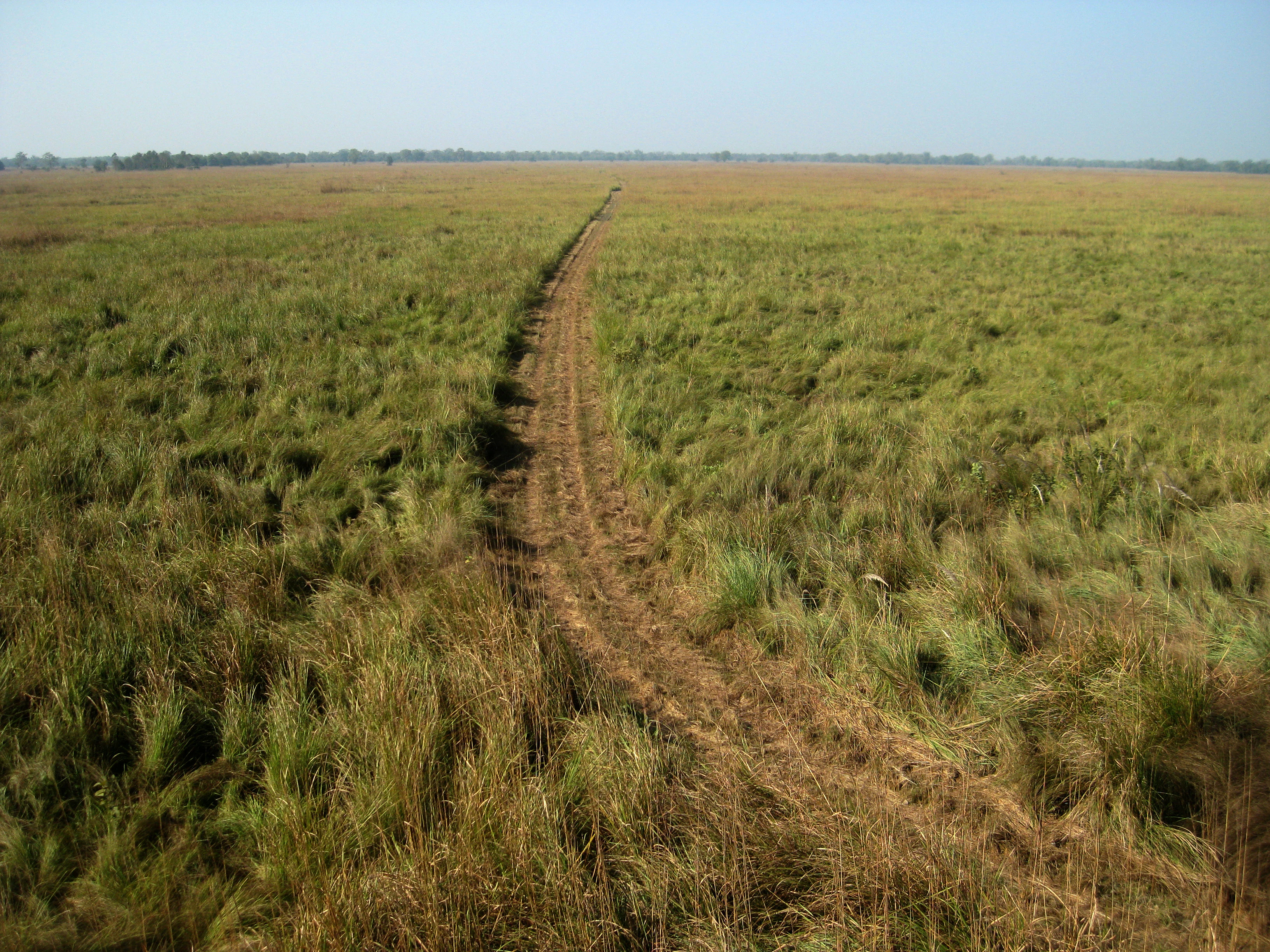
The name Shuklaphanta derives from the grassland known as phanta within the protected area, with the main Shukla Phanta representing the largest continuous grassland in Nepal at approximately 16 square kilometers. The area served as an exclusive hunting ground for Nepal's ruling class before its formal protection, receiving royal designation as a hunting reserve in 1969. In 1973, the area was gazetted as the Royal Shuklaphanta Wildlife Reserve, initially covering 155 square kilometers. The reserve was expanded to its present size during the late 1980s through the incorporation of additional forest and grassland areas. A buffer zone encompassing 243.5 square kilometers was established in May 2004, providing a transitional zone between the core protected area and surrounding agricultural lands. In 2017, the status of the protected area was elevated from wildlife reserve to national park, reflecting both the ecological importance of the area and Nepal's evolving approach to protected area management. The park is governed by the Department of National Parks and Wildlife Conservation under the Ministry of Forests and Environment.
Shuklaphanta National Park landscape and geographic character
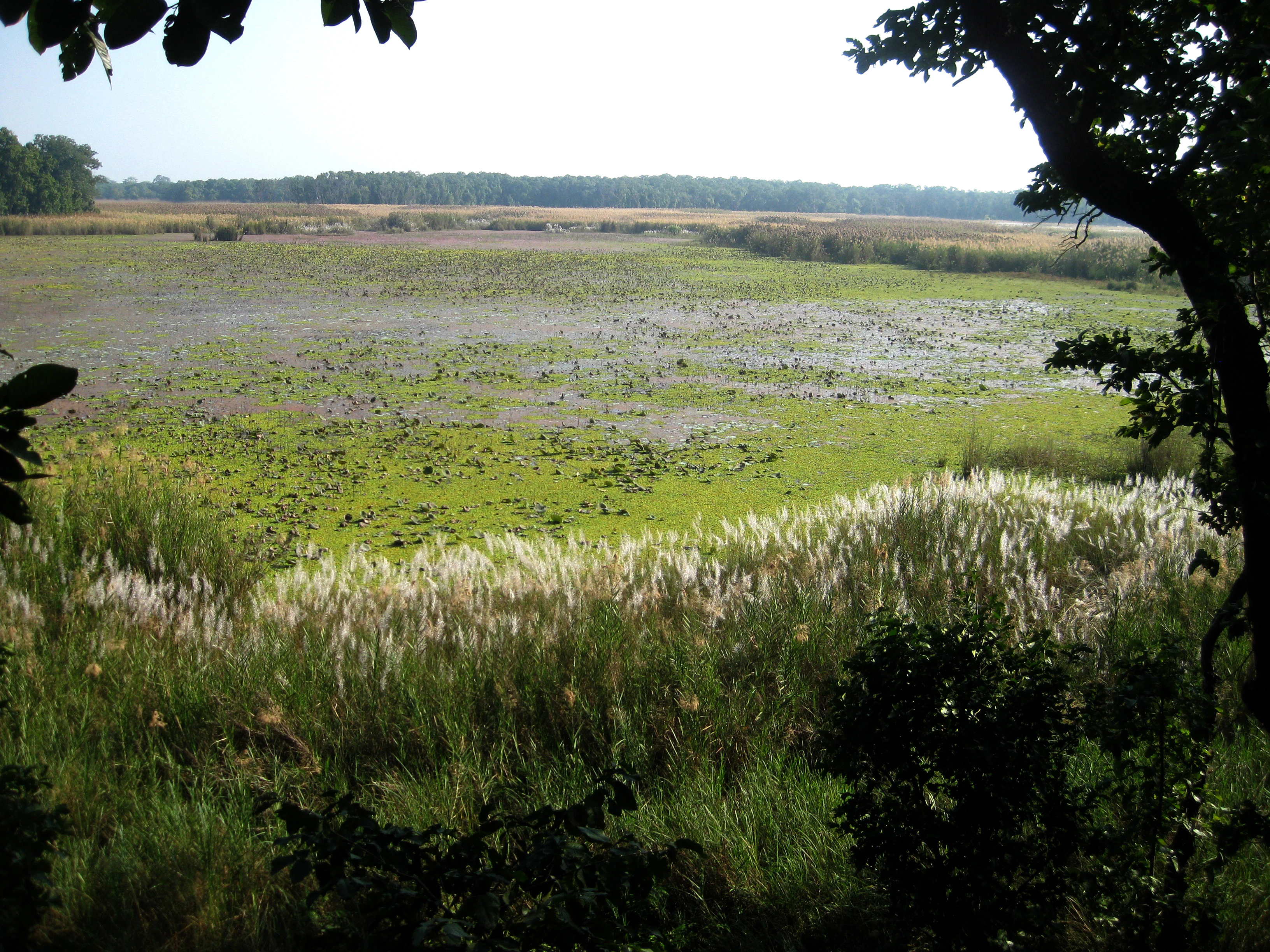
The physical landscape of Shuklaphanta National Park consists of a characteristic Terai topography shaped by alluvial processes and the foothills of the Siwalik range. The park occupies a floodplain environment with soils ranging from sandy loam to clay, exhibiting slight alkalinity. The terrain is predominantly flat to gently undulating in the lower sections, rising toward the northern boundary where the Siwalik Hills begin to emerge. The Mahakali River, a significant Himalayan tributary, forms the western and southern boundary, influencing the hydrology and creating riverine habitat zones. Several small lakes, including Rani Tal, dot the eastern portion of the park, providing permanent water sources amid the seasonal wetlands. The grassland patches, locally called phantas, represent the most distinctive landscape feature, maintained by a combination of seasonal flooding and fire regimes that prevent forest encroachment. The forest cover consists primarily of sal (Shorea robusta) forest in the higher areas, with riverine vegetation along watercourses dominated by Acacia catechu and Dalbergia sissoo.
Shuklaphanta National Park ecosystems, habitats, and plant life
The ecological character of Shuklaphanta National Park is defined by its position within the Terai-Duar savanna and grasslands, a UNESCO recognized ecoregion that once covered extensive portions of the Himalayan foothill belt. The park supports approximately 700 plant species, including 553 vascular plants, 18 pteridophytes, 410 dicots, and 125 monocots. The grasslands are characterized by Imperata cylindrica and Heteropogon contortus as dominant grass species, while marshes surrounding the lakes feature Phragmites karka and Saccharum spontaneum. Sal (Shorea robusta) forms the dominant tree species in the forested areas, creating a canopy that supports diverse understory vegetation. The wetlands represent a critical component of the park's ecological value, providing habitat for waterfowl, amphibians, and mammals adapted to moist environments. The ecosystem faces challenges from grassland encroachment by tree and shrub saplings, which threatens the long-term persistence of the open grassland habitats that support specialized species. The park's inclusion in the Terai Arc Landscape connects it to a broader network of protected areas aimed at maintaining ecological corridors across the Nepal-India border region.
Shuklaphanta National Park wildlife and species highlights
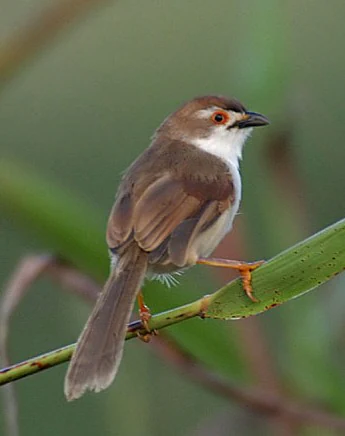
Shuklaphanta National Park supports remarkable wildlife diversity, with the barasingha (swamp deer) population representing the park's most significant conservation achievement as the largest known population in the world at approximately 1,674 individuals. The grasslands provide essential habitat for Bengal floricans, with the park supporting the largest population in Nepal estimated at 20 to 28 individuals. The mammal community includes significant populations of Indian rhinoceros, with individuals translocated from Chitwan National Park since 2015 increasing the population to 17 individuals by 2021. Camera trapping surveys have documented 11 tigers and nine leopards in the southern portion of the park, while the rare rusty-spotted cat was photographed for the first time in spring 2016. The avifauna comprises over 450 species, including the white-rumped vulture, slender-billed vulture, lesser adjutant, and sarus crane. The reptile fauna includes 56 species, with the mugger crocodile present in Rani Tal and venomous species such as king cobra, Indian cobra, and Russell's viper recorded throughout the park. The gharial, which became extinct in the park in 1993, was reintroduced to the Chaudhar River in March 2024.
Shuklaphanta National Park conservation status and protection priorities
Shuklaphanta National Park plays a critical role in Nepal's conservation landscape, serving as a refuge for several endangered and threatened species. The park's significance for barasingha conservation cannot be overstated, as it maintains the world's largest population of this vulnerable cervid species. The Bengal florican population represents the species' stronghold in Nepal, making the park essential for the bird's survival in the country. The reintroduction of Indian rhinoceros from Chitwan National Park represents a deliberate effort to establish a third viable population in Nepal, contributing to the species' national recovery strategy. The reintroduction of gharial in 2024 demonstrates ongoing commitment to restoring extinct species within the protected area. The buffer zone established in 2004 provides a transition area that helps reduce human-wildlife conflict while extending conservation benefits to surrounding communities. The wildlife corridor connecting the park to Pilibhit Tiger Reserve in India maintains transboundary ecological connectivity essential for species that require large home ranges. The park's inclusion in the Terai Arc Landscape reflects its role within a broader regional conservation framework.
Shuklaphanta National Park cultural meaning and human context
Shuklaphanta National Park is located in the far-western Terai region of Nepal, an area historically characterized by relatively low population density due to its historical status as a royal hunting preserve. The local communities in the surrounding areas have traditional connections to the land, though the park's origins as a royal hunting ground meant restricted access for local populations during the monarchy period. The buffer zone established in 2004 recognizes the importance of engaging local communities in conservation, providing a framework for collaborative resource management. The park's name in Nepali, शुक्लाफाँट (Shuklaphanta), directly references the grassland ecosystem that defines much of the protected area's character. The region's proximity to the Indian border has created historical connections between communities on both sides of the boundary, with wildlife movements reflecting the interconnected nature of the landscape regardless of political borders.
Top sights and standout views in Shuklaphanta National Park
The Shuklaphanta grassland represents the park's most distinctive feature, being the largest continuous grassland in Nepal and the primary habitat for the world's largest barasingha population. The wetlands and lakes, particularly Rani Tal, provide year-round water sources that support diverse wildlife concentrations and excellent birdwatching opportunities. The wildlife corridor connecting to Pilibhit Tiger Reserve enables seasonal migrations that maintain genetic connectivity for wide-ranging species. The presence of all four large mammal predators (tiger, leopard, leopard cat, and fishing cat) indicates a healthy ecosystem with complete predator guilds. The reintroduction of gharial marks a significant conservation milestone, restoring an extinct species to the park's aquatic systems. The Bengal florican population represents a globally significant concentration of this endangered bird. The park offers a relatively remote and less-visited alternative to more famous Terai parks, providing opportunities for wildlife observation in a quieter setting.
Best time to visit Shuklaphanta National Park
The optimal time to visit Shuklaphanta National Park spans from October through March, when the weather is dry and wildlife viewing conditions are most favorable. The post-monsoon period from October to November offers green landscapes with clear skies and moderate temperatures, making it comfortable for game drives and wildlife observation. The winter months from December to February provide the best opportunities for spotting large mammals, as animals congregate near water sources and the dry grassland vegetation offers better visibility. December and January can be cold, with daytime temperatures ranging from 7 to 12 degrees Celsius and occasional frost, requiring warm clothing for early morning excursions. The pre-monsoon period from March to May sees rising temperatures reaching 42 degrees Celsius by late April, but this season offers excellent birdwatching as summer migrants arrive and resident birds are more active around water sources. The monsoon season from June to September brings heavy rainfall averaging 1,579 millimeters annually, making some areas inaccessible and reducing visibility for wildlife observation.