
Mori Atlas logo
Wildlife reserveSandi Bird Sanctuary

Geographic overview of the Dahar Jheel wetland and surrounding Indo-Gangetic plain ecosystem

Sandi Bird Sanctuary: Exploring the Wetland Protected Landscape of Uttar Pradesh, India

Sandi Bird Sanctuary is a significant protected wildlife reserve located in the Hardoi district of Uttar Pradesh, India. Centered on the 309-hectare Dahar Jheel lake and influenced by the nearby River Garra, this Ramsar site serves as a vital corridor for migratory waterbirds within the Indo-Gangetic plains. The sanctuary features a complex transition of marshes, reed beds, and aquatic habitats that sustain dense wintering populations.

bird sanctuarywetlandRamsar sitemigratory birdsfreshwater lakewaterbird habitat
An artistic, flat-style digital illustration of a mountain valley featuring pine trees, rocky cliffs, and two cascading waterfalls in a soft color palette.

Sandi Bird Sanctuary

Wildlife reserve

Park overview

Structured park overview, official facts, and landscape profile for Sandi Bird Sanctuary

Sandi Bird Sanctuary park facts, protected area profile, and essential visitor context

Review the core facts for Sandi Bird Sanctuary, including designation, size, terrain, visitor scale, habitats, and operating context in one park-focused overview.

About Sandi Bird Sanctuary

Sandi Bird Sanctuary sits in the flat agricultural landscape of central Uttar Pradesh, where it represents one of the state's more important inland wetland reserves. Created in 1990 and given international recognition as a Ramsar site in 2019, the sanctuary exists to preserve a working wetland ecosystem that supports a wide variety of resident and migratory birdlife.

The sanctuary's defining feature is its 309-hectare lake, traditionally known as Dahar Jheel. Surrounding the water body is a mosaic of marshy edges, scattered trees, reeds, and patches of woodland that together create a layered habitat for birds of different feeding guilds. The River Garra, which passes near the sanctuary, historically known as Garun Ganga, adds a connected aquatic element that migratory flocks use as they settle into the area during the cold season.

Beyond its ecological function, Sandi plays an educational and recreational role. It is a place where visitors can experience the quiet seasonal rhythms of an Indian wetland without venturing into more remote protected landscapes. The sanctuary's accessibility from Hardoi, combined with its Ramsar recognition, makes it a meaningful destination for birdwatchers, ecologists, and travelers interested in the underappreciated wetlands of the Ganga basin.

Quick facts and research context for Sandi Bird Sanctuary

Sandi Bird Sanctuary is a 309-hectare bird sanctuary located in Sandi, Hardoi district, Uttar Pradesh, approximately 19 kilometers from the city of Hardoi. It is classified as an IUCN Category IV protected area, reflecting its focus on habitat and species management rather than strict wilderness preservation.

The site was established in 1990 to protect wetland habitats and aquatic vegetation, and it received Ramsar Wetland status in September 2019. The lake at its core is historically referred to as Dahar Jheel, and the sanctuary lies near the River Garra, a tributary corridor that migratory waterbirds use as they move into the sanctuary during the winter season.

Protection and recognition

Explore documented terrestrial protection metrics and Ramsar site listings.

Sandi Bird Sanctuary Protection Status and International Recognition Record

Sandi Bird Sanctuary holds an established terrestrial protection status originating from its designated year in 2019. Official international recognition records outline the documented Ramsar wetland designation context and management scope.

International recognition

Protection details

Protection scope
Terrestrial
Designated year
2019
Transboundary protection
No
Park context

Deeper park guide and search-rich context for Sandi Bird Sanctuary

Sandi Bird Sanctuary history, landscape, wildlife, and travel context

Explore Sandi Bird Sanctuary through its history, landscape character, ecosystems, wildlife, conservation priorities, cultural context, and seasonal travel timing in a structured park guide built for atlas discovery and search intent.

Why Sandi Bird Sanctuary stands out

Sandi Bird Sanctuary is best known as a seasonal haven for migratory waterbirds on the Indo-Gangetic plains. Its shallow lake habitat and connection to the River Garra create ideal resting and feeding conditions for winter visitors from Central Asia, Siberia, and beyond. The sanctuary's reputation is reinforced by the occasional sighting of rare species such as the Siberian white crane, an extremely uncommon winter visitor whose appearances have made the site notable among dedicated birdwatchers and ornithologists working in northern India. Its combination of Ramsar recognition, accessible location, and rich winter birdlife gives it a distinct identity among Uttar Pradesh's wetland reserves.
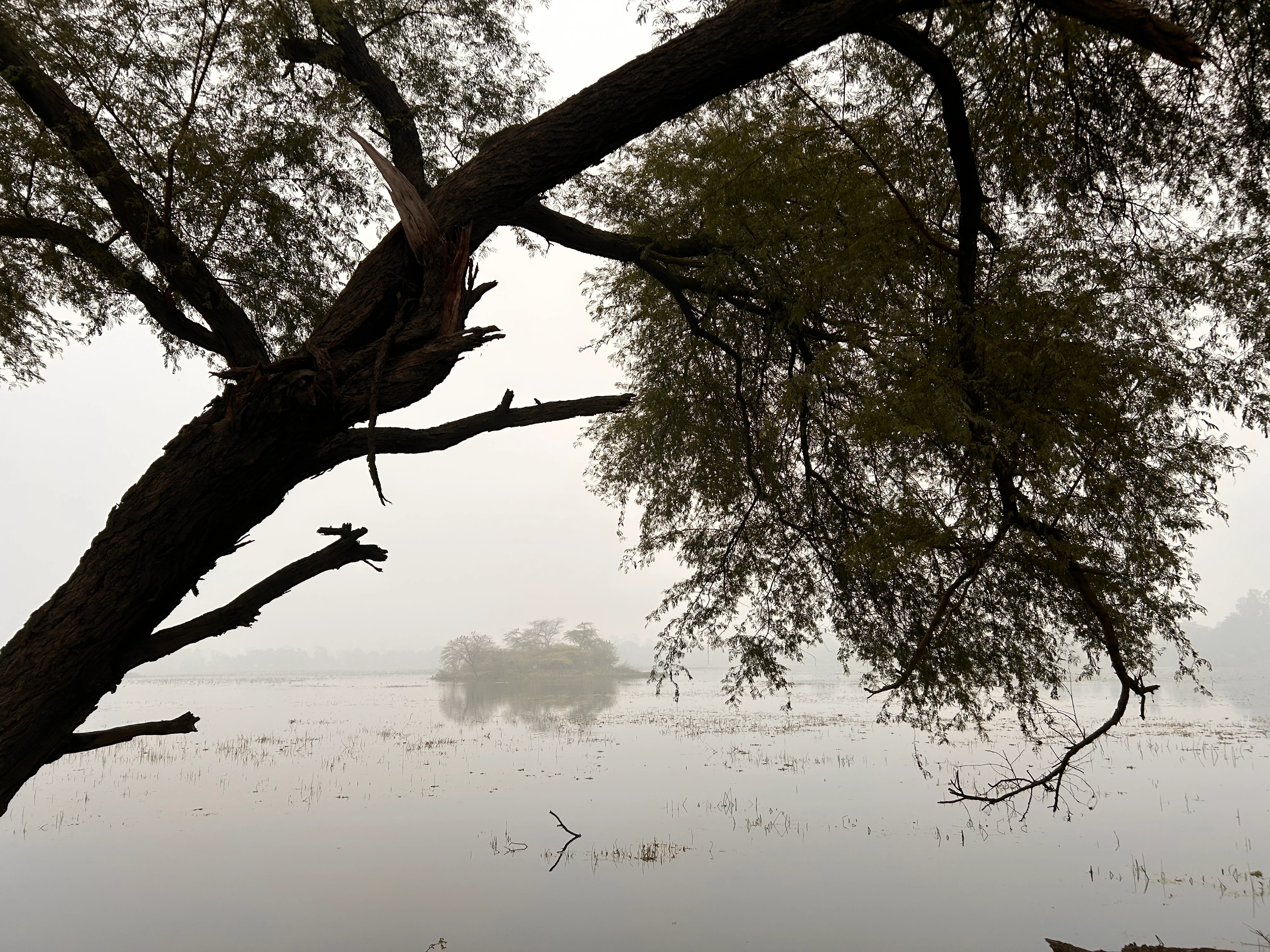
A large, dark tree with sprawling branches frames the view of a calm, misty lake with a small, distant island during a foggy morning.
A misty morning at Sandi Bird Sanctuary, featuring a prominent tree overhanging the calm wetland waters.

Sandi Bird Sanctuary history and protected-area timeline

Sandi Bird Sanctuary was formally created in 1990 under the oversight of the Uttar Pradesh Government, with the stated objective of protecting the natural habitats and aquatic vegetation relied upon by local bird populations and visiting migrants. The lake it now encompasses has long been known locally as Dahar Jheel, reflecting the site's deep-rooted presence in the region's geography and cultural memory.

For decades the wetland existed as an informal refuge for waterbirds, but as pressures on Uttar Pradesh's wetlands increased, the state moved to formalize its protection. The 1990 establishment marked the beginning of active management of the area as a dedicated bird sanctuary.

A defining moment in the sanctuary's modern history came on 26 September 2019, when it was designated as a Ramsar Wetland of international importance, receiving Ramsar reference number 2409. This designation placed Sandi alongside India's other globally recognized wetlands and highlighted its contribution to the conservation of migratory waterbirds. The sanctuary is now managed within the framework of IUCN Category IV, emphasizing habitat and species management.

Sandi Bird Sanctuary landscape and geographic character

The landscape of Sandi Bird Sanctuary is shaped by water. At its heart is the broad, shallow expanse of Dahar Jheel, a 309-hectare lake whose surface mirrors the open sky of the Uttar Pradesh plains. The terrain around the sanctuary is largely flat, typical of the Indo-Gangetic alluvial belt that defines central Uttar Pradesh.

The lake's edges transition gradually from open water into marshy margins, reed beds, and damp grasslands that fringe the wetland in irregular bands. These soft transitions between water and land are among the sanctuary's most important geographic features, because they offer feeding, roosting, and nesting opportunities for a wide variety of birdlife. Along the shoreline and in the surrounding countryside, scattered trees and clumps of vegetation provide additional cover, while cultivated fields lie just beyond the protected boundary, illustrating the close relationship between the wetland and the rural landscape that surrounds it.

The River Garra passes nearby, adding another aquatic dimension to the area. The river's banks become temporary staging grounds for migratory flocks as they move toward the sanctuary during the winter months, turning the broader river-lake landscape into a seasonally rich corridor for waterbird activity.

Sandi Bird Sanctuary ecosystems, habitats, and plant life

The ecological character of Sandi Bird Sanctuary is defined by its inland freshwater wetland. Open water, reed-fringed margins, floating vegetation, and adjacent scrub form the habitat mosaic around the lake, supporting a layered bird community that shifts visibly through the year.

Vegetation in and around the lake includes emergent aquatic plants and floating species that thrive in the still, nutrient-rich waters of Dahar Jheel. These plants are central to the wetland's function, providing food for waterfowl, anchoring sediments, and offering structural complexity along the shoreline.

The surrounding landscape is rural and agricultural, with fields, groves, and patches of secondary vegetation blending into the wetland's edge. This buffer of human-shaped land use is typical of many Indian sanctuaries and adds to the ecological variety of the area, supporting birds that thrive at the interface between wetland, scrub, and farmland. The sanctuary's protected status under IUCN Category IV and its Ramsar designation reflect the ecological importance of maintaining this balance.

Sandi Bird Sanctuary wildlife and species highlights

Sandi Bird Sanctuary is, above all, a bird sanctuary. Its habitats support a rich bird community that combines resident and migratory species, with the winter months bringing the most visible gatherings of waterfowl along the lake and river.

Migratory birds begin arriving in November, using the banks of the River Garra as a resting area before moving into the sanctuary proper. As winter sets in, the lake fills with species typical of northern Indian wetlands, including ducks, geese, waders, and other waterbirds that rely on shallow, productive habitats for feeding and resting during the cold season.

One of the sanctuary's most remarkable wildlife records is the occasional appearance of the Siberian white crane (Grus leucogeranus), a critically rare visitor. Although its appearances are infrequent and uncertain, documented sightings of this species have given Sandi significant attention within ornithological circles and underline the sanctuary's potential as a refuge for uncommon winter migrants.

Sandi Bird Sanctuary conservation status and protection priorities

Conservation at Sandi Bird Sanctuary is anchored by its formal protected status and its international recognition. The sanctuary was designated as a Ramsar Wetland on 26 September 2019 (Ramsar site number 2409), placing it within the global network of wetlands recognized for their ecological and hydrological value. This recognition underscores the sanctuary's role in maintaining healthy wetland habitat within Uttar Pradesh, a state where wetlands face ongoing pressure from agriculture, development, and water management.

The sanctuary operates under an IUCN Category IV designation, which frames its management around the conservation of specific habitats and species rather than full ecosystem wilderness protection. This model is well suited to a working landscape like Sandi, where wetland conservation must coexist with surrounding human activity.

By protecting the lake, its aquatic vegetation, and its associated birdlife, Sandi contributes to broader conservation goals for migratory waterbirds in South Asia. The sanctuary's Ramsar status also reinforces national priorities for wetland preservation and helps integrate Sandi into wider flyway-based conservation strategies.

Sandi Bird Sanctuary cultural meaning and human context

The cultural landscape around Sandi Bird Sanctuary is rooted in the rural traditions of central Uttar Pradesh. The lake at the sanctuary's heart has long been known as Dahar Jheel, a name that suggests a long-standing presence in local memory and identity. The sanctuary lies close to the town of Sandi, and the surrounding region is characterized by agricultural land use, small settlements, and a rhythm of life closely tied to the seasons.

The nearby River Garra, formerly known as Garun Ganga, weaves this region into a wider cultural geography of the Ganga plains, where rivers and wetlands have historically supported communities, agriculture, and religious life. Visitors approaching the sanctuary pass through this working countryside, giving the experience of visiting Sandi a distinct sense of place that blends ecological and rural cultural context.

Top sights and standout views in Sandi Bird Sanctuary

Sandi Bird Sanctuary combines formal international recognition with the everyday presence of an Indian wetland. Its designation as a Ramsar site in 2019 highlights its global importance, while its long-standing role as a winter refuge for migratory waterbirds gives it a clear local and regional character.

The sanctuary's standout qualities include its 309-hectare lake, the surrounding marsh and reed habitat, its connection to the River Garra, and its occasional role as a wintering site for rare species such as the Siberian white crane. Together, these features make Sandi an accessible, ecologically rich destination in the heart of Uttar Pradesh.

Best time to visit Sandi Bird Sanctuary

The best time to visit Sandi Bird Sanctuary is during the winter months, generally from December to February. This is when migratory birds have settled into the lake and surrounding riverbanks, producing the most concentrated and visible birdlife at the sanctuary.

Arrival begins in November as winter sets in, and visitors during the peak cold season can expect foggy mornings, large gatherings of waterfowl, and a quiet, atmospheric experience along the lake. Outside the winter window, the sanctuary remains a wetland habitat but typically offers less concentrated bird activity.
Monthly climate preview

Measured monthly temperature ranges and precipitation patterns across the coordinate

Sandi Bird Sanctuary Climate Normals and Long-Term Weather by Month

Representative coordinate records show significant annual variation between cool winter minimums and high summer maximum temperatures alongside distinct precipitation rhythms. Detailed monthly climate profiles provide complete multi-year observational data for understanding local environmental conditions.
Annual mean26 °C
15 °C36 °C
Jan15°
Feb18°
Mar25°
Apr31°
May35°
Jun36°
Jul32°
Aug29°
Sep28°
Oct25°
Nov20°
Dec16°
Warmest month
June

35.8 °C

Coolest month
January

14.7 °C

Wettest month
July

8.2 mm/day

Driest month
November

0.1 mm/day

Park location guide

Geography guide, regional context, and park location map for Sandi Bird Sanctuary

Sandi Bird Sanctuary park geography, regions, and map view in India

Understand where Sandi Bird Sanctuary sits in India through a broader geographic reading of the surrounding landscape, nearby location context, and its mapped position within the national park landscape.

How Sandi Bird Sanctuary fits into India

India is a South Asian country bordered by the Indian Ocean, Arabian Sea, and Bay of Bengal. It shares land borders with Pakistan, China, Nepal, Bhutan, Bangladesh, and Myanmar. The country has a population of over 1.4 billion people and operates as a federal parliamentary republic with its capital in New Delhi.

Wider geography shaping Sandi Bird Sanctuary in India

India occupies the Indian subcontinent in South Asia, bordered by the Arabian Sea to the southwest, the Bay of Bengal to the southeast, and the Indian Ocean to the south. It shares land borders with Pakistan to the west, China, Nepal, and Bhutan to the north, and Bangladesh and Myanmar to the east. The territory also includes the Andaman and Nicobar Islands in the Indian Ocean.

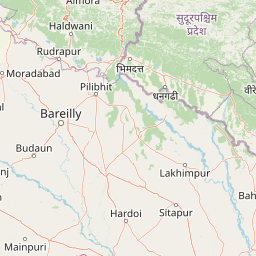
Map view of Sandi Bird Sanctuary

Use this park location map to pinpoint Sandi Bird Sanctuary in India, understand its exact geographic position, and read its mapped placement within the surrounding landscape more clearly.

Pigeon | © OpenStreetMap contributors

Location context for Sandi Bird Sanctuary

Uttar Pradesh

Visualizing wetland habitats, shallow lakes, and protected plains environments

Sandi Bird Sanctuary Photos and Landscape Scenery Exploration

Visual records capture the distinctive terrain, open waters, and marshy margins that define Sandi Bird Sanctuary. Exploring these protected area views reveals the ecological character of the Indo-Gangetic wetland and its surrounding river habitats.

A large, dark tree with sprawling branches frames the view of a calm, misty lake with a small, distant island during a foggy morning.

A tranquil wetland area framed by trees on both sides, with dense aquatic plants covering the water surface under a heavy, overcast, and foggy sky.

Park atlas

Compare regional wetland reserves and protected natural areas across the surrounding terrain

Explore Other Parks Near Sandi Bird Sanctuary and Connected Protected Landscapes

Browsing other parks near Sandi Bird Sanctuary reveals shared ecological patterns across the Indo Gangetic alluvial belt and neighboring wetland corridors. Comparing protected areas in the surrounding region provides deeper geographic context for seasonal waterbird habitats.
Wildlife reserveUttar Pradesh
83 km away#1 closest

West

Saman Bird Sanctuary: Protected Wildlife Reserve Geography and Wetland Atlas

Inland wetland habitat within the western Uttar Pradesh agricultural plain

Saman Bird Sanctuary represents a key protected Ramsar wetland located in the Mainpuri district of Uttar Pradesh. The site is defined by a seasonal, rain-fed oxbow lake that integrates with surrounding agricultural fields. It maintains a distinct ecological identity through its nesting colonies of resident birds and large winter congregations of migratory species on the flat alluvial landscape.

Area
5.25 km²
IUCN
IV
Relief
Lowland
Climate
Subtropical
Watercolor illustration of a lush wetland scene with low hills in the background and a winding stream through green fields.
Wildlife reserveUttar Pradesh
101 km away#2 closest

Southeast

Nawabganj Bird Sanctuary: Geographic Overview and Protected Wetland Landscape in Uttar Pradesh

A Ramsar-recognized lake ecosystem and wildlife reserve.

Located in the Unnao district, Nawabganj Bird Sanctuary features a significant freshwater lake that serves as a vital hydrological heart for the region. The sanctuary creates an essential ecological mosaic of reed-fringed water, dry land patches, and woodland edges. This protected landscape plays a foundational role in conservation efforts for migratory waterfowl and resident species on the Indo-Gangetic plain, offering unique insights into wetland terrain mapping.

IUCN
IV
Relief
Lowland
Access
Easy access
Scope
Terrestrial
National parkLakhimpur Kheri district
134 km away#3 closest

Northeast

Dudhwa National Park: Terai Grasslands and Alluvial Plain Geography within Lakhimpur Kheri

Discover the mapped protected landscape of this vital Indian national park.

Dudhwa National Park in Lakhimpur Kheri district stands as a crucial example of the Terai grassland ecosystem, characterized by its expansive alluvial plains and marshy habitats. This page provides an atlas-style exploration of its protected landscape, detailing the unique terrain and geographic context essential for understanding its conservation significance.

Area
614 km²
Established
1977
IUCN
II
Visitors
26K annual
Watercolor scene of grassy fields and a winding river with distant hills and trees
National parkSudurpashchim Province
About 170 km away#4 closest

North

Shuklaphanta National Park: A National Park in Nepal's Sudurpashchim Province

Explore mapped protected areas and regional landscape context.

Shuklaphanta National Park is a key protected landscape within Sudurpashchim Province, Nepal. As a designated national park, its geographic identity is significant for understanding regional conservation and natural terrain. This entry focuses on its mapped boundaries and role as a protected area, providing foundational geographic context for atlas exploration and discovery of Nepal's natural landscapes.

Area
305 km²
Established
2017
IUCN
II
Relief
Lowland
Wildlife reserveUttar Pradesh
About 182 km away#5 closest

West

Shekha Bird Sanctuary: Wildlife Reserve and Wetland Geography in the Uttar Pradesh Ganges Plain

A perennial freshwater lake habitat for migratory waterbirds.

Located near Aligarh in the upper Ganges plain, Shekha Bird Sanctuary functions as a high-value wildlife reserve. This protected wetland, fed by local canal systems, supports a concentrated population of resident and migratory waterbirds, offering a clear window into the ecological importance of small-scale freshwater landscapes in densely populated agricultural regions.

Area
0.25 km²
Established
2009
IUCN
IV
Relief
Lowland
National parkBardiya District
About 190 km away#6 closest

Northeast

Bardiya National Park: Nepal's Expansive Terai Protected Landscape and Atlas

Mapped geography, tiger habitat, and rhino conservation in Bardiya District.

Bardiya National Park represents a significant protected area within Nepal's Terai lowlands, providing an exceptional resource for geographic discovery. Its diverse terrain, including vast grasslands and dense forests bisected by major river systems like the Karnali and Babai, creates unique ecosystems. As the largest national park in Nepal, it is instrumental in mapping wildlife corridors and understanding regional landscape dynamics, particularly for endangered species such as Bengal tigers and Indian rhinoceroses. This park offers a profound glimpse into the mapped natural heritage of the Bardiya District.

Area
968 km²
Established
1988
IUCN
II
Relief
Mixed relief
Wildlife reserveUttar Pradesh
199 km away#7 closest

Southeast

Samaspur Bird Sanctuary: Geographic Overview of Uttar Pradesh Wetland Reserves

Freshwater marshland and migratory bird habitat in North India

Samaspur Bird Sanctuary preserves a series of freshwater jheels and marshes in the central Gangetic plain. This protected area supports an expansive ecosystem of migratory waterfowl and resident species, defining a distinct natural enclave within the agricultural landscape of Raebareli district.

Area
7.994 km²
Established
1987
IUCN
IV
Water
Water-dominated
Wildlife reserveUttar Pradesh
209 km away#8 closest

West

Sur Sarovar Wildlife Reserve: A Protected Wetland Sanctuary in Uttar Pradesh

Mapped freshwater landscapes and migratory bird habitats.

Sur Sarovar serves as a significant wildlife reserve in Uttar Pradesh, characterized by the distinct geometric shape of Keetham Lake. This protected wetland provides essential breeding habitat for diverse waterbird species across its shallow margins and islands. The area also hosts a vital sloth bear rescue center, anchoring its status as a key site for wildlife rehabilitation and conservation efforts within the broader Gangetic plains region.

Area
7.13 km²
Established
1991
Water
Water-dominated

Common questions about visiting, size, designation, and location context for Sandi Bird Sanctuary

Sandi Bird Sanctuary FAQs for park facts, access, geography, and protected area context

Find quick answers about Sandi Bird Sanctuary, including protected-area facts, park geography, trail and visitor context, and how the park fits into its surrounding country and regional landscape.
MoriAtlas Explorer

Continue Your Protected Areas Search Across the Global Atlas

Deepen your exploration by continuing the structured search for national parks and protected areas worldwide. Utilize the comprehensive filtering capabilities to compare different conservation landscapes and refine your understanding of global park geography. Discover more about the distribution and characteristics of protected natural areas.

Global natural geography