Why Sapo National Park stands out
Sapo National Park is best known for its exceptional biodiversity and status as one of West Africa's last major tracts of untouched lowland tropical rainforest. The park hosts the largest population of pygmy hippopotamuses in Liberia and represents critical habitat for western chimpanzees, with population estimates ranging from 500 to 1,640 individuals. It contains approximately 125 mammal species and 590 bird species, including numerous threatened species such as the African golden cat, Liberian mongoose, white-breasted guineafowl, and white-necked rockfowl. The park has been designated an Important Bird Area by BirdLife International due to its significant bird populations. Its designation as a regional center of endemism within the Upper Guinean forest ecosystem makes it one of the most ecologically significant protected areas in West Africa.
Sapo National Park history and protected-area timeline
Sapo National Park was established in 1983 by the People's Redemption Council, making it Liberia's first national park. The park was named after the local Sapo (or Sao) tribe whose ancestral lands the protected area encompasses. The original boundaries covered 1,308 square kilometers east of the Sinoe River and south of the Putu Mountains, with management plans drafted by the Division of Wildlife and National Parks in cooperation with the World Wildlife Fund, the World Conservation Union, and the Peace Corps. The creation of the Forestry Development Authority in 1976 and the Division of Wildlife and National Parks in 1977 laid the institutional groundwork for the park's establishment. Throughout the 1980s and early 1990s, the park faced threats from illegal farming, hunting, and logging, though poaching was limited through USAID-funded initiatives that made local villagers stakeholders in the park's preservation. During the First Liberian Civil War (1989-1997), the park fell under rebel control, with infrastructure damaged and staff casualties. After the war, logging and poaching increased, and in 2002, allegations emerged that President Charles Taylor had sold logging concessions within the park to a Hong Kong-based timber company. The Sapo National Park Act of October 10, 2003, expanded the park to its current size of 1,804 square kilometers. Following the Second Liberian Civil War (1999-2003), an influx of gold prospectors and hunters occupied the park, with an estimated 5,000 people living inside by 2005. Eviction efforts involving conservationists, the Liberian government, and United Nations peacekeeping forces did not completely clear the park until late 2005. Fauna and Flora International and WWF subsequently worked with the Forestry Development Authority to restart management, supported by the Darwin Initiative and other conservation partners.
Sapo National Park landscape and geographic character
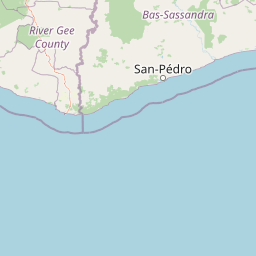
Sapo National Park features a predominantly flat and marshy topography that supports one of West Africa's most extensive unbroken tracts of tropical rainforest. The landscape is quite homogeneous across most of its extent, with gentle relief dominating the central and southeastern areas where elevations approximate 100 meters above sea level. The northern portion of the park contains higher elevations of around 400 meters and steep ridges, between which numerous small streams and rivers flow. The Putu Mountains form a prominent natural boundary along the park's northern edge, while the Sinoe River, the largest river within the park, bounds the western side. Mount Putu rises to 640 meters as the park's highest point, standing as a prominent landmark within the otherwise low-lying terrain. The park's hydrological network includes many smaller streams that drain the ridges and feed into the Sinoe River system. During the wet season, river levels can rise by more than 4 meters in a single night, inundating forests along the riverbanks, while in the dry season, many smaller streams dry up entirely, exposing sandy and rocky stream beds. The combination of flat terrain, extensive marsh areas, and the river system creates a landscape of exceptional ecological complexity and visual uniformity, characterized by the continuous, unbroken canopy of the rainforest.
Sapo National Park ecosystems, habitats, and plant life
Sapo National Park occupies a pivotal position within the Upper Guinean forest ecosystem, one of Africa's most important biodiversity hotspots and the largest remaining block of tropical rainforest in West Africa. Liberia contains the largest portion of this forest ecosystem, retaining an estimated 42% of the remaining Upper Guinean forest cover, though only about 40-45% of the country's original forest remains and less than 30% is covered by natural forest. The park's forest composition, as determined by a 1983 survey, comprises 63% primary and mature secondary forest, 13% swamp forest, 13% seasonally inundated forest, and 11% young secondary forest. This luxuriant forest supports some of the tallest trees in the region, with specimens reaching heights of 70 meters, while the canopy averages 25 meters in height with a range of 12 to 32 meters. The park contains rich floral diversity with many endemic species, including the legumes Tetraberlinia tubmaniana and Gilbertiodendron splendidum, and the tree Brachystegia leonensis. The Western Guinean lowland forests ecoregion classification further defines the park's ecological character as a critical area for conservation of West African biodiversity.
Sapo National Park wildlife and species highlights
Sapo National Park is recognized as a regional center of endemism and biodiversity, hosting approximately 125 mammal species and 590 bird species within its boundaries. The park supports significant populations of threatened species including the African golden cat, Liberian mongoose, white-breasted guineafowl, and white-necked rockfowl. Seven species of duiker antelopes inhabit the park, including the vulnerable Jentink's duiker and zebra duiker, with bay duikers and Maxwell's duikers reported as locally abundant. The park contains remarkable primate diversity with seven monkey species, including the endangered Diana monkey. It also supports populations of the African civet, giant forest hog, water chevrotain, three pangolin species, leopards, and crocodiles. Among the avifauna, the park hosts the African fish eagle, grey parrot, great blue turaco, numerous hornbills, kingfishers, bee-eaters, egrets, rollers, and sunbirds. The park's significance for birds earned it designation as an Important Bird Area by BirdLife International. Notably, the park contains Liberia's largest population of pygmy hippopotamuses, an endangered species unique to West Africa with fewer than 3,000 individuals remaining in the wild, and supports populations of African forest elephants estimated between 313 and 430 individuals in recent surveys.
Sapo National Park conservation status and protection priorities
Sapo National Park occupies a critical position in West African conservation as the largest protected area in Liberia and one of the last major blocks of unmodified lowland rainforest in the region. The park is recognized as being at the core of an immense forest block of the Upper Guinean Forest Ecosystem that is important to the conservation of biodiversity in both Liberia and West Africa as a whole. The 2003 Sapo National Park Act formally recognized this significance, declaring the park essential to regional biodiversity conservation. The park has been designated an Important Bird Area by BirdLife International due to its significant populations of bird species. Conservation efforts have historically been most effective for pygmy hippopotamus protection in Sapo National Park, where the IUCN notes that protection is relatively good. The park serves as the only realistic choice for a suitable conservation area for pygmy hippopotamuses according to IUCN Species Survival Commission planning documents. Following the devastation of the civil wars, Fauna and Flora International and the World Wildlife Fund have worked with the Forestry Development Authority and the Society for the Conservation of Nature of Liberia to re-establish management and build local community support. The park's isolation and lack of infrastructure have paradoxically provided some protection by limiting human access, though this remoteness also presents challenges for effective management and anti-poaching efforts.
Sapo National Park cultural meaning and human context
Sapo National Park takes its name from the local Sapo (or Sao) tribe whose ancestral homeland lies within the park's boundaries. The culture of the Sapo people includes a traditional reverence for the chimpanzee, manifesting in a cultural taboo against hunting these primates. This cultural perspective has contributed to the relative protection of chimpanzee populations within the park, though the broader region has faced significant human pressures from population displacement during Liberia's civil conflicts. The park's establishment in 1983 represented a key moment in Liberia's conservation history, coming two decades after the creation of the Forestry Development Authority in 1976 and the Division of Wildlife and National Parks in 1977. The Sapo National Park Act of 2003 also coincided with the creation of Liberia's second protected area, the East Nimba Nature Reserve, marking a significant expansion of the country's protected area network following years of conflict and environmental neglect.
Top sights and standout views in Sapo National Park
Sapo National Park represents one of West Africa's most significant conservation landscapes, protecting the second-largest block of primary tropical rainforest in the region within Liberia's largest national park. The park's exceptional biodiversity includes approximately 125 mammal species and 590 bird species, with notable populations of western chimpanzees, the largest Liberia population of pygmy hippopotamuses, and significant elephant herds. Its position within the Upper Guinean forest ecosystem, recognized as a global biodiversity hotspot, makes it irreplaceable for regional conservation. The park contains the Putu Mountains, Mount Putu at 640 meters as the highest point, and is traversed by the Sinoe River, creating diverse microhabitats within the continuous rainforest. The park has been designated an Important Bird Area and serves as a critical refuge for numerous endemic and threatened species, including the endangered Diana monkey, Jentink's duiker, and white-necked rockfowl.
Best time to visit Sapo National Park
Sapo National Park can be visited year-round, though the optimal period depends on visitor interests. The dry season from November to April offers easier navigation as smaller streams dry up and river levels recede, exposing waterfalls and sandbars along the Sinoe River. However, the wet season from May to October brings the forest to life with abundant wildlife activity and full rivers, though some areas may be inaccessible due to flooding. January and December are the driest months, while May and August typically receive the heaviest rainfall, with a mid-dry period in July occasionally extending into August. Given the park's extreme remoteness, lack of visitor infrastructure, and requirement for Forestry Development Authority approval for entry, planning any visit requires significant advance coordination and self-sufficiency. The near-complete absence of amenities means visitors must be fully prepared for self-sufficient travel.