Why Schwalm-Nette-Platte mit Grenzwald und Meinweg stands out
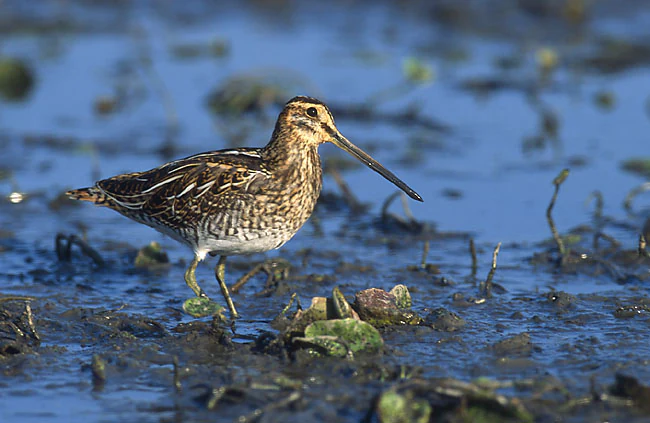
Schwalm-Nette-Platte mit Grenzwald und Meinweg is best known for being one of North Rhine-Westphalia's most important bird protection areas, harboring a remarkable variety of breeding, resting, and migrating bird species within a single, large habitat mosaic. The site's classic Lower Rhine landscape mosaic is the foundation of its ornithological importance: pine and oak forests, dry heaths, heath moors, softwood and hardwood floodplain woodlands, near-natural streams, and still waters create an unusually rich combination of breeding and feeding habitats. It owes its ornithological value especially to outstanding breeding populations of species such as bluethroat, woodlark, common snipe, little grebe, black tern, and common stonechat, which set the area apart from many other regional bird sanctuaries.
Schwalm-Nette-Platte mit Grenzwald und Meinweg history and protected-area timeline
Schwalm-Nette-Platte mit Grenzwald und Meinweg was formally designated as a European bird protection area in 1983, under ordinances issued by the regional authorities of Düsseldorf and Cologne. The designation was made within the framework of the European Birds Directive, whose purpose is to conserve all naturally occurring wild bird species within the European Union and to regulate their protection, management, and control, including the protection of their eggs and habitats.
Within the broader regional system of nature conservation in North Rhine-Westphalia, the bird protection area sits alongside a network of pre-existing landscape protection areas and nature reserves along the Lower Rhine. Many of the individual sub-areas that now form part of the sanctuary, such as the Brachter Wald, the Schwalmbruch, and the Elmpter Schwalmbruch, had already been recognized as protected areas under German nature conservation law before their inclusion in the European network.
Since its 1983 designation, the sanctuary has continued to function within the Natura 2000 framework as both a national and European conservation instrument. Its detailed conservation objectives, particularly those covering breeding birds, migratory visitors, and winter guests, were refined in line with periodic reporting requirements under the Birds Directive, and remain the basis for ongoing habitat management actions in the area.
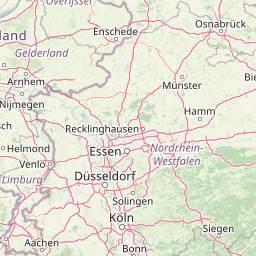
Schwalm-Nette-Platte mit Grenzwald und Meinweg landscape and geographic character
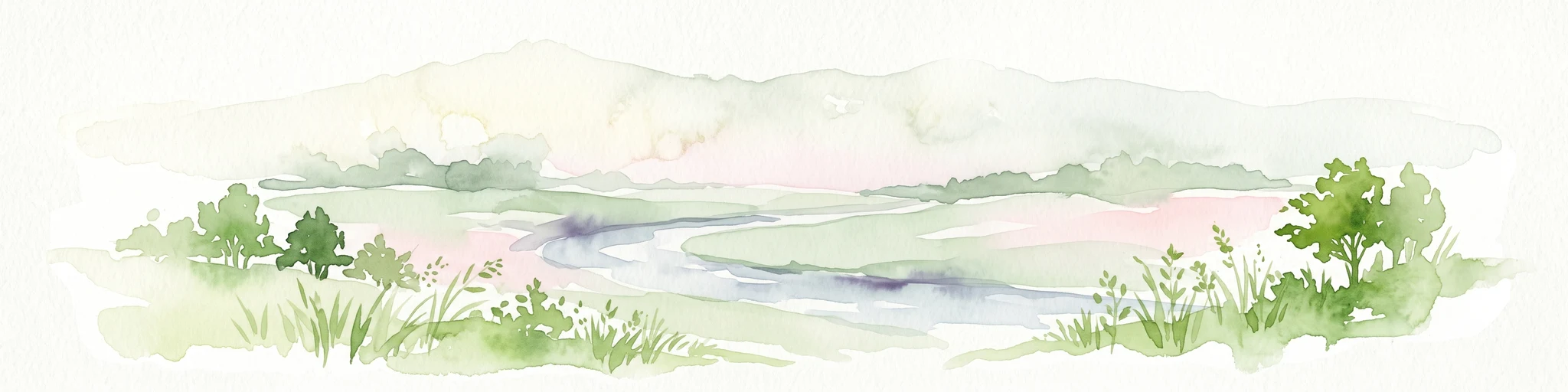
The landscape of Schwalm-Nette-Platte mit Grenzwald und Meinweg is a classic expression of the Lower Rhine lowlands, in which sandy, gently undulating terrain is interwoven with a multitude of wetland features. Although the area sits at relatively modest elevations typical of the Lower Rhine plain, its visual character is unusually varied because of the closeness of water bodies, forest stands, and heath remnants.
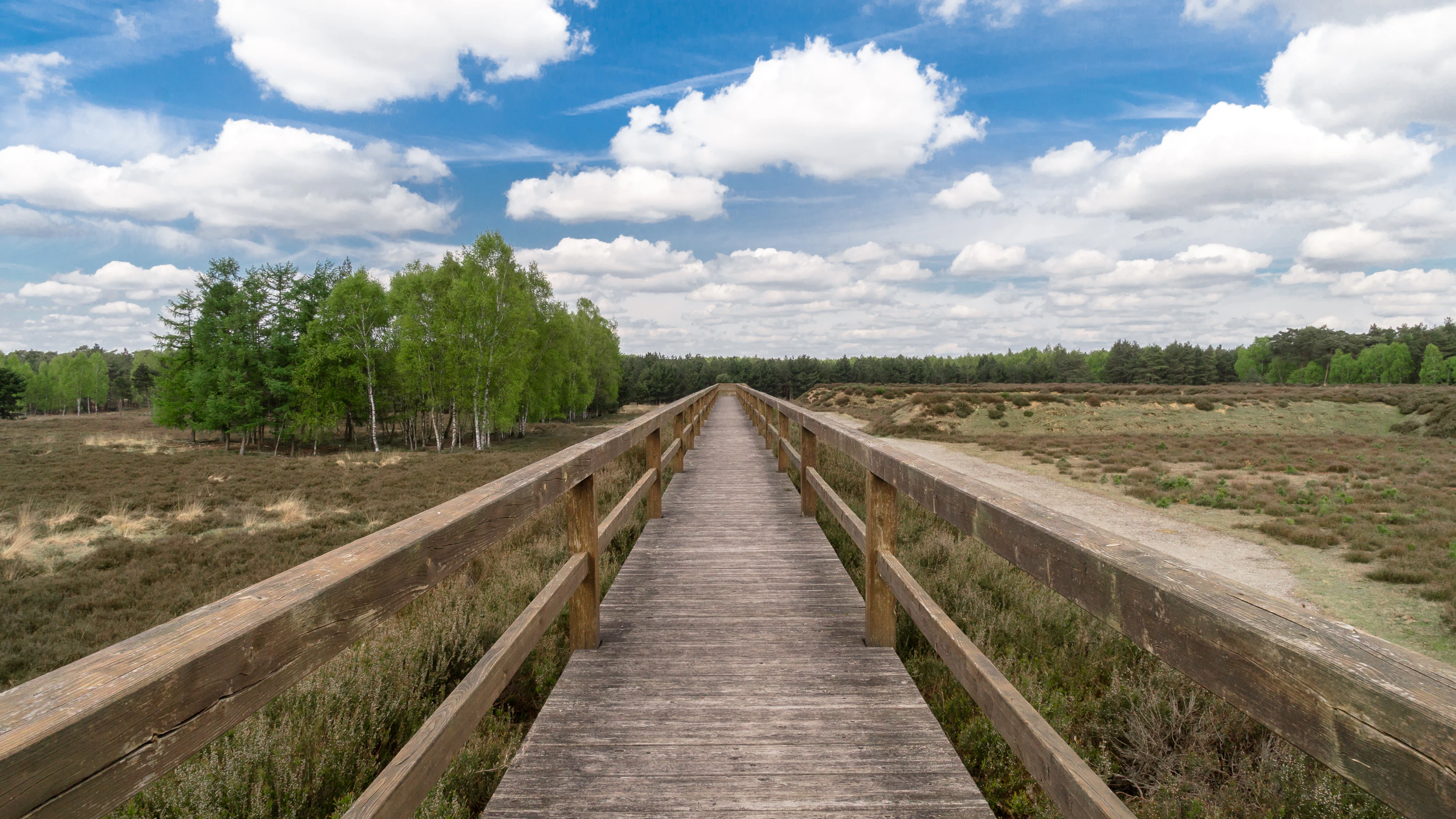
Heath moors and dry heaths form one of the visually most distinctive elements of the site, often adjacent to open pine and oak mixed forests with light, semi-open canopies. Pine-dominated plantation forests, which make up a large share of the woodland cover, are interspersed with these more open, heathy sections, producing the patchwork quality that defines the region's scenery. Streams, small rivers, and still waters occur throughout the territory, and together they create the conditions for softwood and hardwood floodplain woodlands, bog forest, and swamp woodland in wetter pockets.
Streams such as the Schwalm and associated tributaries shape the valley systems within the sanctuary. Steep banks, undercut slopes, and natural river dynamics along these watercourses create nesting sites for birds such as the kingfisher and sand martin, while also supporting rich aquatic vegetation. The contrast between sandy ridges, open heath, dark coniferous stands, and bright floodplain forest gives the area a layered landscape character that is recognizable from many other parts of the Lower Rhine.
Schwalm-Nette-Platte mit Grenzwald und Meinweg ecosystems, habitats, and plant life
From an ecological perspective, the sanctuary can be understood as a textbook example of habitat mosaic conservation in a lowland setting. Despite the relatively modest topography of the Lower Rhine, the overlap of sandy soils, peat substrates, and alluvial deposits has produced a striking diversity of ecological communities within a comparatively limited area.
Dry land habitats are dominated by lowland heaths, juniper formations, dry grasslands on sandy substrates, and species-rich mesophile grassland, as well as areas of juniper heath and, locally, montane-type bent-grass meadows. Pine plantations dominate large sections of the territory, but these artificial forests are interspersed with more ecologically valuable deciduous and mixed woodland types, including old acidophilous oak forests on sand, sub-Atlantic pedunculate oak forests, and beech forests on acidic substrate.
Wetland habitats are equally pervasive. Oligo-, meso-, and eutrophic standing waters, dystrophic ponds and lakes, lowland rivers with aquatic vegetation, and transition or quaking bogs are all represented. Bog forests, alder-ash floodplain woodlands, and tall herb fringe communities complete the wetland mosaic. This combination of dry and wet, acidic and base-rich, open and forested habitats gives the sanctuary a degree of ecological complexity unusual within the regional context, and explains why the area supports so many important bird species.
Schwalm-Nette-Platte mit Grenzwald und Meinweg wildlife and species highlights
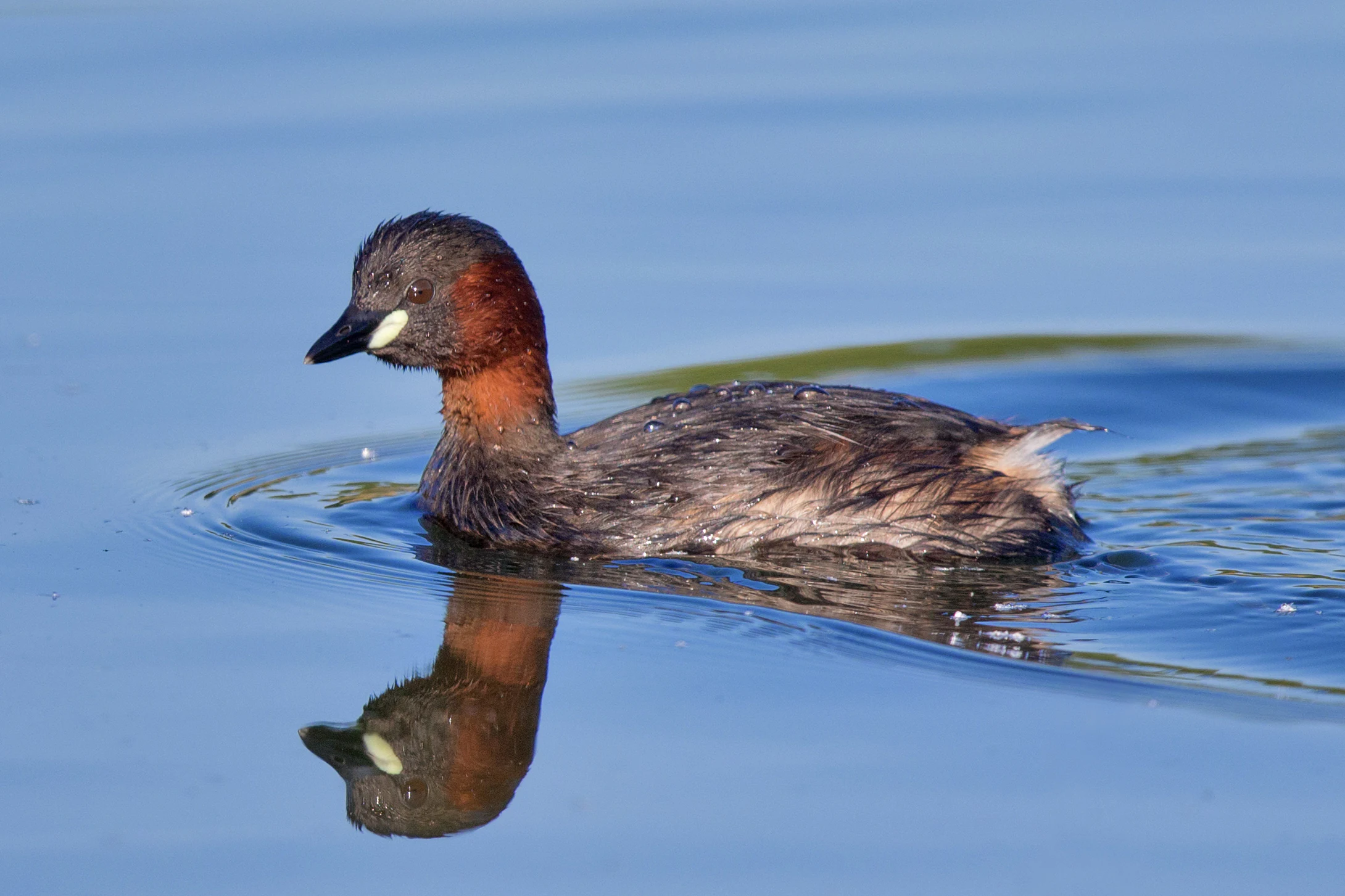
The wildlife profile of Schwalm-Nette-Platte mit Grenzwald und Meinweg is dominated by its bird community, which is the central reason for its European protection status. The sanctuary supports outstanding breeding populations of several notable species, including bluethroat, woodlark, common snipe, little grebe, and common stonechat, as well as more widely distributed forest and wetland specialists.
Among the regularly documented breeding birds, the list includes hobby and black kite as raptors of forested and semi-open landscape, goshawk and Eurasian sparrowhawk in woodland, and specialist forest species such as middle spotted woodpecker, black woodpecker, golden oriole, and European honey buzzard. Wetland and riverside breeding birds include kingfisher, sand martin, water rail, common reed warbler, eurasian bittern, marsh warbler, and little bittern, all of which depend on the still waters, streams, and reedbeds of the area. Open-country and farmland-edge species include lapwing, Eurasian curlew, corncrake family relatives such as quail (within the wider lowland mosaic), whinchat, stonechat, meadow pipit, red-backed shrike, and great grey shrike in the more heathy, semi-open sections.
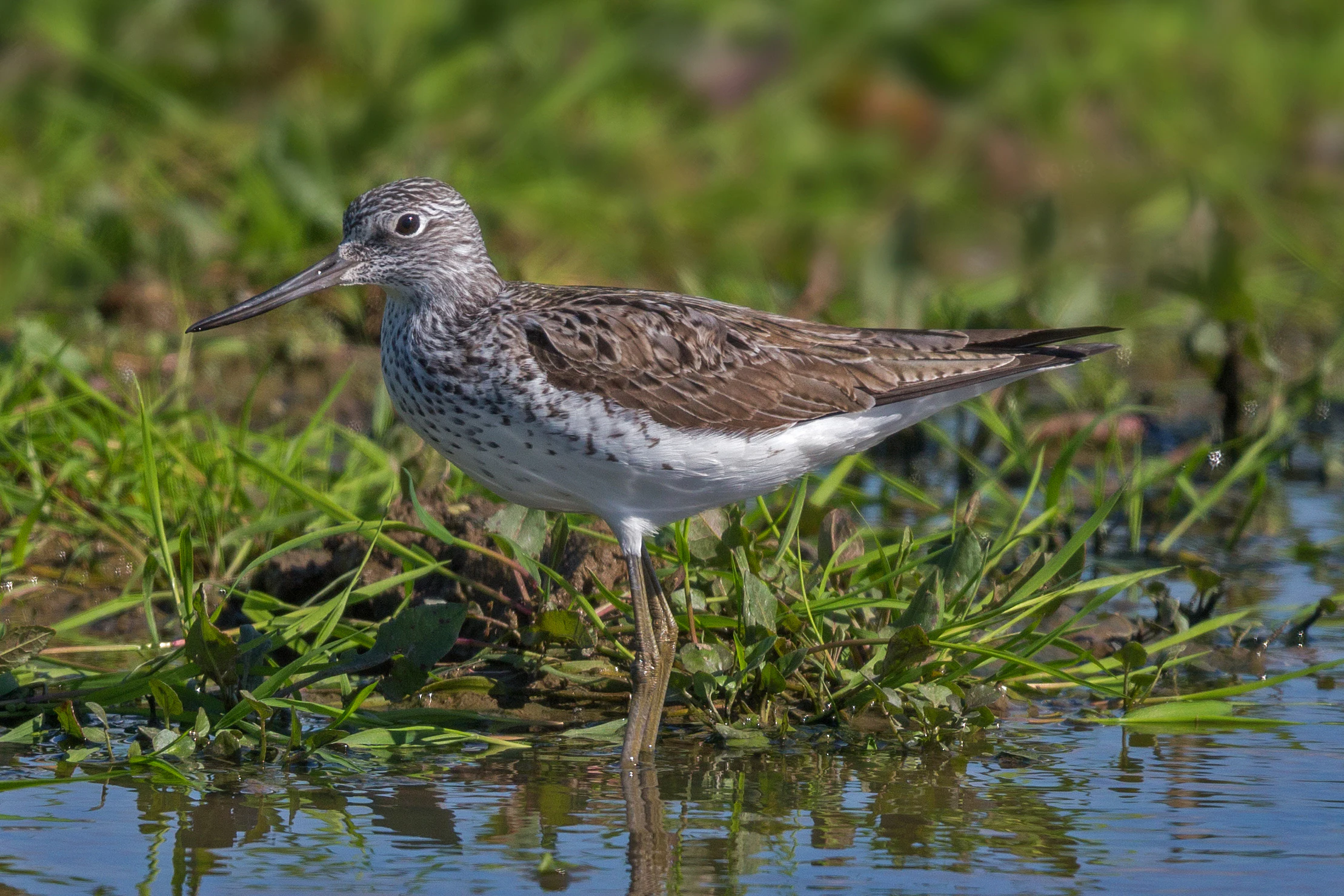
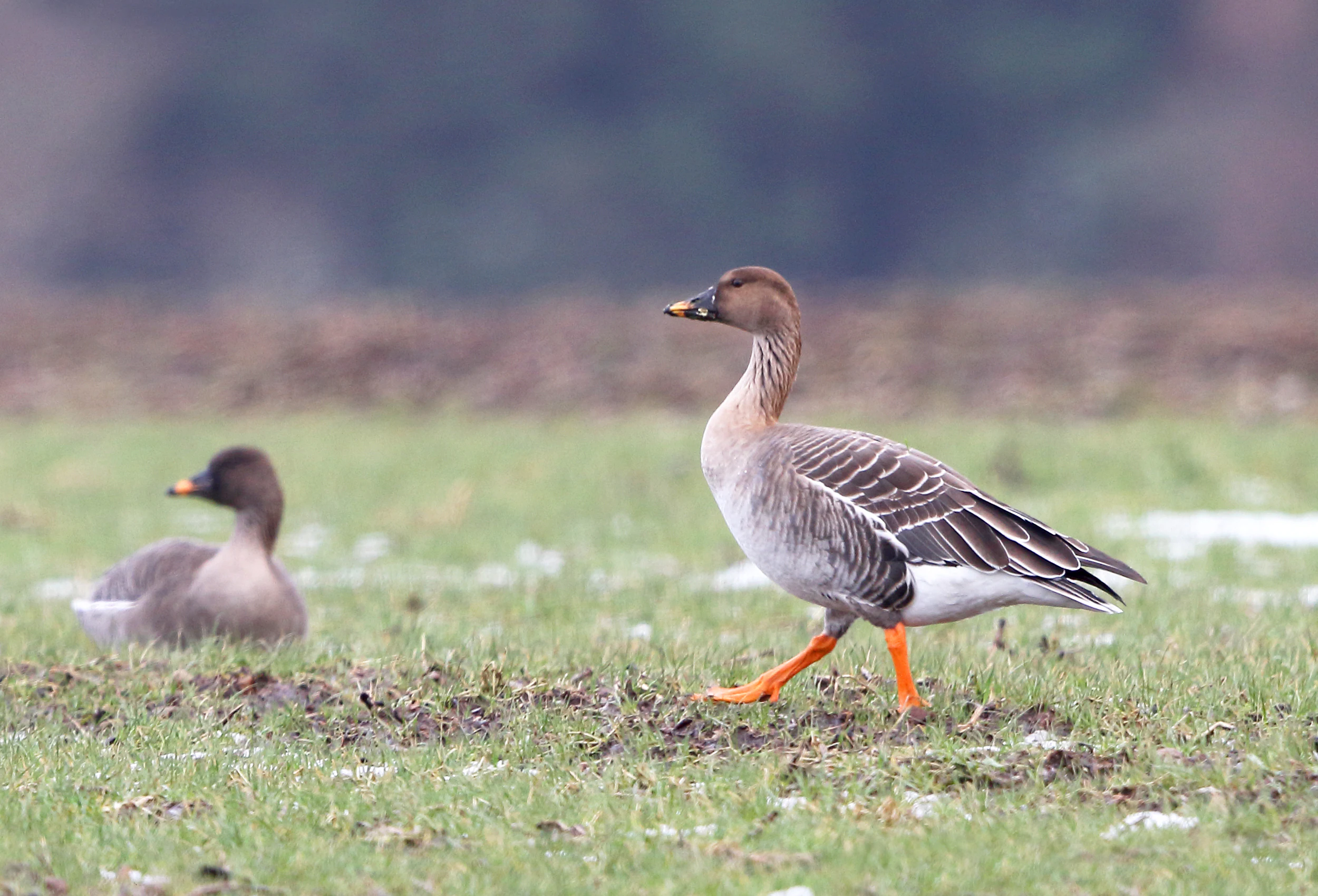
The area is also significant for migratory and wintering birds. Passing and wintering species documented in the sanctuary include greylag goose, bean goose, wigeon, common teal, garganey, northern shoveler, common pochard, tufted duck, goosander, goldeneye, and a variety of waders such as common greenshank, spotted redshank, wood sandpiper, and jack snipe. The combination of wet meadows, still waters, and open freshwater margins makes the sanctuary an attractive staging and wintering site in an otherwise densely populated landscape.
Schwalm-Nette-Platte mit Grenzwald und Meinweg conservation status and protection priorities
From a conservation perspective, the sanctuary's central purpose is the preservation and improvement of breeding, resting, and feeding habitats for the bird species covered by the European Birds Directive. Its recognition as a state-level important bird area reflects both the rarity of some of the species present and the quality of the habitat mosaic that supports them.
The conservation strategy emphasizes two complementary approaches. The first is the protection of the sanctuary against land-take and habitat fragmentation, with measures explicitly aimed at avoiding any new sealing of soils or splitting of habitat areas. The second is active habitat management, including maintenance of high groundwater levels, careful watercourse management, reduction of nutrient and pollutant inputs, retention of deadwood and old trees in woodland, and extensive rather than intensive use of farmland and grassland.
For species associated with specific structures, conservation actions are highly targeted. Wetland species benefit from stable water levels and retention of old reedbeds, while heathland species such as woodlark, nightjar, and great grey shrike depend on continued low-intensity management using grazing or patchy mowing to keep the heath vegetation open. Forest species, in particular black woodpecker, middle spotted woodpecker, and golden oriole, depend on the retention of old, deadwood-rich stands, including old beech trees more than 120 years old for black woodpecker breeding. The sanctuary also plays a role within the wider German-Dutch protected-area network along the Lower Rhine, where it connects to a series of related nature reserves and landscape protection areas.
Schwalm-Nette-Platte mit Grenzwald und Meinweg cultural meaning and human context
The cultural context of the sanctuary is shaped primarily by the long-standing relationship between the Lower Rhine landscape and traditional land use forms such as heath farming, extensive grazing, and small-scale forestry. Forest names such as Brachter Wald and feature names such as Schwalmbruch, Elmpter Schwalmbruch, and Meinweg reflect the broader historical pattern of settlements, woodland estates, and pastoral commons that have shaped this part of North Rhine-Westphalia for centuries.
The Meinweg area in particular carries a regional identity rooted in the borderland character of the German-Dutch frontier. Several of the constituent sub-areas are recognized at the national level as nature reserves, including Schwalmbruch, Lüsekamp and Boschbeek, Tantelbruch, Diergardt'scher Wald, Brachter Wald, Heidemoore, and Krickenbecker Seen, each of which carries its own local heritage. Within this broader context, the bird sanctuary functions as a European-level umbrella over a regional network of protected places that are locally appreciated for their cultural, historical, and natural value.
Top sights and standout views in Schwalm-Nette-Platte mit Grenzwald und Meinweg
Schwalm-Nette-Platte mit Grenzwald und Meinweg stands out for combining a large protected area, a distinctive cross-border location, and one of the richest bird habitats in North Rhine-Westphalia. Its five sub-areas collectively hold dry heaths, heath moors, near-natural streams, still waters, open pine and oak forests, and alder-ash floodplain woodlands, all within a single coordinated European protection framework.
Within Germany, the sanctuary is recognized as outstanding for its breeding populations of bluethroat, woodlark, common snipe, little grebe, and common stonechat, and as an important staging and wintering area for a wide range of migratory and wintering waterbirds. Its combination of high ecological quality, scale, and proximity to the Netherlands makes it a model example of how a working lowland landscape can also function as a major European bird sanctuary.
Best time to visit Schwalm-Nette-Platte mit Grenzwald und Meinweg
Spring and early summer are the most rewarding times to experience the sanctuary, when breeding activity is at its peak and many of the characteristic songbirds, including bluethroat, woodlark, and common nightingale, are most vocal. Late spring and early summer also offer the richest display of waterbird activity on the still waters and slow-flowing streams that run through the area.
For migratory and wintering waterbirds, late autumn through winter tends to bring the highest numbers of geese, ducks, and waders to the wet meadows and open water margins, particularly in years with cold conditions further north. Visiting the open heath sections in late spring or summer provides the best chance to see dry-habitat specialists such as woodlark, European nightjar, and great grey shrike, while low light in early morning or evening typically offers the most rewarding wildlife observation across all seasons.