
Why De Groote Peel National Park stands out
De Groote Peel is best known as one of the last substantial raised bogs remaining uncultivated in Western Europe. The park's defining characteristic is its mosaic of peat swamps, lakes, and heathland created by historical peat extraction. It has earned particular recognition as one of the most bird-rich wetlands in Western Europe, with resident black-necked grebes and seasonal flocks of migrating common cranes passing through in October and November. The park features a 3-kilometer walking route marked by red poles with an observation tower providing panoramic views of the open bog landscape. Visitors are cautioned to stay on marked paths, as the underlying peat swamps can be dangerously unstable.
De Groote Peel National Park history and protected-area timeline
The history of De Groote Peel is fundamentally tied to the extraction of peat, a fuel source that powered much of the Dutch economy from medieval times onward. The original raised bog developed over centuries in the Peel region, eventually forming an extensive peat dome covering what is now the border area between Limburg and North Brabant. Local communities harvested peat from the margins of the bog for their own use from the medieval period onward, creating the characteristic peat pits visible in the Limburg section today. The industrial-scale extraction of peat began around 1850 in the Brabant portion, where drainage allowed for systematic removal of the fuel. Excavators dug extensive networks of canals and railways to extract and transport the peat, leaving behind the large lakes that now define portions of the park landscape. When peat extraction ceased to be economically viable, much of the former bog was drained and converted to agricultural grassland and cropland. By the first half of the twentieth century, conservationists began advocating for protection of the remaining peat area as a nature reserve. Staatsbosbeheer, the Dutch State Forestry Service, began acquiring land for conservation in 1951 and subsequently undertook restoration efforts to re-establish appropriate hydrological conditions. The park was officially designated as a national park in 1993, becoming part of the Netherlands' system of protected areas.
De Groote Peel National Park landscape and geographic character
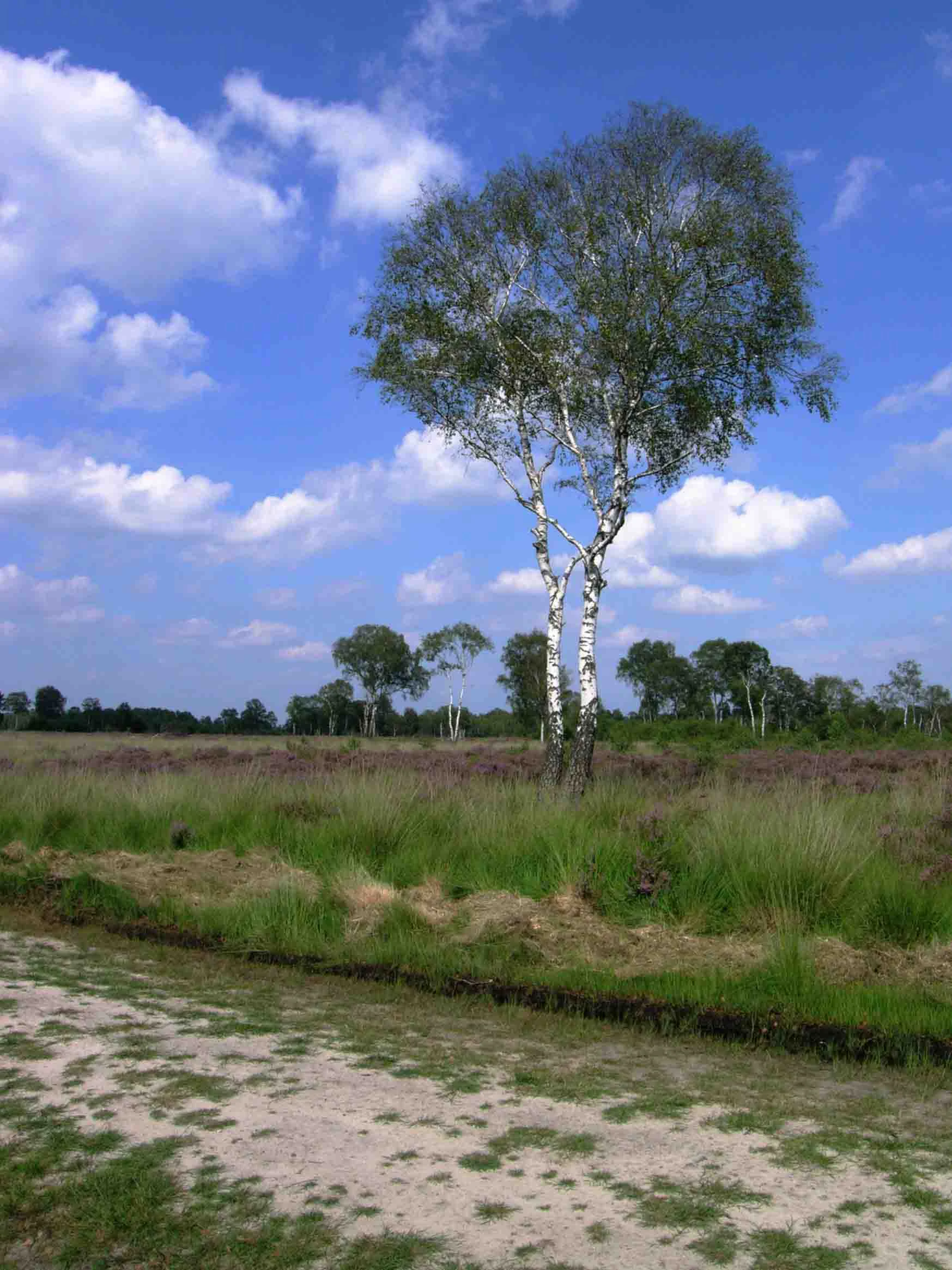
The physical landscape of De Groote Peel is a direct product of historical peat extraction overlaid on the natural formation of a raised bog. The terrain varies considerably across the park, featuring inaccessible peat swamps, open water lakes, heathland heather, and sand ridges that protrude from the peaty substrate. The lakes scattered throughout the park were created by the extraction of peat, leaving behind deep depressions that filled with groundwater and precipitation. The most distinctive landscape feature is the raised bog itself, a dome of accumulated plant material that once grew upward as the underlying vegetation died and decomposed slowly in the waterlogged, acidic conditions. Today, the bog remains partly intact in the core areas of the park, though the hydrology has been altered by historical drainage. Purple moor grass dominates the heath sections, creating distinctive purple hues during the flowering season. The sand ridges represent older, mineral-rich landforms that predate the development of the peat bog and now stand as islands of different vegetation amid the wetland. Visitors walking the elevated paths can observe the stark contrast between the open, treeless bog and the planted tree belts that were established around the mid-twentieth century to provide shelter and habitat.
De Groote Peel National Park ecosystems, habitats, and plant life
The ecological character of De Groote Peel is defined by its wet, nutrient-poor conditions that support a specialized community of plants and animals adapted to acidic, boggy conditions. The park contains a remarkable diversity of rare plant species precisely because the management maintains the low-nutrient, waterlogged conditions that contrast sharply with the demands of intensive agriculture. The damp, quiet environment created by the network of wetlands and the absence of major human disturbance has made the area exceptionally attractive to birdlife. The park is classified as one of the richest bird areas in Western Europe, with nearly one hundred species breeding within its boundaries during the spring season. The tree belts planted in the mid-twentieth century have created additional habitat for songbirds, expanding the avian community beyond the wetland specialists. The insect community is exceptionally rich, particularly dragonflies and butterflies that depend on the specific plant associations found in the bog and heath habitats. The Dutch name for the park refers to the Peel region, a landscape type that was once widespread across the Netherlands but has now been largely eliminated by drainage and peat extraction.
De Groote Peel National Park wildlife and species highlights
De Groote Peel supports an impressive avian community that is the primary wildlife draw for visitors. The park is particularly known for its population of black-necked grebes, a species that breeds resident in the wetland areas. Perhaps most dramatically, the park serves as a staging ground for migrating common cranes during October and November, when these large birds gather in significant numbers to feed before continuing their migration. Beyond these signature species, the park hosts nearly one hundred breeding bird species during the spring months. Autumn brings thousands of migrating birds, including waders, geese, cranes, and ducks that use the wetland as a rest and feeding area during their journey. The tree-planting initiatives have created habitat for a diverse community of songbirds that inhabit the scrub and woodland edges. Mammals present in the park include foxes and roe deer, while the wetlands support populations of amphibians and reptiles. The specialized bog and heath habitats support invertebrate communities including numerous dragonfly and butterfly species.
De Groote Peel National Park conservation status and protection priorities
De Groote Peel holds significant conservation importance both within the Netherlands and internationally. The park was designated as a Ramsar Wetland in 1980, recognizing its importance as a wetland habitat under the international Ramsar Convention. It is also part of the Natura 2000 network, the European Union's system of protected areas designed to conserve biodiversity. The park represents one of the few remaining largely intact raised bogs in Western Europe, making it a critical refuge for species dependent on this increasingly rare habitat type. The conservation strategy maintains the wet, nutrient-poor conditions that characterize the bog ecosystem, deliberately avoiding the drainage or nutrient enrichment that would allow agricultural use but would destroy the specialized biodiversity. Managing the water table to keep the ground damp and nutrient-poor is essential for preserving the rare plant species and the associated insects that form the base of the food web. The bird-rich character of the area is protected through seasonal closures during breeding and migration periods, preventing human disturbance at critical times.
De Groote Peel National Park cultural meaning and human context
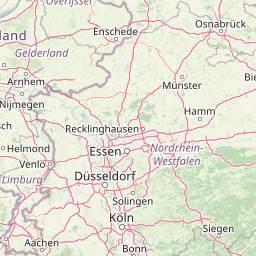
The cultural landscape of De Groote Peel reflects centuries of human interaction with the peat bog environment. The Peel region has historically been characterized by its extensive peat deposits, and the extraction of peat for fuel shaped both the economy and the physical landscape. The Dutch word Peel in the park's name derives from the old term for a region of peat bog and marshland. The park lies within the municipalities of Asten, Nederweert, and Peel en Maas. The remnants of peat extraction remain visible in the landscape as peat pits, the characteristic peelbanen (peat extraction paths), and the peat canals known as peelvaarten that were used to transport the extracted fuel. This industrial heritage is woven into the contemporary nature landscape, creating a cultural as well as ecological dimension to the park's identity. The current land ownership is divided between Staatsbosbeheer and the municipality of Asten, reflecting a partnership between state and local stewardship of the protected area.
Top sights and standout views in De Groote Peel National Park
De Groote Peel offers a distinctive wetland experience centered on one of the last surviving raised bogs in Western Europe. The observation tower along the 3-kilometer marked trail provides sweeping views across the open bog landscape, particularly striking in the atmospheric light of autumn and early spring. The birdlife is exceptional, with the autumn crane migration representing one of the most memorable wildlife spectacles in the Dutch protected areas. The network of raised boardwalks allows visitors to experience the interior of the bog safely while minimizing disturbance to sensitive habitats. The park's Ramsar designation and Natura 2000 status reflect its international conservation significance as a biodiversity hotspot. The juxtaposition of the industrial peat extraction landscape with recovering wetland creates a unique historical ecology that distinguishes the area from other Dutch national parks.
Best time to visit De Groote Peel National Park
The character of De Groote Peel varies meaningfully across seasons, each offering distinct experiences. Autumn represents perhaps the most dramatic season, particularly October and November when common cranes migrate through the area in significant numbers, creating memorable wildlife viewing opportunities. The park's seasonal closures during the bird migration period from October 15 to November 30 affect access to certain areas, so visitors should check current conditions. Spring brings the breeding bird season, with nearly one hundred species nesting in the wetland, though the area closure from March 15 to July 15 protects the most sensitive nesting habitat. Summer displays the heathland in full bloom, with purple moor grass creating distinctive color across the open areas. The dragonfly and butterfly populations are most active during warm summer months. Winter offers a quieter, more austere experience of the bog landscape, with the skeletal trees and open water creating a different atmospheric quality. The park can be visited year-round, though the weather-dependent nature of wetland trails means conditions may be muddy orwet after precipitation.