
Why Sitia Nature Park stands out
Sitia Nature Park is especially known for its deeply incised gorges, including Zakros Canyon, also called the Valley of the Dead, and for its wealth of karst caves. These geological features, together with the Sitia Mountains and the Coastal Hill Range of East Crete, form the backbone of the landscape and the reason for its UNESCO Global Geopark recognition. Equally characteristic is the integration of these natural features with cultural landmarks such as the Moni Toplou monastery, ancient sites around Zakros and Palaikastro, and largely untouched coastal stretches. This makes the park distinctive not only as a geological showcase but also as a geopark where human history and rural life continue alongside the protected landscape.
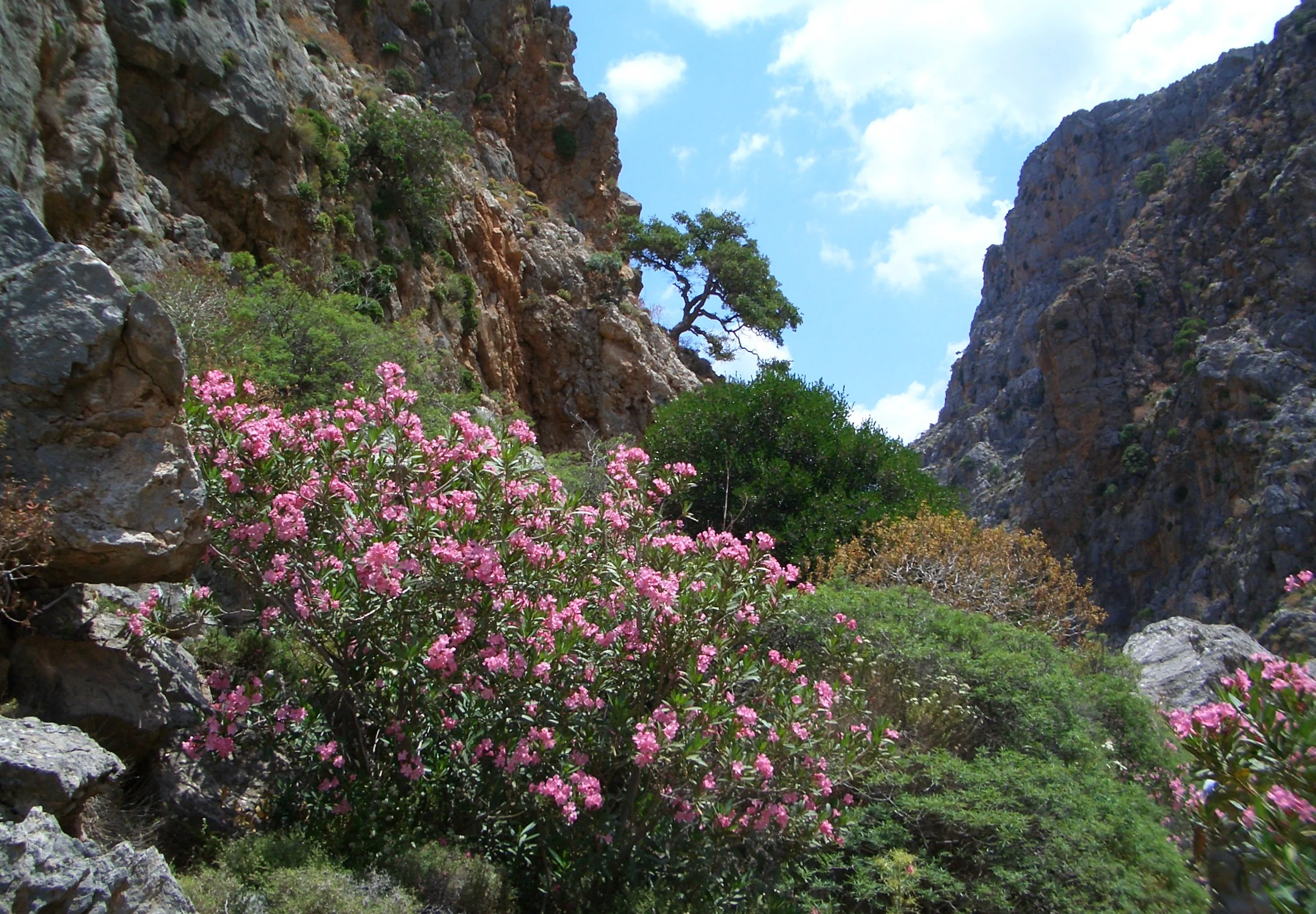
Sitia Nature Park history and protected-area timeline
Sitia Nature Park was formally created in 2015 and quickly entered the European Geoparks Network, the regional framework of the UNESCO Global Geoparks Network. Its establishment reflected a growing international recognition of the geological significance of eastern Crete, particularly its mountain ranges, gorges, and cave systems.
Management of the geopark was assigned to DOKAS, the Municipal Organization for Socio-Cultural Development of Sitia. DOKAS had itself been assembled in 2011 under Greece's Kallikratis administrative reform, which merged several smaller municipal agencies. Although originally focused on socio-cultural activities such as libraries and philharmonics, DOKAS took on the geopark as an additional responsibility, effectively serving as a board of directors for the park.
Running the geopark on a daily basis is an eleven-member committee, drawn from agencies including the Municipality of Sitia and its opposition, DOKAS itself, the Natural History Museum of Crete, the Ephorate of Antiquities, the Forestry Directorate, the Sitia Development Organization, the Sitia Hotel Association, the Environmental Education Center of Ierapetra, the Moni Toplou monastery, and the Sitia Mountaineering Association. This coalition of cultural, scientific, municipal, monastic, and tourism stakeholders has shaped the park's distinctive collaborative model of governance.
Sitia Nature Park landscape and geographic character
The landscape of Sitia Nature Park is dominated by the Sitia Mountains, a rugged range that rises toward the eastern end of Crete and forms the park's spine. These mountains are deeply dissected by gorges, with Zakros Canyon, sometimes called the Valley of the Dead, being one of the most prominent. The canyon carves a dramatic route from the interior highlands down toward the southeastern coast, creating steep cliffs, isolated rock formations, and one of the more unusual named landscapes in Crete.
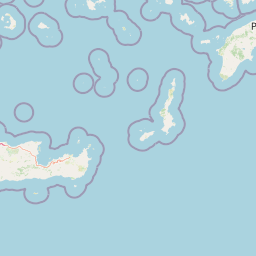
Along the coast, the topography gives way to the Coastal Hill Range, East Crete, a chain of lower hills that follows the shoreline and supports a different mosaic of habitats than the higher interior. Together, the mountains and hills frame a long and varied coastline along the Libyan Sea, ranging from cliff-backed shores to small beaches and coastal plains suitable for agriculture. The southwestern portion of the wider regional mass, centered on the Thripti Mountains, lies outside the park, leaving the Sitia Mountains and the coastal hills as the primary landscape focus.
Caves are another defining element of the park's physical character. Extensive karst systems run through the limestone terrain, providing the setting for the region's notable spelunking activities and contributing to the area's UNESCO Geopark recognition. The combination of mountains, gorges, coastal hills, sea cliffs, and underground systems gives the park a layered, three-dimensional landscape that is compact enough to explore but structurally diverse.
Sitia Nature Park ecosystems, habitats, and plant life
Ecologically, Sitia Nature Park transitions sharply from interior mountain terrain to coastal environments. The Sitia Mountains support a mix of Mediterranean mountain vegetation typical of eastern Crete, including phrygana, maquis, and patches of woodland in sheltered valleys, while the gorges create microclimates where moisture-loving species can persist in an otherwise arid setting.
The Coastal Hill Range adds a distinct ecological layer, with low Mediterranean scrub, agricultural terraces, and slopes that link the mountain interior to the sea. The long coastline and offshore waters of the Libyan Sea complete the ecological spectrum, with terrestrial, marine, and interface habitats all present within park boundaries.
Although the Mediterranean climate limits dense forest cover, the park's combination of elevation, aspect, and karst geology produces notable habitat diversity. The exclusion of small islands and the Cape Sideros area from the geopark means the terrestrial focus is on the mainland, while the surrounding sea remains an important ecological context for the park as a whole.
Sitia Nature Park wildlife and species highlights
Wildlife in Sitia Nature Park reflects the broader patterns of eastern Cretan fauna, dominated by species adapted to Mediterranean mountain and coastal habitats. The park's gorges and cliffs are particularly important for raptors, providing nesting sites and shelter, while caves host bat colonies typical of Cretan karst systems.
The mosaic of maquis, phrygana, agricultural land, and semi-natural grassland supports a variety of reptiles and small mammals characteristic of the island, as well as passerine birds associated with scrub and coastal environments. Seasonal migratory birds likely use the coastal stretches as part of broader Mediterranean flyways, although specific counts are not strongly documented in the available sources.
The park's wildlife value lies less in headline species and more in the persistence of relatively undisturbed habitats across a large, contiguous area. By tying extensive natural terrain together under one management framework, the geopark helps anchor populations that depend on large, connected landscapes rather than isolated fragments.
Sitia Nature Park conservation status and protection priorities
As a UNESCO Global Geopark, Sitia Nature Park's conservation significance is rooted primarily in geological heritage. The park's gorges, karst caves, and the Sitia Mountains are recognized internationally as exemplars of eastern Mediterranean geology, providing reference sites for the study of tectonic processes, karst evolution, and landscape formation. This international designation adds a layer of protection and visibility beyond national or local recognition.
Conservation is approached through a collaborative governance model rather than a single environmental agency. The involvement of the Natural History Museum of Crete, the Forestry Directorate, and the Ephorate of Antiquities suggests that natural heritage, forests, and cultural sites are managed within a coordinated framework. Cultural institutions and tourism bodies sit alongside scientific agencies, reflecting the geopark philosophy that conservation of place is inseparable from the communities and traditions that inhabit it.
The exclusion of the naval base at Cape Sideros and the small surrounding islands from the park boundary is a notable feature of the conservation design. While this means these areas are not covered by geopark protections, it also concentrates the park's mandate around the mainland mountain and coastal territory where geological and ecological values are highest.
Sitia Nature Park cultural meaning and human context
Sitia Nature Park is closely woven into the cultural fabric of eastern Crete. The Moni Toplou monastery, one of the most important Orthodox monasteries on the island, sits within or near park territory, and is represented directly in the geopark's management committee. This inclusion reflects the deep historical relationship between monastic communities and the Cretan landscape.
The region around Zakros and Palaikastro is also archaeologically significant, with the Minoan site of Zakros among the major Bronze Age palaces of Crete. The Ephorate of Antiquities, which oversees such sites, is part of the geopark's governance, anchoring the park in the management of cultural heritage alongside natural features.
Rural life remains a defining element of the park's cultural context. The Sitia region is known for its olive groves, vineyards, and traditional villages, and the inclusion of bodies such as the Sitia Hotel Association and the local mountaineering club underscores the importance of everyday economic and recreational activity. Rather than presenting the park as a strictly protected wilderness, the geopark model treats these communities as integral to the landscape's long-term vitality.
Top sights and standout views in Sitia Nature Park
Among the standout features of Sitia Nature Park are Zakros Canyon and its associated Valley of the Dead, the long stretch of karst caves that host the park's signature spelunking experiences, and the contiguous mountain chain of the Sitia range. These geological assets underpin the park's UNESCO status and provide the setting for its main group activities.
Equally notable are the park's cultural anchors, especially Moni Toplou and the archaeological sites around Zakros, and its largely undeveloped coastline along the Libyan Sea. The collective presence of mountains, gorges, caves, monasteries, ancient sites, and traditional villages within a single protected framework gives the park an unusually rich and varied profile for visitors and researchers alike.
Best time to visit Sitia Nature Park
Spring and early autumn are widely considered the most comfortable seasons for visiting Sitia Nature Park. Temperatures are mild, the landscape is green or still warm from summer, and conditions for hiking the Sitia Mountains and gorges such as Zakros Canyon are at their best. These months also make cave explorations more manageable, as summer heat can make strenuous outdoor activity difficult.
Summer brings higher temperatures and very dry conditions, though the coastal stretches of the park remain attractive for sea-focused visits. Winter tends to be quieter and cooler, with some high-mountain paths more challenging. Because much of the park's appeal centers on physically demanding hiking and spelunking, visitors with limited time are likely to benefit most from the milder shoulder seasons, when the park's full range of experiences is accessible without the extremes of summer heat.