
Mori Atlas logo
Nature reserveSkawiński obszar łąkowy

Explore the boundaries, mapped terrain, and ecological habitat of this Lesser Poland protected area.

Skawiński obszar łąkowy Nature Reserve: A Detailed Geographic Atlas of Protected Polish Meadows

Discover the geographic character of Skawiński obszar łąkowy, a significant nature reserve in the Lesser Poland region. This protected area preserves rare variable-moisture Molinia meadows, serving as a critical habitat for specialized butterfly species within the broader Bielańsko-Tyniecki landscape mosaic. Gain insights into its lowland terrain, surrounding river valleys, and its role as a preserved sanctuary for traditional meadow ecosystems in a densely populated region.

Natura 2000meadow habitatMolinia grasslandwet meadowbutterfly conservationLandscape Park
A graphic illustration of a lush mountain valley with a waterfall in the distance, pine trees in the foreground, and wildflower fields under a bright sun.

Skawiński obszar łąkowy

Nature reserve

Park overview

Structured park overview, official facts, and landscape profile for Skawina Meadow Area

Skawina Meadow Area park facts, protected area profile, and essential visitor context

Review the core facts for Skawina Meadow Area, including designation, size, terrain, visitor scale, habitats, and operating context in one park-focused overview.

About Skawina Meadow Area

The Skawina Meadow Area is a compact, habitat-focused protected landscape on the southern edge of the Kraków conurbation. Although it is not a national park or even a standalone nature reserve, it occupies an important niche within the regional conservation network as a Natura 2000 site dedicated to the preservation of semi-natural meadow habitats. Its designation reflects a broader European effort to maintain traditional low-intensity grassland systems, which remain biodiversity-rich but have been lost over much of the continent through agricultural intensification, drainage, and development.

The majority of the site lies within the boundaries of the Bielańsko-Tyniecki Landscape Park, a protected area that already safeguards a mosaic of forests, river valleys, and meadows along the Vistula south of Kraków. Within this mosaic, the Skawina Meadow Area adds a particularly species-rich grassland component. To the north, the site borders the Tyniec Forests and the historic Tyniec Podgórki cemetery landscape, while to the south it meets the economic activity zone around Skawina, an industrial town that has expanded around the edge of the protected meadows.

The significance of the area lies less in spectacular scenery than in ecological continuity. The meadows and their associated fauna have survived here in a recognizable form, providing a refuge for species that have declined across much of central Europe. The site's proximity to large urban populations in Kraków and Skawina also gives it a quiet educational and recreational value, allowing residents and visitors to encounter a working traditional meadow landscape within a heavily urbanized region.

Quick facts and research context for Skawina Meadow Area

The Skawina Meadow Area is a Natura 2000 Special Area of Conservation in the Małopolskie voivodeship of southern Poland, registered under the code PLH120079. It was approved as a site of Community importance in March 2011 and covers about 44 hectares. The protected zone lies mainly in the southwestern district of Kraków (Dębniki), with a smaller portion extending into northern Skawina, and it sits inside the Bielańsko-Tyniecki Landscape Park. Its ecological focus is on wet Molinion meadows and associated butterfly fauna, including several protected Lycaenidae species.

Protection and recognition

Documented terrestrial conservation history and Natura 2000 recognition details

Skawiński obszar łąkowy Protection Status and Designated Area Record

Skawiński obszar łąkowy maintains a documented terrestrial protection status established in 2011 alongside official Natura 2000 recognition records. Visitors can examine the recorded designation history, management scope, and international listings associated with this protected landscape.

International recognition

Protection details

Protection scope
Terrestrial
Designated year
2011
Transboundary protection
No
Park context

Deeper park guide and search-rich context for Skawina Meadow Area

Skawina Meadow Area history, landscape, wildlife, and travel context

Explore Skawina Meadow Area through its history, landscape character, ecosystems, wildlife, conservation priorities, cultural context, and seasonal travel timing in a structured park guide built for atlas discovery and search intent.

Why Skawina Meadow Area stands out

The site is best known for its surviving stands of variable-moisture Molinia meadows (Molinion), a habitat that supports a community of rare, protected butterflies. These include the Scarce Large Blue (Phengaris teleius), the Large Blue (Phengaris nausithous), the Large Copper (Lycaena dispar), and the Violet Copper (Lycaena helle), whose presence here is the central reason for the area's formal protection. The combination of a traditional hay-meadow landscape, a Natura 2000 designation, and a location within a recognized landscape park gives the site a clear identity as a small but ecologically focused meadow reserve.
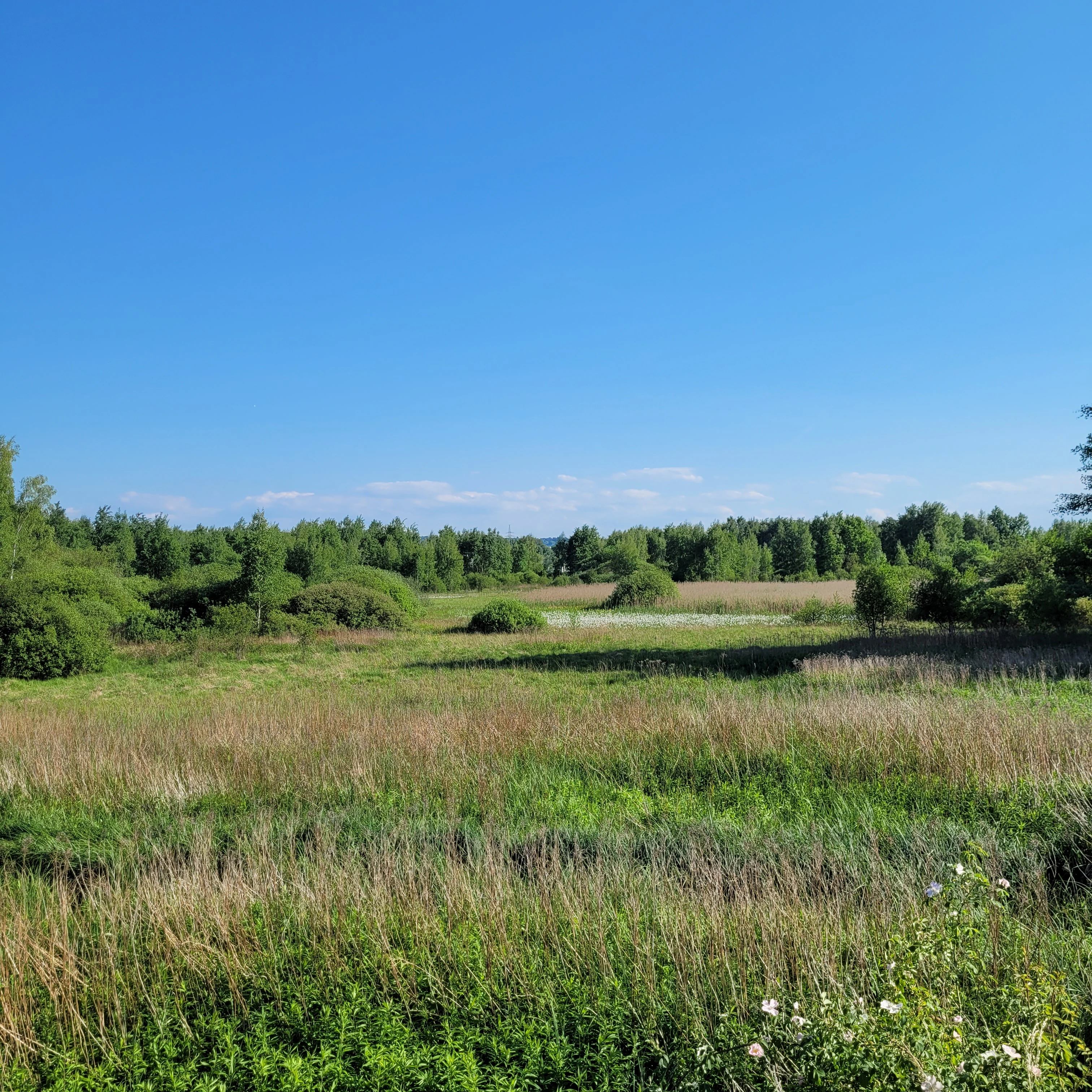
A wide, eye-level landscape view of a green meadow field under a clear blue sky, with a line of trees and shrubs in the distance.
A wide view of the meadow landscape within the Skawiński obszar łąkowy Natura 2000 protected area.

Skawina Meadow Area history and protected-area timeline

The Skawina Meadow Area acquired formal protection as a Natura 2000 site of Community importance in March 2011, under the European Union's Habitats Directive framework. Its designation was driven by the persistence of qualifying habitat types, particularly Molinion wet meadows, together with the presence of several butterfly species listed under the directive's annexes.

The meadows themselves have a longer, informal history as part of the traditional agricultural landscape surrounding Kraków and Skawina. Their survival into the twenty-first century reflects continued extensive management practices, likely including low-intensity mowing and limited use of fertilizers, which have allowed the underlying botanical and entomological communities to persist. The area's location inside the Bielańsko-Tyniecki Landscape Park predates the Natura 2000 listing and provides an additional layer of national-scale landscape protection around the meadow core.

Skawina Meadow Area landscape and geographic character

The landscape of the Skawina Meadow Area is gently rolling, lowland terrain typical of the southern fringe of the Kraków region. The site consists of open, semi-natural meadows rather than dramatic landforms, but the surrounding context adds character: to the north lie the wooded Tyniec Forests along the Vistula valley, while the broader Bielańsko-Tyniecki Landscape Park frames the area with mixed woodland, river-cut valleys, and small hills.

The dominant land cover is wet, variable-moisture grassland, where changes in groundwater and surface conditions create a patchwork of drier and damper swards. This mosaic of microhabitats is itself a defining physical feature of the site, supporting different plant communities and the specialized fauna that depend on them. The meadows are bordered by woodland patches, small watercourses, and the edges of urban and industrial development, giving the protected area a clear but relatively narrow footprint within a much larger working landscape.

Skawina Meadow Area ecosystems, habitats, and plant life

Ecologically, the Skawina Meadow Area is defined by its grassland habitats, especially the Molinion communities of variable-moisture Molinia meadows. These are species-rich swards dominated by purple moor-grass and associated with a wide range of herbs, sedges, and mosses adapted to periodically wet conditions. In drier or transitional patches the meadows grade into lowland and submontane fresh meadows of the Arrhenatherion type, which reflect a more traditional hay-meadow character.

The combination of wet and mesic meadow communities supports an unusually rich invertebrate fauna. The site's botanical diversity underpins the abundance of nectar sources and host plants needed by its specialized butterflies, while the mix of wetter and drier swards provides the range of microclimates that these species require across their life cycles. Surrounding woodland edges, scrub transitions, and nearby aquatic habitats of the Vistula corridor add further ecological depth, though the meadow core itself remains the principal focus of conservation effort.

Skawina Meadow Area wildlife and species highlights

Wildlife interest at the Skawina Meadow Area centers overwhelmingly on its butterfly community. The site is a refuge for four particularly notable species, all of which are legally protected in Poland and listed in the annexes of the EU Habitats Directive. Two species of large blue, the Scarce Large Blue (Phengaris teleius) and the Large Blue (Phengaris nausithous), are the area's signature inhabitants, dependent on a close ecological relationship with specific host ants and meadow plants.

Two copper butterflies, the Large Copper (Lycaena dispar) and the Violet Copper (Lycaena helle), further reinforce the site's importance, the latter being especially rare and associated with wet, species-rich meadows. Together, this assemblage gives the small area an entomological value that far exceeds its modest size. Beyond butterflies, the broader mosaic of meadows, woodland edges, and the adjacent Vistula valley supports typical lowland biodiversity, though the formal conservation record for the site is built primarily around these four flagship species.

Skawina Meadow Area conservation status and protection priorities

Conservation significance at the Skawina Meadow Area is rooted in its role within the Natura 2000 network, the European Union's coordinated system of protected sites aimed at safeguarding threatened habitats and species. The designation as a Special Area of Conservation under the Habitats Directive brings a legal obligation to maintain the meadow habitats and the species that depend on them in favorable condition.

The site's protective framework is layered. Beyond the Natura 2000 status, its inclusion in the Bielańsko-Tyniecki Landscape Park adds national-level landscape protection, and the broader regional planning context provides additional buffering against urban and industrial expansion. The main conservation challenge is the ongoing pressure from nearby development, particularly the Skawina economic activity zone to the south, as well as the perennial risk of changes in land use that could disrupt the long continuity of extensive meadow management on which the site's biodiversity depends.

Skawina Meadow Area cultural meaning and human context

The meadows of the Skawina area are part of the traditional rural landscape that historically surrounded the villages, market towns, and religious sites of the Kraków region. Their preservation has cultural as well as ecological meaning, representing a continuation of extensive hay-making practices that once characterized this part of the Vistula river basin.

The proximity of historic sites, including the Podgórki Tynieckie cemetery and the woodlands associated with the long-established Tyniec area near Kraków, places the meadow site within a wider cultural landscape shaped by monastic, agricultural, and river-based traditions. While the protected area itself is not the focus of major cultural interpretation, it forms a quiet ecological backdrop to the surrounding human history of southern Poland.

Top sights and standout views in Skawina Meadow Area

A small Natura 2000 meadow reserve protecting one of the better-preserved stands of Molinia wet grassland in the Lesser Poland region. The site is most notable for hosting four protected butterfly species, including two large blues and two coppers, whose presence is the principal reason for its European-level designation. Its location inside the Bielańsko-Tyniecki Landscape Park and at the edge of the Kraków and Skawina urban areas makes it a compact example of how traditional meadow biodiversity can coexist with a densely populated region.

Best time to visit Skawina Meadow Area

Late spring through early autumn is broadly the most rewarding period to experience the Skawina Meadow Area, when the meadows are in active growth and the butterfly populations are most visible. Warm, sunny days in late May, June, and July are typically the best window for observing the large blues and coppers, while late summer offers a richer botanical display of meadow herbs. Winter visits are possible but offer little of the site's defining insect life, and the open meadows are best appreciated in fair weather when the grassland mosaic can be seen in full.

Monthly climate preview

Long-term temperature ranges and monthly precipitation patterns from representative coordinates

Skawiński obszar łąkowy Climate Normals and Annual Weather Rhythm

Representative station records for Skawiński obszar łąkowy show a measured annual temperature range spanning subzero winter minima to warm summer maximums alongside varying monthly precipitation averages. Detailed twelve-month climate normals provide complete historical context for understanding the long-term meteorological profile across this protected area.
Annual mean8 °C
-3 °C20 °C
Jan-3°
Feb-2°
Mar
Apr
May14°
Jun17°
Jul20°
Aug19°
Sep14°
Oct
Nov
Dec-2°
Warmest month
July

19.6 °C

Coolest month
January

-3.2 °C

Wettest month
July

3.5 mm/day

Driest month
December

1.3 mm/day

Park location guide

Geography guide, regional context, and park location map for Skawina Meadow Area

Skawina Meadow Area park geography, regions, and map view in Poland

Understand where Skawina Meadow Area sits in Poland through a broader geographic reading of the surrounding landscape, nearby location context, and its mapped position within the national park landscape.

How Skawina Meadow Area fits into Poland

Poland, officially the Republic of Poland, is a Central European country spanning from the Baltic Sea in the north to the Carpathian Mountains in the south. It borders Germany, Czech Republic, Slovakia, Ukraine, Belarus, Lithuania, and Kaliningrad Oblast. The country has a temperate climate, diverse landscapes, and is known for its rich history, cultural heritage, and strong economic position within the EU.

Wider geography shaping Skawina Meadow Area in Poland

Poland occupies 312,696 km2 in Central Europe, extending from the Baltic Sea coast in the north to the Sudetes and Carpathian Mountains in the south. It borders Germany to the west, Czech Republic and Slovakia to the south, Ukraine and Belarus to the east, and Lithuania and Kaliningrad Oblast to the northeast. The landscape includes lowland plains, uplands, and mountain ranges.

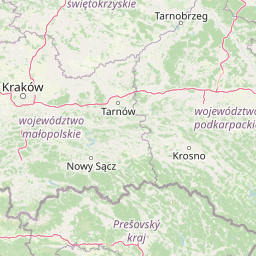
Map view of Skawina Meadow Area

Use this park location map to pinpoint Skawina Meadow Area in Poland, understand its exact geographic position, and read its mapped placement within the surrounding landscape more clearly.

Pigeon | © OpenStreetMap contributors

Location context for Skawina Meadow Area

Lesser Poland Voivodeship
Recorded earthquake history

View Historical Earthquake Records for Skawiński obszar łąkowy

Investigate the history of seismic activity recorded in the vicinity of Skawiński obszar łąkowy through a structured data catalogue. MoriAtlas provides these records to support geographic exploration of the region, allowing for the analysis of past epicentre locations and event metrics associated with this protected landscape.

Skawiński obszar łąkowy Earthquake History

Catalogued events

17 events

Strongest magnitude

Magnitude 4.1

Most recent event

Nov 17, 2015

This history includes earthquakes recorded inside the park or within 50 km of its borders

Visual exploration of wet grassland terrain and protected lowland habitats in southern Poland

Skawiński obszar łąkowy Photos, Landscape Scenery, and Protected Meadow Habitat Views

Visual records reveal the gentle terrain, open meadows, and distinctive microhabitats that characterize the protected landscape of Skawiński obszar łąkowy. Photographic documentation helps observers examine the native flora, traditional grassland patterns, and surrounding ecological buffers more thoroughly.

A wide, eye-level landscape view of a green meadow field under a clear blue sky, with a line of trees and shrubs in the distance.

Park atlas

Compare nearby lowland reserves, wet meadows, and protected landscapes across Lesser Poland

Explore Other Parks Near Skawiński Obszar Łąkowy and Surrounding Regional Protected Areas

Browse protected areas adjacent to Skawiński obszar łąkowy to evaluate wider regional biodiversity and landscape patterns. Expanding the search helps connect local meadow habitats with neighboring river valleys and woodland reserves.
A pale, minimalist watercolor illustration depicting a soft, winding river valley surrounded by distant hills and coniferous forests.
Protected landscapeLesser Poland Voivodeship
About 3.8 km away#1 closest

North

Bielańsko-Tyniecki Park Krajobrazowy Protected Landscape and Regional Geography

Limestone terrain and Vistula valley river corridors in Lesser Poland

Bielańsko-Tyniecki Park Krajobrazowy anchors a complex protected landscape near Kraków, featuring dramatic limestone rock groups, ancient forest complexes, and extensive river meadows. This detailed overview maps its karst caves, Natura 2000 sites, and cultural heritage, documenting the rare overlap of upland ridges and alluvial floodplains within the Lesser Poland Voivodeship.

Area
63.591 km²
Established
1981
Relief
Upland
Climate
Temperate
A soft, horizontal watercolor illustration depicting a rolling green landscape with distant hills under a light sky.
Nature reserveLesser Poland Voivodeship
About 5.8 km away#2 closest

Southeast

Rezerwat przyrody Cieszynianka: Protected Woodland and Floristic Reserve in Lesser Poland

Exploring the geographic boundaries and botanical significance of this unique southern Polish site

This nature reserve protects an isolated, island-like population of rare spring-flowering plants within a sheltered beech and birch forest. Situated on the slopes above the Rzepnik stream in the Lesser Poland Voivodeship, the site serves as a prime example of focused botanical conservation within a heavily settled foothill countryside.

Area
0.103 km²
Established
1969
Relief
Upland
Climate
Temperate
Protected areaLesser Poland Voivodeship
11 km away#3 closest

West

Rudniańskie Modraszki, Kajasówka: Protected Area Geography and Habitat Mapping

Lesser Poland Voivodeship, Southern Poland

Rudniańskie Modraszki, Kajasówka represents a core conservation zone defined by its rare xerothermic and molinia meadow habitats. Spanning the transition between ridge and depression landscapes, this area provides a structured look at how small-scale habitat protection supports essential butterfly populations within the diverse geography of southern Poland.

Area
4.25 km²
Established
2011
Relief
Upland
Scope
Terrestrial
A horizontal watercolor illustration showing a peaceful river flowing through a lush green valley with distant rolling hills and wild grasses in the foreground.
Nature reserveLesser Poland Voivodeship
About 12 km away#4 closest

Northwest

Rezerwat przyrody Dolina Mnikowska: A Karst Landscape Reserve in Lesser Poland

Mapped limestone gorge and forest protected area geography

Rezerwat przyrody Dolina Mnikowska features a striking limestone gorge and forest ecosystem within the Lesser Poland Voivodeship. This protected area offers a deep look into the karst topography, river-carved cliffs, and diverse habitat zones of the Garb Tenczyński upland region.

Area
0.209 km²
Established
1963
Relief
Upland
Climate
Temperate
Protected landscapeLesser Poland Voivodeship
About 17 km away#5 closest

Northwest

Tenczyński Park Krajobrazowy: Protected Landscape and Karst Geography in Lesser Poland

Mapped limestone ridges and forest corridors near Kraków

Discover Tenczyński Park Krajobrazowy, a protected landscape park located in Lesser Poland Voivodeship. This geographic study covers the Garb Tenczyński ridge, where karst limestone formations, small caves, and volcanic outcrops shape a diverse terrain spanning from marshy lowlands to upland forest ridges.

Area
136.581 km²
Established
1981
Relief
Upland
Climate
Temperate
Watercolor illustration showing green hills, scattered trees, and a light sky background
National parkLesser Poland Voivodeship
18 km away#6 closest

North

Ojców National Park: Karst Geography and Protected Landscape Atlas Entry

Explore the mapped terrain and unique geology of this national park.

Ojców National Park, situated in Lesser Poland Voivodeship, offers a concentrated display of dramatic karst topography. This protected national park is renowned for its towering limestone cliffs, intricate ravines, and over 400 caves, showcasing a unique Jurassic geology. As a vital protected area, its mapped boundaries encompass distinctive rock formations like Hercules' Club and the historic Trail of the Eagles' Nests, providing rich context for landscape discovery and atlas exploration.

Area
21.46 km²
Established
1956
IUCN
II
Relief
Upland
Watercolor painting of limestone rock formations surrounded by trees and green hills, rendered in a soft, panoramic landscape style.
National parkLesser Poland Voivodeship
18 km away#7 closest

North

Ojcowski Park Narodowy: A Geographic Guide to Poland's Compact Protected Landscape

Jurassic limestone formations and karst valleys in Lesser Poland

Ojcowski Park Narodowy occupies a unique place in the national park system of Poland, defined by its small footprint and high concentration of Jurassic geological features. The terrain includes vertical cliffs, ancient river valleys, and significant cave systems that provide critical habitats for bat populations. Use this mapping resource to understand the park's structural complexity, from its dry ravines to the historic cultural sites integrated into the limestone bedrock.

Area
21.46 km²
Established
1956
Visitors
400K annual
Relief
Upland
A soft watercolor painting of a winding stream flowing through a green valley with light trees, under a pale pink and yellow sky.
Nature reservePoland
About 18 km away#8 closest

Northwest

Rezerwat przyrody Dolina Potoku Rudno: Nature Reserve and Protected Landscape Atlas

Geographic map and protected forest terrain in Lesser Poland

Situated in the Rudno Stream valley, this nature reserve offers a detailed look at preserved alder floodplain ecosystems and rocky gorge formations. The area provides a critical protected woodland link within the Kraków-Częstochowa Upland. Use the atlas data to examine the reserve boundaries, geological exposures, and regional landscape connections in Poland.

Area
0.959 km²
Established
2001
Relief
Upland
Climate
Temperate

Common questions about visiting, size, designation, and location context for Skawina Meadow Area

Skawina Meadow Area FAQs for park facts, access, geography, and protected area context

Find quick answers about Skawina Meadow Area, including protected-area facts, park geography, trail and visitor context, and how the park fits into its surrounding country and regional landscape.
MoriAtlas Explorer

Continue Your Protected Areas Search Across the Global Atlas

Deepen your exploration by continuing the structured search for national parks and protected areas worldwide. Utilize the comprehensive filtering capabilities to compare different conservation landscapes and refine your understanding of global park geography. Discover more about the distribution and characteristics of protected natural areas.

Global natural geography