Why Sobotín, domov důchodců stands out
This nature monument is known almost entirely for one specific thing: its role as a maternity roost for the lesser horseshoe bat (Rhinolophus hipposideros). The protected loft provides the warm, undisturbed conditions this small cave-dwelling bat needs to raise its young each summer, and is the reason the site received formal protection. It is also notable as a remarkable example of how very small, building-based habitats can carry genuine European conservation value: a fraction-of-a-hectare attic was placed under state protection because of what lives inside it, and is recognized within the Natura 2000 system accordingly.
Sobotín, domov důchodců history and protected-area timeline
The protected area was formally declared on 31 December 2013, when the Regional Authority of the Olomouc Region (Krajský úřad Olomouckého kraje) issued the official designation as a přírodní památka. The decision was driven by long-term observations of a lesser horseshoe bat colony inhabiting the loft above the former laundry of the Diakonie care home complex, and by the broader need to protect that colony under Czech and European conservation law.
In parallel with its national designation, the area was integrated into the Natura 2000 network, reflecting its recognition as a European Site of Community Importance. By the time the protected status was formalized, surveys had already documented the bats using the loft as a summer breeding roost, and the protection order effectively ensured that future management of the building would have to take the colony's needs into account.
Sobotín, domov důchodců landscape and geographic character
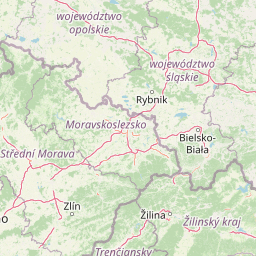
The local landscape is shaped by the foothills of the Jeseníky mountain system in northern Moravia, where the Merta river flows through a narrow valley between forested slopes. The village of Sobotín sits in this valley, and the protected site occupies the built-up central part of the village rather than an open natural area.
The site's surface footprint is only about 0.05 hectares at around 410 meters elevation, and the entire protected zone lies within the loft of a building, with no exposed terrain, cliffs, rivers, or forest included in the formal boundary. However, the broader surroundings of the Merta stream provide the riparian and wooded landscape that bats from the roost depend on when they leave the attic each night to feed.
Sobotín, domov důchodců ecosystems, habitats, and plant life
Ecologically the site is essentially a single-feature bat roost, but one that sits within a broader mosaic of valley habitats along the Merta. The loft offers warm, sheltered, draught-free conditions under the roof of the Diakonie building, which is exactly the kind of microclimate the lesser horseshoe bat selects for its summer maternity colonies.
Surrounding habitats include the small valley of the Merta stream, village gardens, woodland edges, and the mixed forests typical of the submontane belt of northern Moravia. These provide insects for the bats to feed on and structural connectivity that the colony uses during nocturnal flights, while the protected attic itself acts as the reliable core of the colony's seasonal range.
Sobotín, domov důchodců wildlife and species highlights
The defining species of the site is the lesser horseshoe bat (Rhinolophus hipposideros), a small European bat that has declined across much of its range and is the focus of specific conservation measures within the EU Habitats Directive. The protected loft supports a summer breeding colony whose numbers have been estimated at between roughly 20 and 169 individuals in different years, depending on conditions.
During a 2012 survey, researchers also counted 34 greater mouse-eared bats (Myotis myotis) using the same roost, indicating that the building cavity is ecologically valuable beyond the single target species and contributes to local bat biodiversity rather than functioning as a habitat for just one kind of animal. The broader area likely supports additional bat species feeding along the wooded Merta valley, although only the lesser horseshoe bat is the explicit object of protection.
Sobotín, domov důchodců conservation status and protection priorities
The site's conservation importance lies in its formal role within both Czech and European protection frameworks. As a přírodní památka, it carries IUCN Category III status, providing national-level legal protection against disturbance or destruction of the roosting space. Because the protected object is essentially a colonial bat population inside a building, this protection translates into specific obligations regarding building works, lighting, access, and disturbance in and around the loft.
At the European level, the site is designated as a Site of Community Importance under the Natura 2000 network, which links it to the Habitats Directive and obliges the Czech Republic to maintain the colony's long-term viability. The principal conservation objective is to ensure the continued existence of the lesser horseshoe bat's summer colony, with surveys showing that the loft can support breeding groups that fluctuate in size; the protected status effectively freezes in place whatever management arrangements are needed to keep the roost viable from year to year.
Sobotín, domov důchodců cultural meaning and human context
The site's name reflects its unusual setting: 'domov důchodců' literally means 'retirement home' or 'elderly care home', and the protected space sits inside the complex operated historically by Diakonie, a Czech Protestant charitable organization that has long run care services in the region. The protected attic is above the former laundry, a workaday part of the building that is now legally part of a nature reserve.
The naming reflects a broader Czech approach to small-scale, locality-specific conservation, where individual buildings, gardens, trees, or odd corners of villages can be legally protected if they hold ecological value, regardless of whether the wider public would recognize them as 'natural' in a scenic sense.
Top sights and standout views in Sobotín, domov důchodců
The standout feature of Sobotín – domov důchodců is the unexpected pairing of an everyday institutional building and a formal European-recognized bat reserve. The site combines a česká přírodní památka designation with simultaneous Natura 2000 Site of Community Importance status, placing what looks like an ordinary attic in the same legal framework as much larger protected landscapes.
Best time to visit Sobotín, domov důchodců
Because the focus of the site is a summer maternity colony of the lesser horseshoe bat, the period in which the colony is active runs roughly through the warm months of the year, when bats are regularly present in the loft. Outside the summer season the roost may be empty or used differently, so timing a visit around the active season gives the best chance to understand what the protected area actually protects. That said, the site is a working care-home building rather than a visitor attraction, and any engagement with the space is realistically limited to external viewing, reading the protected-area register, and understanding its bat-conservation context.