Why Waychinicup National Park stands out
Waychinicup National Park is best known for its remarkable concentration of threatened and endangered Australian wildlife. The park protects one of the few remaining mainland populations of quokkas, the small marsupial famously known as the world's happiest animal. More significantly, it serves as a crucial sanctuary for Gilbert's potoroo, a critically endangered marsupial that was once thought to be extinct until rediscovered in 1994. The park also harbours the critically endangered noisy scrubbird, a ground-dwelling bird that was formally declared extinct before being rediscovered in 1962 and subsequently translocated to Waychinicup from Two Peoples Bay Nature Reserve. The coastal waters adjacent to the park provide habitat for southern right whales, which can be observed swimming offshore during their seasonal migrations.
Waychinicup National Park history and protected-area timeline
Waychinicup National Park was formally established in 1990, designated under the National Parks and Wildlife Conservation Act to protect the significant natural values of this coastal region in far southwestern Western Australia. The park was created as part of broader expansion of Western Australia's protected area network during the late twentieth century, recognizing the ecological importance of the southern coastline between Albany and the Great Australian Bight. Prior to formal protection, the area had long been recognized by naturalists for its unique fauna, particularly the discovery of the critically endangered noisy scrubbird in the broader Two Peoples Bay region during the 1960s. Conservation translocation programs began in the early 1980s, with noisy scrubbirds moved from Two Peoples Bay Nature Reserve to Waychinicup in 1983 and 1985, establishing what would become a successful and self-sustaining population. In 2010, the park was selected as the site for an insurance population of Gilbert's potoroo, a critically endangered marsupial that had been rediscovered in the southwest and required protected habitat to establish secure populations away from threats facing wild colonies. The management of the park falls under the Western Australian Department of Environment and Conservation, which oversees visitor facilities including a basic camping area and access to the Waychinicup River inlet.
Waychinicup National Park landscape and geographic character
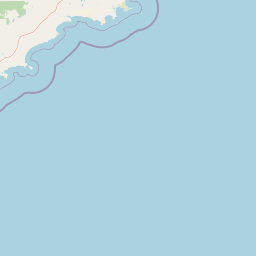
The landscape of Waychinicup National Park presents a striking combination of coastal and upland environments that define the character of far southwestern Australia. The park's coastline extends between Normans Beach and Cheynes Beach, featuring rugged cliffs, sandy beaches, and exposed rock platforms where the full force of the Southern Ocean is visible. Inland, the terrain rises through boulder-strewn hillsides and descends into deeply-incised valleys carved by perennial streams that flow through the park toward the coast. These valley corridors are characterized by dense vegetation and the distinctive presence of moss-covered boulders along stream courses, creating an atmosphere of damp, shaded refuge amid the more exposed coastal terrain. The vegetation ranges from coastal heath on exposed ridges to taller forest and scrub in the sheltered valleys, with species adapted to the region's Mediterranean climate and proximity to the Southern Ocean. The park's boundaries are defined by the Southern Ocean to the south, Mount Manypeaks Nature Reserve to the east, and cleared agricultural land to the north, creating a landscape where protected wilderness meets human-modified farmland.
Waychinicup National Park ecosystems, habitats, and plant life
The ecological character of Waychinicup National Park reflects the unique environmental conditions of southwestern Australia's temperate coastal zone. The park lies within a region recognized for its exceptional biodiversity and high degree of endemism, where species have evolved in isolation from the rest of the continent. The combination of coastal, valley, and upland habitats creates a mosaic of environments that support diverse plant communities ranging from heathlands to forested corridors. The valley streams and their associated riparian zones provide fresh water and more humid microhabitats that contrast sharply with the surrounding drier terrain, supporting species dependent on these water sources. The marine environment adjacent to the park, where the Southern Ocean provides nutrient-rich waters, contributes additional ecological value and supports organisms ranging from intertidal invertebrates to migratory whales. The broader region forms part of the Two Peoples Bay and Mount Manypeaks Important Bird Area, identified by BirdLife International as being of global significance for the conservation of several rare and threatened bird species.
Waychinicup National Park wildlife and species highlights
The wildlife of Waychinicup National Park is distinguished by the presence of multiple species that rank among Australia's most endangered. Among the mammals, the quokka represents one of the few remaining mainland populations of this small wallaby, a species more commonly associated with island habitats such as Rottnest Island near Perth. The establishment of Gilbert's potoroo insurance population in 2010 proved significant for conservation of this marsupial, which numbered only around 100 individuals globally as of late 2018, with the 20 individuals at Waychinicup representing approximately one-fifth of the entire world population. Other mammals include the quenda, a type of bandicoot, and ring-tailed possums. The marine environment off the park's coastline provides seasonal habitat for southern right whales during their migration along the southern Australian coast. The bird fauna is equally remarkable, with the park protecting one of the only populations of the critically endangered noisy scrubbird, a ground-dwelling bird once thought extinct before its rediscovery in 1962 and subsequent translocation to Waychinicup. The vulnerable western bristlebird also persists here, representing one of the few remaining strongholds for this species whose populations have declined since the late nineteenth century.
Waychinicup National Park conservation status and protection priorities
Waychinicup National Park holds exceptional conservation significance disproportionate to its relatively modest 39.82-square-kilometre area. The park forms a critical component of a network of protected areas in far southwestern Western Australia that collectively protect some of Australia's most endangered species. The establishment of an insurance population of Gilbert's potoroo reflects the park's role as a sanctuary for species requiring predator-free or managed environments, though challenges emerged when native carpet pythons entered the enclosure and began preying on the marsupials. The successful establishment of the noisy scrubbird population demonstrates the park's suitability for conservation translocation, with the original 30 individuals introduced in 1983 and 1985 growing to an estimated 223 males by 1994. The designation of the broader region as an Important Bird Area by BirdLife International recognizes its global significance for rare and threatened bird species. The park works in conjunction with adjacent Mount Manypeaks Nature Reserve and the offshore Bald Island Nature Reserve to form a coherent conservation landscape that maintains habitat connectivity and population viability for vulnerable species.
Waychinicup National Park cultural meaning and human context
The Waychinicup area occupies a place within the cultural landscape of the Noongar people, the traditional custodians of the southwestern region of Western Australia. While the park itself was formally established under Western Australian conservation legislation in 1990, the land has been part of Aboriginal country for thousands of years, with the coastal regions and their abundant marine resources forming important parts of traditional life. The name Waychinicup derives from the local Noongar language, reflecting the area's Indigenous heritage and the connection between place names and language in the region. The coastal location near Bremer Bay places the park within a broader region of European settlement history, though the area remained relatively remote and less developed than other parts of the Western Australian coast. The combination of Indigenous place names and the park's role in protecting natural values creates a context where contemporary conservation practice builds upon a landscape that has held significance for both Aboriginal and settler communities.
Top sights and standout views in Waychinicup National Park
The coastal wilderness of Waychinicup National Park combines dramatic Southern Ocean scenery with extraordinary biodiversity protection, making it a distinctive destination within Western Australia's national park system. Visitors experience a landscape where rugged headlands and surf-pounded beaches contrast with tranquil forested valleys, while the presence of some of Australia's rarest wildlife adds a conservation dimension that elevates the park beyond typical scenic appeal. The opportunity to observe southern right whales offshore and to encounter species such as the quokka in their natural habitat represents encounters with wildlife found in few other places on Earth. The park's status as a crucial refuge for the critically endangered Gilbert's potoroo and noisy scrubbird illustrates how a relatively small protected area can play an outsized role in preventing species extinction.
Best time to visit Waychinicup National Park
The park can be visited year-round, though the temperate climate of far southwestern Western Australia offers distinct seasonal experiences. Summer months from December through February typically bring warmer conditions ideal for beach activities and camping, with longer daylight hours providing more time for exploration. The winter months from June to August bring cooler temperatures and increased rainfall that sustains the valley streams and keeps the landscape verdant, though visitor numbers are typically lower during this period. Southern right whales are most reliably observed along the coast from June through October when they migrate through the region. The park's relatively remote location means that visitor numbers remain modest throughout the year, allowing for a more solitary wilderness experience compared to more heavily visited parks closer to population centres.