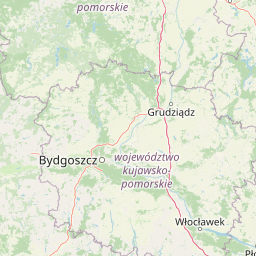
Why Zaborski Landscape Park stands out
Zaborski Landscape Park is especially known for its extensive lake district within the Tuchola Forest, featuring glacial lakes of multiple types including ribbon lakes, lobelia lakes with extremely clear water, and dystrophic peaty lakes. The Brda and Zbrzyca river valleys, along with smaller streams such as Kulawa and Kłonecznica, add further hydrological variety to the protected landscape. The park is also recognized for its rich glacial-relict vegetation, post-glacial peatlands, and pine-dominated forest cover that stretches across the sandy outwash plains of the Brda. Together with the Bory Tucholskie National Park it forms one of the most ecologically significant lowland forest complexes in Poland.
Zaborski Landscape Park history and protected-area timeline
Zaborski Landscape Park was established in 1990 under the name Chojnicki Landscape Park, by resolution of the Provincial National Council in Bydgoszcz. At its founding the park covered approximately 312.79 square kilometers, with an additional buffer zone of 75.36 square kilometers. The following year it received its current name, Zaborski Landscape Park, reflecting its location in the Kashubian Zabory region.
A pivotal change came in 1996, when a portion of the park in the area of the Struga Siedmiu Jezior, covering 46.13 square kilometers, was separated to form the Bory Tucholskie National Park. In 1998 the landscape park was expanded through the incorporation of its buffer zone, increasing its total area. In 2010 the park became part of the Bory Tucholskie Biosphere Reserve and joined the newly created Pomeranian Complex of Landscape Parks, strengthening both its international recognition and its integration into the regional network of protected areas.
Zaborski Landscape Park landscape and geographic character
The landscape of Zaborski Landscape Park is a textbook example of post-glacial lowland scenery in northern Poland. The southern Tuchola Forest region was shaped by Pleistocene glaciation, leaving behind a varied terrain of sandy outwash plains, moraine hills, river valleys, kettle holes, and numerous lake basins.
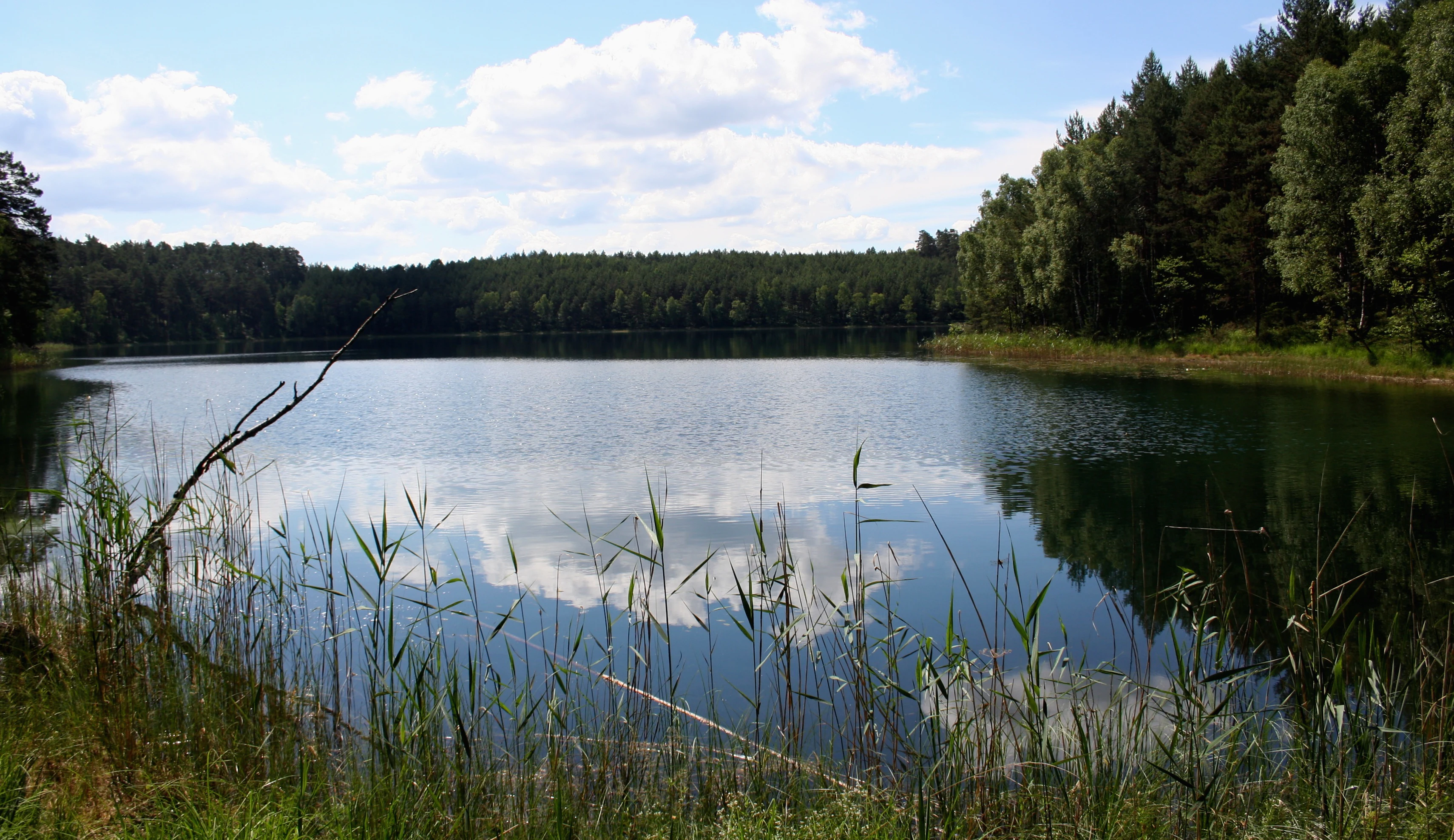
The most prominent rivers are the Brda, which flows through the western part of the park, and the Zbrzyca, a smaller tributary river. The Brda valley, with its forested slopes and sandy terraces, is one of the visual highlights of the area. Smaller rivers such as Kulawa and Kłonecznica run through steep-sided forested valleys, creating distinctive micro-landscapes within the broader forest.
Lakes are a defining element of the terrain. The park contains roughly fifty lakes, including large, deep ribbon lakes such as Charzykowskie, Długie, Karsińskie, Witoczno, Kosobudno, and Łąckie, as well as rare lobelia lakes with crystal-clear water and small dystrophic lakes rich in humic substances. The combination of open water, boggy shorelines, sandy plains, and pine forest creates a varied and scenic landscape typical of the best-preserved parts of the Polish lowlands.
Zaborski Landscape Park ecosystems, habitats, and plant life
Ecologically, Zaborski Landscape Park is shaped by the contrast between dry pine forests on sandy outwash soils and richer deciduous forests on moraine clays. Pine forests cover most of the area, but pockets of natural grąd-type forest with diverse understory plants occur wherever glacial clay soils are present.
The vegetation includes a striking component of glacial relict species, such as string sedge, crowberry, bog saxifrage, northern linnaea, and several mosses. Some locations are home to Kashubian vetch, a regionally notable species. The lobelia lakes harbor rare aquatic plants including lake lobelia, shoreweed, water elisma, and similar species of clear, nutrient-poor waters.
The mosaic of forests, lakes, peatlands, and river valleys supports a high diversity of habitats. Peat bogs, small dystrophic waterbodies, marshy lakes, and ecotone zones between forest and open water create the conditions for distinctive bog and wetland communities. The park's ecological value at the European level is reflected in its overlap with multiple Natura 2000 sites designated for both birds and habitats.
Zaborski Landscape Park wildlife and species highlights
While the park's most prominent ecological features are botanical, its mosaic of large forest tracts, peatlands, lakes, and river valleys supports a rich and characteristic lowland wildlife. The protected forest landscape provides habitat for typical Tuchola Forest mammals, birds, and aquatic species commonly associated with extensive pine woodlands, regenerating clearings, marshy lakes, and bog edges.
The river valleys of the Brda, Zbrzyca, Kulawa, and Kłonecznica, along with the varied lake shorelines, create important conditions for waterbirds, wetland species, and fish communities of different lake types. The presence of both oligotrophic lobelia lakes and more nutrient-rich wetland lakes adds ecological range that supports a broad spectrum of aquatic and semi-aquatic fauna.
The park's significance for birdlife is reflected in its overlap with two Natura 2000 Special Protection Areas, Bory Tucholskie and Wielki Sandr Brdy, which were established to safeguard bird populations of European conservation concern across this large forest and lake complex.
Zaborski Landscape Park conservation status and protection priorities
Zaborski Landscape Park is a conservation cornerstone of the Tuchola Forest region. It entirely surrounds the Bory Tucholskie National Park, and its territory includes the national park's protective buffer zone. This structural relationship gives the landscape park a key role in maintaining ecological continuity between strictly protected core areas and the broader working landscape.
At the European level, the park is covered by several Natura 2000 designations, including the Bory Tucholskie and Wielki Sandr Brdy Special Protection Areas for birds, and Special Areas of Conservation for habitats such as Sandr Brdy, the valleys of the Brda and Chociny, Czerwona Woda pod Babilonem, Las Wolność, and Ostoja Zapceńska. These sites protect specific habitat types and species of community-level conservation concern.
In 2010 the park became part of the Bory Tucholskie Biosphere Reserve, recognized under UNESCO's Man and the Biosphere Programme. This international designation highlights the area's role in combining biodiversity conservation with sustainable regional development. Closer to the ground, the park contains eight nature reserves protecting lobelia lakes, peat bogs, kettle-hole lakes, river valley mires, and calcium-rich spring mires, as well as approximately ninety-nine ecological use sites that safeguard smaller ecologically valuable land parcels.
Zaborski Landscape Park cultural meaning and human context
The park lies in the historical Kashubian region known as the Zabory, and the very name of the protected area reflects this regional identity. The Kashubian form of the park's name, Zôbòrsczi Park Krajòbrazny, is in active use and reflects the living cultural heritage of the local Kashubian community.
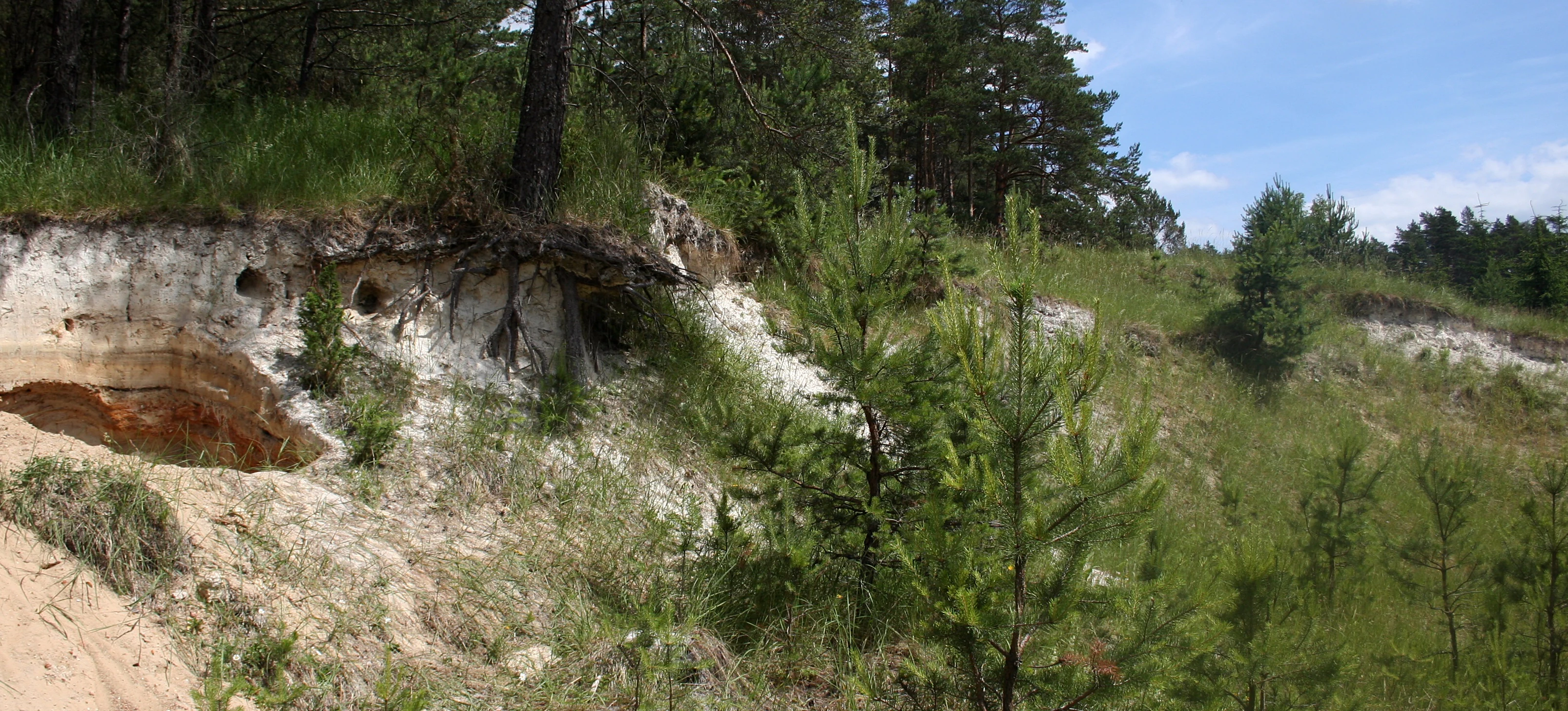
The landscape itself carries traces of historic human use, including old chalk extraction sites along the Kulawa valley near the Dolina Kulawy reserve. The combination of forest, small agricultural areas, and scattered villages reflects a long-standing pattern of coexistence between rural life and the surrounding forest landscape that has shaped this part of northern Poland for centuries.
Top sights and standout views in Zaborski Landscape Park
Zaborski Landscape Park stands out for its exceptional density of glacial-origin lakes, ranging from deep ribbon lakes to rare, crystal-clear lobelia lakes. Surrounding the Bory Tucholskie National Park, it forms part of one of the largest and most ecologically valuable lowland forest complexes in central Europe.
The park's combination of pine forests, peatlands, river valleys, and relict plant species gives it a distinctive northern, almost boreal character within the Polish lowlands. Its inclusion in the Bory Tucholskie Biosphere Reserve and multiple Natura 2000 sites underscores both its national conservation role and its recognition at the European level.
Best time to visit Zaborski Landscape Park
Zaborski Landscape Park is most visually compelling in late spring and summer, when lakes are at their clearest, peat bogs are active, and deciduous patches within the predominantly pine forest are fully leafed. These seasons favor aquatic plant observation in lobelia lakes and offer richer bird activity around wetlands and forest edges.
Autumn brings a quieter but equally distinctive atmosphere, with cooler temperatures, reduced water levels in shallow lakes, and a stronger sense of the boreal character of the Tuchola Forest. Winter conditions can bring snow cover that emphasizes the contrast between open lakes, dark conifer stands, and peatland openings, though visitors should expect typical cold-climate conditions of inland northern Poland.