

Mori Atlas logo
Protected areaZugvogelschutzgebiet Sutherland

Examining the geographic boundaries and habitat conservation within this historic migratory sanctuary

Zugvogelschutzgebiet Sutherland: An Essential Protected Area in the Saskatchewan Prairie Landscape

(Sutherland Migratory Bird Sanctuary)

Zugvogelschutzgebiet Sutherland represents a significant protected area within the Canadian Prairies, serving as a critical refuge for waterfowl like ducks, swans, and geese. This historic sanctuary, established in 1924, spans 130 hectares and features rare pockets of native grassland and shrub vegetation. By examining its mapped boundaries, researchers and nature observers can better understand the intersection of urban development and essential prairie habitat conservation.

migratory bird sanctuarywaterfowl habitatprairie grasslandsurban protected areaducks swans geesenative grassland

Zugvogelschutzgebiet Sutherland

Protected area

Park overview

Structured park overview, official facts, and landscape profile for Sutherland Migratory Bird Sanctuary

Sutherland Migratory Bird Sanctuary park facts, protected area profile, and essential visitor context

Review the core facts for Sutherland Migratory Bird Sanctuary, including designation, size, terrain, visitor scale, habitats, and operating context in one park-focused overview.

About Sutherland Migratory Bird Sanctuary

The Sutherland Migratory Bird Sanctuary is a federally designated protected area in the south-central Canadian province of Saskatchewan, located in the northeastern part of the city of Saskatoon. Established on 5 May 1924, it is among the older entries in Canada's national network of migratory bird sanctuaries, which collectively aim to conserve habitat for waterfowl and other migratory species across the country.

The sanctuary covers roughly 130 hectares, yet its ecological footprint is shaped by the fact that only about 7 hectares of native grass and shrub vegetation remain within its boundaries. The remainder of the area is occupied by a parkland, the Forestry Farm zoo, and the Agricultural Crop Research Station. This unusual mix of protected habitat alongside recreational, educational, and research facilities reflects how the sanctuary has evolved over more than a century, adapting to the growth of Saskatoon around it while still maintaining its conservation mandate.

Its setting on the Canadian Prairies places the sanctuary within a key landscape for migratory waterfowl, and its protected status helps ensure that ducks, swans, and geese have access to resting and feeding habitat in a region where natural wetlands and grasslands have been heavily altered by agriculture and urbanization. The presence of the Canadian Wildlife Service as the responsible authority underscores its continued role within Canada's federal wildlife protection framework.

Although small, the Sutherland Migratory Bird Sanctuary offers a notable example of how a bird sanctuary can be embedded within a broader urban and institutional environment and still serve as a meaningful refuge for migratory species on the prairies.

Quick facts and research context for Sutherland Migratory Bird Sanctuary

The Sutherland Migratory Bird Sanctuary sits in northeastern Saskatoon, Saskatchewan, Canada, within an urban-agricultural landscape on the Canadian Prairies. At roughly 130 hectares in total, it is a relatively small protected area but one of the older migratory bird sanctuaries in the Canadian system, designated on 5 May 1924 and administered by the Canadian Wildlife Service.

The sanctuary combines a park, a zoo (Forestry Farm), and an agricultural research station, with only about 7 hectares of native grassland and shrub vegetation remaining. Despite its modest size, its protected status gives it meaningful conservation value for waterfowl in the prairie region.

Protection and recognition

Terrestrial conservation framework and documented designation records

Zugvogelschutzgebiet Sutherland Protection Status and Recognition Data

Zugvogelschutzgebiet Sutherland maintains a documented terrestrial protection scope within the regional conservation inventory. Official records organize management details and international recognition parameters without supplementary designation claims.

Protection details

Protection scope
Terrestrial
Transboundary protection
No
Park context

Deeper park guide and search-rich context for Sutherland Migratory Bird Sanctuary

Sutherland Migratory Bird Sanctuary history, landscape, wildlife, and travel context

Explore Sutherland Migratory Bird Sanctuary through its history, landscape character, ecosystems, wildlife, conservation priorities, cultural context, and seasonal travel timing in a structured park guide built for atlas discovery and search intent.

Why Sutherland Migratory Bird Sanctuary stands out

The Sutherland Migratory Bird Sanctuary is best known for protecting an important piece of habitat for ducks, swans, and geese in an otherwise heavily developed prairie landscape. Its long-standing protected status, dating back to 1924, and its combination of sanctuary, park, zoo, and research station within the city of Saskatoon give it a distinctive character among Canadian migratory bird sanctuaries.

Sutherland Migratory Bird Sanctuary history and protected-area timeline

The Sutherland Migratory Bird Sanctuary was established on 5 May 1924 under Canada's federal migratory bird protection framework, making it one of the earlier protected areas of its kind in the country. Its designation reflects the early twentieth-century recognition of the need to safeguard habitat for migratory waterfowl in regions undergoing rapid agricultural development.

Over time, the sanctuary's surroundings and uses expanded. The grounds now also host a park area, the Forestry Farm zoo, and the Agricultural Crop Research Station, integrating the original conservation purpose with broader recreational, educational, and scientific functions within the growing city of Saskatoon. The Canadian Wildlife Service remains the responsible management authority for the sanctuary.

Sutherland Migratory Bird Sanctuary landscape and geographic character

The Sutherland Migratory Bird Sanctuary lies on the Canadian Prairies in south-central Saskatchewan, within the urban fabric of Saskatoon. The terrain is broadly flat to gently rolling, typical of the prairie landscape of the region, with open skies and seasonal climatic extremes that strongly shape the character of the area.

Most of the sanctuary's surface area is shaped by human use: parkland, a zoo (the Forestry Farm), and agricultural research infrastructure. Only a small portion, roughly 7 hectares, retains native grass and shrub vegetation in something approaching a natural prairie form. The contrast between these remaining patches of native habitat and the surrounding developed land highlights how limited natural prairie vegetation has become in this part of Saskatchewan.

Sutherland Migratory Bird Sanctuary ecosystems, habitats, and plant life

Ecologically, the sanctuary functions as a small but protected refuge of native grassland and shrub vegetation embedded in a heavily modified prairie landscape. The remaining patches of native grass and shrubs support habitat for migratory waterfowl and other prairie-associated wildlife, including ground-nesting birds and small mammals typical of mixed-grass prairie environments.

Within a broader regional context, the sanctuary contributes to the network of natural and semi-natural habitats that waterfowl and other migratory species rely on as they move across the prairies. The combination of open vegetation, water features associated with its wetland-edge character, and protected status makes even its small extent meaningful for local biodiversity in the Saskatoon area.

Sutherland Migratory Bird Sanctuary wildlife and species highlights

The sanctuary's primary ecological role is to provide habitat for migratory waterfowl, especially ducks, swans, and geese. These species use the protected area for resting, feeding, and seasonal staging during migration across the Canadian Prairies.

The presence of remaining native grass and shrub vegetation, alongside the wetland-influenced character of the site, also supports typical prairie-associated birdlife and small fauna. The sanctuary's protected status helps ensure that these wildlife values are maintained despite the surrounding pressures of urban and agricultural land use.

Sutherland Migratory Bird Sanctuary conservation status and protection priorities

The Sutherland Migratory Bird Sanctuary has conservation significance primarily through its long-standing protected status within Canada's federal migratory bird sanctuary network. Designated in 1924 and administered by the Canadian Wildlife Service, it represents a century-old commitment to safeguarding waterfowl habitat in a landscape where much of the original prairie wetland and grassland has been converted to other uses.

Even though only about 7 hectares of native vegetation remain, the sanctuary's protected designation gives those patches and their associated wildlife a level of security that surrounding lands lack. Its location on a major prairie flyway also means that its conservation value extends beyond its borders, contributing to the broader system of habitats needed by migratory waterfowl across central Canada.

Sutherland Migratory Bird Sanctuary cultural meaning and human context

The sanctuary's setting within Saskatoon, and its integration with the Forestry Farm zoo and the Agricultural Crop Research Station, gives it a distinctly local cultural dimension. It blends wildlife conservation with public recreation, education, and agricultural research, reflecting the role that early protected areas have come to play in the life of prairie cities. The Forestry Farm, in particular, has become a familiar community landmark, while the sanctuary's protected layer adds a quieter conservation identity underneath those public-facing uses.

Top sights and standout views in Sutherland Migratory Bird Sanctuary

Designated in 1924, the Sutherland Migratory Bird Sanctuary is one of Canada's older migratory bird sanctuaries, located within the city of Saskatoon in Saskatchewan. Despite a total area of roughly 130 hectares, only about 7 hectares retain native grass and shrub vegetation, making those protected patches especially important in the surrounding urban and agricultural landscape.

The sanctuary combines a park, a zoo, and an agricultural research station under the management of the Canadian Wildlife Service, offering a distinctive blend of conservation, public recreation, and research. Its enduring role as refuge for ducks, swans, and geese on the Canadian Prairies underscores its continued relevance within Canada's broader migratory bird protection system.

Best time to visit Sutherland Migratory Bird Sanctuary

The sanctuary fits within the broader seasonal rhythm of the Canadian Prairies, where spring and fall are key periods for waterfowl movement. Migratory ducks, swans, and geese are most likely to be present during these transitional seasons, when birds use prairie habitats for staging and resting.

Summer brings active nesting and the full expression of the site's grassland and parklike character, while winter tends to be cold and quiet, with most waterfowl having moved on. The on-site zoo and park areas provide year-round points of interest, but the strongest wildlife viewing opportunities tend to align with the migration seasons.

Monthly climate preview

Long-term temperature and precipitation records measured across representative coordinate elevations

Zugvogelschutzgebiet Sutherland Climate Normals and Monthly Weather Data

Historical averages for Zugvogelschutzgebiet Sutherland reveal a measured annual temperature range alongside distinct monthly precipitation patterns recorded over three decades. Examining these long-term climate normals provides essential context for understanding the environmental rhythm defining this protected area.
Annual mean3 °C
-15 °C20 °C
Jan-15°
Feb-12°
Mar-4°
Apr
May12°
Jun17°
Jul20°
Aug19°
Sep13°
Oct
Nov-5°
Dec-12°
Warmest month
July

19.9 °C

Coolest month
January

-15 °C

Wettest month
June

2.7 mm/day

Driest month
February

0.5 mm/day

Park location guide

Geography guide, regional context, and park location map for Sutherland Migratory Bird Sanctuary

Sutherland Migratory Bird Sanctuary park geography, regions, and map view in United Kingdom

Understand where Sutherland Migratory Bird Sanctuary sits in United Kingdom through a broader geographic reading of the surrounding landscape, nearby location context, and its mapped position within the national park landscape.

How Sutherland Migratory Bird Sanctuary fits into United Kingdom

The United Kingdom is a parliamentary constitutional monarchy located in northwestern Europe, consisting of four constituent countries: England, Scotland, Wales, and Northern Ireland. As a major global power with over 69 million residents, it maintains significant international influence in politics, economics, and culture.

Wider geography shaping Sutherland Migratory Bird Sanctuary in United Kingdom

The United Kingdom is an island nation located in northwestern Europe, surrounded by the Atlantic Ocean, North Sea, English Channel, Celtic Sea, and Irish Sea. It shares a land border with the Republic of Ireland to the west. The territory includes the island of Great Britain, the northeastern portion of Ireland, and most of the smaller British Isles islands.

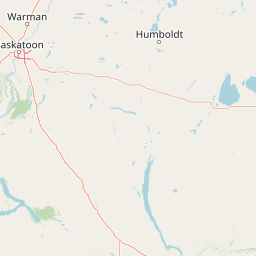
Map view of Sutherland Migratory Bird Sanctuary

Use this park location map to pinpoint Sutherland Migratory Bird Sanctuary in United Kingdom, understand its exact geographic position, and read its mapped placement within the surrounding landscape more clearly.

Pigeon | © OpenStreetMap contributors

Location context for Sutherland Migratory Bird Sanctuary

ScotlandSutherland
Recorded earthquake history

Review the Historical Earthquake Catalogue for Zugvogelschutzgebiet Sutherland

Browse the comprehensive collection of recorded seismic events associated with the geography of Zugvogelschutzgebiet Sutherland. MoriAtlas provides this structured catalogue to help researchers and enthusiasts track regional seismic history through accurate event metrics and mapped distance calculations.

Zugvogelschutzgebiet Sutherland Earthquake Records

Catalogued events

1 event

Strongest magnitude

Magnitude 3.1

Most recent event

Nov 29, 2001

This history includes earthquakes recorded inside the park or within 50 km of its borders

Park atlas

Compare regional park geography and adjacent wildlife sanctuaries

Explore Parks Near Zugvogelschutzgebiet Sutherland and Surrounding Protected Landscapes

Continue browsing other protected areas near Zugvogelschutzgebiet Sutherland to examine regional prairie habitats and wetland sanctuaries. Comparing these connected conservation zones reveals broader patterns in regional park geography and wildlife migration routes.
Wildlife reserveSaskatchewan
About 34 km away#1 closest

East

St. Denis National Wildlife Area: Geographic Profile and Protected Prairie Landscape

A research-focused wildlife reserve in central Saskatchewan.

St. Denis National Wildlife Area represents a critical nexus for prairie ecology, defined by its dense network of shallow ponds and native grassland communities. As a dual-designated National Wildlife and Research Area, this site offers a clear window into the delicate balance of wetland habitats, saline soil conditions, and agricultural landscape integration across Saskatchewan.

Area
3.6 km²
Established
1967
IUCN
IV
Wildlife reserveSaskatchewan
About 87 km away#2 closest

Southwest

Harris Sandhills National Wildlife Area: Saskatchewan Protected Prairie Geography and Map

Mapped wildlife reserve within the Canadian prairie region.

This protected area in Saskatchewan showcases a distinct mosaic of stabilized dunes and native mixed-grass prairie. Understand its geographic significance as a sanctuary for migratory birds and rare prairie species within the expansive plains of Canada. The reserve offers a focused look at small-scale conservation landscapes through its defined physical boundaries and varied topographic features.

Area
3.7 km²
Established
2025
IUCN
IV
Relief
Lowland
Wildlife reserveSaskatchewan
About 99 km away#3 closest

Northwest

Thickwood Hills National Wildlife Area: Geography and Protected Landscape Analysis

A study of transitional Saskatchewan prairie and aspen ecosystems

Located northeast of Blaine Lake, this Canadian wildlife reserve encompasses a precise 299-hectare footprint. The site serves as a vital example of regional conservation, maintaining wetlands and native grasslands that define the transition between open prairie and northern boreal forest landscapes.

Area
2.99 km²
Established
2025
IUCN
IV
Relief
Lowland
Wildlife reserveSaskatchewan
About 112 km away#4 closest

East

Raven Island National Wildlife Area: Geographic Overview and Protected Island Landscape

Essential conservation geography within Saskatchewan

Located in the saline prairie basins of central Saskatchewan, Raven Island National Wildlife Area is a 112-hectare protected habitat. This site plays a strategic role in the Lenore Lake migratory bird complex, preserving crucial island breeding grounds within a gentle prairie landscape. Explore the physical boundaries and ecological context of this Canadian wildlife reserve.

Area
1.12 km²
Established
1982
IUCN
IV
Scope
Terrestrial
Wildlife reserveSaskatchewan
137 km away#5 closest

Northwest

Scent Grass Lake Migratory Bird Sanctuary: Regional Geography and Wetland Protected Area Maps

Key waterfowl breeding and molting ground in Saskatchewan.

Examine the ecological significance of Scent Grass Lake Migratory Bird Sanctuary, a critical wildlife reserve within the Saskatchewan Aspen Parkland. This protected area offers essential open water and sedge marsh environments for migratory waterfowl, serving as a vital staging and breeding site that maintains regional habitat stability in the Canadian prairies.

Area
6.47 km²
Established
1948
IUCN
IV
Relief
Lowland
National parkSaskatchewan
158 km away#6 closest

North

Prince Albert National Park: Saskatchewan National Park and Protected Area Geography

Mapped Landscape Boundaries and Regional Natural Terrain Context

Prince Albert National Park represents a distinct national park entity within Saskatchewan, vital for understanding regional geography and protected landscapes. This page offers detailed insights into its mapped boundaries and the surrounding natural terrain. It is designed to help users comprehend the park's specific protected area identity and its contribution to the broader geographic atlas of Canada's natural spaces.

Area
3,874 km²
Established
1927
IUCN
II
Visitors
287.4K annual
Wildlife reserveSaskatchewan
236 km away#7 closest

Southeast

Wascana Lake Migratory Bird Sanctuary: Geographic Overview and Protected Wetland Boundaries

A vital wildlife reserve located in Regina, Saskatchewan

Explore the unique geography of Wascana Lake Migratory Bird Sanctuary, where a managed reservoir creates a rich wetland habitat for migratory waterfowl. This protected area stands as a significant ecological site within the Saskatchewan prairie landscape, offering a rare look at riparian terrain integration inside a major urban center.

Area
1.04 km²
Established
1956
Relief
Lowland
Climate
Temperate
Wildlife reserveSaskatchewan
About 252 km away#8 closest

Southwest

Great Sandhills National Wildlife Area: Saskatchewan Protected Dune and Prairie Landscapes

Mapping the natural features and protected boundaries of this significant wildlife reserve.

The Great Sandhills National Wildlife Area represents a vital contemporary conservation effort in southwestern Saskatchewan. It encompasses a compact but biologically dense mosaic of stabilized dune fields, native mixed-grass prairie, and alkaline wetland basins. This protected area stands as a representative example of Canada's evolving strategy to preserve the most ecologically significant parcels of the prairie landscape, offering deep insights into the region's specific terrain and habitat patterns.

Area
4.7 km²
Established
2025
IUCN
IV
Relief
Lowland

Common questions about visiting, size, designation, and location context for Sutherland Migratory Bird Sanctuary

Sutherland Migratory Bird Sanctuary FAQs for park facts, access, geography, and protected area context

Find quick answers about Sutherland Migratory Bird Sanctuary, including protected-area facts, park geography, trail and visitor context, and how the park fits into its surrounding country and regional landscape.
MoriAtlas Explorer

Continue Your Protected Areas Search Across the Global Atlas

Deepen your exploration by continuing the structured search for national parks and protected areas worldwide. Utilize the comprehensive filtering capabilities to compare different conservation landscapes and refine your understanding of global park geography. Discover more about the distribution and characteristics of protected natural areas.

Global natural geography