
Why Black Bulga State Conservation Area stands out
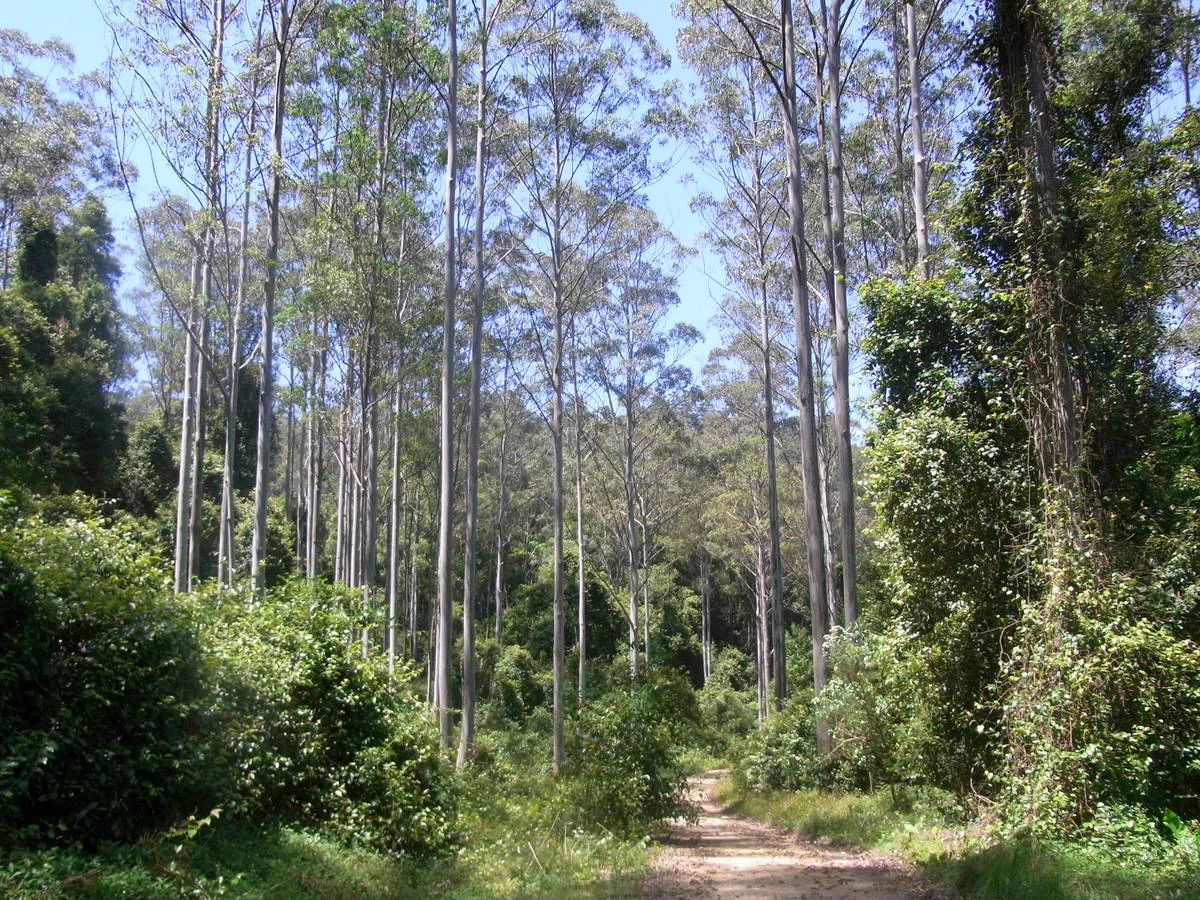
Black Bulga is best known for its tall wet sclerophyll forest dominated by Sydney blue gum, tallowwood, white mahogany, and spotted gum, together with lower-elevation subtropical rainforest patches containing species such as Australian red cedar. The reserve is also notable for its community-led conservation history, having been created in 2003 through local advocacy and later defended against a 2013 proposal to permit logging within New South Wales state conservation areas. The landscape combines forested ridges, sheltered gullies, and higher-altitude grassy understorey punctuated by grass trees, giving the reserve a layered character typical of the transition zone between the coastal lowlands and the Barrington Tops plateau.
Black Bulga State Conservation Area history and protected-area timeline
Black Bulga State Conservation Area has a relatively recent formal protection history. Land that now forms the reserve was previously part of Trevor State Forest and Chichester State Forest, areas that had been used over many decades for timber harvesting. In 2003, the area was converted into a State Conservation Area under the management of the NSW National Parks and Wildlife Service, following sustained local advocacy.
A community-based group known as the Black Bulga Range Action Group played a central role in the reserve's creation. Composed of local residents and concerned individuals, the group campaigned for the formal protection of what they regarded as a unique bushland area, and their efforts underpinned the 2003 gazettal of the conservation area.
The reserve's protected status was tested again in 2013, when the Government of New South Wales recommended allowing logging within national parks and considered changes affecting state conservation areas. The Black Bulga Range Action Group was again active during this period, working to ensure the continued protection of the area. Their efforts were ultimately successful, and the reserve retained its conservation status. The episode highlighted both the contested history of forest use in the Hunter region and the role of community-led groups in defending small but ecologically significant bushland reserves.
Black Bulga State Conservation Area landscape and geographic character
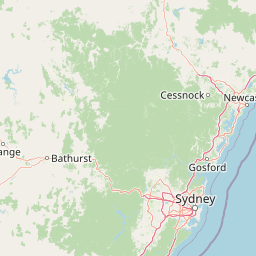
The landscape of Black Bulga State Conservation Area is shaped by the transition between coastal lowlands and the higher country of the Barrington Tops. The terrain is undulating, with forested ridges, sheltered valleys, and small creek lines that support a varied forest structure across the reserve.
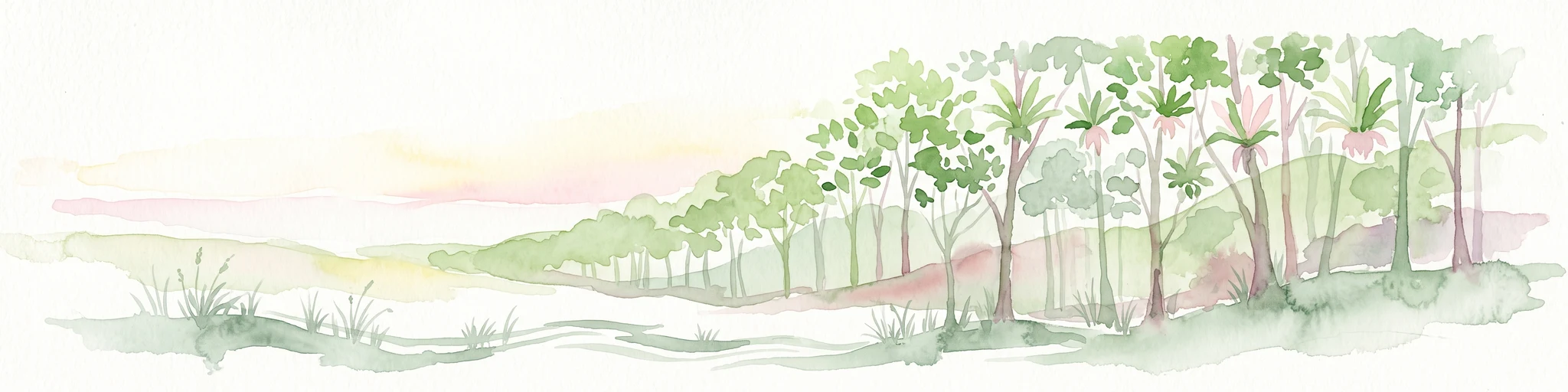
On the broader slopes, the bushland is dominated by tall wet sclerophyll forest, in which large eucalypts rise above a ferny understorey. Heavier soils and moister, sheltered gullies support pockets of subtropical rainforest, where broad-leaved species create a denser, more closed canopy quite distinct from the taller eucalypt forest around it. At higher altitudes within the reserve, the understorey takes on a grassier character, with tall grass trees rising among the eucalypts and producing a more open, layered woodland appearance.
The reserve's position near the Barrington Tops foothills means that topography, soils, and elevation interact across short distances, leading to abrupt shifts between forest types within a relatively compact area. This variety of landforms, from ridgelines to sheltered gullies and elevated grassy ridgelines, gives Black Bulga a layered and ecologically diverse physical setting despite its modest overall size.
Black Bulga State Conservation Area ecosystems, habitats, and plant life
Black Bulga protects a representative cross-section of wet sclerophyll eucalyptus forest typical of the Hunter region, together with smaller patches of subtropical rainforest that take advantage of the moister, sheltered microclimates within the reserve. The dominant vegetation type is wet sclerophyll forest, which combines a tall overstorey of large eucalypts with a moist, fern-rich understorey.
The eucalypt overstorey includes species such as Sydney blue gum, tallowwood, white mahogany, and spotted gum, all of which have been historically important timber trees in the surrounding state forests. Although the forest had been logged in earlier decades, regeneration of Sydney blue gum and related species is now a prominent feature of the canopy across much of the reserve, and the woodland structure has gradually recovered under protection.
Rainforest communities are concentrated in gullies and other sheltered sites, where Australian red cedar, scentless rosewood, native tamarind, citronella, and rose maple contribute to a distinctly different forest type within the conservation area. At higher elevations, tall grass trees add a grassy woodland character to the bushland. The presence of these varied vegetation types within a relatively small area gives Black Bulga considerable ecological diversity and makes it a useful site for understanding forest transitions on the western edge of the New South Wales coastal forest belt.
Black Bulga State Conservation Area wildlife and species highlights
Wildlife at Black Bulga reflects the broader character of wet sclerophyll forest in the Hunter region, with a mix of arboreal marsupials, ground-dwelling herbivores, and other forest animals that depend on the tall eucalyptus canopy and the sheltered rainforest patches within the reserve.
Koalas inhabit the forested parts of the conservation area, where the tall eucalypts provide both food and shelter. Eastern grey kangaroos and red-necked wallabies are among the more conspicuous ground-dwelling mammals, moving through the more open grassy woodland edges and between stands of forest. Greater gliders, which depend on old-growth hollows and a connected canopy, are also recorded in the area, highlighting the importance of large mature trees in the reserve's ecology.
Beyond these headline species, the wider wet sclerophyll and rainforest habitats support typical east Australian forest fauna. The combination of tall eucalypt forest, sheltered rainforest pockets, and grass tree woodland at higher altitudes creates a range of habitat niches, allowing Black Bulga to support a richer mix of forest animals than its relatively small size might suggest.
Black Bulga State Conservation Area conservation status and protection priorities
Black Bulga State Conservation Area represents a meaningful conservation outcome for wet sclerophyll forest in the Hunter Region. Prior to its 2003 designation, the area was part of active state forest and had been logged for its commercially valuable eucalypts. Its conversion to a State Conservation Area halted further timber harvesting and placed the remaining forest and rainforest patches under formal protection, allowing natural regeneration processes to continue.
The reserve's conservation significance is enhanced by the presence of both wet sclerophyll eucalyptus forest and smaller rainforest communities, which together provide habitat for a mix of forest-dependent species. Species such as the greater glider, which relies on mature trees with hollows, benefit from the retention of older growth forms and the cessation of active logging.
The 2013 episode, in which the reserve's status came under review during a broader New South Wales debate about logging in national parks and state conservation areas, underscored both the political vulnerability of small bushland reserves and the effectiveness of organised community advocacy in protecting them. The successful defence of Black Bulga's protected status has come to symbolise the role that local groups can play in maintaining the long-term integrity of the conservation estate in the Hunter region.
Black Bulga State Conservation Area cultural meaning and human context
Black Bulga's cultural significance is closely tied to the history of forestry in the Chichester and Trevor State Forests and to the local community that organised around the reserve's creation and defence. The Black Bulga Range Action Group, formed by local residents and concerned individuals, gave the reserve a distinctive grassroots identity within the broader landscape of New South Wales forest politics.
The reserve is part of the Hunter Region's broader story of tension between timber harvesting and conservation, a debate that has shaped the region's forests for decades. Black Bulga sits on the margins of that debate, having moved from being part of working state forest to being a community-protected bushland reserve, reflecting a shift in how local bushland has come to be valued within the region.
Top sights and standout views in Black Bulga State Conservation Area
Among the reserve's standout features are its tall wet sclerophyll eucalyptus forest, including regenerating Sydney blue gum stands; the smaller but ecologically important patches of subtropical rainforest; the presence of characteristic forest wildlife such as koalas, eastern grey kangaroos, red-necked wallabies, and greater gliders; and its setting near the foothills of the Barrington Tops.
The reserve is also notable for its community-led conservation history, having been created through local advocacy in 2003 and successfully defended during a 2013 review of logging in New South Wales state conservation areas. Together, these features make Black Bulga a compact but ecologically rich example of community-driven bushland protection in the Hunter.
Best time to visit Black Bulga State Conservation Area
Black Bulga's character shifts with the seasons in ways typical of the wet sclerophyll forests of the Hunter region. Cooler months generally bring crisper conditions, milder temperatures in the lower valleys, and a more open atmosphere under the tall eucalypts, while warmer months bring lusher understorey growth and more active wildlife movement. Spring often produces a striking mix of fresh leaf growth and flowering events in the eucalypt canopy, while autumn tends to settle into calmer, drier conditions that make the grassy higher-elevation woodland particularly accessible. The dense rainforest pockets remain shaded and humid year-round, offering a different atmosphere regardless of season.