Why Børgefjell National Park stands out
Børgefjell is best known as the primary stronghold for the rare Arctic fox in Norway, though the wolverine is actually the most common large predator in the park. The park's dramatic granite mountain landscape, particularly around Kvigtinden and Jetnamsklumpen, represents some of the most impressive alpine terrain in northern Norway. The extreme remoteness and lack of development distinguish this park from most other Norwegian protected areas, offering a genuine wilderness experience where visitors can spend days hiking without seeing another person.
Børgefjell National Park history and protected-area timeline
The human history of Børgefjell stretches back centuries, with the Sami people maintaining continuous presence in the region for at least 500 years. The Sami controlled the land right up until the beginning of the twentieth century, establishing settlements and hunting stations throughout what is now the national park and the adjacent border areas. These cultural monuments remain visible today as evidence of the deep historical connection between indigenous peoples and this landscape. The first Norwegian farms appeared at the end of the eighteenth century and the beginning of the nineteenth century, driven by land scarcity elsewhere in Norway that pushed settlers northward into this challenging terrain. Norwegian settlement gradually increased from this period onward, though the region's remoteness limited substantial development. Børgefjell was originally established as a national park in 1963, representing Norway's commitment to preserving this wilderness area. The park was subsequently enlarged in 1973 and again in 2003, expanding protection to additional land and consolidating the boundary to its current extent.
Børgefjell National Park landscape and geographic character
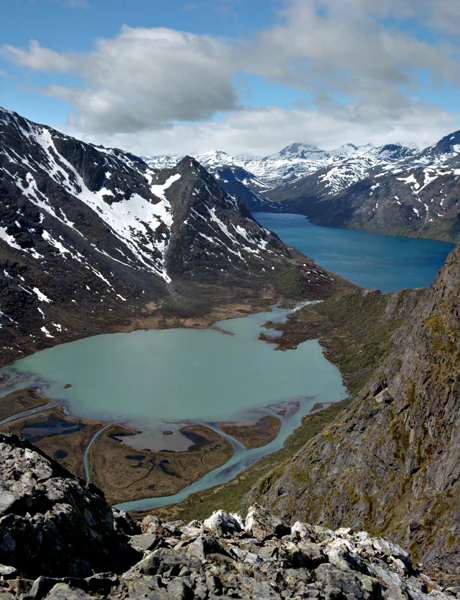
The physical landscape of Børgefjell National Park presents a striking contrast between dramatic alpine terrain and more gentle wetland environments. The western mountain regions feature rough, dark granite peaks and grey ridgelines with sparse vegetation, creating an almost stark, desolate atmosphere across the high terrain. Sub-glacial moraines cover extensive portions of the landscape, testament to the glacial processes that shaped this region. In contrast, the eastern and southern areas feature more fertile mountain slopes and extensive marshland systems. The park contains numerous lakes and ponds of varying sizes, along with rushing rivers that drain the high terrain. The Rainesfjellet area exemplifies the park's rugged character, with rough stone screes lacking vegetation covering steep slopes. The highest points concentrate in the west where the Børgefjell granite bedrock predominates, while the terrain becomes progressively lower and more gently contoured toward the east.
Børgefjell National Park ecosystems, habitats, and plant life
Børgefjell supports approximately 300 different plant species within its boundaries, distributed across distinct ecological zones defined by elevation and terrain. The tree line occurs at around 500 to 600 meters above sea level, with birch forest forming the dominant tree cover below this elevation. Spruce and pine trees also occur in suitable locations, particularly in valleys and on more protected slopes. Above the tree line, the landscape transitions to alpine meadows and eventually to bare rock and permanent snow fields on the highest peaks. The marshlands and wetlands that characterize portions of the park represent important ecological zones, supporting distinctive plant communities adapted to waterlogged conditions. The extensive reindeer grazing throughout the park, particularly in the western, eastern, and southern areas used seasonally and the northern areas used year-round, creates a dynamic interaction between traditional land use and natural ecosystems.
Børgefjell National Park wildlife and species highlights
Børgefjell harbors a remarkable assemblage of wildlife, with the Arctic fox representing the park's most famous resident despite being rare throughout its range. The wolverine, though less celebrated, is actually the most common large predator present in terms of numbers. Additional large predators include the Eurasian lynx and brown bear, both of which maintain populations within the park boundaries. Smaller predators are well represented, with red fox, least weasel, European pine marten, and stoat all present. The Eurasian otter occasionally appears near water bodies. The park supports significant bird populations, including willow ptarmigan and rock ptarmigan as characteristic species. Birds of prey are represented by the rough-legged buzzard, which is common throughout the park, along with the occasional snowy owl and golden eagle. All of Børgefjell serves as domestic reindeer grazing habitat, with reindeer from Sweden also utilizing the eastern portions of the park.
Børgefjell National Park conservation status and protection priorities
Børgefjell National Park holds significant conservation value as Norway's primary habitat for the endangered Arctic fox, a species that has suffered severe population declines across its range. The park's extensive size and extreme remoteness provide the large, intact territories that large predators like wolverines, lynx, and bears require. The designation as a Category II protected area under the IUCN framework recognizes the park's role in preserving natural ecosystems while allowing for sustainable use by local Sami reindeer herding communities. The park's undeveloped character, with minimal trail infrastructure and no significant tourist facilities, represents an intentional management approach that prioritizes ecological integrity over visitor access. This wilderness protection model ensures that the natural processes and wild populations that define Børgefjell's ecological character can continue with minimal human disturbance.
Børgefjell National Park cultural meaning and human context
The Sami people maintain a profound historical connection to the Børgefjell landscape, having controlled this territory for centuries and continuing traditional reindeer herding practices within the national park boundaries. The park name itself reflects this heritage, with the Southern Sami name 'Byrkije vaarjelimmiedajve' preserving the indigenous linguistic identity of the region. Sami cultural monuments in the form of settlements and hunting stations remain visible throughout the park and surrounding border areas, representing physical evidence of centuries of traditional land use. Reindeer grazing has occurred in this landscape for at least 500 years, creating a cultural landscape where human activity and ecological processes have co-evolved. This living cultural tradition continues today, with the western, eastern, and southern portions of the park serving as summer grazing areas while the northern sections support year-round reindeer husbandry.
Top sights and standout views in Børgefjell National Park
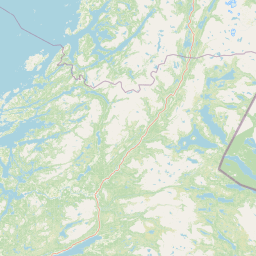
Børgefjell offers exceptional wilderness solitude in Norway's most extensive undeveloped mountain parks, with visitors able to hike for days without encountering another person. The dramatic granite peaks of Kvigtinden and Jetnamsklumpen provide spectacular alpine scenery and challenging climbing opportunities. The rare Arctic fox remains the park's most iconic species, though sighting requires patience and luck. The extensive marshland systems and network of lakes create diverse habitats supporting over 300 plant species. The park's location along the Norwegian-Swedish border adds historical dimension, with the Old Norse name 'byrgi' referencing fort-like structures once used for border control and tax collection from Sami peoples.
Best time to visit Børgefjell National Park
The summer months from June through August offer the most accessible conditions for hiking and wildlife observation in Børgefjell, with the tree line and higher terrain snow-free and temperatures suitable for extended backcountry travel. The midnight sun of the polar summer provides extended daylight hours for exploration. Autumn in September and October brings the characteristic golden birch forests and potential for aurora borealis viewing in clear skies, though conditions become increasingly unpredictable. Winter visits require substantial expertise and preparation for extreme cold, short daylight hours, and challenging snow conditions, but offer exceptional solitude and the possibility of observing Arctic foxes and wolverines in their winter coats. Spring arrives late to this northern latitude, with May often still featuring significant snow cover at higher elevations.