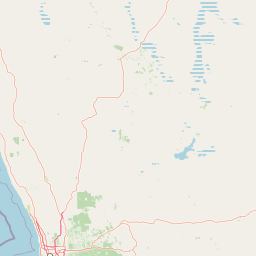
Why Charles Darwin Reserve stands out
Charles Darwin Reserve is best known for protecting a large, intact mosaic of old-growth eucalypt woodland and sand-plain heath in a landscape where such habitats have largely been cleared for farming. Its old hollow-bearing York gum and salmon gum trees provide nesting and shelter resources that are increasingly scarce across the Wheatbelt. Equally important is the reserve's role in conservation of the malleefowl, a ground-dwelling bird that depends on large tracts of intact mallee and woodland habitat and which has declined sharply across much of southern Australia. The reserve's recognition as part of a BirdLife International Important Bird Area underlines the broader importance of the site for arid- and mallee-restricted birdlife, while its sheer size offers some of the most unfragmented habitat left in the region.
Charles Darwin Reserve history and protected-area timeline
Before its acquisition as a conservation reserve, the land that is now Charles Darwin Reserve operated as Whitewells Station, a pastoral lease used for grazing in the Western Australian Wheatbelt. Like much of the surrounding region, it sat within a landscape that had been progressively altered by agricultural use since European settlement, although portions of native woodland and heath survived intact.
In 2003, the property was purchased by Bush Heritage Australia, a non-profit organisation dedicated to acquiring and managing land for the long-term protection of Australia's native species and habitats. The acquisition was partly supported by a donation from Chris Darwin, great-great-grandson of Charles Darwin, the 19th-century English naturalist whose observations helped lay the foundations of evolutionary biology. Following the purchase, the property was renamed Charles Darwin Reserve in his honour.
Since then, Bush Heritage Australia has managed the reserve as a conservation asset, removing it from the pastoral lease system and allowing ecological processes to be restored. Its integration, for conservation planning purposes, with the neighbouring Mount Gibson Sanctuary and its formal recognition as part of the Mount Gibson and Charles Darwin Important Bird Area mark the reserve's transition from a working pastoral property into a regionally and internationally significant biodiversity refuge.
Charles Darwin Reserve landscape and geographic character
Charles Darwin Reserve sits on the undulating plains of the north-eastern Wheatbelt, where ancient weathering has produced broad sand-plains interspersed with rises of heavier soils. The terrain is generally low and gently rolling rather than mountainous, with the visual character defined by extensive woodland canopy broken by patches of low heath, areas of bare or sparsely vegetated sand-plain, and transitional edges where one vegetation type meets another.
The climate sets the rhythmic backdrop for this landscape. With winter-dominated rainfall averaging around 282 millimetres a year and a semi-arid Mediterranean pattern of cool, wet winters and hot, dry summers, plant communities are adapted to long seasonal droughts punctuated by relatively short, dependable wet periods. This seasonal pulse strongly influences growth, flowering, and seed production, and contributes to the often open, parkland-like character of the woodland in which individual tree canopies stand clear of a diverse understorey.
Sand-plain areas feature low shrubs, herbs, and ground covers adapted to nutrient-poor soils, while the heavier-soil rises support more substantial York gum and salmon gum woodland with mature trees of significant age. Among the most distinctive of these are old-growth salmon gums, whose smooth, salmon-coloured trunks and gnarled forms give the woodland a sculptural quality. Hollows and dead limbs in these veteran trees contribute to the physical complexity of the landscape, providing niches for cavity-nesting birds, mammals, and reptiles across an otherwise relatively simple topography.
Charles Darwin Reserve ecosystems, habitats, and plant life
The reserve's ecological identity lies in the juxtaposition of two botanical provinces. Most of the reserve falls within the South West Botanical Province, characterised by eucalypt woodlands and heath communities typical of southwestern Australia, while its northern sections extend into the Eremean Province, where vegetation transitions toward the drier, more arid-adapted communities of the Australian interior. This overlap creates a zone of mixed floral influence with elements drawn from both regions.
York gum and salmon gum woodlands form the backbone of the reserve's vegetation. York gum is associated with heavier red and brown soils and often occurs as a medium-sized tree with a spreading canopy, while salmon gum typically grows on lighter soils and valley sites, producing striking stands of smooth-barked mature trees. Together, these woodlands are layered over an understorey of shrubs, grasses, and smaller eucalypts, including mallee species whose multi-stemmed habit signals drier, more exposed conditions.
Sand-plain heath contributes a contrasting habitat. These plains support low, often diverse shrublands with species representing numerous southwestern Australian plant families, including wattles, myrtles, and pea-flowered shrubs. In spring, following good winter rains, sand-plain heath communities are well known for spectacular flowering displays. The combination of woodland, heath, and sand-plain gives the reserve a habitat mosaic in which different plant communities meet and intergrade, supporting ecological processes and species combinations that are difficult to replicate in smaller or more uniform reserves.
Charles Darwin Reserve wildlife and species highlights
The reserve's wildlife is closely tied to the structure of its old-growth woodlands and the integrity of its sand-plain heath. Mature trees with hollows and fallen timber provide shelter, nesting sites, and foraging substrates for a wide range of birds and mammals, while the open ground between trees supports ground-foraging and ground-nesting species that depend on large, continuous blocks of habitat.
Birds are among the reserve's most studied and ecologically important fauna groups. The malleefowl, a large ground-dwelling bird of the mallee and arid woodlands, is a particular focus of conservation interest because of its dependence on extensive stands of intact vegetation and leaf-litter for mound-building and foraging. Other notable birds include Australian bustards, which stride across open plains and lightly wooded country; Major Mitchell's cockatoos, recognised by their pink-and-white plumage and yellow crests; peregrine falcons, using woodland edges and open airspace for hunting; crested bellbirds, whose far-carrying calls ring through the shrublands; and the Wheatbelt form of the white-browed babbler, a social, ground-feeding passerine.
Mammals recorded on the reserve include short-beaked echidnas, which forage among leaf-litter and sandy soils for ants and termites; euros, the hill-adapted wallaroos that shelter in rocky or sheltered sites and graze on surrounding vegetation; and red kangaroos, the largest of Australia's macropods, which move across open woodland and plains. The presence of these medium- to large-sized mammals in relatively intact numbers reflects the reserve's role as a refuge in a landscape where smaller remnants often cannot sustain viable populations of such species.
Charles Darwin Reserve conservation status and protection priorities
Charles Darwin Reserve is one of the most significant privately protected areas in the Western Australian Wheatbelt, a region where clearing for agriculture has left native vegetation highly fragmented. By incorporating several hundred thousand hectares of contiguous habitat under a single conservation management regime, the reserve helps preserve ecological processes and species populations that cannot survive in scattered remnants.
The reserve's conservation profile is strongly shaped by BirdLife International. Together with the neighbouring Mount Gibson Sanctuary, Charles Darwin Reserve forms a substantial portion of the 2,335 square kilometre Mount Gibson and Charles Darwin Important Bird Area. This designation reflects the site's importance for malleefowl and western corellas, as well as for additional species restricted to arid or mallee biomes. The reserve's recognition under this international framework highlights its contribution not just to local conservation but to broader efforts to safeguard bird diversity across Australia's arid and semi-arid zones.
Management by Bush Heritage Australia focuses on maintaining the reserve's ecological values through active threat abatement and ongoing monitoring. Priorities include managing pressures from introduced species such as goats and foxes, reducing the impact of inappropriate fire regimes, maintaining the integrity of old-growth vegetation, and monitoring key indicator species like malleefowl. The reserve also functions as a reference site for researchers and conservation managers interested in understanding how large blocks of Wheatbelt woodland and sand-plain habitat recover and persist when returned to dedicated conservation management.
Charles Darwin Reserve cultural meaning and human context
The cultural context of Charles Darwin Reserve is layered. The land carries a long history of Indigenous connection and use prior to European settlement, embedded in a wider southwestern Australian landscape of deep Aboriginal ecological knowledge, language, and seasonal movement. While specific traditional associations of the Whitewells Station area are not detailed in the available source material, the reserve sits within Country whose broader cultural heritage is significant and ongoing.
More recently, the reserve's identity has been shaped by two modern threads. The first is its pastoral history as Whitewells Station, a working property within the Western Australian wool and wheat economy that defined much of the Wheatbelt's settlement era. The second is its renaming following Bush Heritage Australia's 2003 purchase, when a donation from Chris Darwin, great-great-grandson of Charles Darwin, helped convert former pastoral land into a conservation asset named in honour of the famous naturalist whose work helped transform humanity's understanding of life on Earth. Together, these layers give the reserve a character that bridges regional agricultural heritage, modern private conservation philanthropy, and the international cultural legacy of Charles Darwin's scientific contributions.
Top sights and standout views in Charles Darwin Reserve
• A 686 square kilometre private nature reserve representing one of the largest consolidated blocks of relatively intact habitat remaining in the Western Australian Wheatbelt.
• Old-growth York gum and salmon gum woodlands with hollow-bearing mature trees that support a wide range of woodland-dependent wildlife.
• Sand-plain heath and mallee shrublands that contribute a striking habitat mosaic drawn from both the South West Botanical Province and the Eremean Province.
• Together with Mount Gibson Sanctuary, the reserve forms a BirdLife International Important Bird Area recognised especially for malleefowl and western corellas, alongside other arid- and mallee-restricted bird species.
Best time to visit Charles Darwin Reserve
Like much of inland southwestern Australia, Charles Darwin Reserve has a Mediterranean climate in which the cooler, wetter winter and spring months typically offer the most comfortable conditions for outdoor activity. Winter, from roughly June through August, brings the bulk of the annual rainfall and cooler daytime temperatures, softening the landscape and supporting green growth across woodlands and heath.
Spring, from roughly September through November, is often considered the most rewarding season for natural-history viewing. Following good winter rains, sand-plain heath communities can flower prolifically, and the wildlife of the reserve, including birds such as malleefowl and Major Mitchell's cockatoos, may be more active as temperatures warm but remain moderate. By contrast, summer brings heat, dryness, and a heightened risk of bushfire, which can make conditions less comfortable and access more restricted. Autumn generally sees a gradual drying of the landscape, with warm days and cool nights preceding the next winter rainfall cycle.