

Mori Atlas logo
National parkDrovers Cave National Park

Explore the geographic boundaries and natural terrain of this key national park.

Drovers Cave National Park: Mapped Protected Landscape in Western Australia

Drovers Cave National Park represents a distinct protected landscape within the vast geography of Western Australia. This national park offers a focused entry point for understanding its mapped boundaries, natural terrain, and regional significance. As a protected area, it contributes to the diverse geographic context of Australia, providing a unique site for atlas-driven exploration of its ecological and geological features within a broader regional setting.

limestone cavesWestern Australian WheatbeltCanning Stock Route heritagekarst landscapeAustralian national parkscave conservation

Drovers Cave National Park

National park

Park overview

Structured park overview, official facts, and landscape profile for Drovers Cave National Park

Drovers Cave National Park park facts, protected area profile, and essential visitor context
Review the core facts for Drovers Cave National Park, including designation, size, terrain, visitor scale, habitats, and operating context in one park-focused overview.

About Drovers Cave National Park

Drovers Cave National Park occupies a unique position in Western Australia's protected area estate as a cave-dominated landscape within the agricultural Wheatbelt region. The park's limestone geology has created an extensive underground cave system that stands in contrast to the more typical flat, agricultural landscapes surrounding it. The area's proximity to the Canning Stock Route, one of Australia's most historic stock routes, cemented its importance as a rest stop for drovers moving cattle and sheep between the desert interior and the coast. Today the park provides a window into both the geological processes that shaped the region and the pastoral history of Western Australia's interior. The management approach balances access to the caves with safety considerations, as the underground passages can pose risks to unprepared visitors.

Quick facts and research context for Drovers Cave National Park

Drovers Cave National Park covers 26.81 square kilometres of Western Australia's Wheatbelt region, located 201 kilometres northwest of Perth with Jurien Bay as the nearest town six kilometres to the west. The park is centred on a limestone cave system that was well known to early explorers and stockmen, with the first documented drover visit recorded in 1886. The park contains several named caves including Hastings, Moora, Old River and Mystery Caves, with Hastings cave known to contain fossils. The protected area supports Mediterranean-type scrub and woodland vegetation and is home to emus, various marsupials including honey possums and western grey kangaroos, and bird species such as Australian bustards.

Park context

Deeper park guide and search-rich context for Drovers Cave National Park

Drovers Cave National Park history, landscape, wildlife, and travel context
Explore Drovers Cave National Park through its history, landscape character, ecosystems, wildlife, conservation priorities, cultural context, and seasonal travel timing in a structured park guide built for atlas discovery and search intent.

Why Drovers Cave National Park stands out

Drovers Cave National Park is best known for its limestone cave system, which is unusual for the Wheatbelt region and represents a distinctive geological feature in this part of Western Australia. The caves, particularly Drovers Cave itself, hold historical significance as a resting point for drovers moving livestock along the Canning Stock Route during the late 19th and early 20th centuries. The park's name directly reflects this pastoral heritage. Hastings Cave within the park is notable for containing fossil deposits, adding a paleontological dimension to the site's significance.
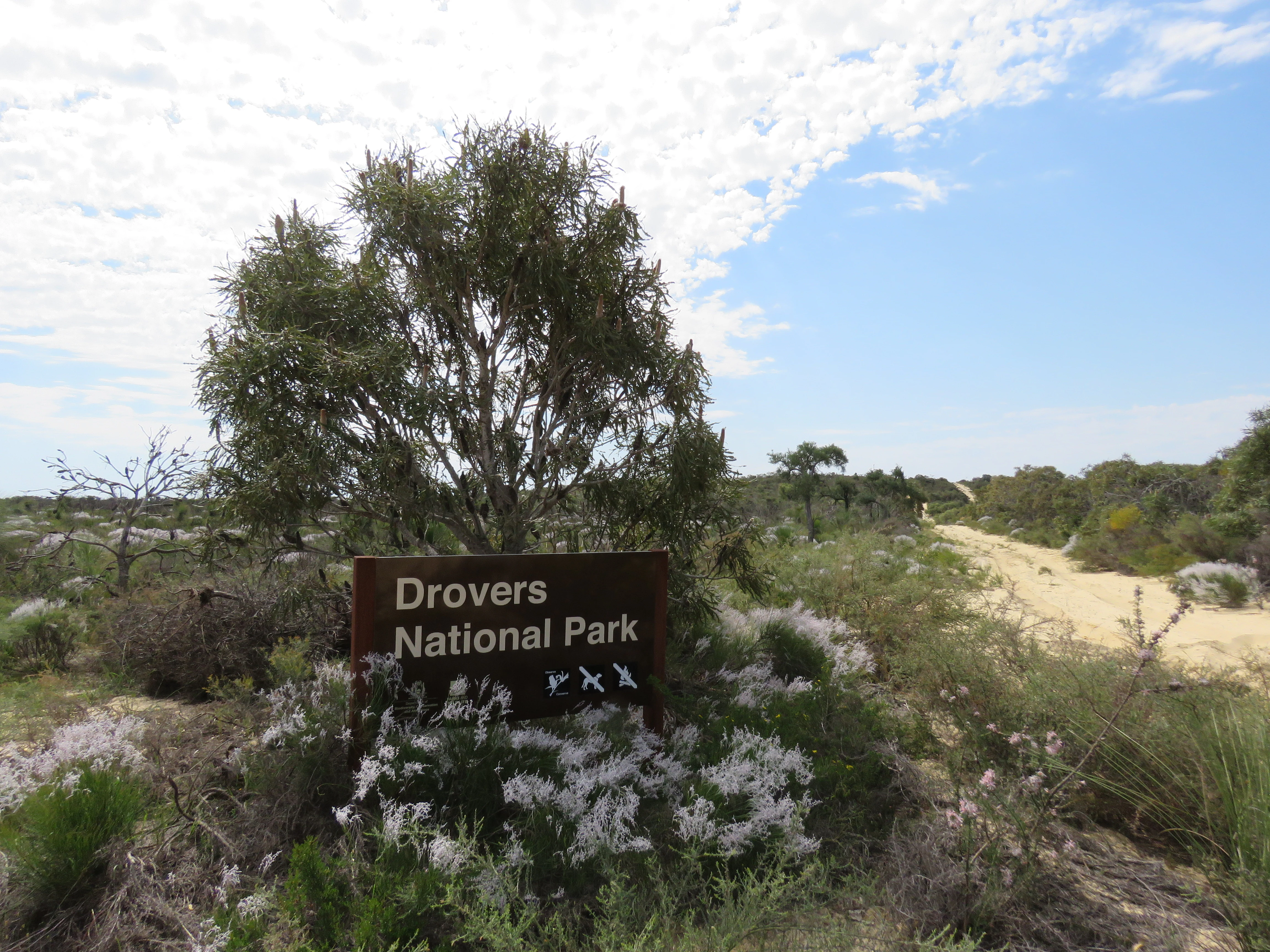
Brown sign reading 'Drovers Cave National Park' surrounded by white flowers and green vegetation with a dirt road and tree in the background
Entrance sign for Drovers Cave National Park with surrounding vegetation and a dirt road

Drovers Cave National Park history and protected-area timeline

The Drovers Cave area has a documented history of human visitation dating back to the late 19th century. The first known visit by a drover occurred in 1886, when a stockman signed the cave wall, leaving a record of his passage through the region. Between 1930 and 1940, the cave saw regular use by drovers and explorers moving through the area along the Canning Stock Route, which served as a vital link between the pastoral lands of the interior and the coastal settlements. The cave was formally surveyed in 1973, and following this assessment it was gazetted as part of Drovers Cave National Park that same year. The park was formally established in 1972, with the cave survey confirming its significance as a geological and historical site worthy of protection.

Drovers Cave National Park landscape and geographic character

The landscape of Drovers Cave National Park is defined by its limestone geology, which contrasts sharply with the surrounding Wheatbelt farmland. The limestone bedrock has been eroded over geological time to form a network of caves and underground passages, with Drovers Cave being the most prominent. The surface landscape features Mediterranean-style scrub and low woodland adapted to the semi-arid conditions of the region. The terrain is relatively flat, typical of the Wheatbelt, but the presence of cave entrances and karst features adds geological interest. The park sits at relatively low elevation within the region, with the limestone formations extending both at the surface and underground.

Drovers Cave National Park ecosystems, habitats, and plant life

The park supports scrub and woodland vegetation characteristic of the Western Australian Wheatbelt, adapted to the region's Mediterranean climate with wet winters and dry summers. Native flora includes shrub banksia species, one-sided bottlebrush and parrot bush, which provide habitat and food sources for the park's wildlife. The limestone environment creates specialized niches for flora adapted to the alkaline soils and the unique conditions of the cave entrances and overhangs. The park's vegetation forms an important remnant of native scrub in a region that has been extensively cleared for agriculture.

Drovers Cave National Park wildlife and species highlights

Drovers Cave National Park is home to a range of Australian wildlife adapted to the semi-arid conditions of the Wheatbelt. Mammals present include emus, which are a prominent feature of the landscape, honey possums, western pygmy possums, short-beaked echidnas and western grey kangaroos. The park also supports birdlife including Australian bustards, which are characteristic of open woodland and scrubland habitats. Reptiles are also present, reflecting the diverse faunal communities that persist in remnant vegetation patches within the agricultural landscape. The caves themselves provide shelter for various species, though the interior access is restricted for safety reasons.

Drovers Cave National Park conservation status and protection priorities

The park represents a conservation priority as a remnant of native vegetation and geological features within the heavily cleared Wheatbelt region of Western Australia. The limestone cave system provides habitat for specialized species and contains paleontological resources in the form of fossils found in caves such as Hastings Cave. The management approach, which includes securing cave entrances with screens, reflects the dual goals of protecting public safety and preserving the caves from vandalism. The protection of the cave system also safeguards the historical heritage associated with the Canning Stock Route and early droving activities in the region.

Drovers Cave National Park cultural meaning and human context

Drovers Cave National Park carries significant cultural heritage value related to the droving tradition that was central to Western Australia's pastoral industry. The Canning Stock Route, which passes near the park, was one of Australia's most important early stock routes, enabling the movement of livestock from the inland pastoral stations to coastal markets. The cave provided a convenient stop for drovers travelling this route, and the practice of signing the cave wall by visitors has created a historical record of passage through the region. The park's name directly commemorates this droving heritage, making it a site where geological, natural and cultural histories intersect.

Top sights and standout views in Drovers Cave National Park

The limestone cave system at Drovers Cave National Park, with its network of passages including Hastings, Moora, Old River and Mystery Caves, represents the park's primary highlight. The historical connection to the Canning Stock Route and the droving tradition adds cultural significance that distinguishes this park from other Western Australian protected areas. Fossil deposits in Hastings Cave provide an additional layer of scientific interest, while the remnant native vegetation supporting wildlife including emus, kangaroos and honey possums offers nature observation opportunities.

Best time to visit Drovers Cave National Park

The best time to visit Drovers Cave National Park is during the cooler months of autumn and spring in Western Australia, when daytime temperatures are more comfortable for outdoor exploration. The Mediterranean climate of the Wheatbelt means that summer temperatures can be high, making outdoor activities less pleasant. Winter brings reliable rainfall which can affect access to some areas, though the park remains accessible. Visitors should be aware that cave access is restricted for safety reasons, with screens in place at many cave entrances.

Park location guide

Geography guide, regional context, and park location map for Drovers Cave National Park

Drovers Cave National Park park geography, regions, and map view in Australia
Understand where Drovers Cave National Park sits in Australia through a broader geographic reading of the surrounding landscape, nearby location context, and its mapped position within the national park landscape.

How Drovers Cave National Park fits into Australia

Australia is a constitutional monarchy and federal parliamentary democracy comprising six states and ten territories. With a population of nearly 28 million, it is one of the world's most urbanised countries, with most people concentrated on the eastern seaboard. The country has a high Human Development Index and is known for its cultural diversity, ancient Aboriginal heritage, and unique wildlife.

Wider geography shaping Drovers Cave National Park in Australia

Australia occupies the entire Australian continent, the island of Tasmania, and numerous smaller islands. It is the world's flattest and driest inhabited continent, featuring vast deserts in the interior (the Outback), tropical rainforests along the eastern coast, and a coastline bordering the Indian and Pacific Oceans.

Map view of Drovers Cave National Park

Use this park location map to pinpoint Drovers Cave National Park in Australia, understand its exact geographic position, and read its mapped placement within the surrounding landscape more clearly.

Pigeon | © OpenStreetMap contributors

Location context for Drovers Cave National Park

Western AustraliaWheatbelt

Visual Exploration of Western Australia's Unique Limestone Cave Systems and Arid Terrain

Drovers Cave National Park Photography, Landscapes, and Protected-Area Scenery
Explore a comprehensive visual gallery of Drovers Cave National Park, showcasing its distinctive limestone geology, intricate cave entrances, and characteristic Wheatbelt scrubland. These images offer valuable insight into the park's protected environments, diverse habitats, and unique ecological character, providing a deeper understanding of this notable Western Australian landscape.

Brown sign reading 'Drovers Cave National Park' surrounded by white flowers and green vegetation with a dirt road and tree in the background

Park atlas

Trace the unique karst geology and historical routes of the Wheatbelt, exploring protected areas across Western Australia's diverse landscapes.

Explore More National Parks Near Drovers Cave: Discover Western Australian Protected Areas
After exploring Drovers Cave National Park, continue your geographic discovery by browsing other protected areas and national parks located within Western Australia. Compare distinct landscapes, understand regional conservation efforts, and trace the spread of unique karst formations and historical droving routes across the state.
National parkWestern Australia

Lesueur National Park: Detailed National Park Atlas and Geographic Context

Explore the mapped protected landscape in Western Australia.

Lesueur National Park is a key protected area within the expansive geography of Western Australia. This resource provides detailed information on its national park status, mapped boundaries, and its significance within the regional atlas. Engage with the specific landscape identity of this protected territory and understand its role in the broader geographic context of Australia.

Area
272.35 km²
Established
1992
IUCN
II
Relief
Upland
Watercolor illustration of a landscape with green rolling hills and pink clouds
National parkWestern Australia

Nambul National Park: A Protected Landscape Within Western Australia's Geographic Context

Explore mapped boundaries and regional terrain context.

Nambul National Park represents a distinct protected area within the expansive geography of Western Australia. This detailed park page offers users an atlas-driven exploration of its identity as a national park, highlighting its mapped natural landscape and its regional significance. Understand the specific geographic features and protected land context that define Nambul National Park within Australia's largest state, fostering deeper geographic discovery.

Area
192.68 km²
Established
1994
IUCN
II
Relief
Upland
National parkWestern Australia

Alexander Morrison National Park: Discover Its Protected Landscape and Regional Geography

Mapped protected area boundaries and landscape context in Western Australia.

Alexander Morrison National Park represents a core protected natural landscape within Western Australia. As a national park, its identity is deeply tied to its mapped geographic extent and its role in the regional atlas. This destination provides a focused lens on a specific protected area, enabling users to understand its unique landscape features and its contribution to the conservation estate of Western Australia. Delve into its protected status and geographic orientation within Australia's largest state.

Area
85 km²
Established
1970
IUCN
II
Relief
Upland
National parkWestern Australia

Badgingarra National Park: Mapped Boundaries and Protected Landscape Exploration

Explore its national park designation and regional geography.

Delve into the protected landscape identity of Badgingarra National Park, a designated national park situated in Western Australia. This entry provides detailed atlas-level information, focusing on the park's geographic scope, mapped boundaries, and its significance as a protected natural area. Understand its terrain and regional context for a deeper appreciation of Western Australia's conservation landscapes.

Area
131.08 km²
Established
1973
IUCN
II
Relief
Mixed relief
National parkWestern Australia

Tathra National Park: Protected Landscape Identity and Mapped Geographic Boundaries

Western Australia national park exploration and regional context.

Delve into the protected landscape of Tathra National Park, a significant entity within Western Australia's network of natural areas. This detail provides a structured overview of its geographic position, mapped outlines, and ecological context, serving as a vital entry point for understanding Australia's diverse protected lands and regional geography.

Area
43.22 km²
Established
1970
IUCN
II
Relief
Upland
National parkWestern Australia

Watheroo National Park National Park: Mapping Protected Landscapes in Western Australia

Explore regional geography and mapped park boundaries.

Watheroo National Park represents a key protected landscape within the vast state of Western Australia. This detail page offers focused insight into the park's specific geographic character, its mapped boundaries, and its role within the regional atlas of protected areas. Understand the natural terrain and landscape context that defines this Australian national park.

Area
444.81 km²
Established
1969
IUCN
II
Relief
Upland
National parkWestern Australia

Yanchep National Park: Explore Its Unique Limestone Caves and Protected Bushland Geography

Discover the subterranean formations and coastal plain landscapes.

Yanchep National Park offers a singular opportunity for atlas-driven exploration of Western Australia's natural and cultural heritage. Situated on the Swan Coastal Plain, this national park is celebrated for its extensive network of limestone caves, including the notable Crystal Cave, providing a rare glimpse into subterranean geological processes. Beyond its underground wonders, the park encompasses diverse native bushland, supporting iconic koala colonies and offering insights into the region's ecological distinctiveness. Its deep Nyoongar heritage further enriches the understanding of this mapped protected landscape.

Area
28.76 km²
Established
1957
IUCN
II
Relief
Lowland
National parkWestern Australia

Neerabup National Park: Discover its Protected Landscape and Geographic Identity in Western Australia

Explore mapped boundaries and regional context.

Neerabup National Park represents a crucial protected landscape within Western Australia, offering a distinct geographic identity for atlas-based discovery. This page focuses on its role as a national park, detailing its mapped boundaries and situating it within the rich regional geography of Western Australia. Users can explore the park's unique natural terrain and understand its contribution to the state's protected areas.

Area
9.43 km²
Established
1965
IUCN
II
Relief
Lowland

Common questions about visiting, size, designation, and location context for Drovers Cave National Park

Drovers Cave National Park FAQs for park facts, access, geography, and protected area context
Find quick answers about Drovers Cave National Park, including protected-area facts, park geography, trail and visitor context, and how the park fits into its surrounding country and regional landscape.
MoriAtlas Explorer

Continue Your Protected Areas Search Across the Global Atlas

Deepen your exploration by continuing the structured search for national parks and protected areas worldwide. Utilize the comprehensive filtering capabilities to compare different conservation landscapes and refine your understanding of global park geography. Discover more about the distribution and characteristics of protected natural areas.

Global natural geography