
Mori Atlas logo
Wildlife reserveChashma and Taunsa Barrage Dolphin Sanctuary

Understanding the hydrological boundaries and freshwater geography of this Punjab wildlife reserve

Chashma and Taunsa Barrage Dolphin Sanctuary: Mapping a Vital Indus Riverine Protected Landscape

Chashma and Taunsa Barrage Dolphin Sanctuary represents a significant riverine protected landscape situated along the Indus River in Punjab. This reserve encompasses a critical corridor of freshwater habitat, stretching between two major barrages to support endemic aquatic species and large seasonal waterfowl populations. The mapped geography highlights a distinctive, slow-moving river environment that functions as a primary refuge within the arid regional terrain of the Indus River basin.

freshwater ecosystemriverine reserveIndus Riverdolphin sanctuaryendangered specieswetland habitat

Chashma and Taunsa Barrage Dolphin Sanctuary

Wildlife reserve

Park overview

Structured park overview, official facts, and landscape profile for Chashma and Taunsa Barrage Dolphin Sanctuary

Chashma and Taunsa Barrage Dolphin Sanctuary park facts, protected area profile, and essential visitor context

Review the core facts for Chashma and Taunsa Barrage Dolphin Sanctuary, including designation, size, terrain, visitor scale, habitats, and operating context in one park-focused overview.

About Chashma and Taunsa Barrage Dolphin Sanctuary

The Chashma and Taunsa Barrage Dolphin Sanctuary is a freshwater conservation reserve located in Mianwali District, in the Punjab province of Pakistan. It occupies a strategically important reach of the Indus River, situated between the Chashma Barrage and the Taunsa Barrage, two of the major hydraulic structures along the Indus. Since its opening to the public in 1972, it has functioned as a sanctuary rather than a terrestrial national park, with its protections centered on the river itself and the species that depend on its flow.

What sets this sanctuary apart within Pakistan's protected-area system is its focus on aquatic and wetland biodiversity. The site is recognized as the largest preservation area for the Indus river dolphin, an endangered species that is endemic to the Indus River and its tributaries. Populations of these dolphins have notably increased in the sanctuary's waters since the 1970s, reflecting the effectiveness of focused riverine protection in a region where freshwater cetaceans face widespread threats elsewhere in their range.

Equally important is the sanctuary's role for birds. It serves as an important breeding and wintering area for a wide variety of waterfowl, with regular seasonal counts reaching approximately 20,000 birds. This makes it not only a dolphin-focused reserve but also a significant inland wetland site within the broader Indus river ecosystem.

The sanctuary is also seen as holding considerable potential for eco-tourism development in this portion of Punjab. The chance to observe the blind dolphins, an endemic and charismatic species, in their natural riverine habitat gives the site a distinctive appeal. Combined with its accessibility from surrounding districts and its concentration of waterfowl, the sanctuary offers a rare opportunity for nature-based tourism in a predominantly arid landscape.

Quick facts and research context for Chashma and Taunsa Barrage Dolphin Sanctuary

The Chashma and Taunsa Barrage Dolphin Sanctuary lies in Mianwali District, Punjab, Pakistan, along the Indus River between the Chashma and Taunsa barrages. Declared open to the public in 1972, it functions primarily as a riverine wildlife sanctuary rather than a terrestrial park. Its defining conservation focus is the Indus river dolphin, an endemic and endangered cetacean, and the regular seasonal congregation of around 20,000 waterfowl. The site is considered the largest dedicated preservation area for Indus river dolphins in the country.

Park context

Deeper park guide and search-rich context for Chashma and Taunsa Barrage Dolphin Sanctuary

Chashma and Taunsa Barrage Dolphin Sanctuary history, landscape, wildlife, and travel context

Explore Chashma and Taunsa Barrage Dolphin Sanctuary through its history, landscape character, ecosystems, wildlife, conservation priorities, cultural context, and seasonal travel timing in a structured park guide built for atlas discovery and search intent.

Why Chashma and Taunsa Barrage Dolphin Sanctuary stands out

The sanctuary is best known as the largest preserved habitat for the Indus river dolphin, also referred to as the blind dolphin, an endemic cetacean found only in the Indus River system. It also stands out for hosting one of the largest concentrations of wintering and resident waterfowl along this part of the Indus, with tens of thousands of birds recorded at the site. Together, these characteristics make it a flagship freshwater conservation area in Pakistan.

Chashma and Taunsa Barrage Dolphin Sanctuary history and protected-area timeline

The Chashma and Taunsa Barrage Dolphin Sanctuary was declared open to the public in 1972, marking one of the earlier formal protections established along the Indus River in Pakistan for aquatic wildlife. Since that time, it has played an important role in the recovery of Indus river dolphin populations within its stretch of the river.

Throughout the decades following its establishment, the sanctuary has gained recognition as a key refuge for the Indus river dolphin, with population increases documented in its waters since the 1970s. Over time, its importance for migratory and resident waterfowl has also grown, leading to its current standing as a major seasonal habitat for waterbirds in the region.

Chashma and Taunsa Barrage Dolphin Sanctuary landscape and geographic character

The sanctuary's landscape is defined by the Indus River itself, flowing between the Chashma and Taunsa barrages through Mianwali District in Punjab. Rather than a terrain of mountains, forests, or escarpments, the reserve is characterized by a broad, slow-moving freshwater river corridor flanked by relatively arid floodplain environments typical of interior Punjab.

The barrages themselves shape the hydrology of the area, creating quieter pools and structural conditions that support both resident and migratory aquatic life. This riverine setting, set within an otherwise dry regional landscape, gives the sanctuary its distinctive geographic identity as a linear freshwater protected area cutting through semi-arid territory.

Chashma and Taunsa Barrage Dolphin Sanctuary ecosystems, habitats, and plant life

Ecologically, the Chashma and Taunsa Barrage Dolphin Sanctuary is a freshwater riverine ecosystem rather than a terrestrial habitat reserve. The sanctuary protects a flowing-water environment that supports both resident and migratory aquatic species, with the Indus River itself forming the central ecological feature.

The riparian and wetland conditions along this stretch of the Indus make the sanctuary an important breeding and wintering ground for a wide variety of waterfowl. The combination of relatively calm waters near the barrages and the broader river channel supports an ecological profile that is unusual within the surrounding semi-arid region, allowing freshwater biodiversity to thrive in an otherwise dry landscape.

Chashma and Taunsa Barrage Dolphin Sanctuary wildlife and species highlights

The most emblematic wildlife inhabitant of the sanctuary is the Indus river dolphin, also called the blind dolphin, an endangered freshwater cetacean endemic to the Indus River system. The sanctuary is recognized as the largest dedicated preservation area for this species, making it a cornerstone of Indus dolphin conservation in Pakistan. Since the 1970s, dolphin populations within the sanctuary's waters have shown significant increases.

In addition to the dolphins, the sanctuary supports a rich and varied waterfowl community. Around 20,000 birds regularly use the area as a breeding or wintering ground, giving the sanctuary considerable significance for avian biodiversity in the Punjab region. Together, the dolphin and waterfowl populations define the sanctuary's wildlife identity and its broader conservation relevance.

Chashma and Taunsa Barrage Dolphin Sanctuary conservation status and protection priorities

From a conservation perspective, the Chashma and Taunsa Barrage Dolphin Sanctuary is one of the most important protected freshwater areas in Pakistan. Its primary conservation value lies in safeguarding the Indus river dolphin, an endemic and endangered species whose survival depends on specific river conditions that have become increasingly threatened elsewhere in its range. By protecting a substantial stretch of the Indus River between the Chashma and Taunsa barrages, the sanctuary preserves critical habitat for the recovery and long-term persistence of this species.

The sanctuary also delivers significant wetland conservation value. Its role as a breeding and wintering ground for roughly 20,000 waterfowl each season places it among the larger and more ecologically meaningful inland waterbird sites in the country. The combination of an endemic mammalian species, large waterbird numbers, and focused riverine protection gives the sanctuary a distinctive and well-defined conservation profile that extends beyond ordinary wildlife reserve status.

Top sights and standout views in Chashma and Taunsa Barrage Dolphin Sanctuary

The sanctuary's standout qualities include its status as the largest preservation area for the endangered Indus river dolphin, its substantial seasonal waterfowl populations of around 20,000 birds, and its setting along a strategic reach of the Indus River between two major barrages. Together with its recognized potential for eco-tourism, these features make it a singular freshwater conservation site within Pakistan's protected-area landscape.

Best time to visit Chashma and Taunsa Barrage Dolphin Sanctuary

The sanctuary's seasonal character is closely tied to the movement of waterfowl and the behavior of the Indus river dolphin. Winter and migration seasons tend to bring the largest concentrations of waterbirds to the area, making cooler months a particularly rewarding time for bird-focused visits. For general observation of the Indus river dolphin in calmer river conditions, periods associated with stable river flows, especially outside the peak flood season, are typically the most practical. As always, visitors should consider local conditions when planning a trip.
Monthly climate preview

Long term monthly averages for temperature and precipitation rhythm across representative terrain

Chashma and Taunsa Barrage Dolphin Sanctuary Climate Normals and Temperature Patterns

Representative coordinates record distinct shifts in long term average temperature and precipitation across twelve monthly periods. Opening the complete monthly dataset provides comprehensive climate profiles for detailed regional research.
Annual mean26 °C
13 °C38 °C
Jan13°
Feb16°
Mar22°
Apr28°
May34°
Jun38°
Jul38°
Aug36°
Sep33°
Oct27°
Nov20°
Dec15°
Warmest month
June

37.9 °C

Coolest month
January

12.6 °C

Wettest month
July

1.9 mm/day

Driest month
November

0.2 mm/day

Park location guide

Geography guide, regional context, and park location map for Chashma and Taunsa Barrage Dolphin Sanctuary

Chashma and Taunsa Barrage Dolphin Sanctuary park geography, regions, and map view in Pakistan

Understand where Chashma and Taunsa Barrage Dolphin Sanctuary sits in Pakistan through a broader geographic reading of the surrounding landscape, nearby location context, and its mapped position within the national park landscape.

How Chashma and Taunsa Barrage Dolphin Sanctuary fits into Pakistan

Pakistan, officially the Islamic Republic of Pakistan, is a federal parliamentary Islamic republic in South Asia. It is the fifth-most populous country and the 33rd-largest by area. The country gained independence from British India in 1947 and has a diverse history spanning ancient civilizations including Mehrgarh and the Indus Valley Civilisation. Pakistan shares maritime borders with Oman and is bounded by the Arabian Sea, Gulf of Oman, and several neighboring countries.

Wider geography shaping Chashma and Taunsa Barrage Dolphin Sanctuary in Pakistan

Pakistan is located in South Asia, bordered by the Arabian Sea to the south, the Gulf of Oman to the southwest, and shares land borders with India to the east, Afghanistan to the west, Iran to the southwest, and China to the northeast. The country also shares a maritime border with Oman in the Gulf of Oman. The Wakhan Corridor in Afghanistan separates Pakistan from Tajikistan in the northwest.

Map view of Chashma and Taunsa Barrage Dolphin Sanctuary

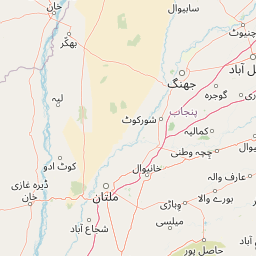
Use this park location map to pinpoint Chashma and Taunsa Barrage Dolphin Sanctuary in Pakistan, understand its exact geographic position, and read its mapped placement within the surrounding landscape more clearly.

Pigeon | © OpenStreetMap contributors

Location context for Chashma and Taunsa Barrage Dolphin Sanctuary

Punjab
Park atlas

Compare adjacent wetland habitats, riverine reserves, and regional conservation landscapes.

Parks Near Chashma and Taunsa Barrage Dolphin Sanctuary and Regional Protected Areas

Browsing other protected areas near Chashma and Taunsa Barrage Dolphin Sanctuary reveals broader patterns in regional riverine conservation. Extending geographic comparison across adjacent freshwater habitats helps place individual reserves into wider regional wildlife networks.
National parkPakistan
About 87 km away#1 closest

North

Sheikh Badin National Park: Pakistan's Sulaiman Mountains Protected Landscape Explorer

Semi-arid terrain and rich herpetofauna habitat in Khyber Pakhtunkhwa.

Investigate Sheikh Badin National Park, a key protected area situated within Pakistan's Sulaiman Mountains. This national park showcases a distinctive semi-arid mountain terrain, characterized by rocky ridges and valleys, offering insights into ecological transition zones. Delve into the park's mapped boundaries and its significance as a habitat for diverse birdlife and herpetofauna within Pakistan's geography.

Area
155.4 km²
Established
2003
IUCN
II
Relief
Mountain
A wide watercolor illustration showing a calm body of water in the foreground, green trees and reeds along the shoreline, and soft rolling hills in the background under a pale sky
Protected areaKhushab District
About 143 km away#2 closest

Northeast

Uchhali Complex Protected Area: Geography, Salt Range Lakes, and Wetland Mapping

Key protected wetland landscape in the Soon Valley of Punjab

The Uchhali Complex serves as a critical wetland system characterized by the brackish and saline waters of Khabikki, Uchhali, and Jahlar lakes. Situated in the Soon Valley, this protected area offers a unique geographic perspective on the interplay between the mineralized geology of the Salt Range and the surrounding semi-arid terrain. This detail overview examines the site as a landmark habitat for migratory waterbirds and a defining feature of the Khushab District landscape.

Area
12.43 km²
Established
1996
Access
Access unknown
Scope
Terrestrial
Protected areaIran
About 149 km away#3 closest

Southwest

Koh-e-Sulaiman Protected Area: Sacred Mountain Geography and Landscape Context in Iran

Discover unique terrain and cultural heritage within this protected mountain range.

Koh-e-Sulaiman is a vital protected area within Iran, distinguished by the sacred Takht-e-Sulaiman peak, a site of deep spiritual importance. This landscape features rugged mountains, steep ridges, and deep valleys, contrasting sharply with surrounding plains. The protected area's unique geological complexity and dramatic terrain make it a significant natural and cultural landmark. MoriAtlas offers detailed geographic context to understand its protected boundaries and its role in the regional atlas, focusing on landscape discovery and natural features.

Area
6,475 km²
Relief
Mountain
Climate
Arid
Access
Remote access
Wildlife reservePunjab
About 167 km away#4 closest

Northeast

Chumbi Surla Wildlife Sanctuary: Geographic Overview of Punjab Foothill Habitats

Mapping protected scrub forests and ridges in Khushab and Chakwal

Covering thousands of acres of contiguous reserve forest, Chumbi Surla Wildlife Sanctuary represents a crucial protected ecosystem within the Punjab landscape. This high-altitude scrub environment provides an essential refuge for the Punjab urial, characterized by deep valleys, stony slopes, and ridge systems that define the topography of the local Salt Range outliers.

Area
226.4 km²
Established
1978
IUCN
IV
Relief
Upland
National parkPakistan
About 200 km away#5 closest

Northeast

Salt Range National Park: Pakistan's Protected Landscape for Geographic Atlas Exploration

Mapped boundaries and regional terrain context for a Pakistani national park.

Gain insight into Salt Range National Park, a significant national park established within Pakistan. This entry focuses on its role as a protected landscape, providing a mapped view of its geographic scope and environmental context. Understand how this park contributes to Pakistan's broader geography and offers opportunities for atlas-based discovery of its natural terrain.

Relief
Mountain
Scope
Terrestrial
National parkPunjab
About 206 km away#6 closest

Northeast

Chinji National Park: National Park Atlas, Salt Range Geography, and Protected Landscape

Discover the unique eroded terrain and semi-arid ecosystems of Punjab, Pakistan.

Chinji National Park is a protected national park located in the Punjab province of Pakistan, specifically within the historic Salt Range. This park is characterized by its deeply eroded terrain, composed of sandstone and igneous rock formations, shaped by seasonal streams that lead towards the Soan River. As a key example of a semi-arid mountain ecosystem within the Baluchistan xeric woodlands ecoregion, Chinji National Park offers significant insights into the geological heritage and unique biodiversity of central Pakistan.

Area
60.95 km²
Established
1987
IUCN
II
Relief
Upland
Protected areaKhyber Pakhtunkhwa
About 224 km away#7 closest

North

Tanda Dam Protected Area: Geographic Context and Wetland Map Features in Khyber Pakhtunkhwa

Ramsar-listed reservoir and regional irrigation landscape

Tanda Dam is a critical irrigation reservoir and Ramsar-listed wetland located in the Kohat District. This protected area supports agricultural networks for surrounding villages while serving as a winter refuge for migratory waterbirds traveling from the Caspian region and Siberia. The site offers a unique perspective on managed water landscapes within the broader terrain of Khyber Pakhtunkhwa.

Area
4.05 km²
Established
1967
Relief
Lowland
Scope
Terrestrial
National parkJhelum District
About 233 km away#8 closest

Northeast

Tilla Reserve National Park: Mapped Protected Landscape and Dry Forest Ecosystem

Explore the geography and ancient heritage of this Salt Range national park.

Tilla Reserve National Park is a protected area recognized for its significant dry subtropical forest ecosystems and rich cultural history within Pakistan's Salt Range. Situated in Jhelum District, the park's landscape is characterized by steep, rocky ridges and ancient geological formations. Discover its unique mapped terrain, the distribution of its remnant forest habitats, and its importance as a protected natural and spiritual site.

Area
40.6 km²
Established
2021
IUCN
II
Relief
Mountain

Common questions about visiting, size, designation, and location context for Chashma and Taunsa Barrage Dolphin Sanctuary

Chashma and Taunsa Barrage Dolphin Sanctuary FAQs for park facts, access, geography, and protected area context

Find quick answers about Chashma and Taunsa Barrage Dolphin Sanctuary, including protected-area facts, park geography, trail and visitor context, and how the park fits into its surrounding country and regional landscape.
MoriAtlas Explorer

Continue Your Protected Areas Search Across the Global Atlas

Deepen your exploration by continuing the structured search for national parks and protected areas worldwide. Utilize the comprehensive filtering capabilities to compare different conservation landscapes and refine your understanding of global park geography. Discover more about the distribution and characteristics of protected natural areas.

Global natural geography