
Why Connemara National Park stands out
Connemara National Park is best known for its iconic Atlantic bog landscapes and the dramatic Twelve Bens mountain range. The park protects one of Europe's finest remaining blanket bog systems, a rare and ecologically significant habitat shaped by Ireland's maritime climate. The purple moorgrass-dominated bogs create a distinctive purple-hued landscape across the hillsides. The park is also notable for its herd of Connemara ponies, the largest mammals now roaming the park after the reintroduction of red deer. The area's archaeological heritage, including megalithic court tombs dating back 4,000 years, adds historical depth to the natural landscape.
Connemara National Park history and protected-area timeline
Connemara National Park was founded and officially opened to the public in 1980, becoming one of the later additions to Ireland's national park system. The land that now comprises the park was historically part of the extensive Kylemore Abbey estate, a connection that shaped the human history of the area. Within the park boundaries, visitors can still encounter remnants of this long human presence, including a 19th-century graveyard that reflects the communities who lived and worked on the land in relatively recent centuries. Of particular significance are the megalithic court tombs scattered throughout the park, ancient burial structures dating back approximately 4,000 years to the Bronze Age, making them among the oldest human-made structures in Ireland. These prehistoric monuments indicate that this landscape held significance for ancient peoples, possibly as a ceremonial or burial landscape. The establishment of the park in 1980 reflected growing recognition in Ireland of the need to protect remaining natural landscapes and cultural heritage, with the park later coming under the management of the National Parks and Wildlife Service.
Connemara National Park landscape and geographic character
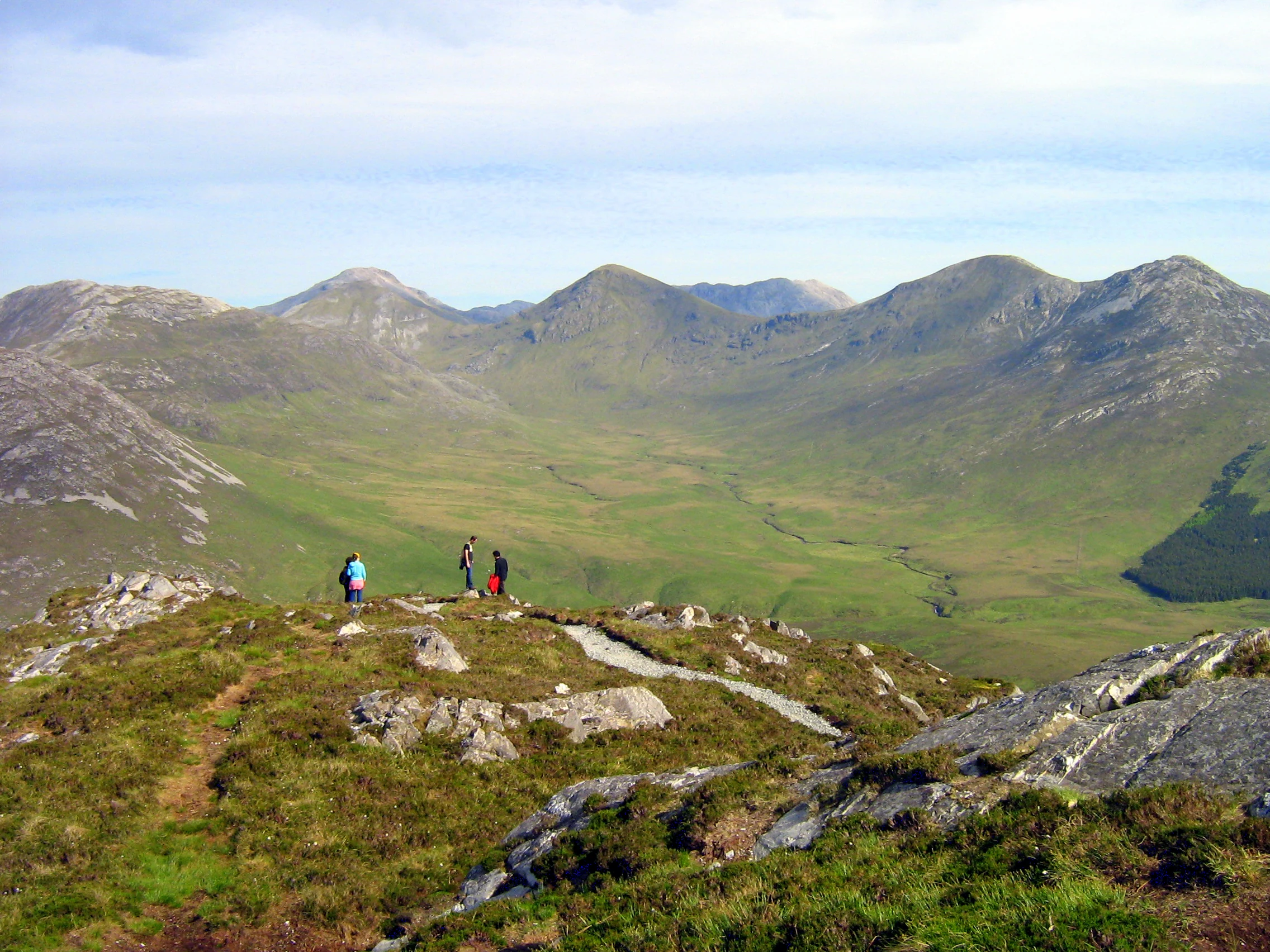
The landscape of Connemara National Park presents a dramatic interplay between mountain and bog, creating one of Ireland's most visually distinctive protected areas. The Twelve Bens, also known as the Bens or the Twelve Pins, form a horseshoe-shaped mountain range that dominates the park's eastern side, with sharp quartzite peaks rising abruptly from the surrounding terrain. The highest peak, Benbaun, reaches 729 metres and provides challenging hiking routes for experienced climbers, while lower peaks offer more accessible routes with spectacular views. Between and below the mountains lies an extensive system of blanket bogs, flat or gently undulating expanses of peat that can appear almost lunar in their barren beauty. The bogs are punctuated by small lakes, streams, and areas of heathland where heather and other shrubs provide color variation. Grasslands occur in areas where drainage is better, supporting grazing that helps maintain the open character of the landscape. Small woodlands of native and introduced species dot the lower slopes, providing shelter and creating contrasting patches of green amid the purples and browns of the boglands.
Connemara National Park ecosystems, habitats, and plant life
The ecological character of Connemara National Park is defined by its extensive blanket bog and heathland systems, which represent some of the finest examples of these habitats in Europe. The blanket bogs develop in Ireland's wet Atlantic climate where heavy rainfall and mild temperatures prevent complete decomposition of plant material, leading to the accumulation of peat over thousands of years. The park's boglands exist in two main forms: wet low-lying bogs and the more extensive mountain blanket bog existing in the drier atmosphere at higher elevations. Purple moorgrass dominates large areas, creating the park's characteristic purplish-brown color palette, particularly striking in late summer when the grasses flower. The bogs support a specialized flora adapted to nutrient-poor conditions, including several carnivorous species that derive nutrients from insects. Sundew and butterworts trap prey in their sticky leaves, an adaptation that compensates for the缺乏 of nutrients in the acidic peat soil. The park also supports populations of bog cotton, bog asphodel, lousewort, milkwort, orchids, and the fragrant bog myrtle, along with a rich assemblage of lichens and mosses that carpet damp surfaces.
Connemara National Park wildlife and species highlights
Connemara National Park supports a diverse bird community that exploits the various habitats within the park, from the open bogs and heaths to the mountain slopes and woodlands. Songbirds such as meadow pipits, skylarks, European stonechats, common chaffinches, European robins, and Eurasian wrens are commonly encountered throughout the park, their calls forming the backdrop to any visit. Birds of prey patrol the skies and rocky outcrops, with common kestrels and Eurasian sparrowhawks being regular sightings, while merlins and peregrine falcons appear less frequently, particularly during migration periods. The bogs and wetlands attract important wading bird species including woodcock and common snipe, while the winter months bring an influx of migrants from colder regions. During autumn and winter, flocks of redwings, fieldfares, and common starlings arrive to spend the colder months in the relatively mild Irish climate. The park's mammal community, while more elusive than its birdlife, includes several species adapted to the Irish countryside. Red deer, once native to the area but extirpated approximately 150 years ago, have been successfully reintroduced to the park and now roam the mountains and valleys. The Connemara pony, a distinctive breed native to this region, represents the largest mammals in the park. Other mammals present include badgers, foxes, pine martens, otters, hares, stoats, pygmy shrews, and various bat species, with field mice being common in woodland areas.
Connemara National Park conservation status and protection priorities
Connemara National Park plays a significant role in protecting some of Ireland's most threatened and characteristic habitats. The blanket bog within the park represents one of the last substantial intact systems of this habitat type in Europe, as extensive draining and peat extraction have destroyed most of Ireland's original bogs. Blanket bogs are now recognized as internationally important ecosystems, serving as carbon stores and supporting specialized species found nowhere else. The park's designation as an IUCN Category II protected area reflects its dual value in protecting both natural landscapes and cultural heritage, including the archaeological sites that preserve traces of human presence over millennia. The reintroduction of red deer represents an important conservation success, restoring a native species that had been lost from the region and helping to maintain natural ecological processes. The park's management by the National Parks and Wildlife Service ensures ongoing protection and restoration work, including habitat management that maintains the open character of the boglands and ensures conditions for the specialized species they support.
Connemara National Park cultural meaning and human context
The landscape of Connemara National Park carries the imprint of human activity spanning thousands of years, with the megalithic court tombs scattered throughout the park bearing witness to its significance in prehistoric times. These ancient burial chambers, dating to approximately 2000 BCE, represent the ceremonial landscape of early farming communities who chose this dramatic mountain and bog environment for their dead. The 19th-century graveyard within the park reflects the more recent presence of communities tied to the Kylemore Abbey estate, which owned much of the land before the park's establishment. Connemara itself has a distinctive cultural identity, with the Irish language remaining strong in the region and the Connemara pony breed representing a unique equine heritage developed in this harsh landscape over centuries. The park's landscape has been shaped not only by natural processes but by generations of human use, including grazing that helped maintain the open bog and heathland habitats that now define much of its character.
Top sights and standout views in Connemara National Park
The Twelve Bens mountain range provides the park's most dramatic scenery, with jagged quartzite peaks creating a world-class backdrop for hikers and photographers. The views from Diamond Hill, one of the more accessible peaks, encompass the full sweep of the park's landscapes from bog to mountain to the distant Atlantic coastline. The blanket bogs, particularly striking in late summer when the purple moorgrass flowers, represent a rare habitat protected within the park's boundaries. The archaeological sites, including the 4,000-year-old court tombs, offer a tangible connection to the prehistoric past and the human history of this landscape. The Connemara ponies wandering the park provide a living connection to the region's cultural heritage, while the recent return of red deer restores another element of the area's natural heritage.
Best time to visit Connemara National Park
The park can be visited year-round, though each season offers a different experience of the landscape. Summer brings the purple moorgrass into flower, creating the park's most famous color display across the bogs, though this is also the busiest period for visitors. The long daylight hours of Irish summer allow for extended hiking, though weather can change rapidly as Atlantic weather systems move across the region. Autumn brings migrating birds and often clearer skies, with the turning of the heather to rust color adding warmth to the hillsides. Winter exposes the bare structure of the landscape, with snow occasionally dusting the peaks while the bogs take on a quieter, more atmospheric quality. Spring awakens the bog with new growth and brings breeding bird activity, though conditions can be wet and muddy underfoot. The park's exposed Atlantic location means that weather is unpredictable year-round, and visitors should be prepared for rapid changes regardless of the season.