Why Crystal Mountains National Park stands out
Crystal Mountains National Park is best known for its remarkable plant biodiversity and its status as a former Pleistocene rain forest refugium, which has allowed unique species to persist in the montane forest environment. The park is distinguished by its twin park arrangement with Mbe National Park and Mt Sene National Park, all sharing the exceptional biodiversity of the Monts de Crystal region. The park is also renowned for its significant butterfly populations, with hundreds of species documented including rare varieties such as euphaedra brevis, cymothoe, and graphium angrier.
Crystal Mountains National Park history and protected-area timeline
Crystal Mountains National Park was officially established on September 4, 2002, as part of Gabon's national park system expansion. The creation of the park, along with its twin designations of Mbe National Park and Mt Sene National Park, was driven by scientific recognition of the region's exceptional plant biodiversity and the urgent need to protect this montane forest ecosystem. The establishment was coordinated through Gabon's National Agency for National Parks, which continues to manage the protected area. The selection of this region for protection reflected growing understanding of the Monts de Crystal's significance as a former Pleistocene rain forest refugium, making it a critical area for conservation of Central African biodiversity.
Crystal Mountains National Park landscape and geographic character
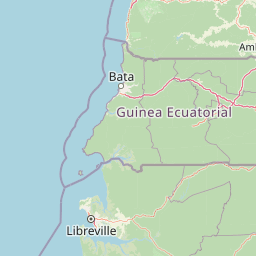
The landscape of Crystal Mountains National Park is defined by the Monts de Crystal, a range of forested mountains that form the western boundary of the Woleu-Ntem Plateau. The terrain is characterized by rolling upland hills and steeper mountain slopes typical of Central African montane environments. The park sits at the transition between the coastal lowlands of Gabon and the inland plateau regions, creating a complex topography that supports diverse microhabitats. The forest-covered mountains rise from the surrounding landscape, with the vegetation transitioning from lowland rainforest at lower elevations to montane forest communities as elevation increases. The proximity to the Ogooué River and the Equatorial Guinea border gives the region geopolitical and ecological significance within Central Africa.
Crystal Mountains National Park ecosystems, habitats, and plant life
The ecological character of Crystal Mountains National Park is defined by its status as a former Pleistocene rain forest refugium, which has resulted in exceptionally high plant biodiversity. This refugium history means the Monts de Crystal has served as a stable environment where forest species could survive during periods of climate change, allowing for the evolution and persistence of unique plant species. The montane forest ecosystem supports a complex layered structure with canopy trees, understory species, and ground-layer vegetation adapted to the cooler, more humid conditions at higher elevations. The forest communities in the park represent some of the most botanically diverse in Central Africa, with many species found only within this limited geographic area.
Crystal Mountains National Park wildlife and species highlights
Crystal Mountains National Park supports diverse wildlife populations despite the primary focus on plant biodiversity protection. The park is home to many animal species including elephants and various monkey species that inhabit the forest canopy and forest floor environments. Of particular note is the park's significant butterfly diversity, with hundreds of species documented within its boundaries. Some of these butterfly species are very rare and include euphaedra brevis, cymothoe, and graphium angrier, representing groups that are particularly associated with intact forest environments. The combination of forest structure, humid microclimate, and historical refugium status has allowed these species communities to persist and diversify within the park.
Crystal Mountains National Park conservation status and protection priorities
Crystal Mountains National Park holds significant conservation importance due to its exceptionally high plant biodiversity and its role as a former Pleistocene rain forest refugium. The protected area is part of Gabon's network of 13 national parks, representing the country's commitment to preserving its unique ecological heritage. The twin park arrangement with Mbe National Park and Mt Sene National Park reflects a conservation strategy that recognizes the interconnected nature of the Monts de Crystal ecosystem. The park's IUCN Category II designation provides a framework for protecting both the forest ecosystem and the species that depend on it, while allowing for sustainable management through the National Agency for National Parks. The preservation of this Pleistocene refugium is particularly important for understanding past and future climate impacts on Central African biodiversity.
Top sights and standout views in Crystal Mountains National Park
The park's defining highlights include its status as one of Gabon's most botanically significant protected areas, protecting species from a former Pleistocene rain forest refugium. The montane forest environment of the Monts de Crystal supports exceptional plant diversity found nowhere else. The rare butterfly populations, including species such as euphaedra brevis, cymothoe, and graphium angrier, represent a distinctive wildlife feature. The twin park designation with Mbe and Mt Sene National Parks reflects the connected ecological identity of the region.
Best time to visit Crystal Mountains National Park
Crystal Mountains National Park can be visited throughout the year, though the optimal period generally coincides with the drier seasons when trail conditions are more favorable for exploration. The equatorial climate of northern Gabon means that rainfall occurs in all seasons, but the December to May period typically experiences reduced precipitation. Visitors interested in wildlife observation and butterfly viewing should consider that the wetter months may offer better opportunities to observe some species, while the drier periods provide easier access to forest trails and viewpoints.