Why Firth of Forth Banks Complex stands out
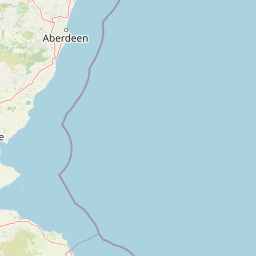
The Firth of Forth Banks Complex is best known for its offshore sand and gravel banks, which form a chain of raised seabed features at the mouth of the Firth of Forth. These banks are recognized for their rich benthic habitats, which support diverse invertebrates, fish, and marine mammals, and for their role as an important spawning ground for commercially significant fish species such as plaice. The area is also notable for hosting ocean quahog, an exceptionally long-lived clam considered among the oldest living animals on Earth. Together, these qualities make the complex a defining example of Scotland's offshore marine conservation estate.
Firth of Forth Banks Complex history and protected-area timeline
The Firth of Forth Banks Complex was formally established in 2014 as a Nature Conservation Marine Protected Area by the Scottish Government, following an assessment of the ecological importance of the sand and gravel banks at the mouth of the Firth of Forth. The designation brought together the Berwick Bank, the Scalp Bank, and additional offshore areas under a single protection framework, recognizing the geological and biological coherence of the bank system as a distinct marine feature.
The protected area is managed by Marine Scotland, which oversees monitoring, regulation, and conservation planning within the three designated zones. The establishment of the complex was part of a broader expansion of Scotland's network of marine protected areas, aimed at preserving representative examples of offshore habitats in waters under Scottish jurisdiction. In the years since designation, the area has become a focal point for discussions about the balance between marine conservation and offshore renewable energy development, particularly with the proposed Berwick Bank Wind Farm project to the north of the complex.
Firth of Forth Banks Complex landscape and geographic character
The defining physical feature of the Firth of Forth Banks Complex is its sea banks, which are elongated accumulations of coarse sediment rising above the surrounding seabed. These banks are the result of long-term interactions between tidal currents, sediment supply from the Firth of Forth, and the offshore hydrodynamic conditions of the North Sea. As currents accelerate through the narrow opening of the Forth, they sort and deposit sediments, forming elevated ridges that contrast with the deeper, finer substrates flanking them.
From south to north, the chain includes the Berwick Bank, the Scalp Bank, the Wee Bankie, and the Montrose Bank. Each bank has a distinct shape and orientation, reflecting the influence of local currents and historical sediment movement. The flanks of the banks are generally gentler than their crests, creating transitional zones where gravelly material gradually gives way to sandy or muddy sediments. This variation in substrate across relatively short distances is one of the most distinctive characteristics of the area's marine landscape.
Firth of Forth Banks Complex ecosystems, habitats, and plant life
The seabed habitats of the Firth of Forth Banks Complex are defined by the varied composition of sand and gravel across the different banks and their flanks. Coarse, well-oxygenated gravels support communities of sessile invertebrates, while mixed sands and finer sediments provide habitat for burrowing organisms. This mosaic of substrates contributes to a high overall diversity of benthic life compared with surrounding, more uniform seabed areas.
The interaction between the banks and the strong tidal regime at the mouth of the Firth produces conditions favorable to biological productivity. Nutrient mixing and sediment turnover support dense populations of invertebrates, which in turn provide food for fish, marine mammals, and seabirds. Because the banks extend from deeper water up toward the photic zone, they also create gradients in light, temperature, and exposure that further diversify the ecological conditions across the complex. Overall, the area represents a productive and structurally complex offshore habitat within the western North Sea.
Firth of Forth Banks Complex wildlife and species highlights
The wildlife of the Firth of Forth Banks Complex reflects the productivity of its sand and gravel habitats. The seabed supports a rich community of marine invertebrates, including crabs, starfish, and a variety of bivalves. Among the most ecologically significant species is the ocean quahog, a large, slow-growing clam known for its exceptional longevity. Individual ocean quahogs in these waters can live for several centuries, making them some of the oldest living animals on Earth and giving the banks particular conservation interest.
Fish populations are an important component of the area's wildlife. Flatfish, including plaice, are notably associated with the banks, and the Berwick Bank in particular is recognized as an important spawning ground for plaice. The waters around the complex also support seals, dolphins, and other marine mammals that take advantage of the productive conditions. Seabirds from colonies along the eastern Scottish coast feed regularly in the area, linking the offshore banks to coastal breeding populations.
Firth of Forth Banks Complex conservation status and protection priorities
The Firth of Forth Banks Complex was designated specifically to protect a representative example of offshore sand and gravel bank ecosystems in Scottish waters. Its conservation value lies in the unusual combination of habitat diversity, biological productivity, and long-lived species such as the ocean quahog, which can only be sustained where seabed conditions remain undisturbed. Protecting the banks helps preserve genetic resources, ecological processes, and habitat structure that would be difficult to restore if lost.
Within the Scottish marine protection framework, the complex contributes to broader network goals by safeguarding offshore features that complement inshore protected areas. Because the banks support spawning grounds for commercially important fish and feeding areas for seabirds, their conservation has implications beyond the marine environment, extending to fisheries management and the protection of internationally important bird populations.
The area has also become a prominent case study in marine spatial planning. Proposals for large-scale offshore wind development, including the Berwick Bank Wind Farm, intersect with the complex and have raised concerns from conservation organizations about cumulative impacts on seabirds and benthic habitats. These debates highlight the ongoing challenge of balancing renewable energy expansion with the preservation of ecologically sensitive offshore environments.
Top sights and standout views in Firth of Forth Banks Complex
The Firth of Forth Banks Complex protects four major offshore sand and gravel banks: Berwick Bank, Scalp Bank, Wee Bankie, and Montrose Bank, which together form one of the most distinctive seabed features at the mouth of the Firth of Forth. The area is celebrated for its high marine productivity, its importance as a spawning ground for plaice, and its population of ocean quahogs, an extraordinarily long-lived bivalve considered among the oldest animals in the world. The complex occupies a central place in Scotland's marine protected area network and has become a notable reference point in discussions about the future of offshore renewable energy.